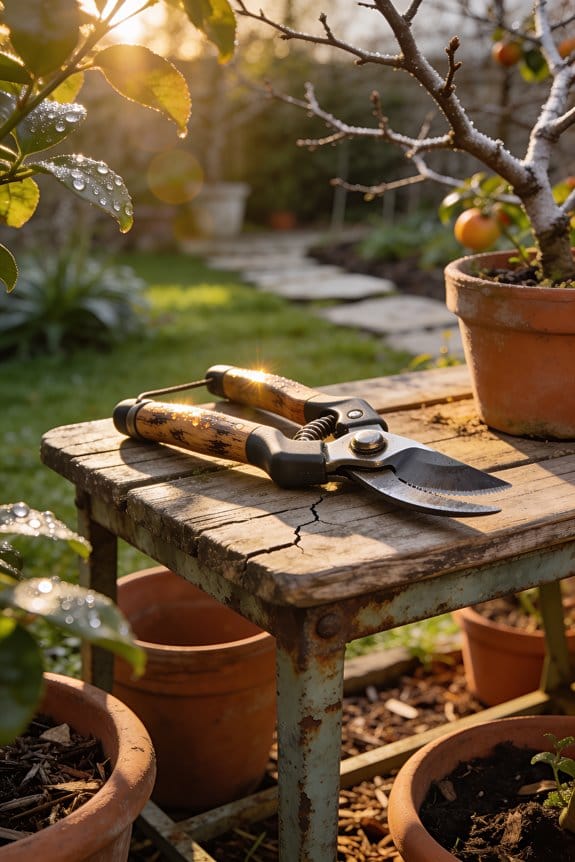

I sanitize my pruning tools between plants by first removing dirt and sap with detergent and hot water, then applying a disinfectant. For quick jobs, I use 70% isopropyl alcohol with a simple wipe or dip since it evaporates fast and costs little. When I’m concerned about serious diseases, I soak tools in a bleach solution (one and a half cups per two gallons) for thirty minutes. Each method prevents pathogens from spreading, though your specific situation determines which approach works best.
Key Takeaways
- Clean blades with detergent and hot water to remove dirt, sap, and debris before disinfecting for effectiveness.
- Use 70% isopropyl alcohol for quick disinfection between plants with a simple wipe or dip method.
- Soak tools in diluted bleach solution for 30 minutes when stronger disinfection is needed between specimens.
- Apply TSP at 10% strength with three-minute soak for viral infections, then rinse thoroughly afterward.
- Sanitize between each plant to prevent transferring pathogens and disease throughout your garden to healthy plants.
Why Dirty Tools Spread Plant Disease
Spreading disease between plants through contaminated pruning tools happens more easily than you might think, since disease organisms are invisible to the naked eye and can survive on metal surfaces for extended periods. When you prune an infected plant, wound pathogens and soil microbes cling to your blade’s cutting surface. These microscopic organisms remain viable and ready to infect your next plant. Without sanitizing between cuts, you’re effectively transferring diseases from one plant directly to another. The problem compounds when you work with multiple plants in succession, potentially spreading pathogens throughout your entire garden. Even a small amount of contaminated sap or debris carries enough organisms to establish infection in a healthy plant’s fresh wound. This is why disinfecting tools between plants isn’t optional—it’s essential prevention.
Recommended Products
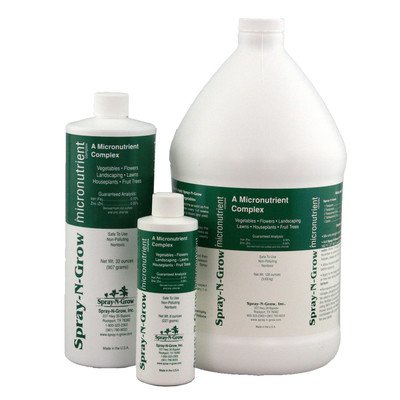
Sold on Amazon

Item Package Dimension: 9.0599999907588L x 8.3099999915238W x 5.5899999942982H inches

Bleach-Alcohol free
Clean Your Blades Before You Disinfect Them
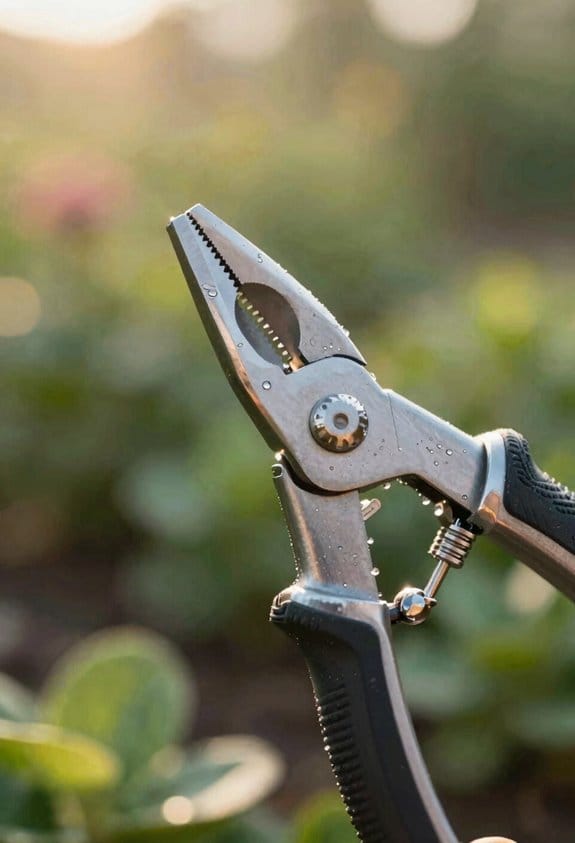
Before you can effectively disinfect your pruning tools, you’ll need to remove all the dirt, sap, and debris that’s built up on the blades. I recommend using detergent and hot water for thorough cleaning, which guarantees cutting surfaces are completely free for disinfectant contact. Pay special attention to rough surfaces and increment borers, spending extra time on these areas. When you’ve finished scrubbing, wipe away excess water to prevent plant injury from remaining moisture. This preliminary step is vital because disease organisms can hide beneath visible grime, rendering any disinfectant less effective. Once your blades are clean and dry, you’re ready to apply your chosen disinfection method, whether that’s alcohol, bleach, or another sanitizer.
Choosing the Right Disinfectant: Speed, Cost, and Safety
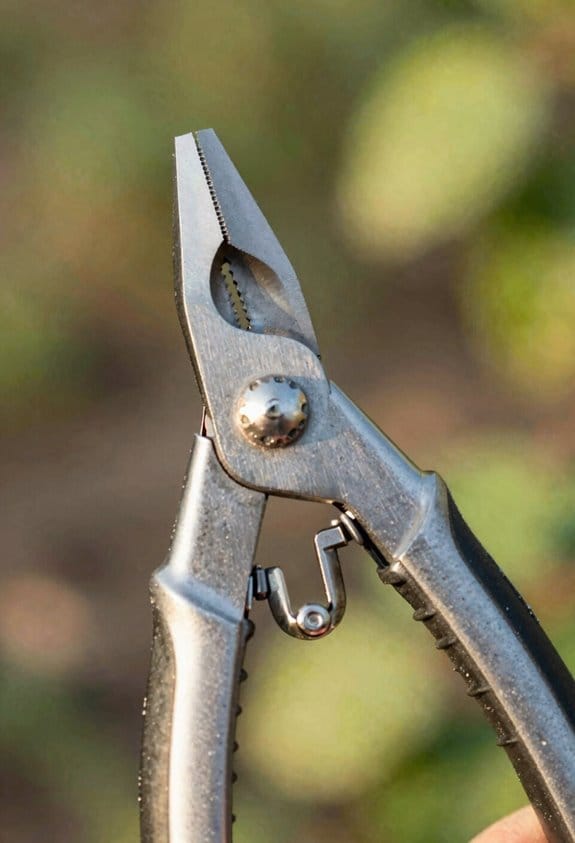
Now that your blades are clean and dry, you’ll need to select a disinfectant that works best for your situation, considering factors like speed, cost, and safety.
I’ve found that 70% isopropyl alcohol offers the fastest disinfection method since it requires only a quick wipe or dip with no soaking time. It’s inexpensive and readily available at drugstores, plus it’s less corrosive than bleach. However, user safety matters here—alcohol is flammable, so I store it away from heat sources.
Bleach solutions work well for multiple tools since I can dip several blades simultaneously in a bucket, though this method takes 30 minutes. TSP provides thorough disinfection but poses significant user safety concerns due to toxicity, making it impractical for home gardeners like myself.
Sanitizing With Alcohol: the Easiest Method
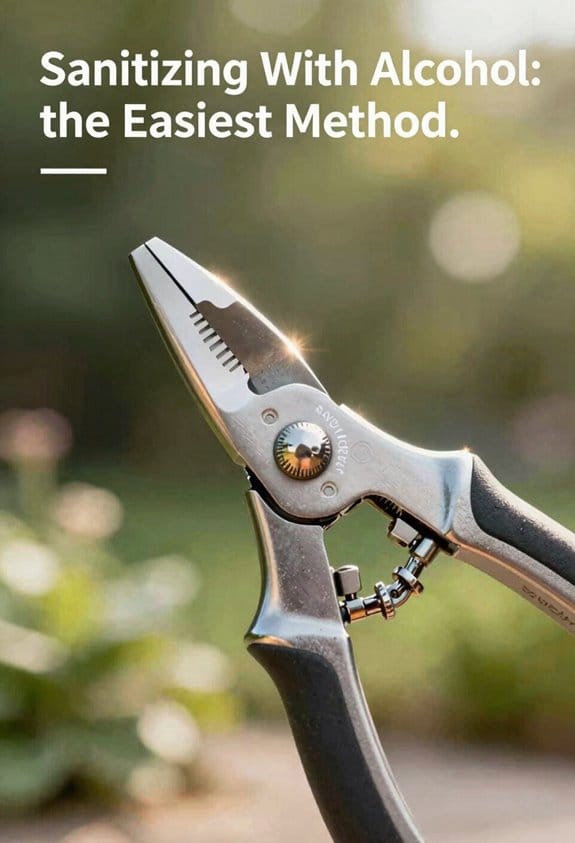
When I need to disinfect my pruning tools quickly, I frequently reach for 70% isopropyl alcohol because it’s the most straightforward method available. I don’t need to dilute it, which saves time between cuts. For my rubbing technique, I wipe the blade surfaces thoroughly, ensuring complete coverage of all cutting edges and crevices where pathogens hide.
My container choice matters for efficiency. I use a small squirt bottle for individual plants or a shallow bucket when working through multiple specimens. The alcohol evaporates quickly, eliminating the need for rinsing, so there’s no corrosion risk like bleach creates. Since alcohol costs little and I can buy it anywhere, I maintain consistent disinfection practices throughout my pruning work without complications or delays.
Bleach and TSP: When Stronger Disinfection Is Needed
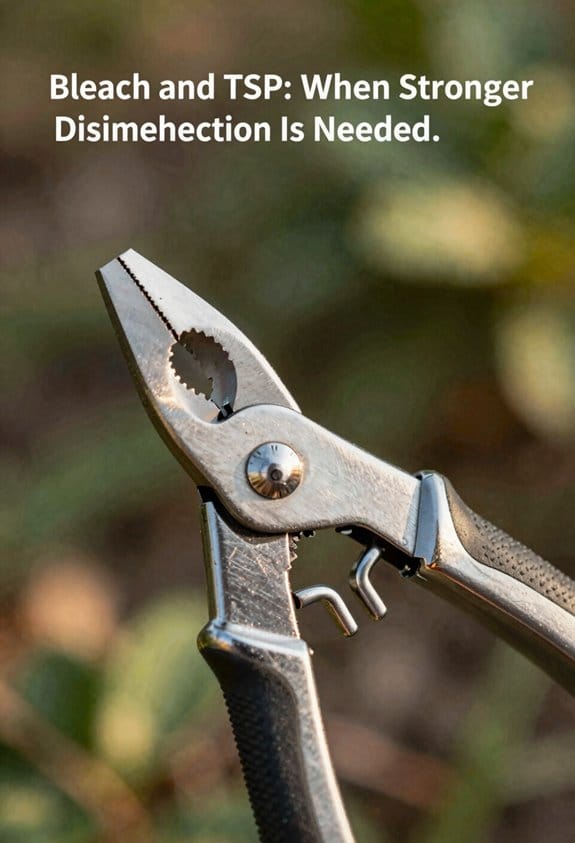
Although alcohol works well for routine pruning, certain situations call for more powerful disinfectants like bleach or TSP (trisodium phosphate). I recommend bleach for most gardeners because it’s affordable and accessible. I mix one and a half cups of bleach with two gallons of water, then soak my blades for thirty minutes. Since bleach is less effective against viruses, I consider TSP when I’m concerned about viral infections. I dilute TSP to ten percent strength and soak tools for three minutes before rinsing thoroughly. However, TSP is highly corrosive and toxic, making it unsuitable for home use. After using either solution, I rinse my tools carefully for metal preservation and proper bleach disposal, preventing rust and environmental harm.
Frequently Asked Questions
How Often Should I Sanitize My Pruning Tools When Working in the Garden?
I’d sanitize between each plant cut ideally, though you can batch similar tasks seasonally. When you’re pruning diseased material or moving between different plants, I’d disinfect immediately to prevent invisible pathogen spread.
Can I Use Household Disinfectants Like Lysol or Pine-Sol on My Cutting Blades?
I wouldn’t recommend household disinfectants like Lysol or Pine-Sol on your blades. They’re unproven for plant pathogen control, and chemical residues could harm your plants. Stick with proven options like 70% alcohol or bleach for household compatibility and safety.
What’s the Best Way to Store Disinfectant Solutions Between Gardening Sessions?
I’d store your disinfectant like a precious elixir—in sealed containers and labeled bottles away from heat and sunlight. Alcohol’s flammable, bleach solutions last only two hours, and TSP’s toxicity demands secure, clearly marked storage in your garage or shed.
Do I Need to Sanitize Tools Between Cutting Different Branches on the Same Plant?
You don’t need to sanitize between branches on the same plant since you’re not transferring disease between different plants. However, I’d sanitize if I’m removing infected material to prevent sap transfer and wound sealing complications.
How Long Does Alcohol Disinfection Take Compared to Bleach Solutions?
I’ll tell you alcohol’s faster—it needs just a quick wipe or dip with minimal contact time, while bleach requires thirty minutes of soaking. Alcohol’s also gentler on material compatibility, making it my preferred choice for frequent sanitizing.