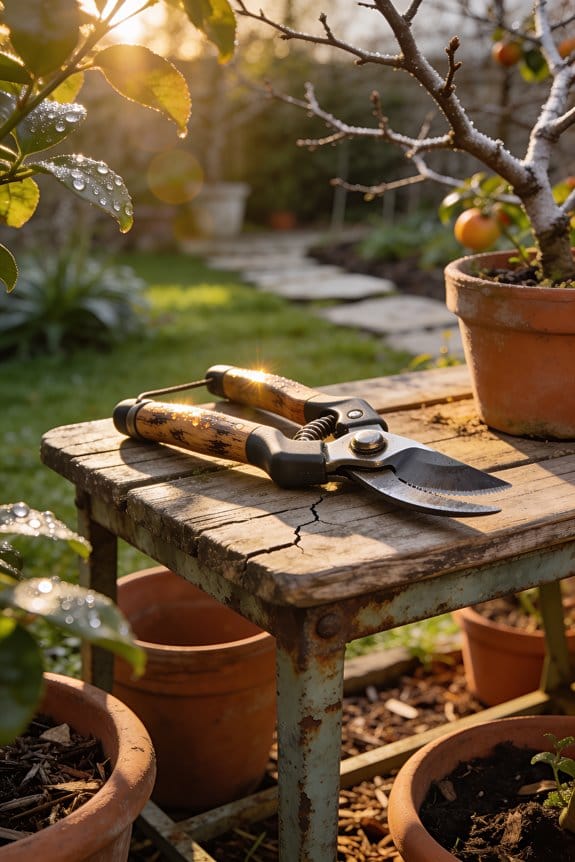


Bypass pruners use two blades that glide past each other like scissors, creating clean, precise cuts ideal for live stems. Anvil pruners work differently—a single blade presses down against a flat surface, crushing material rather than slicing it. While bypass pruners produce wounds that heal quickly and protect plants, anvil pruners excel at cutting dead, brittle wood where crushing is acceptable. Choosing between them depends on whether you’re cutting living or dead material, though understanding how each mechanism affects plant health reveals why this distinction matters more than you might expect.
Key Takeaways
- Bypass pruners use two blades that glide past each other like scissors for clean, precise cuts on live wood.
- Anvil pruners feature a single blade that cuts against a flat surface, crushing through dead or brittle material.
- Bypass shearing action creates clean wounds that heal faster and protect the plant’s vascular system and nutrient flow.
- Anvil cutting produces jagged wounds that heal slowly and increase vulnerability to disease and pest damage.
- Choose bypass for live stems and anvil for dead wood to optimize cutting efficiency and plant health.
How Do Bypass and Anvil Pruners Cut Differently?
When you’re deciding between bypass and anvil pruners, understanding how each one cuts is essential, because the cutting mechanism fundamentally determines which tool will work best for your gardening needs. Bypass pruners use shearing mechanics where two blades glide past each other like scissors, creating clean, precise cuts through plant tissue. The blade alignment in bypass pruners allows them to work close to buds without causing damage. Anvil pruners operate differently—a single blade cuts downward against a flat surface, much like a knife hitting a cutting board. This action compresses and crushes the material rather than slicing it cleanly. Understanding these distinct cutting approaches helps you select the right pruner for your specific gardening task.
Why Bypass Pruners Outperform on Live Stems?
You may be interested

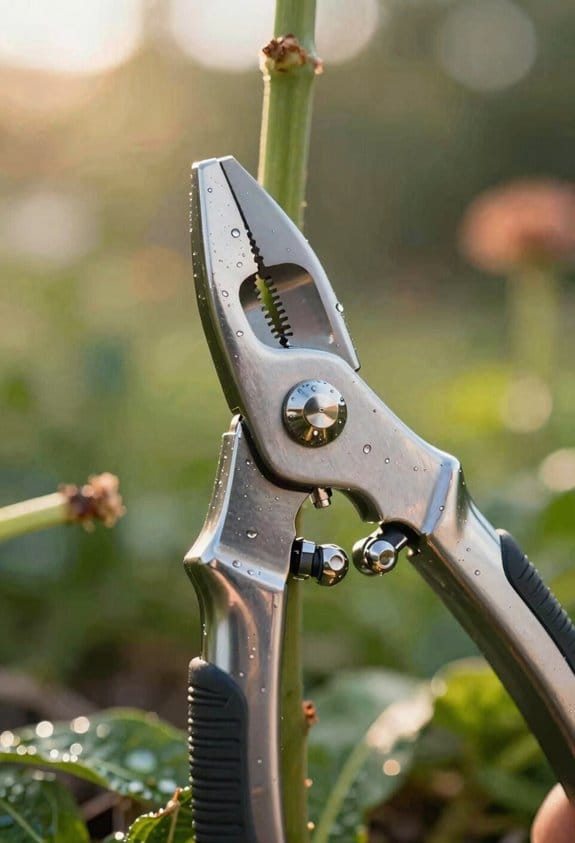
Now that you understand how these pruners cut differently, it’s worth exploring why bypass pruners specifically excel when working with live stems and branches. When you use bypass pruners on living wood, the shearing action creates clean wounds that promote faster clean healing. The two blades pass smoothly past each other, slicing through tissue without crushing it, which means the plant’s vascular system remains intact and undamaged. This precision matters tremendously near buds, where bud protection becomes essential. The bypass design allows you to cut extremely close to buds without contact damage, preventing the tissue compression that anvil pruners cause. For anyone serious about plant health, bypass pruners represent the superior choice for live material because they minimize trauma and support ideal wound closure.
When Anvil Pruners Win: Dead Wood and Heavy-Duty Cuts
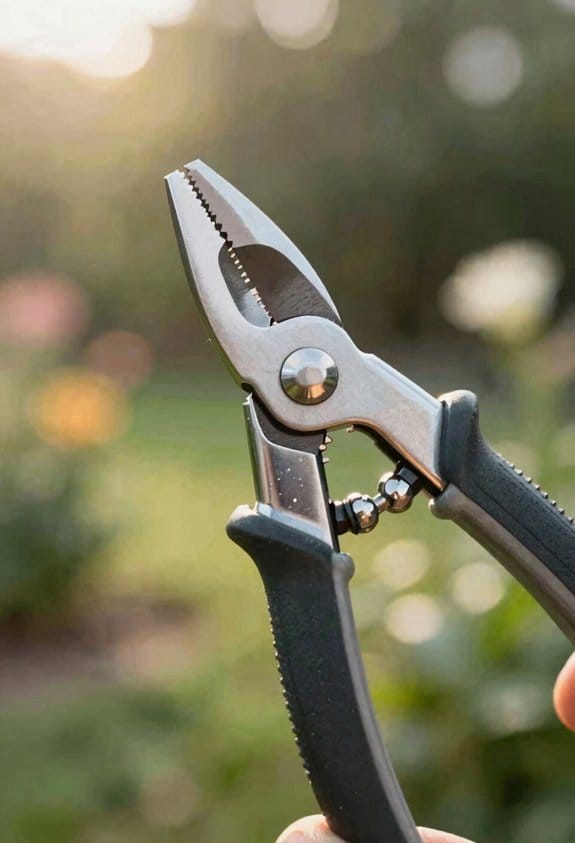
Although bypass pruners excel with living material, anvil pruners demonstrate distinct advantages when you’re working with dead wood and tackling heavy-duty cutting tasks. anvil pruners require notably less hand strength, making them ideal for hard woodwork that would fatigue you with bypass models. Their single blade crushes through dry, brittle material efficiently, which is precisely what dead wood demands. When you’re cutting thick, stiff branches at maximum capacity, the anvil’s straightforward impact mechanism outperforms the scissor action. Additionally, anvil pruners offer practical benefits for rust prevention since they’re simpler mechanically, with fewer moving parts to maintain and protect. For deadheading annuals or removing deadwood from mature plants, anvil pruners provide cost-effective, reliable performance without compromising your gardening efficiency.
Why Cut Quality Matters More Than You Think
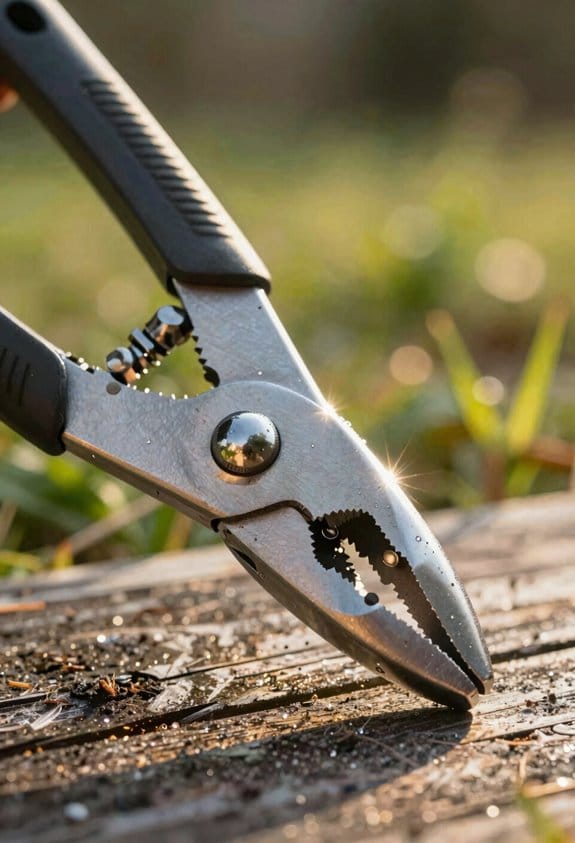
The difference between a clean cut and a crushed one extends far beyond appearance, influencing your plant’s health and long-term vigor. When you use bypass pruners on live wood, you’re creating a smooth wound that allows your plant to heal efficiently. This clean cut minimizes stress on the plant tissue and enables proper sap flow through the remaining stem, which is essential for nutrient distribution and growth.
Conversely, anvil pruners crush tissue, creating jagged wounds that take longer to heal. These damaged areas become vulnerable to disease and pest infiltration. Your plant expends more energy repairing crushed tissue rather than directing resources toward new growth. Understanding this distinction helps you make better pruning choices, ultimately supporting healthier, more vigorous plants throughout your garden.
Your Simple Pruner Decision: Dead or Alive Wood?
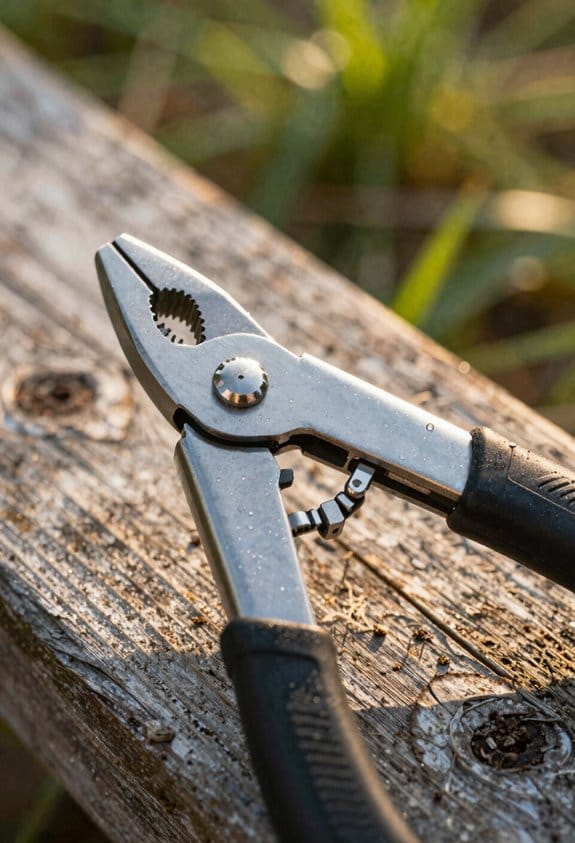
Once you understand how cut quality affects your plant’s healing process, choosing between bypass and anvil pruners becomes straightforward—you simply need to identify whether you’re cutting dead or live wood. When you’re working with live stems, bypass pruners deliver the clean cuts that promote faster healing and stem preservation. Their scissor-like action minimizes crushing damage that could compromise your plant’s recovery. Conversely, if you’re removing dry or dead wood, anvil pruners work efficiently since these materials won’t suffer from the crushing action. The live vs. dead distinction guides your tool selection perfectly. Assess your material before reaching for your pruner, and you’ll make the right choice every time, protecting your plants while working effectively.
For a useful next step, clean pruning tools safely, sharpen pruning shears and compare pruning shears. These guides cover the related maintenance or buying decision without changing the task explained here.
Frequently Asked Questions
Can I Use Bypass Pruners on Dead Wood, or Will They Break?
You can use bypass pruners on dead wood, though I’d adjust my cutting technique for harder material. Maintain proper blade alignment and apply steady pressure—they won’t break, but anvil pruners handle dead wood more efficiently.
How Often Should I Sharpen or Replace Pruner Blades for Optimal Performance?
I’d sharpen your pruners monthly like honing a chef’s knife—blade maintenance preserves that keen edge. Replace blades annually for peak edge longevity. Dull blades crush plants rather than slice cleanly, defeating your pruning purpose entirely.
Which Pruner Type Is Better for Left-Handed Gardeners?
Consider looking for pruners with ambidextrous design since most standard models don’t prioritize left-handed ergonomics. You’ll find both bypass and anvil types available in truly left-handed versions that’ll feel natural in your hand.
Are Bypass or Anvil Pruners Safer to Use Around Delicate Flowering Plants?
I’d argue bypass pruners are your delicate flowering plants’ best friend. They’re safer cuts that minimize tissue damage, offering superior petal protection through precision shearing rather than crushing. You’ll preserve blooms beautifully.
What’s the Price Difference Between Quality Bypass and Anvil Pruners?
quality bypass pruners typically cost $30–$60, while anvil models run $20–$45. Brand comparisons show premium bypass options command higher prices due to their precision engineering, though both budget ranges offer reliable performance for most gardeners.