

I clean my pruning tools between cuts using 70% isopropyl alcohol, which works quickly without corroding blades like bleach does. First, I remove dirt and debris with a stiff brush and water, then dip or spray my blades for thorough disinfection. I replace my disinfectant solution every ten plants or two hours to keep it effective, since contaminated solutions won’t kill pathogens properly. For specialty equipment like chainsaws, I disassemble and soak components separately. The specific techniques and seasonal maintenance steps matter greatly for preventing disease spread.
Key Takeaways
- Remove dirt and plant debris with a stiff brush before disinfecting to eliminate pathogen hiding spots.
- Use 70% isopropyl alcohol or diluted bleach, dipping blades for two minutes for thorough disinfection.
- Replace disinfectant solution every 10 plants or 2 hours, or when it becomes cloudy or dirty.
- Disassemble chains, bars, and attachments for separate cleaning and soaking in crevices where pathogens hide.
- Wipe or spray blades between cuts during field work to maintain continuous disease prevention during pruning.
Why Pruning Tools Spread Plant Disease
When you make a cut on a diseased plant, you’re not just removing branches—you’re creating a direct pathway for pathogens like viruses, bacteria, and fungi to travel to your next plant. During pathogen transmission, microorganisms from infected wood adhere to your blade’s surface through sap and debris. This tool contamination occurs whether you’re cutting visibly diseased areas or apparently healthy sections of an infected plant.
You may be interested
Diseases like fire blight, anthracnose, and bacterial spot spread efficiently through contaminated tools. The pathogens remain viable on blade surfaces, ready to infect new plants when you make subsequent cuts. Even small amounts of plant material trapped in tool crevices harbor these organisms. Understanding how tools become vectors for disease transmission helps you recognize why consistent disinfection between cuts is essential for protecting your garden’s health.
Prepare Pruning Tools Before Disinfecting
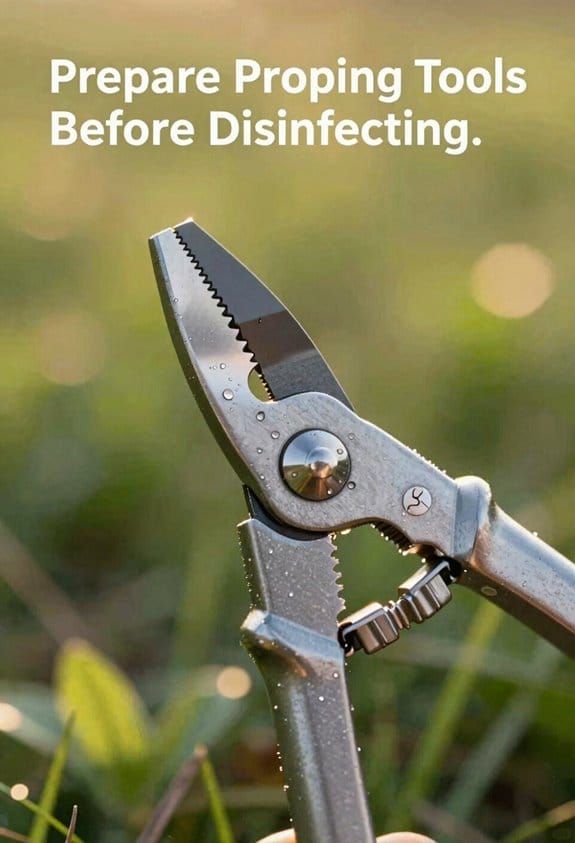
Before you dip your tools into any disinfectant solution, you’ll want to strip away the dirt and plant debris that’s built up on your blades, because these materials can shield pathogens from the disinfectant and reduce its effectiveness. Set up a cleaning station near where you’re working, equipped with a stiff brush and clean water. Wear appropriate glove selection—disposable gloves work well—to protect your hands while scrubbing. Brush off visible soil from all surfaces, paying special attention to crevices and joints where pathogens hide. For chain saws, disassemble the chain and bar, then soak them separately. Rinse everything with clean water and allow tools to air dry completely. Sharp blades are also important; pitted or dull edges trap microbes more easily than smooth, maintained blades.
Isopropyl Alcohol vs. Bleach: Which Works Best
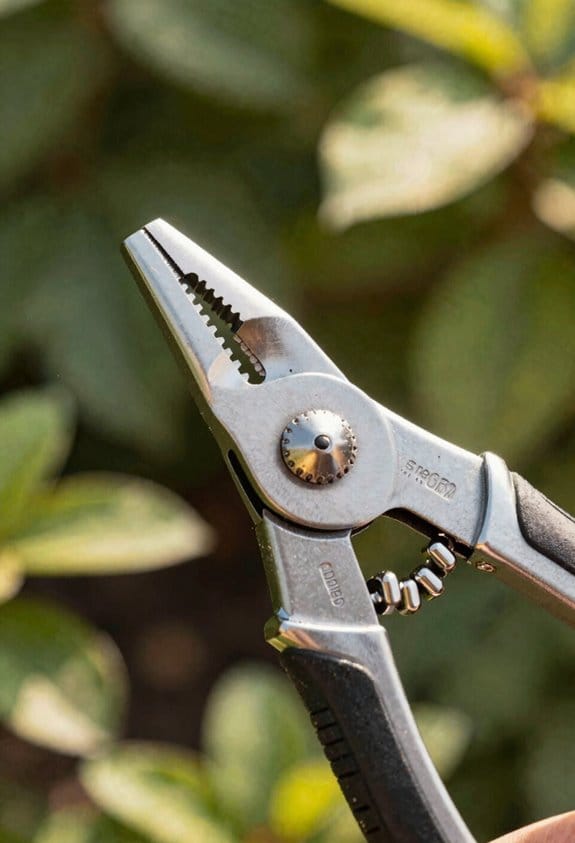
Once your tools are clean and dry, you’re ready to choose a disinfectant that’ll actually eliminate the pathogens hiding on your blades. Isopropyl alcohol works quickly through alcohol evaporation, leaving tools dry and ready to use immediately. You can dip, spray, or wipe blades with 70% isopropyl alcohol for effective pathogen elimination. Bleach solutions also kill pathogens thoroughly when you soak tools for 2-5 minutes in a diluted mixture. However, bleach corrosion can damage metal over time, potentially dulling your blades and creating pitted surfaces where microbes hide. For most gardeners, isopropyl alcohol offers convenience and tool protection. Both options effectively reduce disease transmission when used consistently between cuts and plants.
Spray, Dip, or Soak: Your Disinfection Method
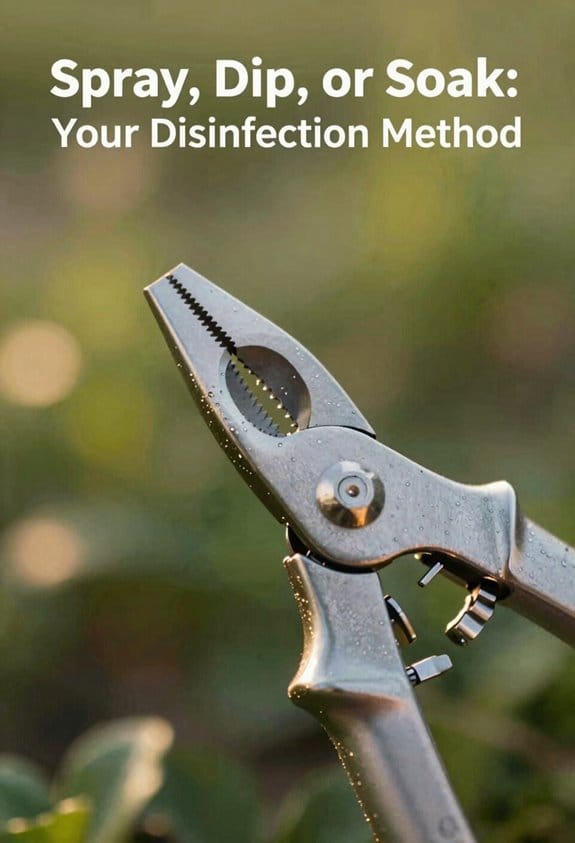
Now that you’ve selected your disinfectant, you’ll need to decide how to apply it to your tools, and your choice depends on your situation and the type of tool you’re using. For maximum contact time, dipping works best—submerge your blades for two minutes to guarantee thorough disinfection. If you’re working in the field, carrying a sealed plastic bottle makes spray or wipe application more practical for field portability. Between cuts, quickly spray or wipe your blades rather than pausing for lengthy soaking. For larger tools like pruning saws, soaking remains ideal. Many professionals use two tools simultaneously: one soaks while you prune with the other. Replace your solution every ten plants or every two hours to maintain its effectiveness and protect your plants from disease transmission.
When to Replace Your Disinfectant Solution
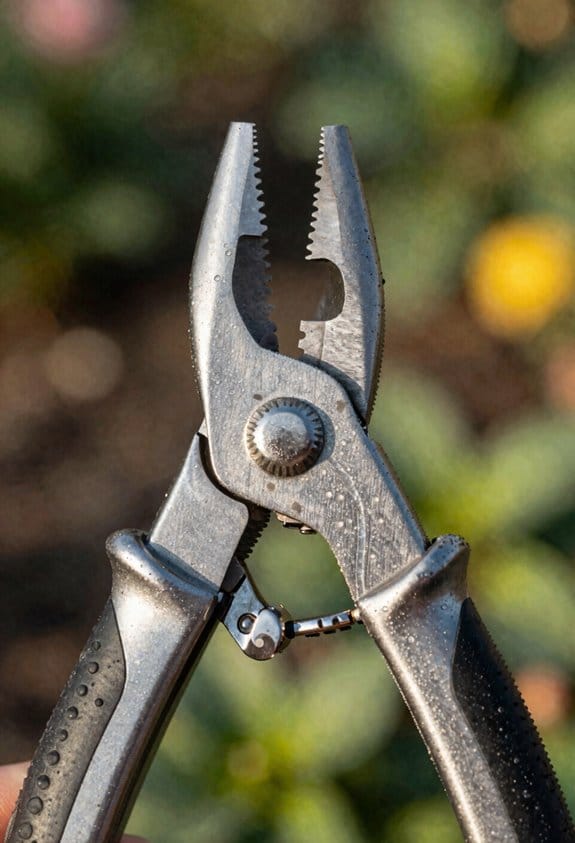
I need to replace my disinfectant solution regularly, since the effectiveness of any disinfectant decreases over time as it becomes contaminated with plant debris, sap, and soil particles. This process, called solution fatigue, reduces the disinfectant’s ability to kill pathogens effectively.
I watch for contamination indicators that signal replacement time. When the solution becomes cloudy, discolored, or visibly dirty, I know it’s compromised. Additionally, I replace my solution every 10 plants I prune or every 2 hours during work sessions, whichever comes first.
During intensive pruning, I refresh the solution more frequently to maintain maximum protection. By replacing contaminated solutions promptly, I make certain my disinfection efforts genuinely prevent pathogen transmission between plants, keeping my garden healthier and protecting valuable specimens from preventable diseases.
Disinfecting Saws and Specialty Pruning Equipment
When you work with saws and specialty pruning tools, disinfection requires different approaches than you’d use for simple hand pruners, since these equipment pieces have larger surfaces, multiple components, and harder-to-reach areas where pathogens can hide. For chainsaw maintenance, you’ll need to disassemble the equipment and soak the chain and bar separately in your disinfectant solution for two to five minutes. Specialty attachments, like pole saw heads or lopper blades, should receive extra attention in crevices where debris accumulates. After soaking, rinse everything thoroughly with clean water and allow components to air dry completely before reassembling. This thorough approach makes certain that pathogens hiding in complex equipment won’t spread disease to your next project.
Seasonal Tool Storage and Prep
Because pruning tools accumulate pathogens throughout the growing season, I need to establish a cleaning routine tied to seasonal changes to prevent disease carryover into the next year. Before winter storage, I thoroughly clean all tools with soap and water, removing debris and dried sap. I then disinfect them with isopropyl alcohol or dilute bleach solution to eliminate any lingering pathogens. Once dry, I store tools in a dry location away from moisture, which prevents rust and microbe growth. For spring prep, I inspect blades for damage or pitting, which can harbor pathogens. I sharpen dull blades and apply light oil to prevent corrosion. Finally, I disinfect tools again before spring pruning begins, ensuring they’re pathogen-free for the new season.
Pruning Tool Disinfection Mistakes to Avoid
Even with the best seasonal storage and spring preparation routine, many gardeners undermine their disinfection efforts by making common mistakes during the actual pruning process. One frequent error is dulling blades through improper cleaning, which damages tool edges and creates spaces where pathogens hide. Neglecting to disinfect between cuts on different plants is another critical oversight that spreads disease. Glove contamination often goes unnoticed; wearing gloves while pruning diseased plants then touching healthy ones transfers pathogens directly. Additionally, many gardeners apply disinfectant solutions directly to plant wounds, which causes damage. Using expired or contaminated disinfectant solutions reduces effectiveness. Finally, skipping the initial debris removal before disinfection prevents solutions from reaching tool surfaces properly. Understanding these mistakes helps you maintain truly disease-free pruning practices.
For a useful next step, sharpen pruning shears, compare pruning shears and clean garden tools after use. These guides cover the related maintenance or buying decision without changing the task explained here.
Frequently Asked Questions
Can I Use the Same Disinfectant Solution for Multiple Pruning Sessions?
You shouldn’t reuse the same solution across multiple sessions. I’d replace it every 10 plants or 2 hours because its disinfecting potency weakens. For storage stability, you’ll want fresh solution with compatible concentrations each time.
How Do I Disinfect Pruning Tools if I’m Working in the Field Without Supplies?
I’d carry rubbing alcohol wipes in my pocket for quick blade cleaning between cuts. If I’m unprepared, household hand sanitizer works temporarily, though it’s less effective than isopropyl alcohol for disinfecting pruning tools thoroughly.
What Disinfectant Is Safest to Use Around Children and Pets?
Consider isopropyl alcohol since child safe disinfectants and pet friendly sanitizers are limited. Studies show households using alcohol reduce pathogen spread by 99%. It’s safer than bleach when kids and pets are present.
Should I Disinfect Tools Between Cutting Healthy Branches on the Same Plant?
Consider sanitizing between branches only if you’ve noticed disease signs on that plant. For healthy branches with close branch proximity, you can skip disinfection. Just sanitize intervals when moving to different plants or after visible infection.
How Long Does Disinfectant Remain Effective Once Applied to Pruning Blades?
Consider replacing your disinfectant solution every two hours or after ten plants. The residual efficacy diminishes with use, and you’ll need adequate contact time—typically two minutes—to guarantee effectiveness against pathogens.