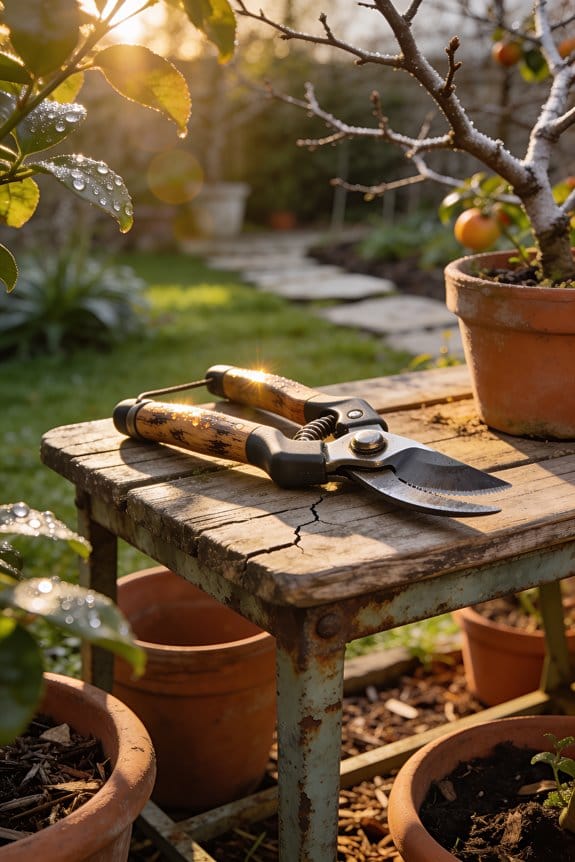


Prune roses based on their variety and your climate zone. Repeat-bloomers like hybrid teas need major pruning in early spring, while once-blooming roses get pruned after flowering. Make cuts at 45-degree angles just above outward-facing buds to direct new growth away from the plant’s center. Remove dead stems first, then thin the canopy by cutting back one-third to two-thirds of cane length. Seal cuts immediately, clean up debris, and improve airflow to prevent disease. Understanding your specific rose type and local frost dates helps you avoid winter damage from premature pruning, and getting these details right makes all the difference.
Key Takeaways
- Prune repeat-blooming roses in early spring; once-blooming roses after flowering ends in mid-to-late June.
- Make 45-degree angle cuts just above outward-facing buds to direct new growth away from center.
- Time pruning by climate zone: Zones 3–4 wait until May; Zones 5–7 prune March–April.
- Remove dead, diseased, weak stems first, then thin canopy by one-third to two-thirds of length.
- Avoid late summer or fall pruning; tender new growth from early pruning dies in hard freezes.
Start With Your Rose Type: It Determines Your Timing
Identifying your rose variety before you grab your pruning shears is essential, because different roses require pruning at different times of the year. Rose classification determines your pruning frequency and approach. Repeat-blooming varieties—hybrid teas, floribundas, and grandifloras—need major pruning in early spring to encourage continuous flowering throughout the season. Once-blooming roses, including old garden and modern shrub types, require pruning after they’ve finished blooming in mid-to-late June. Climbing roses vary by type: repeat-bloomers need early spring pruning, while heirloom climbers should be pruned following their bloom period. Knock-out roses, classified as shrub roses, need approximately one-third of their growth removed in late February. Understanding your specific rose type guarantees you’ll prune at the most suitable time for maximum blooms and plant health.
When to Prune: Climate Zones and Forsythia Bloom
You may be interested



Once you’ve identified your rose type, the next step is determining the right time to prune based on where you live. Consider using zone specific cues to guide your timing. In zones 3-4, wait until May after the last frost. Zones 5-7 should prune in March or April, while zones 8-9 can begin in February or March. Zone 10 gardeners may start as early as January.
I’ve found forsythia timing incredibly helpful across all regions. Forsythia blooms naturally align with safe pruning conditions when temperatures stabilize. Wisconsin growers traditionally prune when forsythia blooms in early April. This natural indicator usually coincides with consistent mild daytime temperatures in the 40s°F range, signaling that frost danger has passed and your roses are ready for cutting.
How to Make the Right Pruning Cut
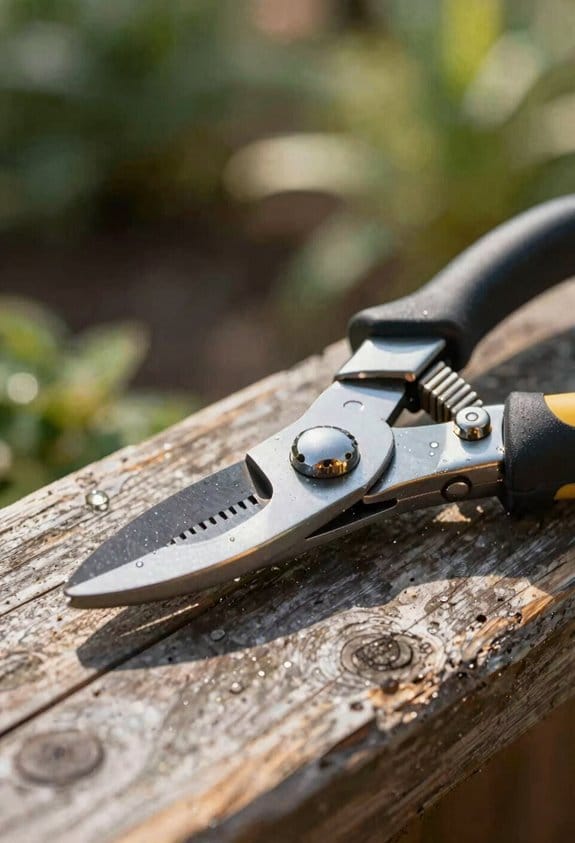
Making accurate cuts is essential to encouraging healthy growth and preventing disease, so I’ll explain the proper technique you should follow. When pruning, cut at a 45-degree angle just above an outward-facing bud, which directs new stems away from the plant’s center. This bud orientation guarantees branches grow outward rather than inward. For canopy thinning, remove one-third to two-thirds of the cane length, depending on your rose type. Hybrid teas and floribundas typically reduce to 3-6 canes total, creating frameworks 6 inches to slightly over one foot tall. Always remove dead, diseased, or weak stems first, then open the center portion to improve airflow. After cutting, seal the wounds to prevent rot and disease entry, reducing infection risk markedly.
Protect Your Work: Cleanup, Airflow, and Sealing
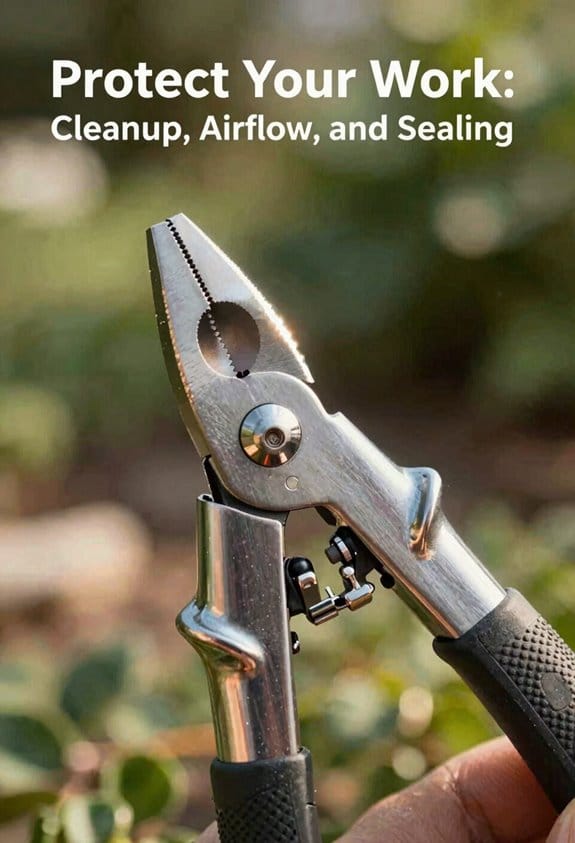
Your careful cuts represent only part of the pruning process, because what you do after cutting markedly impacts your rose plant’s health and recovery. Consider prioritizing yard debris cleanup by removing all cut stems and leaves from around your roses, which prevents disease spread and pest problems. Next, I open the center portions of plants to improve airflow, reducing disease risk considerably. Finally, I apply wound dressing to seal cuts, preventing rot and disease entry into vulnerable tissues. This three-step approach—cleanup, airflow improvement, and cut sealing—transforms your pruning work into lasting benefits. By completing these protective measures immediately after pruning, you’re establishing ideal conditions for strong new growth and healthier blooms throughout the season.
Avoid These Timing Mistakes or Risk Winter Damage
Because timing errors during late summer through early winter can severely damage dormant roses, I emphasize that you should avoid major pruning during these months. Late pruning stimulates premature foliage growth, which becomes vulnerable when freezing temperatures arrive unexpectedly. This tender new growth can’t withstand harsh winter conditions, leaving your plants weakened and susceptible to dieback.
Consider waiting until late winter or early spring when temperatures stabilize consistently. Use the forsythia bloom as your natural indicator—this signals that conditions are suitable for cutting. If you prune too early and a hard freeze follows, you’ll need to cover your plants immediately. By respecting these seasonal boundaries, you’ll protect your roses from preventable winter damage and make certain vigorous spring growth.
For a useful next step, clean pruning tools safely and sharpen pruning shears. These guides cover the related maintenance or buying decision without changing the task explained here.
Frequently Asked Questions
Can I Prune Roses as Early as Three Weeks Before My Last Frost Date Safely?
Yes, you can prune roses three weeks before your last frost date, but Consider having frost protection ready. Early pruning risks damage if hard freezes follow, so make certain your pruning tools are sharp and monitor dormancy timing closely.
Should I Deadhead Faded Blooms Separately From My Major Spring Pruning Session?
Yes, Consider deadheading separately from major spring pruning. It’s better for scent preservation and stem sanitation throughout the growing season. You’ll practice festival pruning techniques while allowing petal composting during bloom time.
What Temperature Conditions Indicate It’s Safe to Prune My Roses?
You’ll want consistent mid-40s°F daytime temperatures with nights staying above freezing for two weeks. I monitor soil temperature warming and air moisture stabilizing—these conditions signal your roses won’t suffer frost damage after cutting.
How Do I Know if My Rose Variety Blooms Once or Repeats Throughout Season?
You’ll find that repeat-bloomers like hybrid teas show hybrid vigor with continuous flowering, while heritage varieties and old garden roses typically bloom once yearly. Check your rose’s label or research its classification to confirm.
Will Pruning My Roses in Late Summer or Fall Increase Winter Damage Risk?
Yes, I’m texting you this from my telegraph office: late summer or fall pruning definitely increases winter damage risk. You’ll stimulate late season vigor when you should let roots establish insulation practices instead.