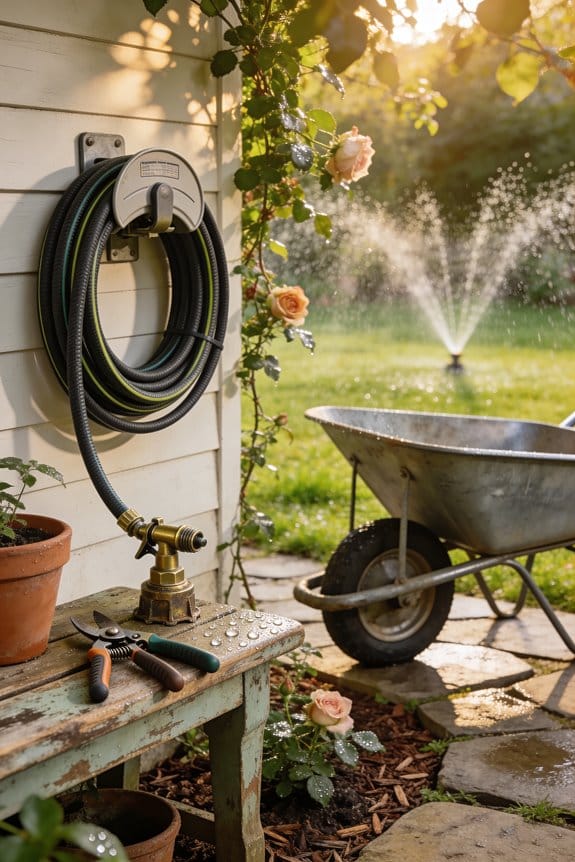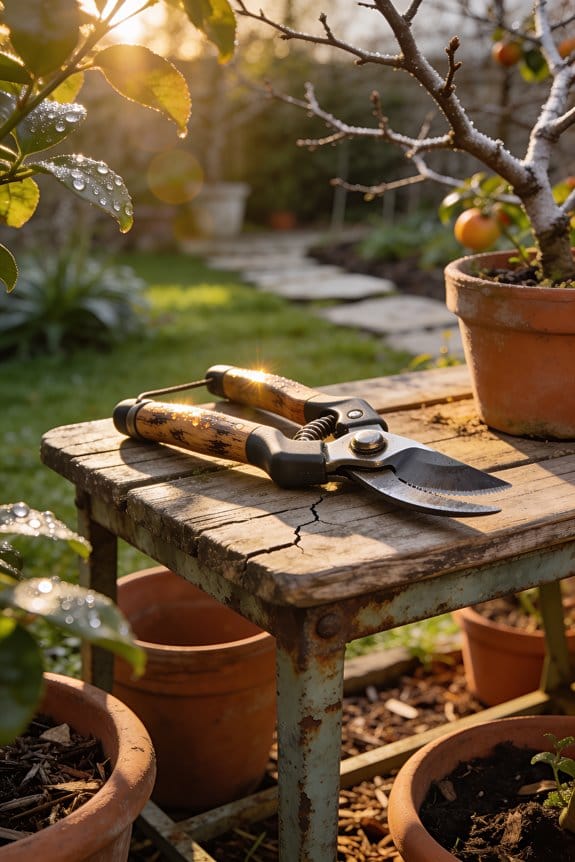


I keep my cutting tools sharp and rust-free through consistent year-round care. I wipe sap off blades after each use with a cloth or turpentine, then dry them completely. I sharpen tools regularly using appropriate sharpeners—ceramic ones for pruners, mill files for larger tools—maintaining proper edge angles. I apply mineral oil to steel surfaces before storage and lubricate pivot points seasonally. For handles, I sand splinters smooth and coat them with boiled linseed oil. Storing tools in dry, ventilated areas prevents rust and damage. Understanding material differences, like carbon steel’s superior edge retention versus stainless steel’s corrosion resistance, helps you choose the best maintenance approach for your specific tools.
Key Takeaways
- Clean cutting tools immediately after use with cloth or turpentine to prevent sap buildup and maintain blade performance.
- Sharpen blades regularly using appropriate sharpeners like ceramic tools or mill files to ensure clean cuts throughout seasons.
- Apply mineral oil coatings to steel surfaces before storage to prevent rust and corrosion during off-seasons.
- Lubricate pivot points seasonally with household oil or specialized lubricants to reduce wear on moving parts.
- Store tools in dry, ventilated areas on wall-mounted racks rather than damp basements to minimize degradation.
Daily Cleaning Prevents Sap on Garden Tools
If you’re working with pruners, hedge shears, or other cutting tools regularly, you’ve probably noticed that sap builds up on the blades and handles, making them sticky and uncomfortable to use. preventive wiping during your work session keeps tools in better condition than waiting until cleanup time.
You may be interested

I wipe my cutting tools with a cloth after each use, and this simple habit prevents sap from hardening on the blades. For tougher buildup, I use turpentine or soapy water to remove stubborn residue. When sap accumulates, it dulls blades faster and creates an unpleasant grip.
After cleaning thoroughly, I make sure sap-free storage by drying tools completely before putting them away. This practice extends tool life markedly and keeps your equipment ready for the next gardening session.
Choose the Right Sharpeners for Your Tools
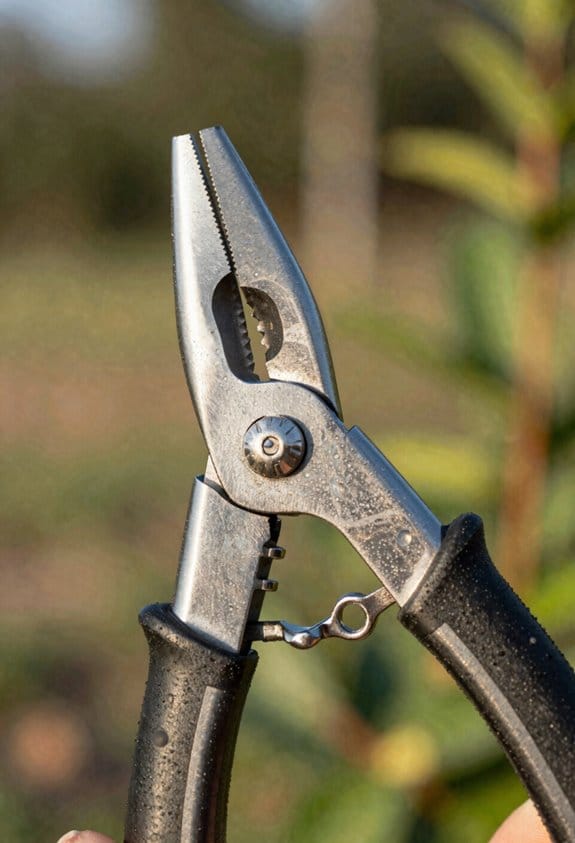
Having sharp blades makes garden work easier and more efficient, which is why selecting the right sharpening tool matters for your toolkit. Consider using carbide or ceramic sharpeners for small cutting tools like pruners, as they’re durable and long-lasting. For larger tools such as shovels and hoes, I use a 10-inch mill file to maintain sharp edges. Diamond wheels work exceptionally well for precision sharpening because they cut through metal quickly without overheating. Ceramic rods offer another excellent option, particularly for maintaining cutting tool blades between major sharpening sessions. Pocket sharpeners provide convenient, portable solutions when you’re working in the garden. I sharpen my blades periodically throughout the season to maintain efficiency, and I perform thorough sharpening during spring maintenance to guarantee peak performance.
Sharpen Cutting Tools Regularly Throughout the Season

Regularly sharpening your cutting tools throughout the growing season keeps your blades efficient and effective for all your gardening tasks. Consider sharpening periodically rather than waiting until tools become dull, since sharp blades cut cleanly and reduce plant stress. Dull blades tear plant tissue, which creates entry points for disease and microbe growth that weakens your plants. When you maintain proper edge geometry—the angle and shape of your blade’s cutting surface—you’ll notice your tools perform better with less effort. Spring is ideal for initial sharpening, but I also sharpen during summer as needed. Using appropriate sharpeners like carbide or stone tools helps you achieve consistent results. This regular maintenance guarantees your cutting tools remain reliable throughout your entire gardening season.
Oil Your Tools Year-Round to Stop Rust

While keeping your cutting tools sharp makes them work better throughout the season, protecting them from rust requires a different kind of maintenance that happens year-round. I apply a light coat of mineral oil to steel surfaces before storing my tools, which creates a protective barrier against moisture and oxidation. Application timing matters substantially—I oil my tools after cleaning them and before winter storage. For pivot points on pruners and shears, I use household oil or specialized lubricants like Boeshield T-9. During summer months, I reapply oil periodically since humidity increases rust risk. Some gardeners dip tools in buckets of sand mixed with motor oil for efficient cleaning and coating simultaneously. This consistent approach prevents rust damage and extends tool lifespan considerably.
Keep Handles Splinter-Free and Gripped Tight

Your garden tool handles deserve attention just as much as the blades they support, since damaged or uncomfortable grips make tasks harder and less safe to perform. I sand wood handles regularly to remove splinters and rough spots that develop from regular use. After sanding, I apply boiled linseed oil in multiple coats until the wood stops absorbing it, which protects and conditions the material. For tools that need extra durability, I use a grit resistant coating spray that reduces wear while improving grip comfort. I also check for loose screws or bolts, tightening them promptly. When handles show cracks or severe damage, I replace them entirely. Ergonomic endcaps on handles provide cushioning and reduce hand fatigue during extended gardening sessions, making your work more comfortable and efficient.
Remove Rust: Steel Wool vs. Evapo-Rust
Rust forms on steel garden tools when moisture causes oxidation, and removing it promptly prevents further damage and extends tool life. I’ve found two effective methods for rust removal: steel wool and Evapo-Rust.
Steel wool works through abrasive blasting, where the rough texture scrapes away rust layers. This manual approach requires elbow grease but costs little and works immediately on light to moderate rust.
Evapo-Rust uses electrochemical removal, a chemical process that converts rust without scrubbing. Simply soak your tools, and the solution does the work. This method suits heavy rust and preserves tool surfaces better than abrasive methods.
Choose steel wool for quick, budget-friendly cleaning or Evapo-Rust for stubborn rust requiring minimal effort. Both restore tools effectively when used properly.
Store Your Garden Tools Dry and Protected
After you’ve cleaned and treated your garden tools, proper storage becomes the final step in protecting your investment. storing tools in a dry environment greatly reduces rust and deterioration. You’ll want to use ventilated storage solutions that allow air circulation, preventing moisture buildup that damages metal and wood components. If possible, consider a space with climate control, which maintains consistent temperature and humidity levels throughout the year. I avoid storing tools in damp basements or sheds where condensation accumulates. Instead, I hang my cutting tools on a wall-mounted rack or store them in a cabinet with adequate ventilation. This approach keeps your tools ready for use while extending their lifespan considerably. Remember, moisture is your tools’ worst enemy during storage periods.
Spring Inspection: Check Sharpness, Handles, and Damage
When spring arrives and you’ve retrieved your tools from their protected storage, it’s time to conduct a thorough inspection before putting them back into regular use. Consider checking sharpness first, since dull blades require more effort and reduce efficiency. Next, examine handles carefully for cracks or splinters that could cause injury. Tighten any loose screws or bolts on blade assemblies. I suggest creating seasonal documentation by noting which tools need sharpening, repair, or replacement. This pre-use calibration guarantees your equipment performs at its best throughout the growing season. If you find rust spots, remove them immediately using steel wool or appropriate rust removers. Address any damage now rather than mid-season, when you’ll need reliable tools most.
Lubricate Pivot Points Each Season
Pivot points on pruners, shears, and other cutting tools require regular lubrication throughout the year to maintain smooth operation and prevent rust buildup at these critical joints. Consider performing seasonal disassembly of your tools to access these areas thoroughly. For lubricant selection, I prefer household oil, greaseless lubricant, or Boeshield T-9, which penetrate joints effectively without attracting dirt. Apply a small amount directly to pivot points where blades connect, then work the tool open and closed several times to distribute the lubricant evenly. This simple maintenance task takes just minutes but markedly extends your tools’ lifespan. By lubricating seasonally—particularly during spring, summer, and fall—you’ll notice smoother cutting action and reduced wear on moving parts.
Carbon Steel vs. Stainless: A Maintenance Trade-Off
Because garden tools require different care depending on their material composition, I’ll explain the key differences between carbon steel and stainless steel options. Carbon steel tools require more maintenance since they’re susceptible to rust, but they offer superior edge retention after heat treatment, making them sharper and more durable for cutting tasks. Stainless steel tools provide excellent corrosion resistance, meaning they resist rust without frequent oiling. However, stainless blades don’t hold edges as well as carbon steel. If you choose carbon steel, you’ll need to apply protective oil coatings regularly and inspect for rust. Stainless steel demands less upkeep but requires more frequent sharpening. Your choice depends on whether you prefer lower maintenance or superior cutting performance.
For a useful next step, clean pruning tools safely, sharpen pruning shears and compare pruning shears. These guides cover the related maintenance or buying decision without changing the task explained here.
Frequently Asked Questions
How Often Should I Inspect My Garden Tools for Damage Before Each Use?
Consider daily checks and pre-use inspections of your garden tools. Before you grab any cutting tool, I’d suggest quickly examining it for damage, wear, or loose parts. This habit guarantees you’re working safely and efficiently every time.
What’s the Best Way to Remove Stuck Dirt From Shovels and Rakes Quickly?
I can blast stuck dirt away with a pressure washer—because apparently my shovels deserve a spa day. For stubborn grime, I’ll soak them in vinegar, then scrub with a wire brush. It’s transformative.
Can I Use Household Oil on All Types of Garden Tool Pivot Points?
Consider using household oil on most pivot points, but I’ve found machine oil and silicone spray work better for precision areas. They’re less likely to attract dirt and provide smoother operation on your cutting tools’ moving parts.
Should I Sharpen My Tools During the Off-Season or Only During Growing Season?
Consider giving your tools their beauty treatment during the off-season. Storage honing ensures they’re ready when growing season arrives. I also perform seasonal sharpening in spring, so they’re always operating at peak efficiency.
How Do I Know When a Tool Handle Needs Replacement Versus Simple Maintenance?
I’d check for visible cracks—that’s your signal for handle replacement. If you’ve only got splinters or roughness affecting grip comfort, I’d sand and oil it instead. Replace when damage compromises safety and function.