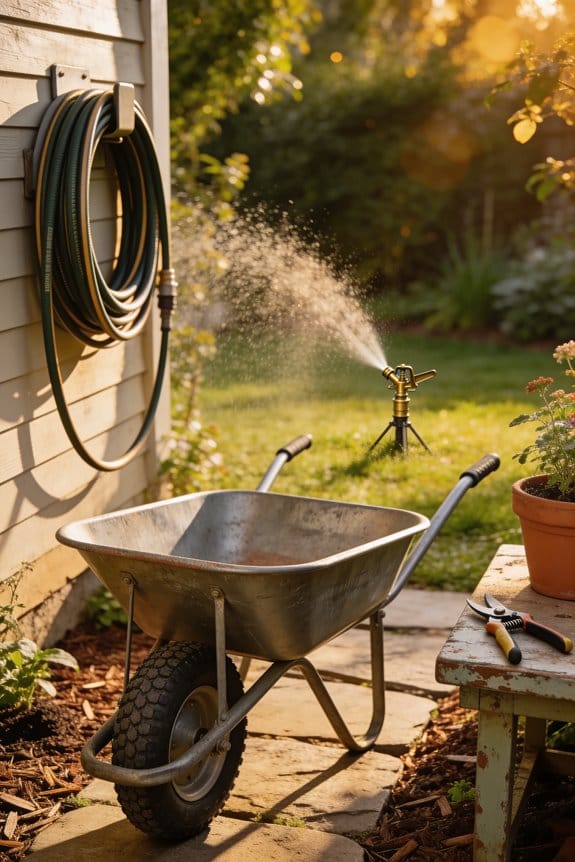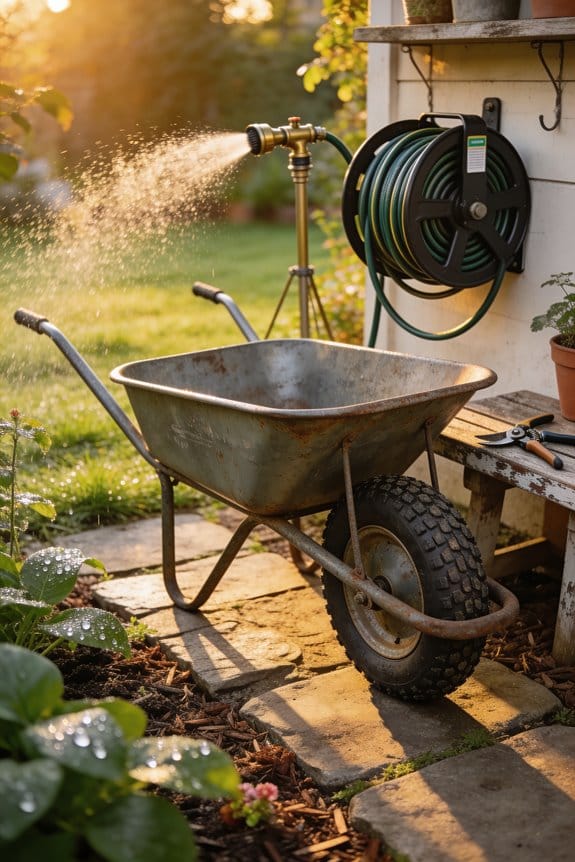


I’ll help you clean and rust-proof your metal wheelbarrow by disassembling it first, then scrubbing away dirt and loose rust with a stiff brush. Next, I’ll sand the surface with medium-grit sandpaper to bare metal, which helps coatings stick better. After that, I’ll apply rust-resistant paint or penetrating oil in thin layers. Finally, I’ll lubricate moving parts and store your wheelbarrow indoors or under a tarp to prevent winter rust. Each step follows a logical sequence that maximizes protection, and the details get more specific as you progress.
Key Takeaways
- Disassemble the wheelbarrow and scrub all parts with a stiff brush to remove dirt and loose rust thoroughly.
- Sand remaining rust with medium-grit sandpaper in circular motions until the metal surface appears dull and uniform.
- Apply rust-resistant paint or protective coating in multiple thin, even coats, allowing drying time between applications.
- Lubricate wheel axles, pivot points, and grease fittings with penetrating oil to prevent corrosion and reduce noise.
- Store the wheelbarrow indoors in a cool, dry place, or cover outdoors with a waterproof tarp when not in use.
Disassemble and Inspect Your Wheelbarrow Before Cleaning
Before you start scrubbing away dirt and rust, you’ll want to disassemble your wheelbarrow into its separate components, which typically include the wheel, handles, and metal basin. Taking your wheelbarrow apart gives you complete access to all surfaces, including areas where dirt and rust hide underneath.
You may be interested

Create a hardware inventory by organizing all bolts, nuts, and screws in a container so you won’t lose them during cleaning. As you disassemble, inspect each piece and check your safety checklist for loose hardware that could cause problems later. Tightened fasteners now prevent paint damage and rust from forming around these connection points. Working in a well-ventilated space with a drop cloth protects your work area while you prepare components for thorough cleaning and rust removal.
Scrub Away Dirt and Loose Rust With Proper Technique

Now that you’ve disassembled your wheelbarrow, it’s time to tackle the dirt and loose rust that’s accumulated on its surfaces. I’ll use a stiff-bristled brush or brass brushwork to scrub away buildup without damaging the underlying metal. For stubborn dirt, I apply gentle detergents mixed with water, which help loosen grime without harsh chemicals. I work methodically across each component, paying special attention to crevices and corners where rust typically forms. After scrubbing, I rinse thoroughly with clean water and dry everything completely. This preparation step is vital because a clean, dull surface is essential before applying any protective treatments. Taking time here guarantees better adhesion of rust-preventative products later.
Sand Rust Down to Bare Metal

Once you’ve scrubbed away the dirt and loose rust, sanding becomes your next critical step to expose bare metal underneath the remaining corrosion. Consider using medium-grit sandpaper, around 80 to 120 grit, to effectively remove rust without gouging the metal surface beneath.
For stubborn, heavily rusted areas, you might consider abrasive blasting techniques, which use pressurized particles to strip rust more aggressively than hand-sanding alone. Alternatively, chemical etching solutions can dissolve rust deposits, preparing the surface for treatment.
As you sand, work in circular motions across affected areas until the metal appears dull and uniform. This creates an ideal surface for paint and protective coatings to adhere properly, preventing future rust formation and extending your wheelbarrow’s lifespan considerably.
Choose Your Rust-Preventative Coating
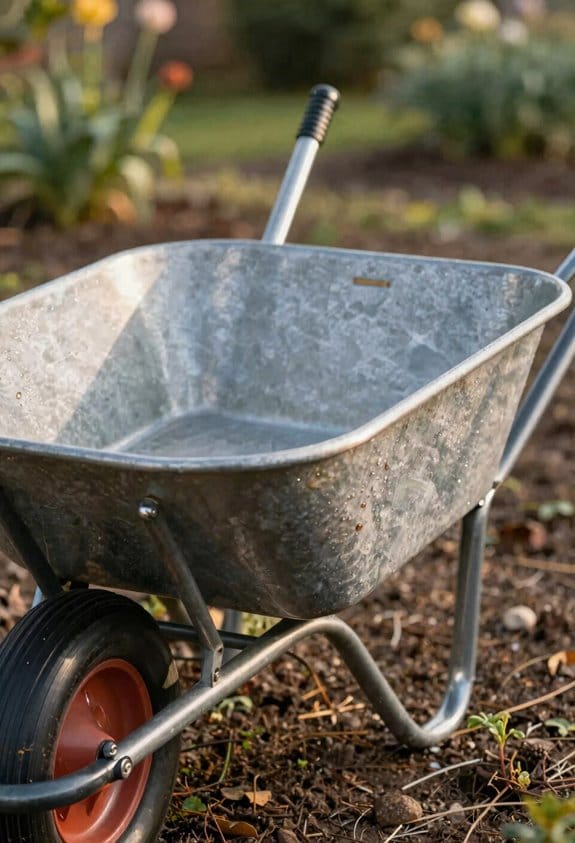
Selecting the right protective coating depends on your wheelbarrow’s condition, your climate, and how often you’ll use the tool. Consider considering three main options. Penetrating lubricant creates a barrier against oxygen and water, making it ideal for regular maintenance. Rust-resistant paint or spray works well for exposed surfaces and comes in various colors. For maximum durability, zinc galvanizing—a zinc coating process—significantly slows corrosion by creating a protective layer that lasts years. Powder coating, applied through electrostatic spray, provides an exceptionally durable finish that resists chipping and wear. I suggest choosing based on your wheelbarrow’s exposure level: lubricant for storage, paint for occasional use, and galvanizing or powder coating for heavy outdoor use.
Apply Rust-Resistant Paint in Thin, Even Layers

Paint application requires careful technique to guarantee even coverage and proper adhesion to your wheelbarrow’s metal surface. Consider shaking your spray paint for one to two minutes before starting, which secures the pigment and solvents mix thoroughly. When you’re ready, hold the can eight to ten inches away and use controlled spraying in sweeping motions across the surface. Apply multiple thin coats rather than one thick layer, as this prevents drips and promotes uniform coverage. Start painting the interior surfaces first, then move to the exterior. Between coats, allow twenty minutes for the paint to dry to the touch. This patience prevents smudging and secures even coats bond properly to the metal, creating a durable protective barrier against rust and corrosion.
Lubricate Moving Parts to Keep Everything Smooth
Regularly applying lubricant to your wheelbarrow’s moving parts is essential for preventing rust and maintaining smooth operation, since moisture and friction are two major causes of metal degradation. Consider using penetrating oils that reduce friction and create a protective barrier against water. Focus on grease fittings, wheel axles, and pivot points where metal surfaces meet. When you apply lubricant consistently, you’ll notice noise reduction during use, which indicates proper lubrication. Avoid heavy cooking oils that leave sticky residue; instead, choose products designed for metal protection. After cleaning your wheelbarrow, reapply oil to all moving components. Regular lubrication prevents corrosion while keeping your wheelbarrow functioning smoothly throughout the season.
Store Your Wheelbarrow to Prevent Winter Rust
When winter arrives, proper storage makes an enormous difference in protecting your wheelbarrow from rust damage during the cold months. I always store my wheelbarrow in a cool, dry place, preferably indoors where humidity stays low. If indoor storage isn’t available, I cover it with a waterproof tarp to shield it from moisture and snow. using moisture monitors helps me track humidity levels in my storage space, ensuring conditions remain ideal. Before storing for the season, I make sure the wheelbarrow is completely rust-proofed and dry. I position it upright, leaning against a wall to prevent water pooling underneath. Using desiccant agents in the storage area further reduces moisture, keeping rust at bay throughout winter months.
For a useful next step, choose between a wheelbarrow and a garden cart and store a wheelbarrow in a small space. These guides cover the related maintenance or buying decision without changing the task explained here.
Frequently Asked Questions
Can I Use Cooking Oil as a Lubricant for My Wheelbarrow’s Moving Parts?
I’d advise against it—cooking oil’s like quicksand for your wheelbarrow. The cooking oil pitfalls include heavy residue buildup and food safety concerns from contamination. Instead, Consider penetrating oils designed for metal maintenance.
How Often Should I Inspect My Wheelbarrow for Early Rust Spots?
Consider doing weekly checks during active use seasons to catch rust early before it spreads. I also perform thorough seasonal inspections when storing your wheelbarrow to make certain it’s rust-proof.
What Is the Difference Between Penetrating Oil and Rust-Preventative Coating?
I’ll cut to the chase: penetrating oil’s a penetrating solvent that seeps into crevices, reducing friction and moisture. A protective coating, though, creates a durable surface barrier. You’d apply oil regularly; coating’s more permanent protection.
Is Galvanizing or Powder Coating More Effective for Long-Term Rust Prevention?
galvanizing’s more effective long-term. Hot dip galvanizing uses sacrificial anodes that protect your wheelbarrow even if the coating scratches. Powder coating’s durable but doesn’t offer that same self-healing protection.
How Long Should I Wait Before Using My Wheelbarrow After Painting?
You’ll want to wait at least 24 hours before using your wheelbarrow after painting. Consider allowing the full cure time to make certain the rust-resistant paint hardens completely. The dry-to-touch time is only 20 minutes, but that’s not sufficient for handling.