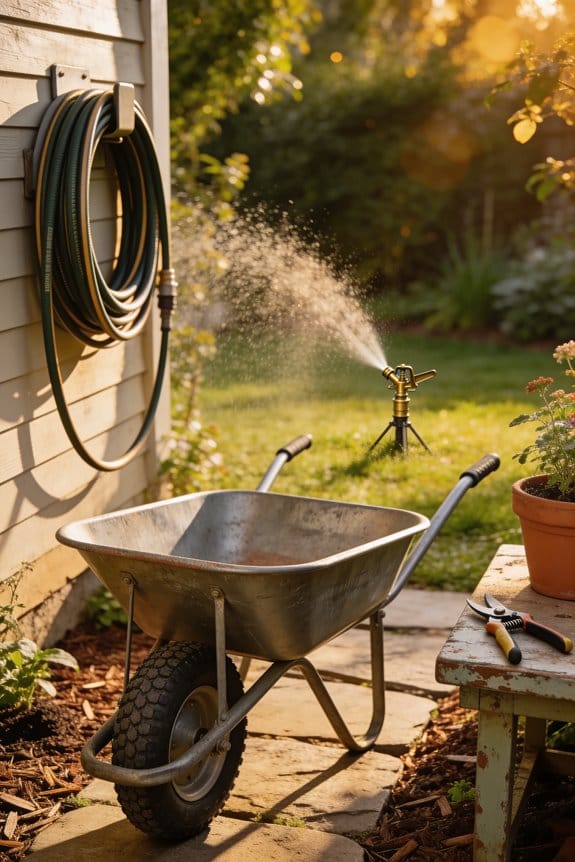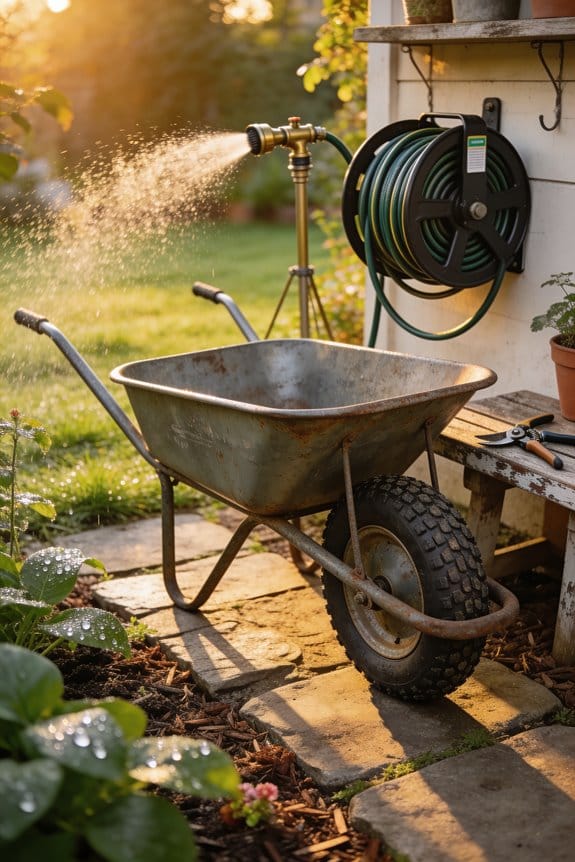


Steel wheelbarrows outlast poly ones because steel’s rigid structure absorbs repeated impacts from rocks and debris without cracking, while poly becomes brittle and fractures easily. Steel’s larger capacity—typically 6 to 7 cubic feet—handles heavier loads more effectively, reducing strain on individual components. Galvanized coatings protect steel from rust, whereas poly deteriorates faster in cold weather. Though steel costs more upfront, it lasts 10+ years with basic maintenance, while poly models fail within 3–5 years under heavy use. Understanding the specific advantages of each material helps you choose the right wheelbarrow.
Key Takeaways
- Steel resists impact damage from rocks and tools better than poly, which cracks under repeated heavy-duty abuse.
- Galvanized steel coatings prevent rust and corrosion, while poly becomes brittle and fails faster in harsh conditions.
- Steel’s reinforced frame distributes heavy loads effectively without bending, maintaining structural integrity through demanding construction work.
- Steel wheelbarrows last 10+ years with maintenance; poly models typically fail within 3–5 years under heavy use.
- Steel’s superior capacity and durability make it cost-effective long-term compared to frequent poly replacement cycles.
Steel Withstands Impact and Abuse That Destroys Poly Tubs
When you’re hauling heavy materials across rough terrain, your wheelbarrow faces constant stress from sharp objects, sudden impacts, and the weight of dense loads. Steel wheelbarrows excel at impact absorption, meaning they can withstand repeated blows from rocks, metal tools, and construction debris without cracking or denting markedly. Their abrasive resistance protects them when transporting rough materials like gravel, cement, or sharp-edged bricks that would damage a poly tub. Unlike plastic models that become brittle and fracture under pressure, steel maintains structural integrity through years of demanding work. This durability difference becomes clear on active construction sites where wheelbarrows encounter constant punishment. You’ll find that steel’s robust construction prevents the costly replacements that plague poly wheelbarrow owners in heavy-duty applications.
Why Larger Capacity Means Steel Lasts Longer

You may be interested



Steel wheelbarrows with greater capacity ratings—typically 6 to 7 cubic feet—distribute heavy loads more effectively across their reinforced frames, which reduces the stress placed on any single component and prevents the structural damage that occurs when you overload a smaller wheelbarrow. This greater volume allows you to transport materials like wet concrete, dense soil, and bricks in fewer trips, minimizing repeated strain on the equipment. The reinforced rims and frame construction handle maximum weight without bending or cracking. When you match the wheelbarrow’s capacity to your actual load requirements, you’re working within its design parameters. Steel’s durability means it withstands years of proper use, whereas undersized poly models fail quickly under comparable conditions.
How Steel Resists Rust While Poly Cracks in Cold Weather

Durability in harsh conditions separates these two wheelbarrow materials in ways that’ll affect how long you can rely on your tool. Steel wheelbarrows resist rust through galvanized coatings and rust inhibitors that protect the metal from moisture and oxidation. When you wipe down your steel wheelbarrow after wet use, you’re preventing corrosion that would otherwise compromise its structure.
Poly wheelbarrows face different challenges in cold weather. They experience thermal brittleness, which means the plastic becomes rigid and prone to cracking when temperatures drop. Freezing conditions make poly increasingly fragile, especially under pressure from heavy loads.
Steel maintains its structural integrity across temperature extremes, while poly deteriorates faster in harsh climates. For long-term reliability, steel’s weather resistance outperforms poly’s vulnerability to environmental stress.
Steel Wheelbarrow Maintenance: What You Actually Need to Do

Now that you understand why steel wheelbarrows outperform poly in harsh conditions, you need to know how to keep that advantage working for you. Regular maintenance is straightforward but essential. After each use, wipe down your wheelbarrow to remove moisture and debris, preventing rust formation. Inspect the tub and frame for damage or corrosion spots. Handle lubrication keeps the wheel turning smoothly, so apply grease monthly to axles and joints. Before seasonal storage, clean thoroughly and apply a protective coat of oil or rust preventative. Store your wheelbarrow in a dry location during winter months. These simple steps extend your steel wheelbarrow’s lifespan markedly, maximizing your investment and ensuring reliable performance for years of heavy-duty work.
Why Steel’s Higher Upfront Cost Saves Money Over 5–10 Years

When you’re shopping for a wheelbarrow, the price tag on a steel model might make you hesitate, especially when a poly wheelbarrow costs markedly less upfront. However, calculating long term ROI reveals why steel saves money. A steel wheelbarrow lasts 10+ years with proper maintenance, while poly models typically fail within 3–5 years under heavy use. When you factor in replacement costs, steel’s lifecycle costs are substantially lower. You’re not just buying one wheelbarrow; you’re investing in durability. Over a decade, replacing multiple poly wheelbarrows costs more than maintaining a single steel model. The initial investment pays dividends through reliability and extended service life, making steel the smarter financial choice for serious work.
Choose Steel for Heavy Loads; Poly Works for Light Yard Tasks
While steel’s long-term financial advantage makes it the best choice for serious construction work, the decision between steel and poly wheelbarrows ultimately depends on what you’re actually hauling. For light gardening tasks like mulch hauling or moving small amounts of soil, a poly wheelbarrow works perfectly fine. Poly models are lighter, easier to maneuver, and don’t require rust maintenance. However, if you’re regularly transporting heavy materials—bricks, cement, or dense loads—steel becomes essential. Steel handles the abuse that poly can’t withstand. Consider your primary use: occasional yard work favors poly’s simplicity, while frequent heavy-duty projects demand steel’s durability and capacity. Match your wheelbarrow choice to your actual workload for the best value.
For a useful next step, choose between a wheelbarrow and a garden cart and store a wheelbarrow in a small space. These guides cover the related maintenance or buying decision without changing the task explained here.
Frequently Asked Questions
Can Steel Wheelbarrows Handle Wet Concrete Better Than Poly Models Long-Term?
Steel wheelbarrows absolutely dominate poly ones for wet concrete—I’m talking night-and-day difference! Steel resists concrete curing’s moisture retention without warping, while poly deteriorates fast under sustained wetness. You’ll notice steel outlasts poly by years.
How Often Should Galvanized Steel Wheelbarrows Be Maintained to Prevent Rust?
Consider seasonal inspections to catch early rust signs and touch up protective coatings as needed. After wet use, wipe down your galvanized wheelbarrow promptly to prevent corrosion buildup and extend its lifespan markedly.
Do Steel Wheelbarrows Provide Better Stability on Uneven or Rocky Terrain?
You’ll find steel wheelbarrows absolutely dominate rocky terrain. I’ve witnessed their superior stability firsthand—their added weight creates an unbeatable wider stance, while traction edges grip uneven ground like nothing else can.
What’s the Typical Lifespan Difference Between Steel and Poly Wheelbarrows?
steel wheelbarrows typically last 10-15 years with proper maintenance, while poly models last 3-5 years. Though steel costs more upfront, its expected lifespan makes it the better cost comparison for heavy-duty work.
Are Two-Wheel Steel Wheelbarrows More Effective for Hauling Dense Materials?
Yes, two-wheel steel wheelbarrows are more effective for dense materials. The dual axle setup improves load balance and cargo stability, while steel’s strength handles heavy weight. Better tire traction keeps you steady on rough terrain.