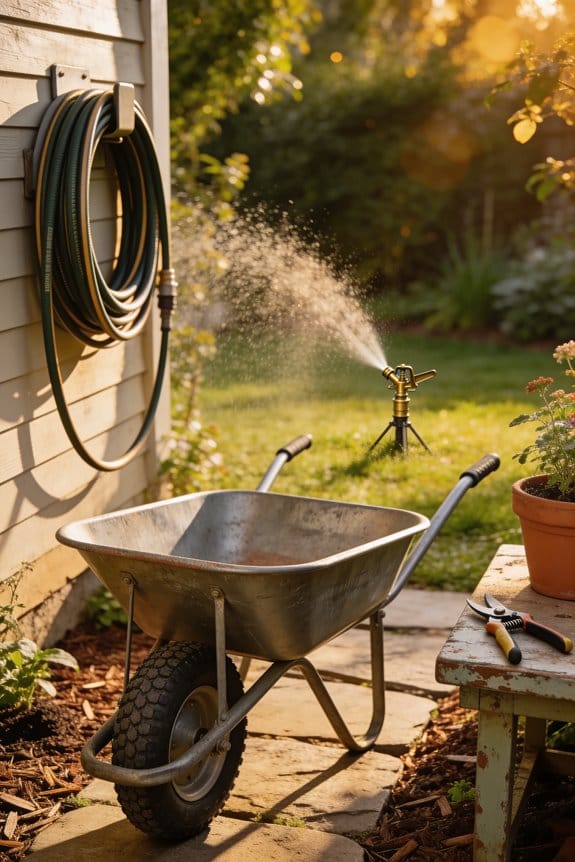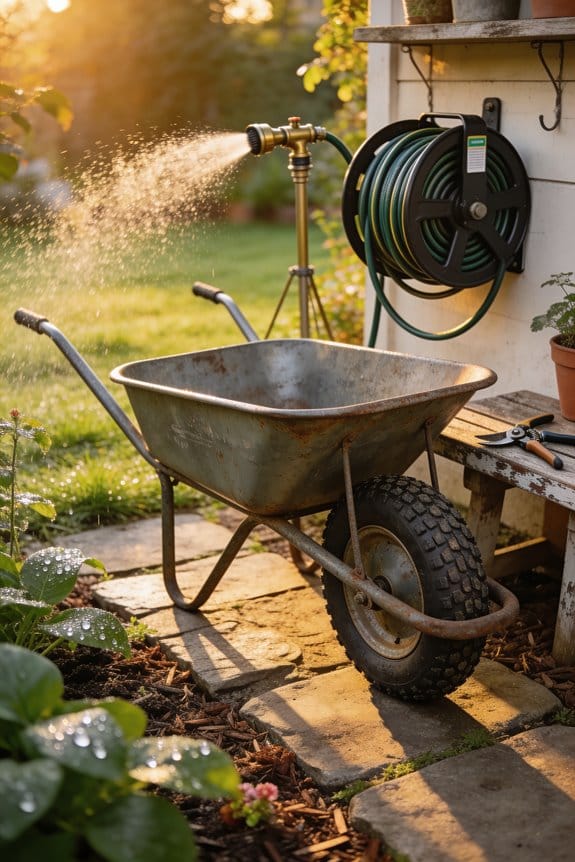


I’d choose between these tools by considering my garden’s layout and physical needs. Wheelbarrows handle tight spaces well but demand upper-body lifting, while garden carts carry heavier loads with less strain across four wheels. If I’m maneuvering narrow pathways, I’d pick a wheelbarrow; for open areas with heavy materials like gravel, a cart makes sense. Cost matters too—wheelbarrows run $50–$150, while carts cost $200–$500. Understanding your specific scenario will reveal which tool truly fits your gardening goals.
Key Takeaways
- Garden carts handle heavier loads (250+ kg) with four-wheel stability; wheelbarrows max 100 kg with tipping risk.
- Wheelbarrows fit narrow pathways and tight spaces; carts suit open gardens with occasional constricted areas.
- Carts reduce physical strain through pulling motions; wheelbarrows demand upper-body lifting causing fatigue.
- Wheelbarrows cost $50–$150 upfront; carts cost $200–$500 but offer longer durability and fewer repairs.
- Assess pathway width, storage space, load capacity needs, and terrain before selecting your tool.
Garden Carts vs. Wheelbarrows: Load Capacity Compared
When you’re deciding between a garden cart and a wheelbarrow, one of the most important differences you’ll notice is how much each one can carry. Garden carts offer markedly higher capacity, holding up to 250 kilograms or more, while wheelbarrows max out around 100 kilograms. This capacity comparison matters because it determines what projects you can tackle efficiently. Garden carts also win on volume limits, accommodating larger overall quantities of materials. Gorilla carts, for example, manage 300 pounds with ease. If you’re hauling heavy loads like gravel bags or multiple plants, a cart’s superior carrying power makes the work easier. Wheelbarrows work better for smaller, more manageable loads when you need flexibility and precision in tighter spaces.
Stability: Which Won’t Tip on Uneven Ground?

You may be interested



Garden carts typically outperform wheelbarrows when it comes to staying upright on uneven terrain, largely because of their four-wheel design versus the wheelbarrow’s single wheel. The four-wheel configuration distributes weight evenly across all support points, dramatically improving wheel stability on rocky or bumpy ground. Wheelbarrows, relying on a single front wheel, concentrate all load pressure in one spot, making them susceptible to tipping when weight shifts unexpectedly. Garden carts feature a lower center of gravity, which further enhances their ability to resist toppling. If you’re working on slopes or uneven surfaces, carts provide superior load tipping prevention. Their pneumatic wheels absorb ground irregularities better than wheelbarrow designs, making them the safer choice for unpredictable terrain conditions.
Tight Spaces: Which Tool Maneuvers Better?

How do wheelbarrows and garden carts compare when you’re maneuvering confined spaces around your yard?
Wheelbarrows excel in tight quarters due to their slim profile and single-wheel design. I’ve found they navigate narrow pathways between raised beds and around shrubs with ease, making them ideal for detailed garden work. Their compact footprint lets you maneuver precisely where larger equipment can’t fit.
Garden carts, while wider, offer impressive turning radius capabilities in tight corners. However, their four-wheel design requires more space than wheelbarrows. The handle ergonomics differ markedly: wheelbarrow handles demand lifting strain, whereas cart handles allow smoother pulling motions.
For congested garden layouts with winding paths and obstacles, wheelbarrows provide superior maneuverability. If you’re working in open areas occasionally encountering tight spots, a cart’s turning ability handles both situations adequately.
Physical Strain: Carts vs. Wheelbarrows

While maneuverability matters when negotiating your garden, the physical demands of hauling materials shouldn’t be overlooked, as this factor substantially impacts which tool suits your needs best. Wheelbarrows demand that you bear significant weight through lifting the handles, which causes muscle fatigue during extended use. Garden carts, conversely, require only pulling motions rather than lifting. This distinction matters considerably if you’re aging or have physical limitations. Carts feature ergonomic handles and distribute weight across four wheels, reducing strain on your back and arms. Wheelbarrows concentrate effort into your upper body, intensifying exhaustion. If you regularly transport heavy loads or want to minimize physical exertion, a cart provides substantial relief from muscle fatigue and promotes safer, more comfortable gardening work.
Real Cost and Durability

Investment in gardening equipment requires careful consideration of upfront expenses and long-term value, as your choice between a wheelbarrow and cart markedly affects your gardening budget over time. Wheelbarrows typically cost less initially, ranging from $50-$150, while garden carts demand higher investment at $200-$500. However, carts often prove more economical long term maintenance-wise. Wheelbarrows require frequent replacement parts, including tires and handles, accumulating costs substantially. Garden carts feature corrosion resistance through better materials and durable construction, extending their lifespan greatly. Additionally, carts maintain stronger resale value when you eventually upgrade. Consider your gardening scale and budget horizon; budget-conscious gardeners appreciate wheelbarrows’ affordability, whereas serious gardeners recognize carts’ superior durability justifies their premium price.
Your Garden Terrain: Carts and Wheelbarrows Matched
Because your garden’s terrain directly influences which equipment performs best, understanding your specific landscape conditions helps you make the right choice between a wheelbarrow and cart. If you’re working on bumpy or uneven ground, Consider a cart with large pneumatic wheels, which bridges holes effectively and handles rough paths without getting flats. For level sites or steep slopes, wheelbarrows work better since they’re easier to control in these conditions. Consider seasonal maintenance needs too—carts excel during winter when frozen ground becomes uneven, while wheelbarrows suit open gardens for spring mulching. Wildlife impact matters as well; carts’ larger wheels prevent soil compaction that attracts burrowing animals, protecting your garden’s ecosystem during regular hauling tasks.
When to Choose a Cart vs. a Wheelbarrow: Side-by-Side Scenarios
Deciding between a cart and a wheelbarrow depends on matching your specific gardening tasks to each tool’s strengths, and breaking down common scenarios helps clarify which one you’ll actually reach for first. For seasonal tasks like spring mulching or fall cleanup, a cart’s high capacity proves invaluable when hauling large volumes. Urban gardening in tight spaces, however, favors a wheelbarrow’s narrow profile for maneuvering between raised beds and pathways. When transporting heavy plants or gravel bags, I choose a cart’s stability and dumping mechanism. For mixing soil or concrete, a wheelbarrow’s lifting motion works better. Consider your garden’s layout, the materials you handle regularly, and your physical comfort level when deciding which tool serves your needs most effectively.
Speed and Ease: Dumping and Unloading Compared
Once you’ve narrowed down which tool matches your garden’s layout and your physical abilities, the way you actually unload materials becomes another practical factor worth considering. Garden carts offer a quick dump mechanism that lets you release loads with minimal effort, simply by pulling a lever or tipping the bed. This controlled release prevents spillage and saves your back from the strain of manual lifting. Wheelbarrows, by contrast, require you to lift the handles and tip the entire barrel forward, which demands significant upper body strength. However, wheelbarrows provide more precise control when you’re unloading into specific spots. If you’re hauling multiple loads throughout your gardening day, the cart’s efficient dumping system reduces fatigue considerably. Consider your strength level and how many trips you’ll make when deciding between these options.
Choose Your Tool: 3 Questions to Decide
After exploring the key differences between wheelbarrows and garden carts, I’ll help you narrow down your choice by asking yourself three straightforward questions that address your specific gardening situation.
First, consider your physical capability and gardener accessibility. Can you comfortably lift and tilt a wheelbarrow, or would pulling a cart reduce strain on your back and arms? Second, evaluate your terrain and storage space. Do you have narrow pathways requiring a wheelbarrow’s slim profile, or open areas where a cart’s stability matters more? Finally, think about seasonal storage. Where will you keep your tool during off-season months—a cramped shed favoring a wheelbarrow, or adequate space for a larger cart?
Answering these questions honestly guides you toward the right choice for your gardening needs.
Next Steps: Buying the Right Tool for Your Needs
Now that you’ve answered the key questions about your needs, you’re ready to make an informed purchase decision by considering a few practical factors before bringing your tool home. First, evaluate the durability and build quality of your chosen option, since these directly affect how long your investment lasts. Next, research seasonal maintenance requirements for whichever tool you select, as some models demand more upkeep than others. Consider the brand’s warranty and customer support options. Finally, think about resale value if you might upgrade later. Compare prices across retailers, read user reviews from gardeners with similar needs, and inspect the tool in person when possible. Taking these steps guarantees you’ll purchase a tool that truly serves your gardening goals.
For a useful next step, store a wheelbarrow in a small space and clean garden tools after use. These guides cover the related maintenance or buying decision without changing the task explained here.
Frequently Asked Questions
Can I Use a Garden Cart on Steep Slopes Safely?
Consider using a wheelbarrow on steep slopes instead. Garden carts lack adequate braking systems and load control for safe steep terrain navigation. Wheelbarrows’ design better suits slopes, preventing dangerous runaway situations.
How Often Do Pneumatic Wheels on Carts Need Maintenance?
I’d suggest giving your cart’s pneumatic wheels a gentle checkup seasonally. You’ll want to monitor tire pressure monthly and make sure valve caps remain secure to prevent slow leaks that’ll compromise performance.
Which Tool Requires Less Storage Space in a Shed?
a folding wheelbarrow takes up less shed space than a garden cart. You can store it vertically or collapse it flat, while carts with their four wheels and larger frame need considerably more room to park.
Are Wheelbarrows Better for Transporting Liquids or Wet Materials?
wheelbarrows aren’t ideal for liquids—their open design challenges spill control and leak prevention. You’ll find carts superior for moisture handling, offering better structural containment and balancing technique to prevent unfortunate accidents.
Do Garden Carts Work Well on Gravel or Unpaved Paths?
garden carts work excellently on gravel or unpaved paths. Their wide treads and low ground pressure prevent sinking, allowing you to navigate rough terrain smoothly without getting bogged down.