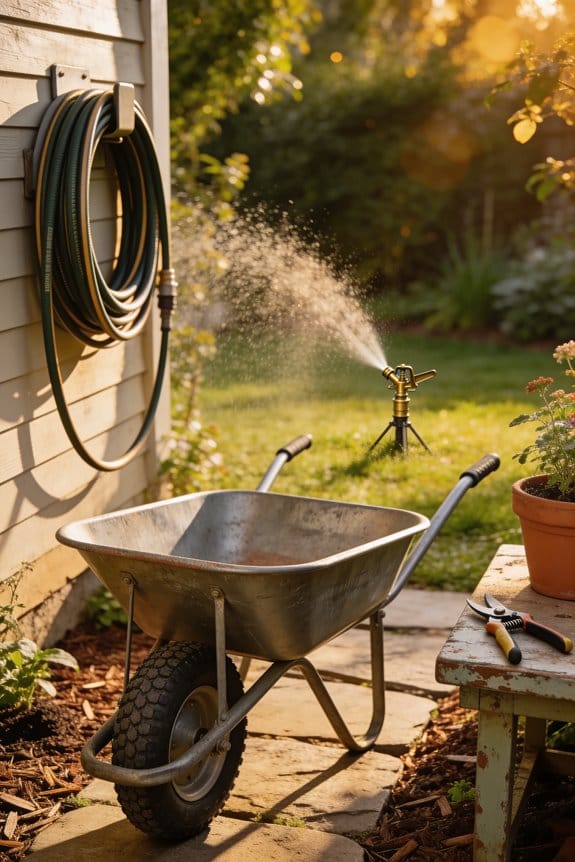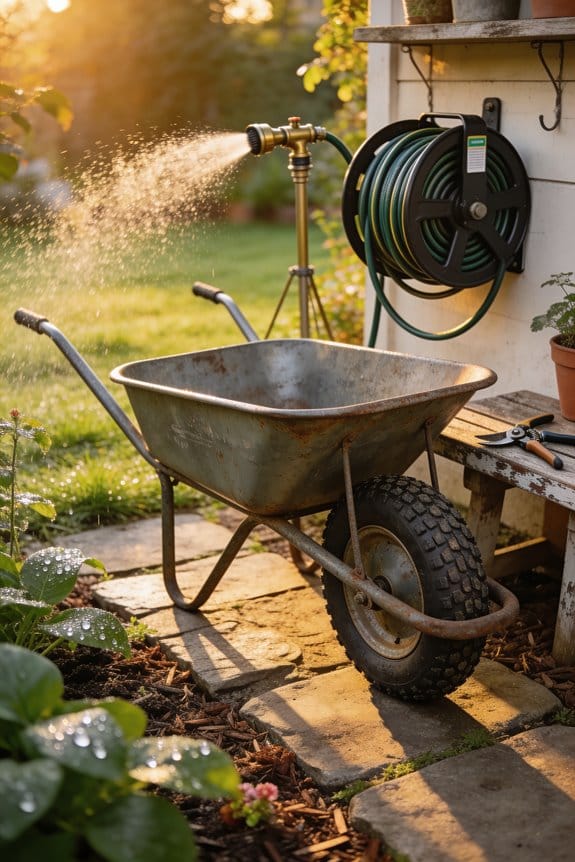


I use garden carts on large properties because they handle 600 to 1,200 pounds of materials, which means fewer trips and less worker fatigue. The dump feature eliminates manual unloading, protecting my team’s backs from injury. Large pneumatic tires provide traction on rough terrain, while expandable frames accommodate different material sizes. By consolidating loads and planning routes strategically, I reduce labor hours and improve productivity markedly. The versatility—switching between mulch transport, sod delivery, and leaf collection—makes one cart replace multiple tools. Understanding how to match cart capacity to your terrain and workflow unleashes substantial efficiency gains on expansive projects.
Key Takeaways
- Heavy-duty carts transport up to 1,000 pounds of materials, reducing trips and worker fatigue on expansive properties.
- Large pneumatic tires provide traction on uneven terrain, while dump features eliminate manual unloading labor.
- Expandable frames (32″–38″) consolidate multiple loads, enabling fewer journeys across yards and fields.
- Ergonomic handles and spacious trays minimize repetitive strain injuries while improving overall productivity and safety.
- Modular designs adapt seasonally for mulch, plants, and leaf collection, maximizing equipment versatility year-round.
Garden Carts for Large Properties: Why Professionals Choose Them
When you’re managing a large property, transporting heavy materials efficiently becomes essential to completing projects on time and without unnecessary physical strain. professional-grade garden carts offer significant advantages over manual carrying methods. These carts handle up to 1,000 pounds of soil, mulch, pavers, and other landscaping materials, reducing the number of trips you’d otherwise need to make. Their expandable frames and dump features streamline workflow considerably. Beyond labor savings, quality carts provide brand loyalty benefits through durability and reliability. Additionally, keeping materials organized in a secure cart minimizes material theft concerns on large properties. Professionals consistently choose these carts because they combine strength, versatility, and efficiency—ultimately improving productivity while protecting your investments and reducing worker fatigue.
Cart Capacity and Load Types: Match Your Material Needs

You may be interested


Since different landscaping projects require different amounts of material, selecting a cart with the right capacity guarantees you’ll transport what you need without overloading or making unnecessary trips.
understanding load distribution is essential when hauling heavy materials like soil, mulch, or rocks. A cart rated for 600 to 1,200 pounds lets me distribute weight evenly across the tray, preventing damage to both the equipment and my property. Material compatibility matters too—knowing which cart features work best for specific loads saves time and effort.
When I’m transporting bulky items like sod or firewood, the removable sides and dump feature become invaluable. The expandable frame, ranging from 32 to 38 inches, accommodates varying material sizes. Choosing the appropriate capacity means I complete projects efficiently while maintaining safety standards throughout the work.
Select the Right Cart Configuration for Your Terrain

Once you’ve determined the right capacity for your materials, the terrain you’ll be working on becomes your next consideration. Different properties demand different cart configurations, and matching your setup to your landscape is essential for safety and efficiency.
If you’re navigating uneven ground or slopes, terrain specific wheelchoices matter greatly. Large pneumatic tires handle rough surfaces better than solid wheels, providing better traction and stability. For steep inclines, slope safebraking features become critical—you’ll want brakes that prevent the cart from rolling downhill unexpectedly.
On flat, maintained paths, you might choose a lightweight configuration. For rocky or bumpy terrain, Consider reinforced frames with wider tire bases. Consider removable sides for accessibility on narrow passages. Evaluating your property’s specific challenges guarantees you’ll select a cart that performs reliably while protecting your materials and yourself.
Reduce Labor Hours and Physical Strain on Site

By choosing a garden cart with adequate capacity and proper design features, you can markedly decrease both the time your team spends on transportation tasks and the physical toll that heavy material handling takes on workers. A spacious tray means fewer trips across your property, which translates to less repetitive movement and reduced fatigue. Ergonomic handles minimize strain on wrists and shoulders during loading and pushing. Task batching—grouping similar materials for transport—allows workers to plan efficient routes and consolidate efforts. The dump feature eliminates manual unloading, protecting backs from injury. By reducing unnecessary physical exertion, you’ll see improved worker productivity, fewer injuries, and lower labor costs on large properties. This strategic approach prioritizes both efficiency and employee wellbeing throughout your landscaping projects.
Transport Heavy Materials Across Expansive Ground

On large properties, the real challenge isn’t just moving materials once—it’s hauling them repeatedly across yards, fields, and uneven terrain where distance multiplies the effort. Garden carts excel at long hauls because their expandable frames—stretching from 32″ to 38″—reduce the number of trips you’ll make. When you’re managing soil batching for landscaping projects, a cart rated for 600 to 1,200 pounds lets you consolidate multiple loads into fewer journeys. The large pneumatic tires navigate bumpy ground without bogging down, while the dump feature enables quick unloading at distant work zones. This efficiency matters tremendously on expansive properties where walking back to your supply pile repeatedly drains time and energy.
Garden Carts Handle Multiple Tasks Without Extra Equipment
Garden carts break down the need for specialized equipment because they transform to handle whatever task your large property demands. modular attachments make this possible, letting me switch between a dump cart for soil delivery and a flat dolly for heavy pavers. The expandable frame adjusts from 32 to 38 inches, adapting to different load types without purchasing separate tools. Seasonal adaptations matter too—I use the same cart for spring mulch spreading, summer plant transport, and fall leaf collection. The removable sides accommodate bulky items, while the dump feature speeds up unloading. This versatility means I’m not investing in multiple pieces of equipment, saving money and storage space while maintaining efficiency across diverse landscaping projects.
Real-World Workflows: Material Transport to Final Placement
When you move materials across a large property, the journey from storage to final placement determines how efficiently your project unfolds. strategic site staging—organizing materials in accessible zones near where they’ll be used—cuts transportation time dramatically. Placement sequencing matters too; you’ll want to move materials in the order they’re needed, preventing unnecessary repositioning. A garden cart’s dump feature and expandable design let you stage soil near planting areas, then move mulch to different zones without backtracking. By planning your material flow before starting, you’ll reduce the total distance traveled and complete projects faster. This workflow approach transforms large property work from chaotic to streamlined, keeping your team productive throughout the day.
For a useful next step, choose between a wheelbarrow and a garden cart, store a wheelbarrow in a small space and compare wheelbarrows. These guides cover the related maintenance or buying decision without changing the task explained here.
Frequently Asked Questions
What Maintenance Is Required to Keep Garden Carts Functioning Properly Long-Term?
I’ll keep your garden cart running smoothly with regular lubrication of wheel bearings and pivot points. You’ll want seasonal storage in a dry location to prevent rust and weather damage, ensuring longevity.
How Do Weather Conditions Affect Cart Performance and Material Transport Efficiency?
extreme temperature effects can make materials harder to load, while wet conditions reduce traction on slopes. Storm damage to your cart’s tires and frame directly impacts how efficiently you’ll transport heavy loads across properties.
Are Garden Carts Suitable for Transporting Delicate Plants or Sensitive Materials?
Consider using plant cushioning materials when transporting delicate specimens. The spacious tray lets you arrange plants safely, and you can provide shade transport by positioning items strategically to protect sensitive foliage from direct sun exposure.
What Safety Protocols Should Professionals Follow When Operating Loaded Carts?
Consider you wear goggles to protect your eyes and always secure loads properly before moving. Check your terrain carefully, maintain steady speeds on uneven ground, and never overload beyond capacity limits for safe operation.
How Does Cart Investment Cost Compare to Hiring Additional Labor Annually?
a cart’s initial investment pays for itself within one season through labor savings alone. When I factor in equipment depreciation over five years, hiring additional workers annually costs materially more than owning reliable equipment.