

I use pruners to cut faded flowers just above the first set of healthy leaves beneath spent blooms, which redirects the plant’s energy toward new flowers instead of seed production. This interrupts the reproductive cycle and encourages additional bloom rounds throughout the season. I make clean cuts at leaf nodes to maintain plant structure and prevent unsightly stubs. Timing matters too—deadheading early and consistently during peak bloom produces the most vigorous reblooming response. Understanding plant-specific techniques will help you maximize your garden’s color potential.
Key Takeaways
- Use pruners for large flowers with woody stems like coneflowers and roses requiring sturdy, clean cuts.
- Cut just above the first healthy leaf set beneath spent blooms to encourage new growth.
- Avoid cutting too low or leaving long stubs to prevent plant weakness and unsightly appearance.
- Deadhead early during peak bloom for maximum reblooming response and extended seasonal color throughout year.
- Make proper cuts at leaf nodes to redirect plant energy toward producing additional flowers instead seeds.
Why Deadheading Matters: More Blooms for Longer
When you remove faded flowers from your plants, you’re effectively telling them to keep producing new blooms instead of making seeds. This works because of pollination biology—once flowers are pollinated and begin developing seeds, the plant’s focus shifts away from blooming. By deadheading, you interrupt this natural cycle and redirect the plant’s energy toward growth and flowering. Your plant reallocates nutrients that would’ve gone into seed production, channeling them into creating more flowers instead. This nutrient allocation strategy means your garden stays vibrant longer. Early deadheading encourages second and third blooming rounds throughout the season. You’ll notice plants flower more prolifically when you remove spent blossoms consistently. The result: gardens that maintain their colorful appearance from spring through fall with minimal effort on your part.
Pick Your Tool: Pruners, Snips, or Shears?

You may be interested

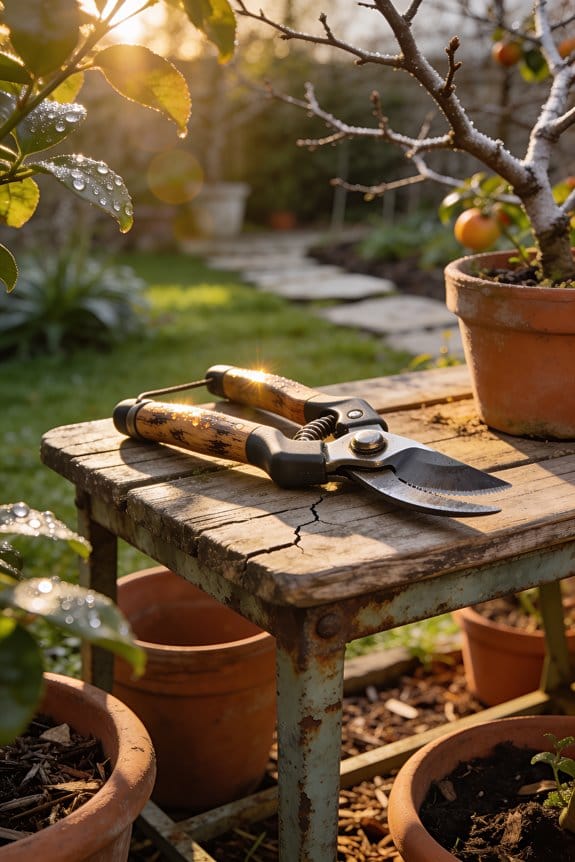
Selecting the right tool for deadheading makes the job easier and better for your plants, since different flowers have different stem textures and thicknesses that require specific equipment. Consider using pruners for large flowers like coneflowers and roses, which have woody stems needing sturdy cutting technique. For delicate plants with thin stalks, I find snips or scissors work best because they provide precision without crushing tissue. Hedge clippers suit plants with masses of flowers, like lavender and thyme, allowing me to cover large areas quickly. Garden tools should match your plant’s needs—secateurs handle tough, stringy stems, while your fingers work perfectly for soft-stemmed perennials. Choosing appropriate equipment prevents plant damage and promotes healthier regrowth.
Where Exactly to Cut: And What Happens if You Don’t

Now that you’ve picked the right tool for your plant’s needs, knowing exactly where to cut makes all the difference in how your flowers respond. Consider cutting just above the first set of healthy leaves beneath the spent bloom. This prevents stem scars and encourages new growth from that leaf node. If you cut too low or leave long stubs, you’ll create unsightly damage that weakens the plant. More importantly, improper cuts allow seed dispersal to continue, signaling your plant that its reproductive job is complete. When you cut correctly at the leaf node, you redirect the plant’s energy toward producing more flowers instead. For spike flowers like delphiniums, prune the entire stalk to ground level once blooming finishes, maximizing second-bloom potential.
Pinch vs. Prune: Which Deadheading Method Works Best?

Two primary deadheading techniques—pinching and pruning—offer different advantages depending on your plant type and the results you’re seeking. Pinching uses your finger strength to remove faded flowers directly between your thumb and fingers, working best on soft-stemmed perennials like marigolds and petunias. This method requires minimal tools and precision. Pruning, conversely, employs cutting tools like secateurs or snips for thicker stems and woody plants. I find pinching ideal when I want quick removal without equipment, while pruning suits tougher plants needing clean cuts. Some gardeners who are seed savers prefer pruning because it allows more controlled cuts above leaf nodes, ensuring plant structure remains intact while maximizing regrowth potential.
Deadhead Roses, Lavender, Delphiniums: Plant-by-Plant Guide

Each of these popular garden plants responds differently to deadheading, so understanding their individual needs will help you maximize blooms and maintain healthy growth.
For rose pruning, cut above the first leaf below the flower, not the full set of five leaves. This promotes vigorous new growth and encourages more blooms throughout the season.
Lavender shearing requires a different approach. Once the flowers fade, cut back the top few inches or one-third of the plant to encourage a second flush of blooms and fuller recovery.
Delphinium staking and care involves cutting the entire stalk to ground level after flowering ends. This technique enables bloom succession, triggering a second round of flowers in fall. Pinch individual flowers on flower heads before pruning the whole plant for best results.
The Shearing Shortcut for Masses of Small Flowers
When you’re faced with plants that produce hundreds of tiny flowers clustered together, like lavender, thyme, or ground phlox, traditional deadheading methods can take up considerable time and effort. Mass shearing offers a practical solution that saves you hours of work while achieving excellent results.
Instead of pinching individual flowers, use hedge clippers to cut back the top few inches of your plant, or trim up to one-third of its total height. This technique works best when you shear after most blooms have faded. For edge shaping, cut the plant’s outer perimeter uniformly, which maintains a neat appearance while removing spent flowers and encouraging fuller regrowth.
This method suits plants where flowers shoot above their foliage, ensuring you remove only old blooms without damaging leaves.
Timing Matters: When to Deadhead for Maximum Reblooming
Timing your deadheading efforts greatly impacts how many times your flowers will bloom throughout the growing season, so I’ll explain the key principles that guide this gardening practice. Early deadheading during the plant’s peak blooming phase encourages the most vigorous reblooming response. When you remove spent flowers before they form seeds, the plant redirects its energy into producing new buds instead of completing its reproductive cycle. Seasonal timing matters appreciably—deadheading in mid-summer often triggers second and third bloom cycles before fall arrives. watching for bud scales beneath faded flowers helps identify plants ready for another flowering round. Remove blooms promptly when they fade, and you’ll maximize your garden’s color throughout the entire growing season.
Troubleshoot: Why Your Plants Aren’t Reflowering
Sometimes I notice that gardeners follow proper deadheading techniques but still don’t see their plants producing new flowers, which can be frustrating when you’ve invested time and effort into the practice. Several underlying issues might prevent reblooming. A nutrient deficiency, particularly in phosphorus or potassium, reduces flowering capacity even with correct deadheading. Root compaction restricts water and nutrient absorption, limiting energy for new blooms. Insufficient sunlight also inhibits flower production since most blooming plants require six to eight hours daily. Additionally, inconsistent watering stresses plants, while late-season deadheading may not allow enough time for new flowers before frost arrives. Check soil drainage and fertility first, then evaluate your plant’s light exposure and watering schedule to identify what’s preventing those secondary blooms you’re expecting.
For a useful next step, clean pruning tools safely, sharpen pruning shears and compare pruning shears. These guides cover the related maintenance or buying decision without changing the task explained here.
Frequently Asked Questions
Can I Deadhead Flowers While They’re Still Wet From Rain or Morning Dew?
Consider waiting until flowers dry. Wet pruning increases disease risk because moisture spreads pathogens between cuts. Timing considerations matter—deadhead in morning after dew evaporates or afternoon for healthier plants.
What Should I Do With Diseased or Pest-Infested Flowers When Deadheading?
Like a gardener’s Pandora’s box, I’d isolate plants showing disease or pests before deadheading. I dispose carefully of affected flowers separately—never composting them—to prevent spreading problems throughout my garden.
How Often Should I Deadhead the Same Plant During the Growing Season?
Consider deadheading weekly during active bloom cycles, adjusting based on your plant’s frequency guidelines. Early, consistent removal encourages prolonged flowering throughout the growing season, so you’ll see better results with regular attention.
Is Deadheading Necessary for Annual Flowers Versus Perennial Plants?
deadheading’s vital for annuals like marigolds and petunias—it’s essential annual maintenance that keeps them blooming all season. For perennials, the perennial benefits include extended flowering, though it’s less critical for their survival.
Can Deadheading Spread Diseases Between Plants if I Don’t Sanitize Tools?
Yes, unsanitized tools can cause pathogen transfer between plants during deadheading. Consider cleaning your pruners between cuts, especially when moving between different plants, to prevent spreading diseases.