

I’ll match your shears to branch size—hand pruners work for branches under three-quarters inch, while lopping shears handle thicker growth. When cutting, I make forty-five-degree diagonal cuts positioned a quarter inch from buds, slanting away to prevent rot. I position the entire branch fully within the shears before closing to avoid crushing. Keeping my blades sharp at a twenty-two-point-five-degree angle and cleaning them with isopropyl alcohol after each use guarantees clean cuts that heal properly. The specific techniques that’ll transform your pruning success await ahead.
Key Takeaways
- Make 45-degree diagonal cuts positioned 1/4 inch from buds to prevent rot and disease.
- Use hand pruners for branches under 3/4 inch and lopping shears for larger branches.
- Position the entire branch within shears before closing to prevent crushing and tearing.
- Cut just above outward-facing shoots to encourage healthy, open growth structure.
- Avoid over-pruning and prune during dormancy or active growth depending on plant species.
Choose the Right Pruning Shear for Your Branch Size
Selecting the correct pruning shear for your job isn’t just about convenience—it’s essential for keeping your plants healthy and making your work easier. Consider matching your tool to branch thickness. Hand pruners work well for branches under 3/4 inch diameter, while lopping shears handle branches from 3/4 to 1.5 inches. For thicker, woody branches, ratchet pruners cut in stages, reducing hand strain markedly. When choosing your shears, consider blade selection carefully—bypass pruners offer clean scissor action with overlapping curved blades, while anvil pruners cut against a flat surface. Ergonomic handles matter too; they reduce fatigue during extended pruning sessions. Using the wrong tool risks plant damage and unnecessary effort. investing in quality shears with proper blade selection and ergonomic handles makes pruning more efficient and protective of your plants’ health.
Master Four Essential Cutting Techniques
You may be interested



Once you’ve selected your shears, mastering the proper cutting techniques will transform your pruning results and protect your plants from unnecessary damage. angle consistency matters greatly for plant health. You’ll want to make 45-degree diagonal cuts when propagating, positioning them away from nodes. For regular pruning, cut just above outward-facing young shoots to encourage open growth structure. Cut timing is equally important—always position the entire branch fully within your shears before closing them. This prevents crushing and tearing. Make cuts approximately 1/4 inch from buds, slanting the blade away to prevent rot and disease. Look for V-shaped areas on plants when making precision shaping cuts. These fundamental techniques assure clean wounds that heal properly.
Avoid Mistakes That Damage Plants and Waste Effort
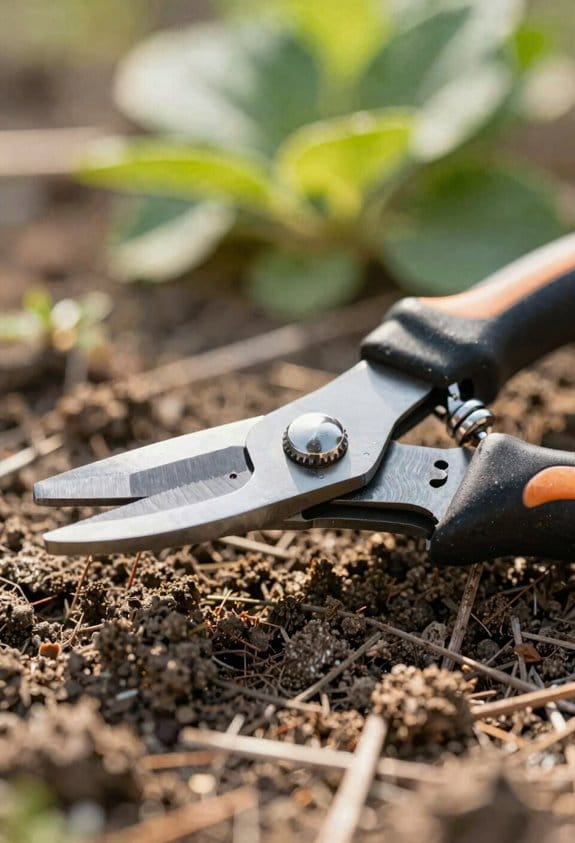
As you develop your pruning skills, recognizing common pitfalls will help you protect your plants and work more efficiently. Over pruning risks weakening your plants and stunting their growth, so prune only what’s necessary. Incorrect timing causes stress; prune during dormancy or active growth, depending on your plant species. Don’t force cuts with excessive pressure on bypass shears, as this can damage the mechanism and slip dangerously. Avoid using hand pruners on thick branches, which leads to crushing rather than clean cuts. Never cut too close to buds, risking permanent damage to growth points. Skip flat cuts that collect water, promoting rot and disease. Finally, assess your plant’s structure before cutting to make certain balanced, healthy pruning that supports long-term plant vigor.
Keep Your Shears Sharp and Ready
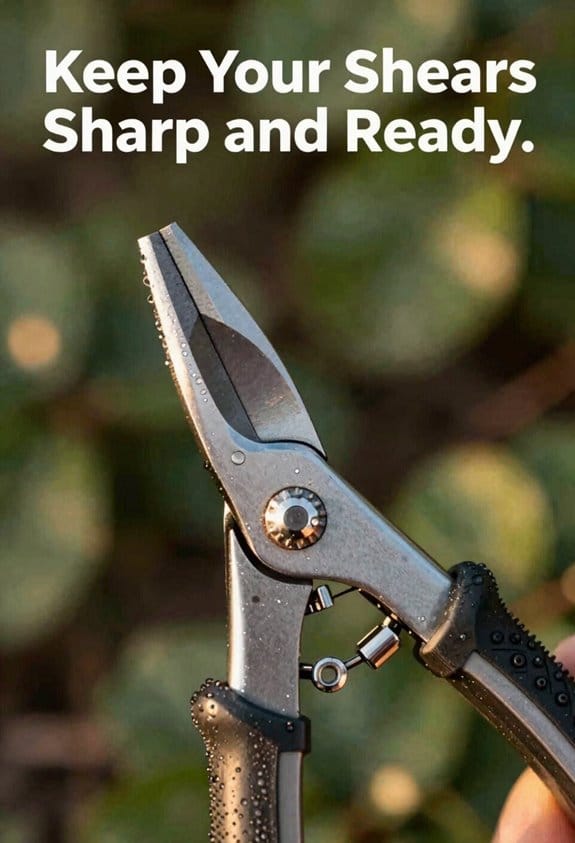
Sharp pruning shears consistently deliver cleaner cuts, reduce the effort you’ll need to apply, and minimize damage to your plants’ tissues. I maintain my shears by sharpening the sloped blade side at a 22.5-degree angle using a fine file, employing smooth strokes across the entire edge. After sharpening, I deburr the flat side once to make certain precision. Regular cleaning with isopropyl alcohol removes plant debris that accumulates during use. I apply steel polish occasionally to maintain blade condition and prevent oxidation. For storage, I keep my shears in a location with controlled storage humidity, ideally between 40-50 percent, preventing rust formation. This routine maintenance makes certain my pruning shears remain effective, safe, and reliable for consistent gardening tasks.
Clean and Maintain Your Tools After Every Use
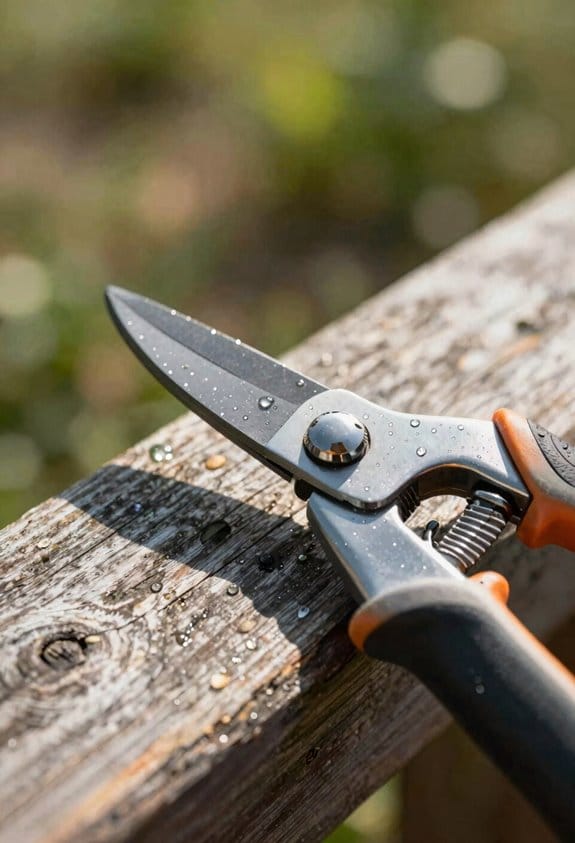
Every time I finish pruning, I clean my shears thoroughly to keep them functioning properly and prevent rust or disease transmission between plants. I wipe the blades with isopropyl alcohol or a clean rag immediately after use, removing any sap or debris that could cause corrosion. For heavily contaminated shears, I dip them in a bleach solution for about thirty minutes, then rinse and dry completely. I also sanitize handles with the same alcohol solution to eliminate bacteria. After cleaning, I apply a light coat of oil to protect against rust, and I replace parts like springs or worn handles when necessary. Storing my tools in a clean, dry location makes certain they’ll remain reliable for years of successful pruning.
Upgrade to Lopping Shears and Ratchet Pruners for Thicker Branches
When your hand pruners reach their limits on thicker branches, it’s time to contemplate upgrading to specialized tools designed for heavier cutting tasks. Lopping shears work well for branches between 3/4 to 1.5 inches in diameter, offering long handled leverage that reduces strain on your hands and wrists. Their extended reach also allows you to access higher branches safely. Ratchet pruners provide an excellent alternative for particularly tough, woody branches, using a mechanical advantage system that cuts in stages. Both tools feature ergonomic grips designed to distribute pressure evenly, making the cutting process less exhausting. By selecting the appropriate tool for your branch size, you’ll achieve cleaner cuts and protect both your plants and your body from unnecessary damage and fatigue.
For a useful next step, clean pruning tools safely, sharpen pruning shears and compare pruning shears. These guides cover the related maintenance or buying decision without changing the task explained here.
Frequently Asked Questions
How Often Should I Sharpen My Pruning Shears for Optimal Cutting Performance?
Consider sharpening your pruning shears every season or whenever you notice they’re cutting less cleanly. Regular seasonal maintenance keeps your blades sharp, minimizing plant damage and reducing the effort needed for each cut markedly.
What Is the Best Way to Store Pruning Shears During Winter Months?
While summer demands constant pruning, I’d store mine in a clean, dry storage spot away from moisture. I’d wrap them with insulating wrap to shield metal from winter’s harsh elements and prevent rust damage effectively.
Can I Use the Same Pruning Shears on Diseased Plants Without Spreading Infection?
You shouldn’t use the same pruning shears on diseased plants without sanitizing tools between cuts. Consider you quarantine pruning shears after treating infected plants, then disinfect them with isopropyl alcohol or bleach solution to prevent spreading infection.
How Do I Know When My Pruning Shears Are Too Dull to Use Safely?
I’d know my pruning shears are too dull when I’m making uneven cuts or notice blunted blades crushing branches instead of slicing cleanly. If I’m applying excessive pressure, it’s time to sharpen them.
What Should I Do if My Pruning Shears Become Stuck on a Branch?
If my pruning shears get stuck, I’ll release the safety mechanism and gently wiggle the branch while applying branch lubrication to free it. I’ll never force the shears closed, as this damages both the tool and plant.