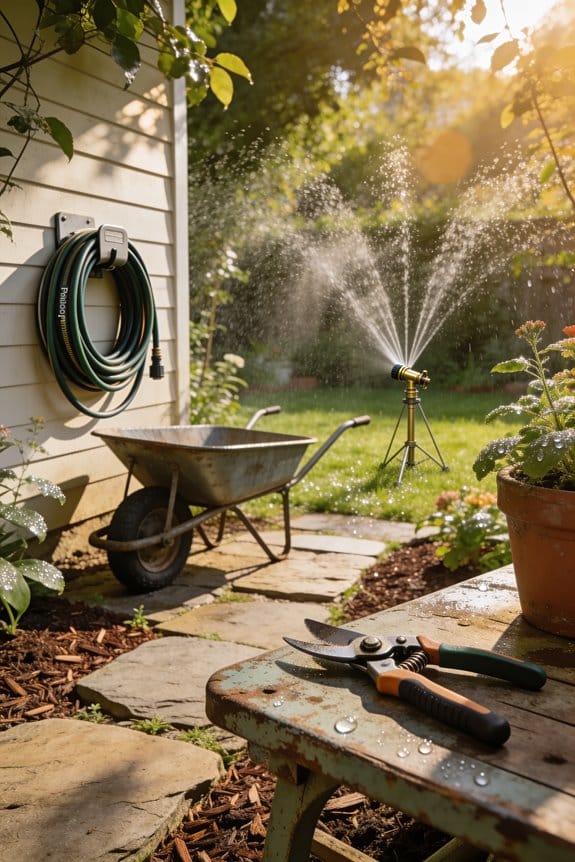

properly sized garden tools help kids work safely and build real skills. When you match tool dimensions to your child’s height and strength, they gain better control and reduce injury risk. Lightweight materials like recycled plastic reduce fatigue while maintaining durability. From age three through elementary school, tool sizes progress from 36-inch shovels to 46-inch handles as kids grow. Tasks like seed sorting, watering, and harvesting develop fine motor skills and responsibility. Understanding which tools work best for each age opens deeper insights into fostering confident young gardeners.
Key Takeaways
- Match tool sizes to children’s ages and physical abilities: 36-inch tools for ages 3–5, 26-inch for early elementary, 46-inch for later elementary students.
- Select lightweight, durable tools made from recycled plastic with ergonomic handles to reduce strain and improve control during gardening activities.
- Teach proper techniques: correct grip positions, safe carrying with handles pointing downward, and supervised independence that increases gradually as skills improve.
- Assign age-appropriate tasks like seed sorting, watering plants, harvesting root vegetables, and raking leaves to build motor skills and responsibility.
- Store tools in designated secured areas and invest in adaptable designs with adjustable handles and reinforced joints for long-term durability and safety.
Why Size and Weight Matter
When you’re picking out garden tools for kids, you’ll want to zero in on size and weight, because these two factors directly affect whether a child can actually use the tool safely and effectively. A tool that’s too heavy causes fatigue and poor control, increasing injury risk. Conversely, oversized handles make gripping difficult, compromising stability and balance.
You may be interested


Growth ergonomics matter markedly during childhood development. Tools designed with proper proportions—like 26-inch handles for younger children and 46-inch for older elementary students—match their physical capabilities at each stage. Tool balance is equally critical; well-balanced implements require less muscular effort, allowing kids to work longer without exhaustion.
Lightweight, durable materials from recycled plastic reduce strain while maintaining functionality. When tools fit a child’s frame appropriately, they can develop proper technique, build confidence, and safely accomplish genuine gardening tasks.
Picking the Right Garden Tools for Your Child’s Age
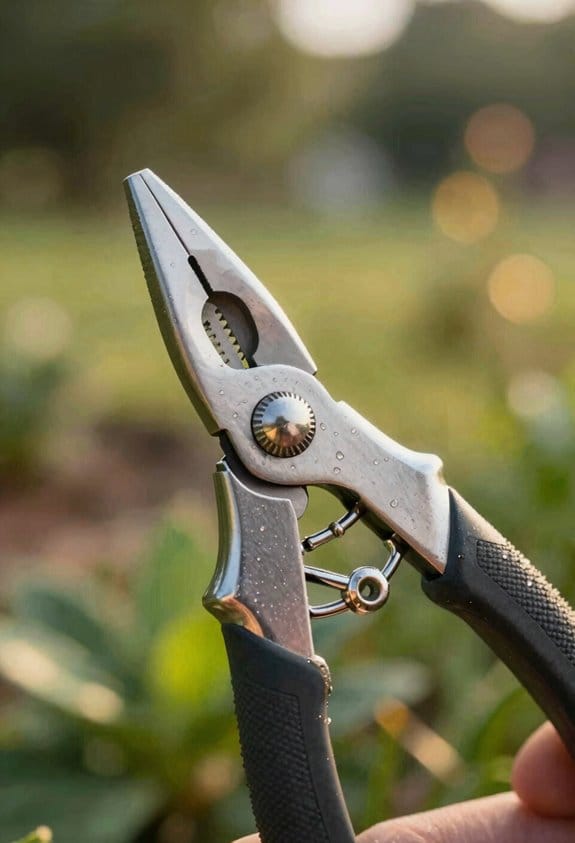
Your child’s age determines which tools will work best in the garden, because children at different developmental stages have varying heights, hand sizes, and physical strength. For ages 3-5, Consider 36-inch shovels, 33-inch hoes, and 31-inch rakes that match their smaller frames. As children progress through early elementary, tool sizing shifts to 26-inch handles for better control and coordination. By later elementary years, 46-inch tools become appropriate as developmental milestones bring increased height and strength.
I select tools based on matching your child’s current abilities rather than their age alone. Lightweight, single-piece construction prevents injury during learning phases. Ergonomic handles designed for small hands reduce strain and encourage proper technique. When you choose age-appropriate tools, your child develops confidence while building gardening skills safely and effectively.
Essential Garden Tools Every Young Gardener Needs
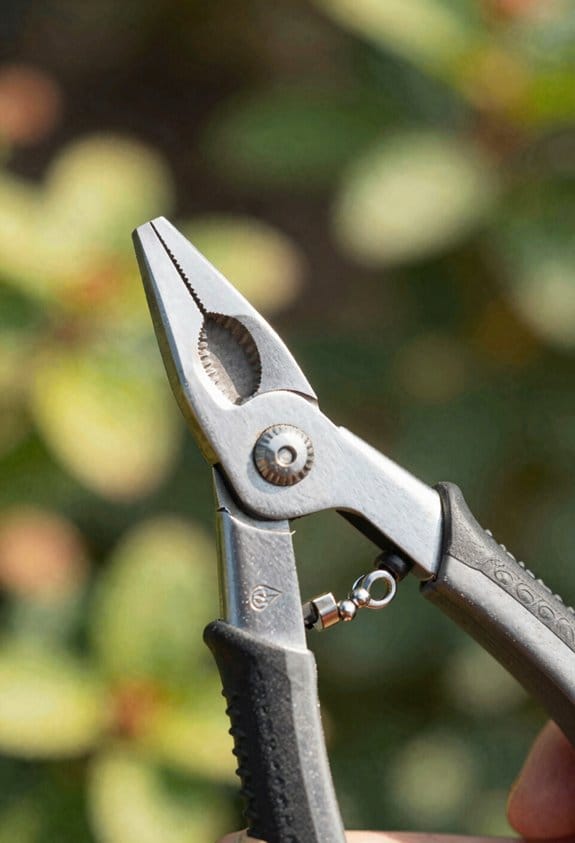
Once you’ve matched tools to your child’s size and strength, the next step involves understanding which specific tools will help them accomplish actual gardening tasks. Consider starting with kid-sized rakes for weeding and loosening soil, garden trowels made from recycled plastic for digging, and watering cans with gentle showers for delicate plants. Handheld cultivators work well for soil preparation, while short-handle shovels suit younger gardeners. Consider seasonal tools appropriate for different times of year, and incorporate sensory gardening opportunities where children touch soil, observe textures, and feel plants growing. These fundamental tools enable kids to participate meaningfully in planting, harvesting, and maintaining garden beds while developing confidence and connection to nature.
Safe Garden Tool Techniques for Young Hands

Because children’s hands are still developing strength and coordination, teaching proper tool techniques prevents injuries and builds confidence in the garden. Start with glove fitting, ensuring they’re snug but not restrictive, allowing full finger mobility. Demonstrate correct grip positions for each tool, emphasizing control over force. Establish supervision routines where you observe their work initially, then gradually increase independence as skills improve. Teach them to carry tools safely, pointing handles downward and away from their body. Proper tool storage prevents accidents; create designated areas where sharp or heavy equipment stays secured and organized. Consider helmet fitting if they’re working near raised beds or structures. These foundational practices transform gardening into a safe, enjoyable experience where young gardeners develop responsibility and competence.
Real Tasks Kids Can Master With Proper Tools
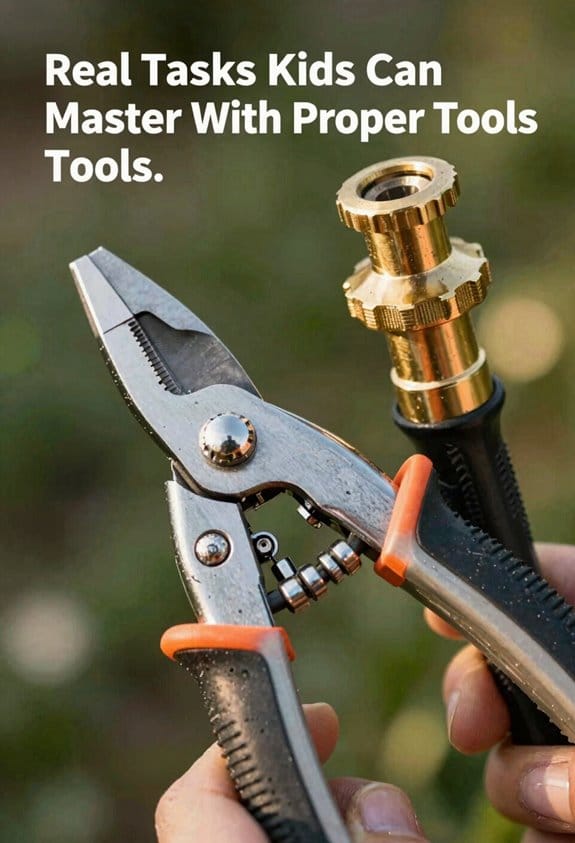
With safe techniques in place, children are ready to tackle genuine gardening responsibilities that match their physical abilities and skill levels. Kids can master seed sorting, organizing seeds by size and type before planting, which develops fine motor skills and attention to detail. Younger children enjoy watering herbs and small plants using appropriately sized watering cans with gentle showers. As they grow stronger, they can progress to beet harvesting, gently pulling root vegetables from loosened soil using handheld cultivators for soil prep. Raking leaves and fluffing mulch build strength while preparing garden beds. These tasks provide genuine contributions to the garden while building confidence, teaching responsibility, and fostering connection to growing plants and producing food.
Tools Built to Last (and Adapt as Kids Grow)
Investing in quality garden tools means your child can use the same equipment for years, growing alongside their developing skills and strength. Tools with lifetime adaptability feature adjustable handles or modular designs that extend as children grow taller and stronger. Growth friendly materials like durable, non-toxic recycled plastic withstand increased use without degrading, while single-piece construction prevents breakage during heavy gardening tasks. Rather than replacing worn tools annually, you’ll find that well-made implements serve multiple children or adapt across different gardening seasons. This approach reduces waste and saves money long-term. When selecting tools, prioritize those built for durability with reinforced joints and sturdy metal components. Such investments transform gardening into a consistent activity your child can enjoy throughout childhood.
For a useful next step, choose essential garden tools. These guides cover the related maintenance or buying decision without changing the task explained here.
Frequently Asked Questions
What Materials Are Used in Kid-Sized Garden Tools, and Are They Safe?
kid-sized garden tools use plastic handles, stainless steel components, rubber grips, and wooden shafts. They’re completely safe—made from non-toxic, recycled materials with ergonomic designs that fit little hands perfectly while preventing injury.
How Can I Teach My Child Proper Garden Tool Safety and Technique?
I’ll teach you proper garden tool safety like it’s the most important lesson on Earth. I supervise constantly, demonstrating correct grip and stance. I emphasize tool etiquette—respect each tool’s purpose, store safely, and never run with implements.
Which Brands Offer the Best Quality Children’s Garden Tool Sets?
Consider Fiskars Kids and Roots & Shoots for quality children’s garden sets. Both brands prioritize durability and safety with age-appropriate designs. They’re also great for teaching proper technique through ergonomic handles.
What Additional Protective Equipment Should Children Wear While Gardening?
you’ve got to keep your eyes peeled when gearing up kids for gardening. They’ll need gloves, kneeling pads, sun protection like hats and sunscreen, insect repellent, and closed-toe shoes for safety.
Can Garden Tools Help Children With Physical Development and Strength Building?
Absolutely. using garden tools builds your child’s motor skills and core strength as they dig, rake, and lift. The repetitive motions develop coordination while handling weighted tools strengthens their muscles naturally.