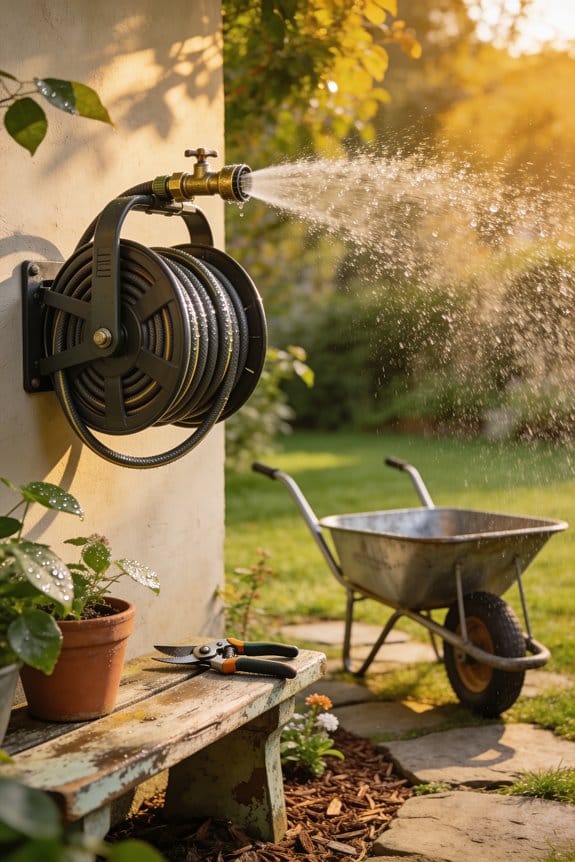

Hard soil makes weeds tough to remove, but you’ve got several chemical-free options. Start by loosening compacted earth with a fork to access deep roots, then pull weeds when soil’s moist—they’ll come out easier. You can also solarize by covering soil with clear plastic during hot weeks to kill weed seeds and roots. For lasting results, add mulch, compost, and organic matter to build healthier soil that naturally resists weeds. The most effective approach combines multiple tactics throughout seasons.
Key Takeaways
- Loosen compacted soil with forks or tined tools to break hardpan and ease weed extraction from deep roots.
- Pull weeds after rain or watering when soil is moist; grasp at base and pull slowly at an angle.
- Layer cardboard beneath mulch on hard soil, then add compost and topsoil to build loose, fertile beds gradually.
- Cover moist soil with clear plastic during hottest weeks to solarize and kill weeds and seeds naturally.
- Remove entire taproots of perennial weeds using leverage tools to prevent regrowth in compacted earth.
Thick Mulch Layers: Your First Line of Defense
When I’m tackling stubborn weeds, a thick mulch layer is one of the most effective defenses I can use, and here’s why: mulch works by creating a physical barrier that prevents weed seeds from reaching the soil and sprouting. I typically apply organic mulch, which offers dual benefits—it suppresses weeds while nourishing soil organisms that improve soil structure over time.
You may be interested



The thickness matters markedly. I spread mulch three to four inches deep, ensuring complete coverage without gaps where weeds might emerge. This depth also provides excellent moisture retention, reducing how often I need to water during dry periods.
For stubborn weeds in hard soil, I layer cardboard beneath the mulch, adding extra protection. I reapply mulch seasonally to maintain effectiveness, creating organic pathways for beneficial microbes while keeping my garden weed-free.
Pull Weeds by Hand When Soil Is Moist
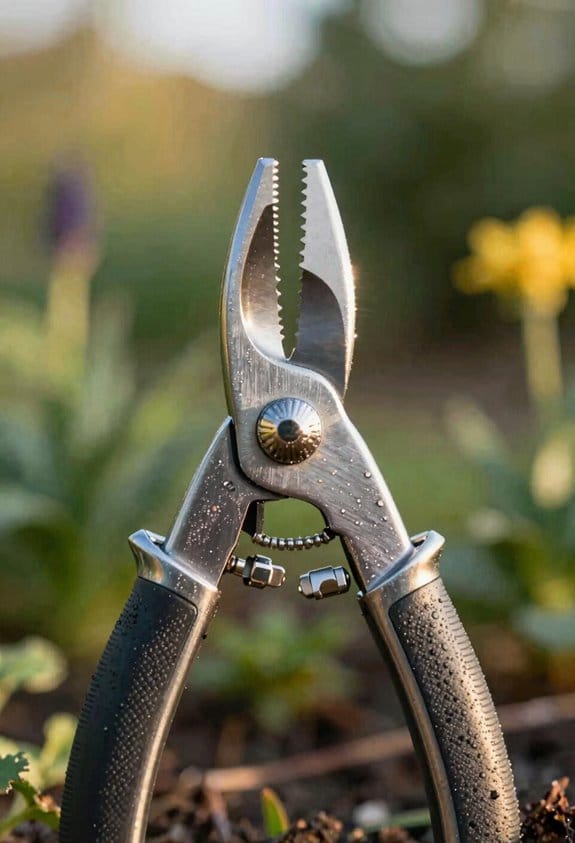
I’ve consistently found that manual pulling works best immediately after rain or watering, when soil moisture softens the ground and loosens the grip around weed roots. Early morning sessions prove particularly effective, as the soil retains overnight moisture and weeds haven’t yet wilted under heat.
When you pull weeds from moist soil, you’re more likely to extract the entire root depth rather than snapping off the stem. This matters because broken roots regrow quickly. Grasp the weed firmly at its base and pull slowly at an angle, allowing the root to slide free gradually.
Target young weeds before they establish deep root systems. After pulling, fill any holes with mulch to prevent new weeds from colonizing exposed soil. Repeat pulling cycles every two weeks combined with your mulch layer for maximum control.
Heat Out Weeds With Plastic Sheeting
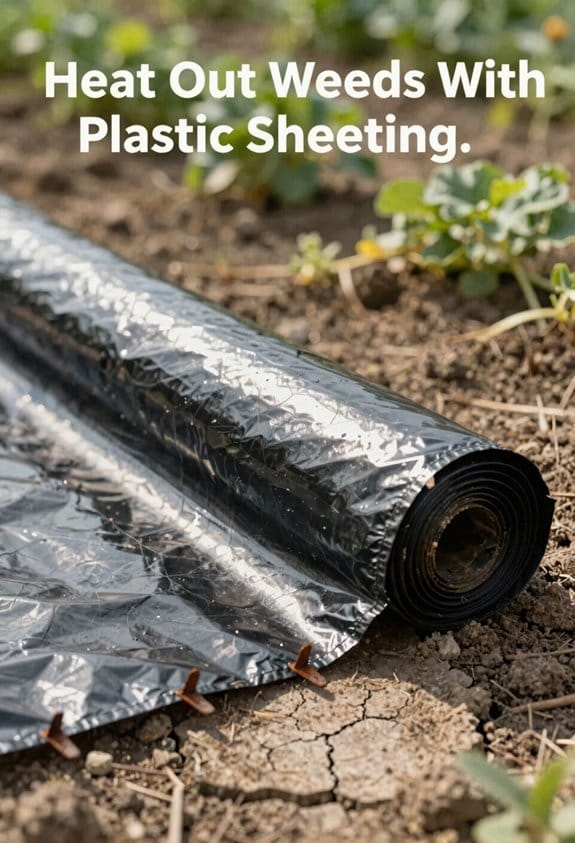
While hand-pulling removes existing weeds effectively, a more thorough approach involves using the sun’s heat to eliminate weed seeds and seedlings before they sprout. This technique, called solarization, harnesses ground heat trapped beneath clear plastic sheeting to kill weeds naturally.
Consider covering moist soil with clear plastic, typically 1-4 mil thickness, during your region’s hottest weeks. Bury or weigh down the plastic edges with bricks or blocks, creating a tight seal that traps heat beneath the surface. The intense temperature kills weed seeds, seedlings, and even some soil pests in the top layers.
For best results, mow weeds short beforehand to speed the process. After several weeks, remove the plastic and add compost to restore beneficial soil organisms before planting.
Sheet Mulching to Smother Stubborn Weeds
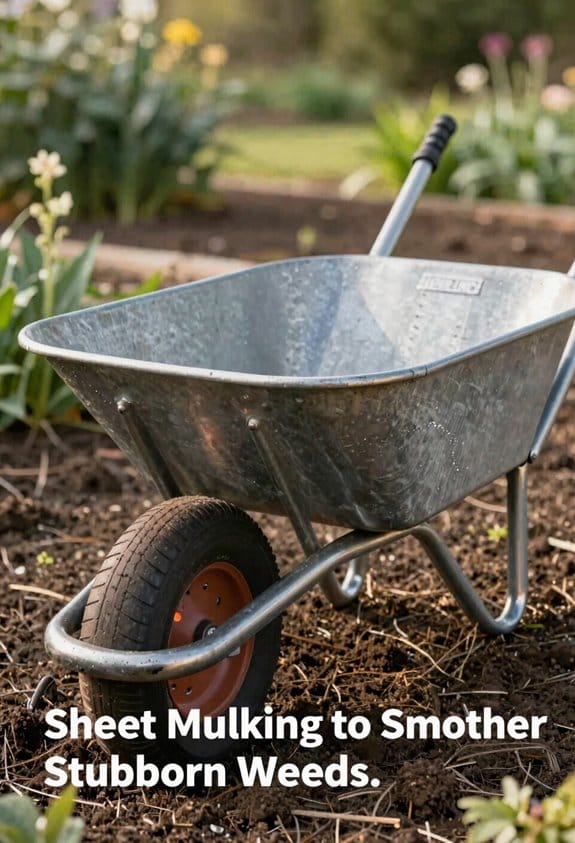
Layering cardboard directly over existing weeds offers an effective alternative to tilling hard, compacted soil, since the cardboard blocks sunlight and oxygen that weeds need to survive. Consider cardboard layering as your foundation, overlapping sheets by at least six inches to prevent weeds from pushing through gaps. Once cardboard is secured, I top it with compost, topsoil, and mulch to create nutrient-rich planting beds. You can also establish wood chip paths between planted areas, which further suppresses weed growth while improving soil drainage. This no-till approach avoids disturbing hard earth, saving labor and effort. By repeating this process annually, you’ll gradually build loose, fertile soil while naturally eliminating stubborn weeds without chemicals.
Build Better Soil to Stop Weeds Naturally
Improving your soil quality creates an environment where desirable plants thrive while weeds struggle to compete, making it one of the most effective long-term strategies for weed control. Consider adding worm castings at twenty pounds per thousand square feet to revive depleted soil. You’ll also want to incorporate beneficial soil microbes that enhance nutrient uptake, particularly in hard-packed areas. Testing and adjusting your soil pH guarantees peak plant health while reducing weed competition naturally. Mixing in compost creates a nutrient-rich environment that inhibits weed growth while feeding soil organisms directly. These improvements work together to establish strong plant growth that naturally outcompetes weeds, reducing your reliance on manual removal methods over time.
Dense Planting and Cover Crops to Crowd Out Weeds
Once your soil is revitalized and rich with nutrients, you can leverage another powerful strategy: using dense planting patterns and cover crops to physically crowd out weeds. When you plant crops closely together in rows or grids, you’re limiting the space and resources available for weeds to thrive. succession planting—rotating plantings throughout the season—keeps your beds consistently full, leaving minimal bare soil where weeds could establish themselves.
Cover crops, sometimes called living mulch, serve double duty by filling gaps between plants while suppressing weed germination. These aggressive companion plants outcompete weeds for light and nutrients. By maintaining dense planting patterns and incorporating cover crops strategically, you’re effectively creating an environment where weeds can’t compete, making chemical control unnecessary.
Which Hard Soil Method Works Fastest?
Since you’re dealing with stubborn weeds in hard, compacted soil, you’ll want to know which removal strategy delivers results most quickly. Rapid tillage combined with immediate mulching offers the fastest approach, loosening soil while preparing beds for protective layers. Solarization works efficiently too, though it requires patience—typically four to six weeks of hot weather to kill weed seeds and roots. No-till sheet mulching progresses more slowly initially but eliminates future tillage labor. Manual removal speeds up markedly after rain when soil softens. For chemical alternatives that work quickly without synthetic herbicides, consider combining rapid tillage with organic mulch application. This hybrid method addresses immediate weed problems while building soil health, making it practical for gardeners seeking both speed and sustainability in stubborn growing conditions.
Combining Mulch and Manual Removal for Best Results
While rapid tillage and solarization each have their advantages, the most sustainable approach combines mulch and manual removal, creating a two-part strategy that addresses weeds at different stages of growth. mulch integration works best when paired with hand-pulling because it tackles prevention while manual methods handle existing problem weeds.
First, I pull young weeds when soil is moist, focusing on complete root extraction to prevent regrowth. Then, I apply thick organic mulch over the prepared area, which suppresses new weed seeds from germinating. This combination leverages both immediate weed control and long-term prevention. By repeating this cycle seasonally, I maintain bare soil minimization without disturbing hard soil structure, creating lasting results that improve soil health simultaneously.
Seasonal Maintenance to Keep Weeds Away
The effort you invest in removing stubborn weeds pays dividends only if you maintain your progress throughout the year, because seasonal changes bring new challenges to weed control. reapplying mulch seasonally prevents regrowth without disturbing hard soil. Spring requires vigilant irrigation scheduling to support your desirable plants while avoiding excess moisture that encourages weeds. Summer demands frequent mulch replenishment as organic materials decompose. During seasonal pruning of companion plants, I remove dead growth that could harbor weed seeds. Fall preparation involves adding fresh compost and cover crops to fill bare spaces where weeds establish. Winter mulching protects soil structure in cold climates. Consistent maintenance cycles, combined with these seasonal adjustments, keep your beds weed-free and healthy year-round.
For a useful next step, prepare garden soil with hand tools. These guides cover the related maintenance or buying decision without changing the task explained here.
Frequently Asked Questions
How Much Worm Castings Should I Add to Revive Hard, Compacted Soil?
Consider applying worm castings at 20 pounds per 1,000 square feet to revive your compacted soil. I suggest starting with pot trials to test this application rate on your specific soil before scaling up the full treatment.
What Type of Organic Mulch Best Nourishes Soil Organisms in Hard Ground?
Consider combining leaf mulch with compost tea applications. Leaf mulch breaks down gradually, feeding soil organisms while compost tea introduces beneficial microbes directly. Together, they’ll revitalize your hard ground’s biological activity most effectively.
How Does Soil pH Testing Help Reduce Weed Competition in Hard Soil?
when I test my soil pH, I can identify nutrient imbalances that weeds exploit. By adjusting pH through soil testing, I create ideal conditions where desirable plants thrive, naturally outcompeting weeds for resources.
When Is the Optimal Season to Perform Solarization on Hard Soil?
You’ll want to catch that window when it’s too late to stop them—late summer’s your best bet, though early spring works if you’re patient. I’d choose the hottest months for fastest results.
How Can Beneficial Microbes Improve Nutrient Uptake in Compacted, Hard Soil?
I’ll incorporate beneficial microbes through microbial inoculants that establish mycorrhizal symbiosis with your plants. This fungal network breaks down compacted soil while expanding nutrient availability, dramatically improving absorption in hard ground conditions.