

When you’re preparing a new garden bed, Consider digging based on what you’re planting. Shallow-rooted plants like herbs and lettuce need just 6 inches, while medium-rooted vegetables such as carrots and beans require 12–18 inches. Deep-rooted crops like tomatoes and squash need 18 inches or deeper. The best approach is double-digging about 24 inches to loosen compacted soil and improve drainage. Loosening subsoil with a fork encourages roots to penetrate deeper, which strengthens your plants’ nutrient absorption and water access. Understanding these specific depths for your crops will transform your garden’s foundation.
Key Takeaways
- Double-dig approximately 24 inches deep to loosen compacted soil and improve aeration, drainage, and root penetration.
- Shallow-rooted plants like herbs and lettuce need 6-inch beds; medium-rooted crops require 12–18 inches.
- Deep-rooted vegetables such as tomatoes, cucumbers, and squash require 18 inches or deeper for optimal growth.
- Break up subsoil with a trench fork without removing it, then work amendments into the top 6 inches.
- Assess soil compaction and drainage before digging; remove rocks and debris to prevent root obstructions.
Why Garden Bed Depth Matters for Plant Success
Consider how plant roots work beneath the soil, and you’ll quickly understand why garden bed depth isn’t just a detail to overlook. Different plants require varying depths to thrive, and shallow beds restrict root development, limiting nutrient and water absorption. When you dig deeper, you create space for roots to expand without root competition, which occurs when multiple plants struggle for the same resources in confined spaces. Deeper beds also create beneficial microclimate effects, maintaining more stable soil temperatures and moisture levels throughout seasons. Tomatoes, for instance, need 18 inches minimum, while herbs require only 6 inches. Understanding your plants’ specific needs prevents stunted growth and poor yields. Proper bed depth directly determines whether your garden succeeds or struggles, making this preparation step essential for any gardener.
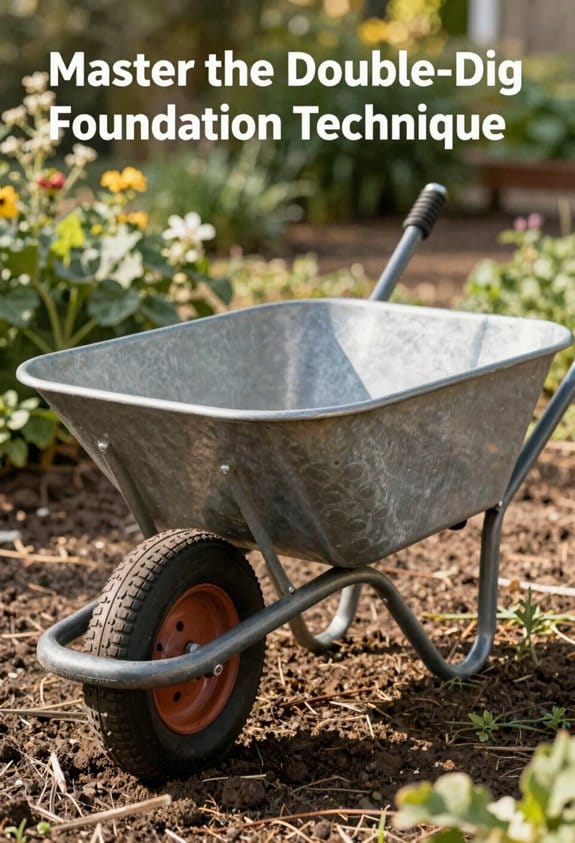
Master the Double-Dig Foundation Technique
You may be interested
Because you’ve now learned why depth matters for plant roots, it’s time to build a strong foundation for your garden bed through double-digging. This technique involves digging down approximately 24 inches, which loosens compacted soil and improves soil aeration throughout your bed. Start by removing the top layer of soil, then use a trench fork to break up the subsoil beneath without fully removing it. Work amendments into the top 6 inches as you progress. This method enhances drainage, encourages deeper root penetration, and creates an ideal growing environment. By investing time in proper double-digging now, you’ll establish excellent conditions that benefit your plants’ long-term success and overall garden productivity.
Shallow-Rooted Plants: 6-Inch Beds
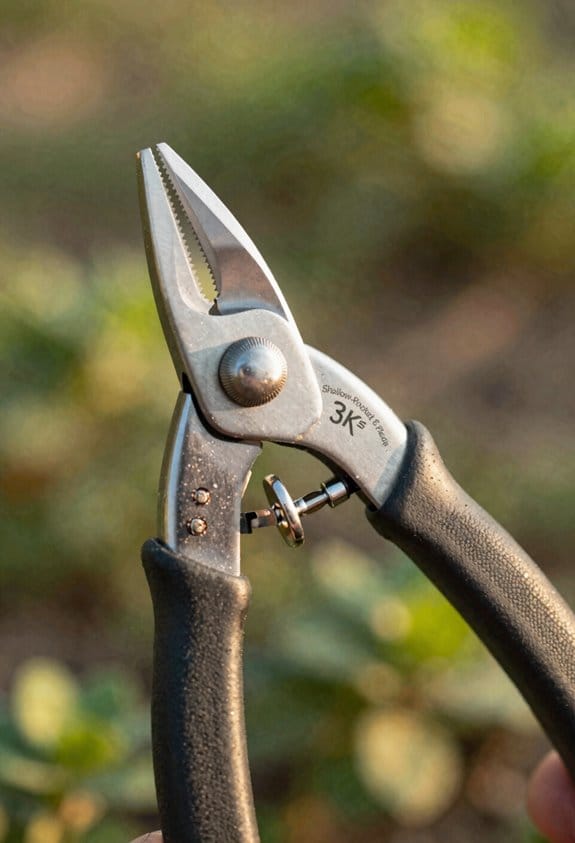
Several common garden vegetables thrive in shallow beds that measure just six inches deep, making them ideal choices if you’re working with limited space or want to establish a quick-growing garden. Herbs, lettuce, and spinach all flourish in this minimal depth, requiring less soil and preparation time. When planning herb spacing, position plants according to their mature width to guarantee adequate air circulation and sunlight exposure. Container herbs work particularly well in shallow beds, since their root systems adapt to confined environments. You’ll find that spinach suits 6-8 inches deep, giving you slight flexibility. These shallow-rooted plants are perfect for beginners because they demand less digging effort during ground preparation, allowing you to create productive garden space efficiently.
Medium-Rooted Plants: 12-18 Inches Deep
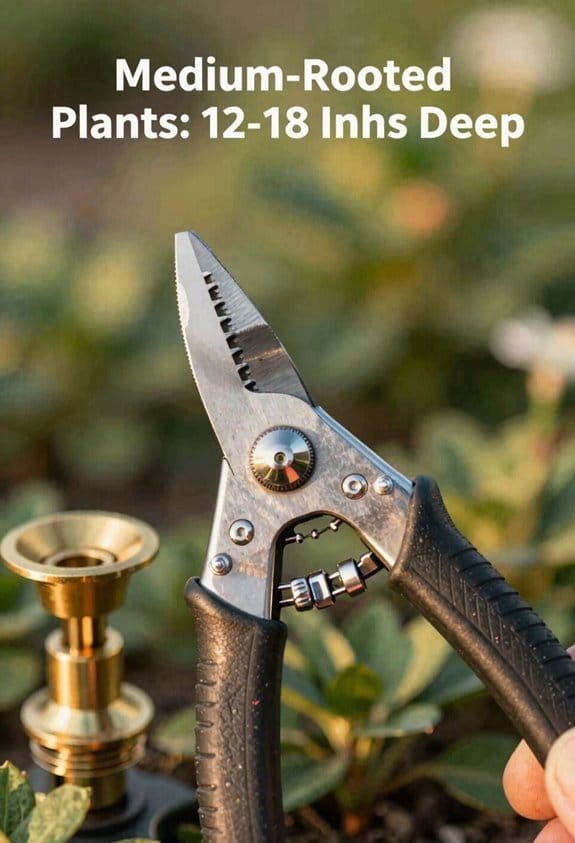
Moving up from shallow beds, I need to prepare deeper soil when growing medium-rooted plants, which typically require between 12 and 18 inches of depth to develop their root systems properly. Plants like carrots, beans, broccoli, and garlic fall into this category, demanding more root space than shallow-rooted vegetables.
When preparing your garden bed to this depth, I consider the container depth carefully to make certain adequate room for expansion. Double-digging becomes essential here, allowing me to loosen soil thoroughly and prevent root pruning, which occurs when plants encounter compacted soil or barriers. Working amendments into the upper six inches while loosening the subsoil creates an ideal environment for medium-rooted plants to thrive. This preparation encourages strong root development and improves overall plant health markedly.
Deep-Rooted Crops: 18 Inches or Deeper
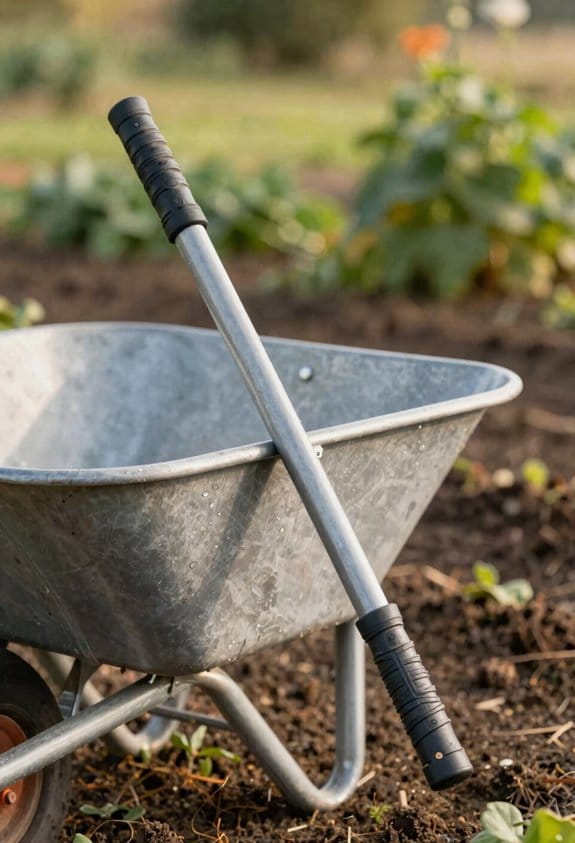
For crops that develop extensive root systems, I need to prepare garden beds that reach 18 inches deep or deeper, accommodating plants like tomatoes, cucumbers, squash, zucchini, and kale. Root depth mapping helps me understand where each plant’s roots will extend, allowing better planning for bed construction.
When preparing these deeper beds, I’ll use nutrient placement strategies by working amendments into the top 6 inches where most active feeding occurs. I should double-dig to 24 inches, loosening the subsoil with a fork to improve drainage and break up compacted layers. Removing rocks and debris during this process prevents root obstruction. Adding a gravel layer beneath the bed further enhances water drainage, preventing root rot in these deeper spaces. This thorough preparation guarantees my deep-rooted crops receive optimal growing conditions.
Assess Your Soil Before You Dig
Before I break ground on my garden bed, I’ll need to understand what’s already in my soil, since the existing conditions will determine how much work I need to do and what amendments I’ll add. Soil testing reveals the nutrient levels, pH balance, and organic matter content in my garden area. I should also perform a compaction assessment by digging a small hole and observing how easily the soil breaks apart. Hard, dense soil indicates compaction that requires loosening before planting. I can send soil samples to a local extension office for professional analysis, or use a home testing kit. This evaluation guides my digging depth and amendment strategy, ensuring my plants receive ideal growing conditions.
Choose Raised Beds or In-Ground Digging
Once I’ve assessed my soil and determined what amendments it needs, I’ll decide whether to build raised beds or dig directly into the ground, since each method has distinct advantages depending on my situation. Raised beds work well for urban gardeners with limited space or poor soil, though they require upfront investment in materials. In-ground digging suits rural settings where space isn’t a constraint. The cost comparison matters too: raised beds cost more initially but improve drainage and prevent weeds, while in-ground digging costs less but demands more labor. I’ll consider my location, budget, and soil quality when choosing. Raised beds need 12-18 inches depth for most vegetables, whereas in-ground preparation requires double-digging 24 inches deep for optimal root growth and drainage.
Drainage and Soil Amendments Below Grade
Whether I’m building a raised bed or digging directly into the ground, what happens beneath the surface matters just as much as what I plant on top. I’ll double-dig approximately 24 inches deep to improve subsurface drainage, which prevents waterlogging that damages roots. Using a fork, I loosen the subsoil carefully, breaking up compacted layers that restrict water movement. For amendment layering, I work organic materials into the top 6 inches, where most root activity occurs. Adding a gravel layer below this helps water drain efficiently downward. This preparation guarantees my plants receive proper moisture without sitting in saturated soil, creating healthier growing conditions overall.
Mistakes That Sabotage Your Garden Bed
Even with excellent drainage preparation and proper soil amendments, many gardeners still struggle because they overlook common pitfalls that undermine their efforts. One major mistake involves overwatering pitfalls, where excess moisture suffocates roots and promotes disease. You’ll want to monitor soil conditions carefully rather than following rigid watering schedules. Another critical error is insufficient weed smothering during initial bed preparation. If you don’t remove existing vegetation or use landscape fabric properly, weeds will compete aggressively with your plants for nutrients and water. Additionally, many gardeners fail to dig deep enough for their chosen vegetables, limiting root development. Some also neglect to loosen subsoil adequately, which restricts drainage and root penetration. Finally, skipping rock and debris removal creates obstacles that impede plant growth and complicate future maintenance.
For a useful next step, prepare garden soil with hand tools and understand how mulch affects soil. These guides cover the related maintenance or buying decision without changing the task explained here.
Frequently Asked Questions
Can I Use Landscape Fabric Instead of Gravel for Improved Drainage?
I wouldn’t recommend using landscape fabric instead of gravel for drainage. Fabric acts as a weed barrier but doesn’t improve water flow like gravel does. You’ll sacrifice drainage while gaining moisture retention—not ideal for most vegetables.
How Often Should I Amend Soil in Established Garden Beds Yearly?
Consider annual topdressing in fall—it’s the moment when your soil needs rejuvenation most. I suggest seasonal testing too, checking nutrient levels spring and fall to guide your amendments strategically.
What’s the Ideal Time of Year to Prepare New Garden Beds?
Consider preparing your garden beds in early spring or late fall. Early spring gives you time before planting season, while late fall lets soil settle over winter, enriching it naturally for spring growth.
Should I Remove All Grass Before Double-Digging My New Garden Area?
Studies show removing sod first saves 40% more effort later. I’d remove sod before double-digging, then layer compost into your loosened soil. This prevents decomposition issues and creates ideal growing conditions for your vegetables.
Can I Mix Different Bed Depths for Various Plants in One Garden?
You can absolutely mix different bed depths for various plants in one garden. Consider tiered planting—creating raised sections with varying depths to accommodate different root zones. This approach lets you grow shallow-rooted herbs alongside deep-rooted tomatoes efficiently.