
Compost tumblers speed up decomposition from months to six to eight weeks by combining three key mechanisms: drum rotation introduces oxygen that accelerates bacterial activity, sealed design retains heat generated by decomposition, and enclosed mixing prevents material stratification. Unlike traditional bins, tumblers distribute aeration evenly throughout the batch, concentrate microbial activity efficiently, and eliminate odors while blocking pests. The faster breakdown means you’ll get nutrient-rich compost ready for gardens sooner, requiring less finished product to achieve the same soil improvements your plants need.
Key Takeaways
- Drum rotation introduces oxygen throughout materials, enabling efficient bacterial breakdown and preventing odorous anaerobic conditions.
- Sealed drum retains decomposition heat, accelerating bacterial activity and producing finished compost in six to eight weeks.
- Consistent rotation distributes oxygen evenly, preventing wet spots where decomposition stalls and ensuring thorough material mixing.
- Complete enclosure prevents odors, excludes rodents, and allows safe meat and fish addition without attracting wildlife.
- Batch filling with proper carbon-to-nitrogen ratios and regular rotation reduces composting timeline to six weeks or less.
How Compost Tumblers Work: Drum Rotation and Heat
If you’ve ever wondered why compost tumblers work faster than traditional bins, the answer lies in two key mechanisms: drum rotation and heat retention. When you spin the drum several times weekly, you’re introducing oxygen throughout the composting materials, which bacteria need to break down organic matter efficiently. This regular aeration prevents the anaerobic conditions that create odors in stationary piles.
You may be interested
The sealed drum‘s thermal insulation retains heat generated by decomposition, accelerating the bacterial breakdown process noticeably. Unlike open bins where heat dissipates, tumblers maintain warm temperatures that speed decomposition. This enclosed design also prevents material stratification, ensuring that fresh additions mix thoroughly with partially decomposed matter. The combination of consistent aeration and sustained heat allows your compost to finish in just six to eight weeks.
Why Speed Matters: Finished Compost in 6–8 Weeks
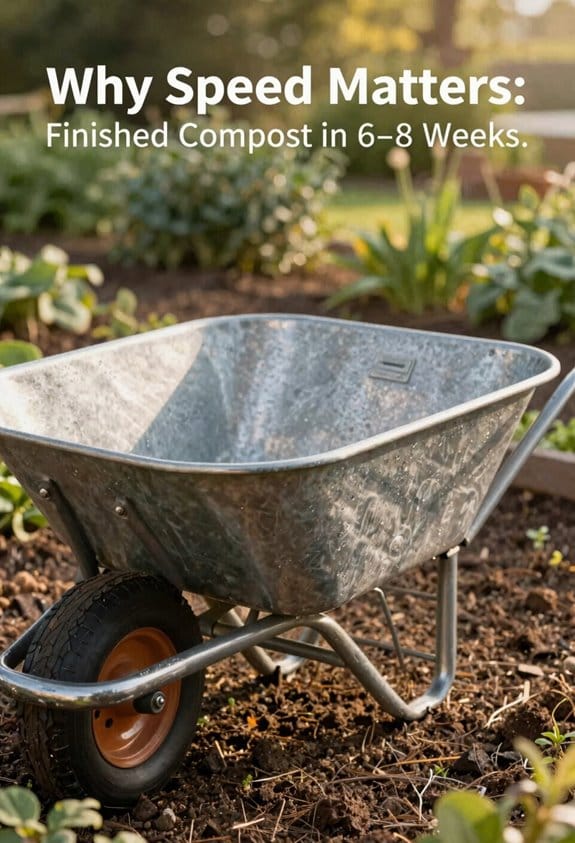
Because traditional compost bins can take three to six months or longer to produce finished compost, the six to eight-week timeline of a tumbler represents a significant advantage for gardeners who want usable material quickly. This rapid curing occurs because the sealed drum retains heat, which accelerates bacterial decomposition throughout your batch. When you finish composting in just weeks rather than months, you’re not waiting as long to amend your garden soil. Additionally, the nutrient concentration in tumbler compost becomes more potent through efficient breakdown. This means you’ll need less finished compost to achieve the same soil improvements compared to slower methods. For gardeners managing multiple plantings or seasonal projects, the speed advantage makes tumblers practical investments that deliver results when you actually need them.
How Tumbler Aeration Drives Faster Breakdown
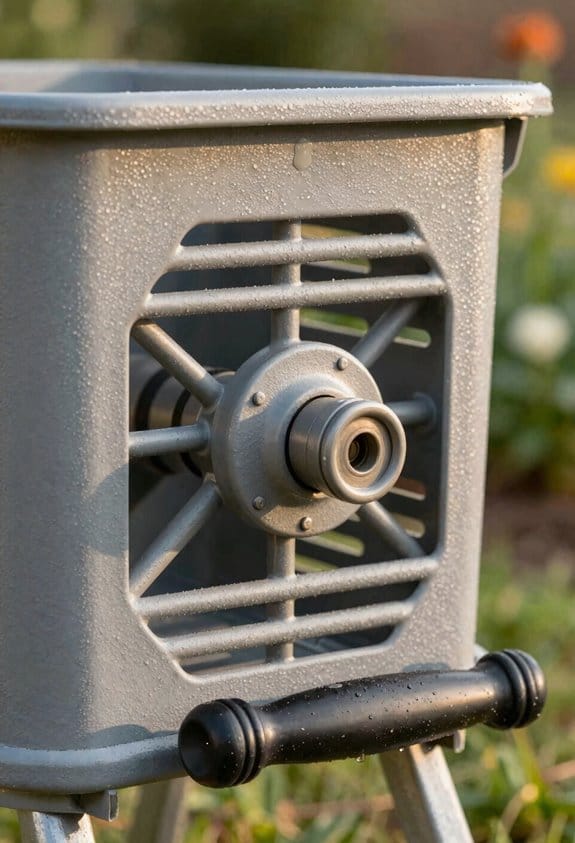
The speed advantage we discussed earlier depends heavily on one factor: consistent aeration, which you control through regular tumbler rotation. When you spin the drum a few times weekly, you’re introducing oxygen diffusion throughout the composting material. This oxygen supply accelerates microbial succession—the process where different bacteria colonize and break down organic matter in stages. Without adequate airflow, decomposition slows dramatically, and anaerobic bacteria take over, creating odor problems. Your tumbler’s enclosed design concentrates bacterial activity efficiently. Each rotation distributes oxygen evenly, preventing wet spots where decomposition stalls. Unlike pile turning with a pitchfork, tumbler rotation reaches all material consistently. This reliable aeration mechanism guarantees bacteria remain active and efficient, transforming your kitchen scraps and yard waste into finished compost in just weeks rather than months.
Sealed Design Eliminates Odors and Pests
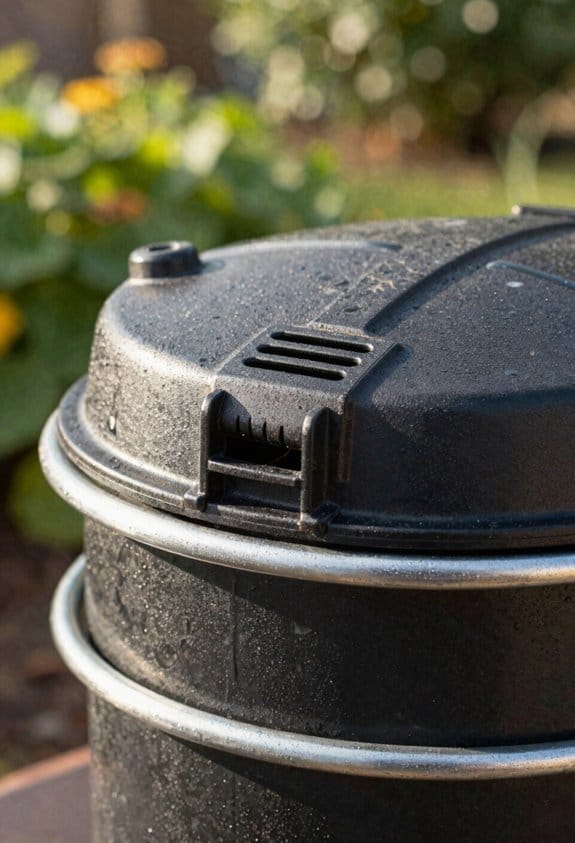
By keeping your compost completely enclosed, a tumbler prevents the two biggest complaints about traditional composting: bad odors and unwanted pests. The sealed design provides rodent exclusion, blocking rats and other burrowing animals that typically invade open bins searching for food scraps. Since you can safely add meat and fish to your tumbler without attracting wildlife, you’ll have fewer neighborhood concerns and better neighborhood aesthetics overall.
The enclosed container maintains an earthy smell rather than developing foul odors, which happens when decomposition becomes anaerobic in open systems. An elevated design further prevents ground-dwelling pests from accessing materials. This sealed approach means you can confidently place your tumbler on a patio or in your garage near neighbors without worry, making composting practical for urban and suburban settings where space is limited and proximity to others matters.
Tumbler vs. Bin: Speed and Consistency Compared
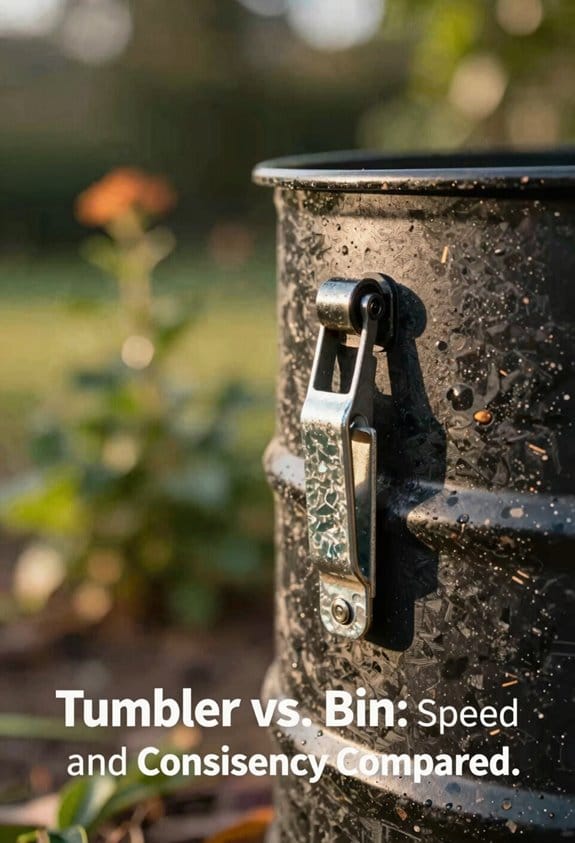
When you’re choosing between a compost tumbler and a traditional bin, speed becomes one of the most important differences you’ll notice. Tumblers finish composting in 6-8 weeks per batch, which is roughly half the time bins require. This faster decomposition happens because the sealed drum retains heat and the regular rotation aerates materials consistently. Unlike bins where you’d manually turn materials with a pitchfork, tumblers’ spinning action guarantees uniform mixing and breaks down particle size more evenly. Better moisture management in the enclosed environment also prevents anaerobic decomposition in wet materials. Since bacteria work more efficiently with constant oxygen flow and ideal conditions, you’ll get finished compost faster and more reliably with a tumbler than a traditional bin.
Maximize Your Compost Tumbler: Speed Up Breakdown
Since you’ve already invested in a compost tumbler, you’ll want to get the most out of it by speeding up the breakdown process even further. To accelerate decomposition, focus on batch scheduling, which means filling your tumbler all at once rather than gradually adding materials. This approach creates ideal conditions for bacterial activity and heat generation. Additionally, maintain proper feedstock ratios by balancing nitrogen-rich materials like kitchen scraps with carbon-rich items such as dried leaves or shredded paper. A good ratio is roughly three parts carbon to one part nitrogen. Rotate your tumbler every few days during warm months, and make sure materials stay moist but not waterlogged. These practices dramatically reduce your composting timeline to six weeks or less.
Is a Compost Tumbler Right for Your Space?
To determine whether a compost tumbler fits your situation, you’ll need to take into account several practical factors that affect both performance and convenience. Space constraints matter considerably, since tumblers require adequate room for rotation and wheelbarrow access underneath. Consider your yard’s dimensions and whether you’d place it on a patio or in a corner. Noise concerns deserve attention too, as spinning mechanisms create sound during turning. If you live near neighbors in close quarters, this could become problematic. Tumblers work best for those with limited ground space, since they don’t require buried installation. They’re ideal for apartment dwellers, small urban yards, or anyone seeking a compact, elevated composting solution. Evaluate your specific location before investing.
For a useful next step, prepare garden soil with hand tools. These guides cover the related maintenance or buying decision without changing the task explained here.
Frequently Asked Questions
What Types of Materials Should I Avoid Putting in My Compost Tumbler?
I’d tell you meat scraps are actually fine—here’s the irony—but diseased plants aren’t. Avoid dairy, oils, and pet waste. Your tumbler’s heat kills pathogens, yet diseased plants still spread problems. Stick to safe scraps instead.
How Often Do I Need to Rotate the Drum for Optimal Decomposition?
Consider rotating your drum a few times weekly for peak results. consistent turn frequency maintains proper aeration and prevents anaerobic conditions. I monitor moisture levels alongside turning—when it’s balanced, I’m seeing decomposition happen faster.
Can I Use Finished Compost From My Tumbler Immediately on Plants?
Yes, you can use it immediately. 95% of gardeners see great results right away. Your tumbler’s high temps kill pathogens, and nutrient stabilization happens during those 6-8 weeks, so screening isn’t necessary before planting.
What’s the Ideal Carbon-To-Nitrogen Ratio for Fastest Composting Results?
Consider a 30:1 carbon-to-nitrogen ratio as your ideal ratio for fastest results. This balance fuels microbial activity in your tumbler, ensuring bacteria work efficiently and breaking down materials in just 6-8 weeks.
Do Compost Tumblers Work Effectively in Cold Winter Climates?
I’ll be honest—they’re seasonally challenged in frigid zones. You’ll need robust winter insulation and freeze mitigation strategies to keep bacterial activity humming. Without them, your tumbler effectively hibernates, slowing decomposition considerably during colder months.