

Community gardens teach tool skills through hands-on practice in real growing spaces where people learn by doing. Trained educators demonstrate techniques, and accessible designs—like raised beds and lightweight tools—welcome learners of all ages and abilities. Since 2002, teacher training programs have equipped educators with gardening knowledge. Participation jumped 388% recently, showing growing demand. When people master these skills, they develop confidence, consume more fresh vegetables, and gain lasting health habits that extend far beyond the garden itself.
Key Takeaways
- Community gardens offer hands-on practice in real growing spaces with weekly three-hour sessions for repeated skill rehearsal and peer mentoring.
- Increased participation from 33 to 161 participants (388% increase) raised demand for tool instruction and equipment maintenance training programs.
- Stipend-compensated educators sustain gardening instruction across 10.5 hectares, enabling consistent tool training and skill-building opportunities for diverse learners.
- Accessible garden designs with inclusive tools accommodate older adults, mobility challenges, and arthritis, expanding who can learn gardening techniques.
- Teacher training initiatives since 2002 have equipped educators with gardening competencies to effectively teach tool use and safety practices.
How Hands-On Learning Environments Build Garden Tool Skills
Building garden tool skills requires more than reading instructions or watching demonstrations; it demands consistent practice in real growing spaces where students can learn by doing. When you spend time in community gardens and urban farms, you develop hands-on ergonomics—understanding how to hold tools correctly to prevent injury and work efficiently. Over 10.5 hectares of growing areas provide ideal practice environments where peer mentoring becomes invaluable. Experienced gardeners show newcomers proper techniques through direct observation and guided practice. Weekly three-hour sessions allow you to repeat skills until they become natural. This combination of real-world practice, expert guidance, and repeated exposure builds genuine competence that classroom instruction alone cannot achieve, creating confident gardeners ready for any planting or maintenance task.
Why Kids Who Garden Score Higher on Science Tests
You may be interested
The skills you develop through hands-on gardening practice extend far beyond tool proficiency and plant care, reaching directly into your understanding of scientific concepts. When you garden, you’re fundamentally conducting inquiry based experiments by observing how plants respond to different conditions, soil types, and watering schedules. You’ll learn plant physiology—how roots absorb nutrients, how leaves convert sunlight into energy—through direct observation rather than textbook definitions alone. Third, fourth, and fifth grade students participating in school gardening activities scored markedly higher on science achievement tests compared to non-participants. This connection happens because experiential learning strengthens your ability to understand cause-and-effect relationships, test hypotheses, and apply scientific thinking to real-world problems, ultimately improving your overall academic performance across multiple subjects.
Beyond Academics: Gardening Boosts Confidence and Behavior
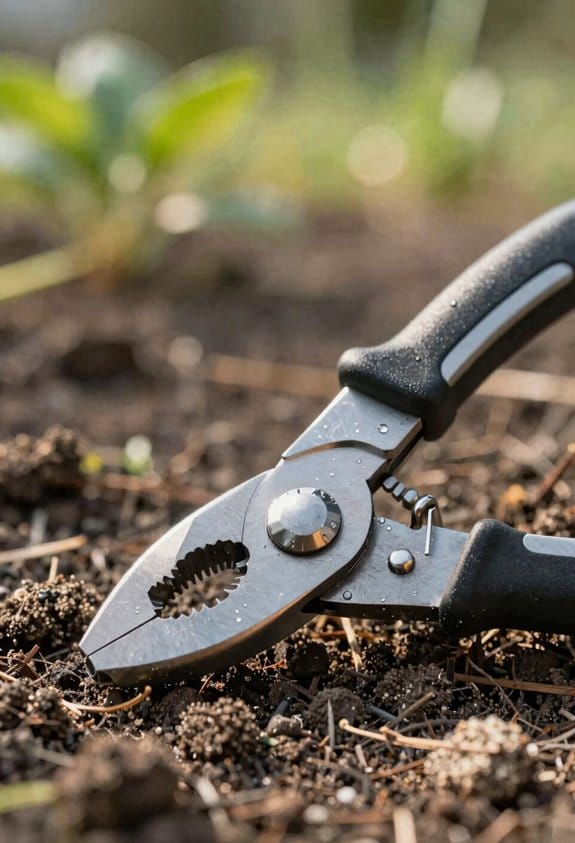
While academic improvement matters, gardening creates equally important changes in how you feel about yourself and behave in social situations. When you work with garden tools and successfully grow plants, you develop self efficacy growth—the confidence that you can accomplish difficult tasks. Teachers reported that ninety-three percent of students showed improved focus, confidence, and on-task behaviors through gardening participation. This isn’t just about grades; it’s about believing in yourself. Additionally, community gardens foster social responsibility modeling, where participants learn to care for shared spaces and contribute to their neighborhoods. Young people who garden alongside others develop stronger relationships and informal social connections. These behavioral and emotional benefits create lasting impacts that extend far beyond the school garden, shaping how you approach challenges throughout life.
How Garden Work Builds Environmental Awareness
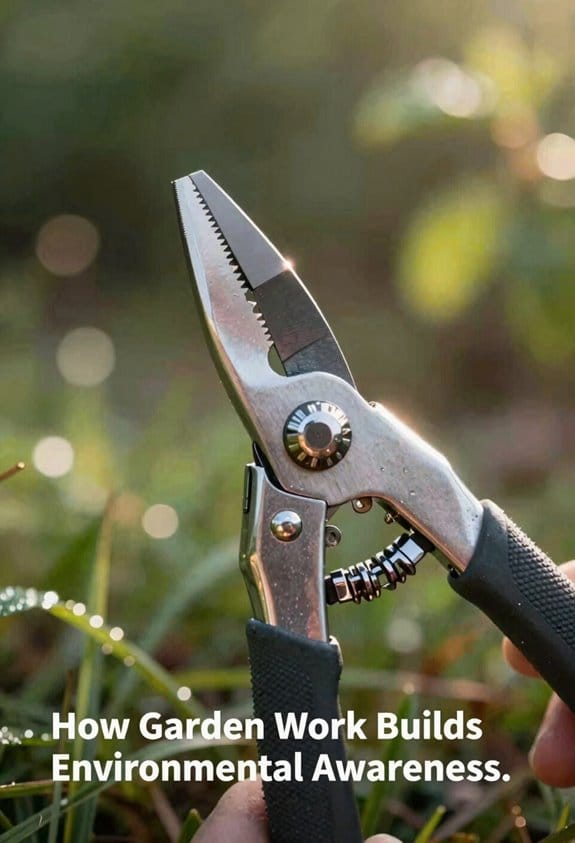
Working with soil, plants, and garden tools opens your eyes to how ecosystems function and why environmental protection matters. When you dig in the earth and nurture plants, you’re directly observing ecological literacy—understanding how living things interact with their environment. Students participating in school gardens develop stronger environmental awareness, particularly recognizing conservation issues that affect their communities. Through hands-on practice, young gardeners learn about sustainable food production and organic methods. They engage in habitat restoration efforts, creating spaces where beneficial insects and pollinators thrive. This practical experience transforms abstract environmental concepts into concrete understanding. Rather than simply reading about ecosystems, you’re actively participating in them, which deepens your commitment to protecting natural resources and addressing local environmental challenges through actionable steps.
Accessible Garden Design for Everyone
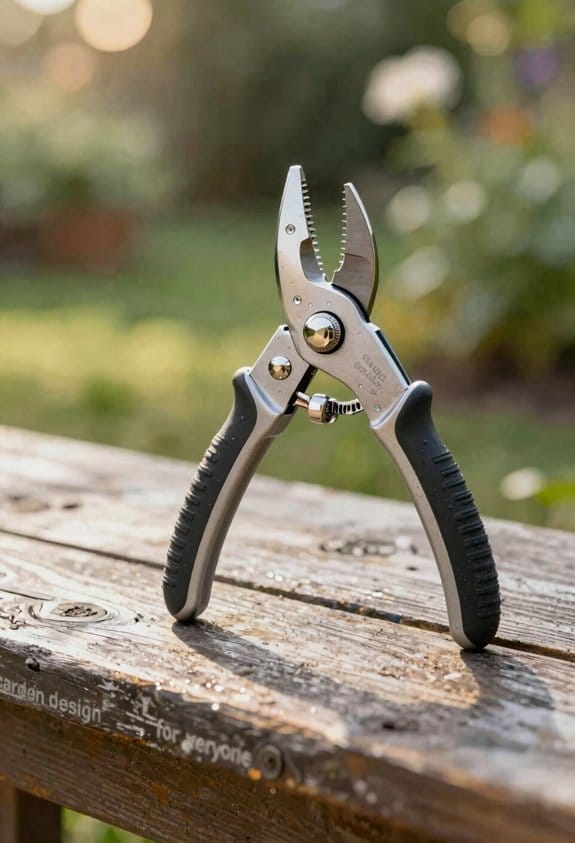
Because gardens serve people with different abilities and learning styles, thoughtful design guarantees that everyone can participate in growing food and developing gardening skills. I’ve observed that accessible paths throughout garden sites allow visitors using wheelchairs or walkers to navigate comfortably between planting areas. Raised garden beds reduce the need for bending, making tool use easier for older adults and people with mobility challenges. Inclusive tools, designed with larger handles and lighter weights, accommodate those with arthritis or reduced grip strength. Sensory gardens featuring plants with different textures and scents engage learners who benefit from multisensory experiences. By installing benches along pathways and providing shaded rest areas, gardens become welcoming spaces where diverse community members develop confidence using gardening equipment and practicing sustainable food production together.
Why Teacher Training and Stipends Scale Garden Tool Education
Physical accessibility opens garden doors to more learners, yet reaching the full potential of community garden programs requires investing in the people who teach tool skills and garden management. Since 2002, teacher training initiatives have equipped educators with essential gardening competencies. Stipend impacts prove significant: when nutrition and gardening educators receive compensation, they engage more deeply with communities. Teacher incentives motivate consistent instruction across 10.5 hectares of growing space, where hands-on practice becomes routine. This investment directly strengthens program quality and participant outcomes. Research shows that compensated educators maintain better relationships with their communities, leading to sustained skill development. When we value educators financially, we demonstrate commitment to scalable, quality garden education that benefits everyone.
Garden Participation Surged 388% in One Year
Community garden programs have consistently demonstrated remarkable growth in recent years, with participation numbers climbing dramatically from 33 survey respondents in 2023 to 161 in 2026—an increase of 388 percent. This surge reflects successful community outreach efforts that’ve engaged diverse populations in hands-on gardening experiences. The expansion has created increased demand for tool instruction and equipment maintenance training across all garden sites. As more participants join these programs, they’re learning essential skills like proper tool handling, equipment care, and sustainable gardening practices. This growth indicates that accessible, inclusive garden programs effectively attract community members seeking both practical knowledge and meaningful engagement. The momentum suggests that continued investment in community gardens will expand tool education opportunities for even broader audiences.
Tool Skills, Fresh Food, Lasting Health Habits
Learning to use garden tools effectively opens doors to nutritional improvements and lifelong healthy habits that extend far beyond the garden itself. When you develop proper tool safety practices and understand seasonal planning, you’re not just learning techniques—you’re establishing patterns that reshape your health. Community gardeners consume fruits and vegetables 5.7 times daily, compared to 3.9 times for non-gardeners, demonstrating how tool proficiency drives sustained engagement with fresh produce. Through hands-on practice with garden tools, you’ll gain knowledge about growing nutritious foods, which naturally encourages healthier eating choices. These skills, combined with consistent garden participation, create lasting habits that benefit your physical wellness and dietary awareness for years to come.
For a useful next step, choose essential garden tools and start a garden with five basic tools. These guides cover the related maintenance or buying decision without changing the task explained here.
Frequently Asked Questions
What Specific Garden Tools Are Beginners Recommended to Start Learning With First?
Like seeds sprouting before branches grow, Consider you start with a hand trowel—it’s your foundation for digging and planting. Then master pruning shears to shape your garden’s growth with precision and control.
How Long Does It Typically Take to Develop Proficiency in Basic Garden Tool Usage?
you’ll typically reach basic proficiency within a few weeks of consistent practice. Your skill timestones depend on weekly engagement—I’ve observed that regular three-hour sessions accelerate learning milestones markedly compared to sporadic participation.
Are There Age Restrictions or Safety Considerations for Children Using Garden Tools?
As the saying goes, “better safe than sorry.” while age guidelines vary by program, child safety remains paramount. Most gardens implement tool restrictions based on developmental stages, ensuring younger children start with supervised, age-appropriate implements before progressing to complex equipment.
What Ongoing Maintenance and Care Do Garden Tools Require for Safe, Effective Use?
you’ll want to establish regular cleaning schedules to prevent rust and debris buildup on your tools. Don’t neglect blade sharpening—dull blades require more force, increasing injury risk and reducing efficiency.
How Can Individuals Without Garden Access Practice and Develop Tool Skills Independently?
While you’re stuck indoors, you can’t replicate authentic garden work—but indoor potting lets you develop foundational skills. Consider virtual classes that teach proper technique before you access community gardens.