

Loppers excel where pruners fail, particularly with branches exceeding 3/4 inch in diameter. Their long handles provide mechanical advantage and leverage, allowing you to cut through thicker, harder wood without straining your hands. You’ll find loppers invaluable for removing dense woody stems in shrubs, accessing interior branches, and tackling dead wood that would bend pruner blades. When pruners feel resistant or your forearm tires quickly, loppers distribute force across both arms efficiently. Understanding which situations demand each tool helps you work smarter and accomplish more.
Key Takeaways
- Loppers handle branches up to 2 inches in diameter, exceeding pruners’ 3/4 inch capacity limit.
- Extended handles provide mechanical advantage for accessing interior branches and making cleaner cuts through thick wood.
- Loppers effectively remove dense woody stems from shrubs like hydrangeas, lilacs, and dead tree wood.
- Two-handed operation distributes force across arms, reducing hand fatigue during heavy pruning sessions.
- Compound-action loppers require less hand force while preventing blade damage from pressure exceeding pruner limits.
Recognize the 3/4-Inch Limit: When Pruners Stop Working
When you’re pruning your garden, you’ll quickly discover that hand pruners have a specific cutting capacity that you shouldn’t exceed. Pruners work best on branches up to 3/4 inch in diameter, which means anything thicker requires a different tool. If you try forcing pruners through oversized branches, you’ll strain your hand strength and risk damaging the blades. Struggling with pruners on thick stems also compromises blade maintenance, as the metal can bend or crack under excessive pressure. Once branches reach beyond that 3/4-inch threshold, loppers become necessary. Their long handles and two-handed design provide the leverage needed for thicker wood. Recognizing this limit prevents frustration and guarantees you’re using the right tool for each cutting task in your garden.
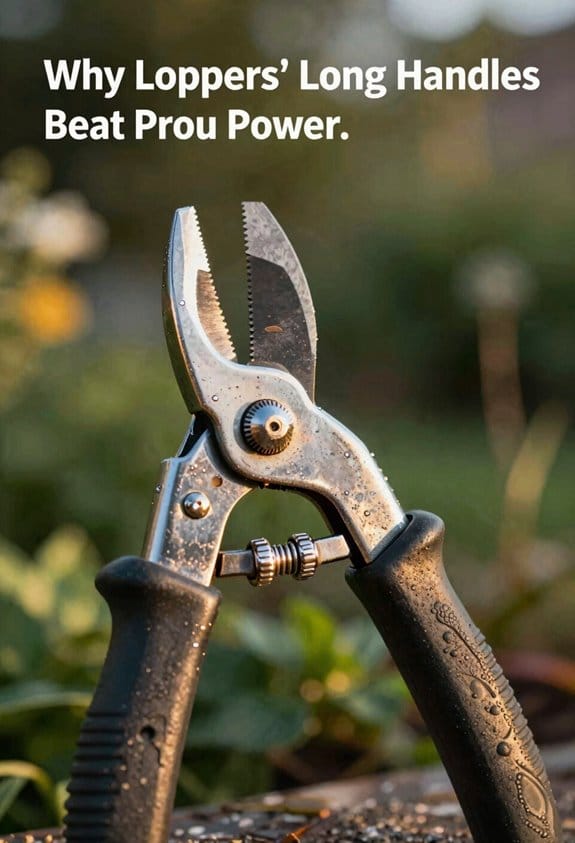
Why Loppers’ Long Handles Beat Pruner Power
You may be interested

Extend your arm while holding a pencil, then try to bend a thick branch with just your fingers—you’ll immediately understand why loppers outperform pruners on larger wood. Long handles create mechanical advantage through extended reach and increased torque. When you grip loppers farther from the cutting point, you multiply the force applied to the blades without straining your hands. This torque advantage means you’re applying more cutting power with less physical effort. Compound-action loppers amplify this benefit further by reducing the force needed on particularly tough branches. For borderline cuts where pruners require hard squeezing, loppers distribute the work across both arms and shoulders, minimizing fatigue and delivering cleaner cuts through thicker wood that resists pruner blades.
Four Tasks Where Loppers Outperform Pruners
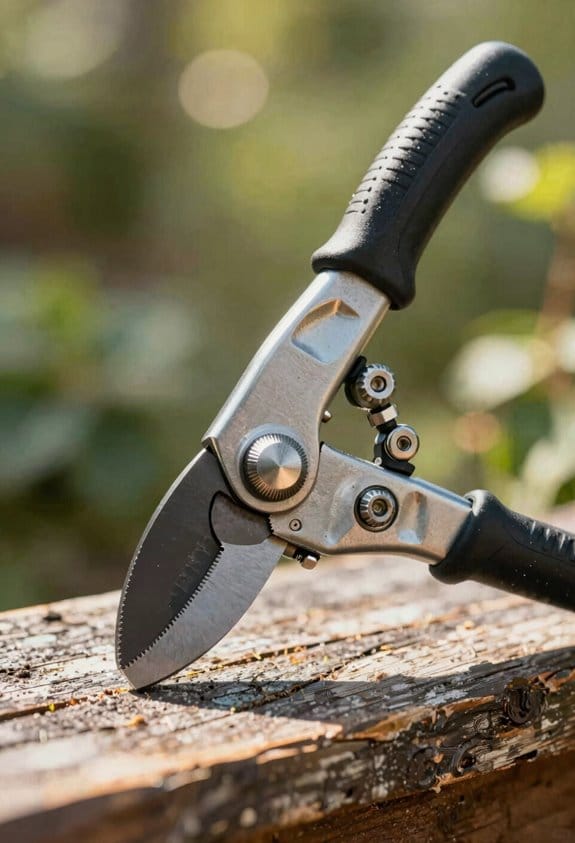
There are four primary gardening situations where loppers deliver results that pruners simply cannot match. First, branch removal from thick woody stems in shrubs like hydrangeas and lilacs requires loppers’ superior cutting capacity. Second, hedge shaping benefits from loppers’ extended reach, allowing you to access interior branches without excessive bending. Third, removing dead wood from trees demands the leverage and power that only two-handed tools provide effectively. Fourth, cutting back water sprouts and suckers near tree bases becomes manageable when you’re using loppers’ mechanical advantage. In each scenario, pruners would either fail completely or force you into exhausting hand fatigue. Loppers transform these challenging tasks into manageable work by providing the cutting power and reach your garden demands.
Size and Hardness: What Actually Matters
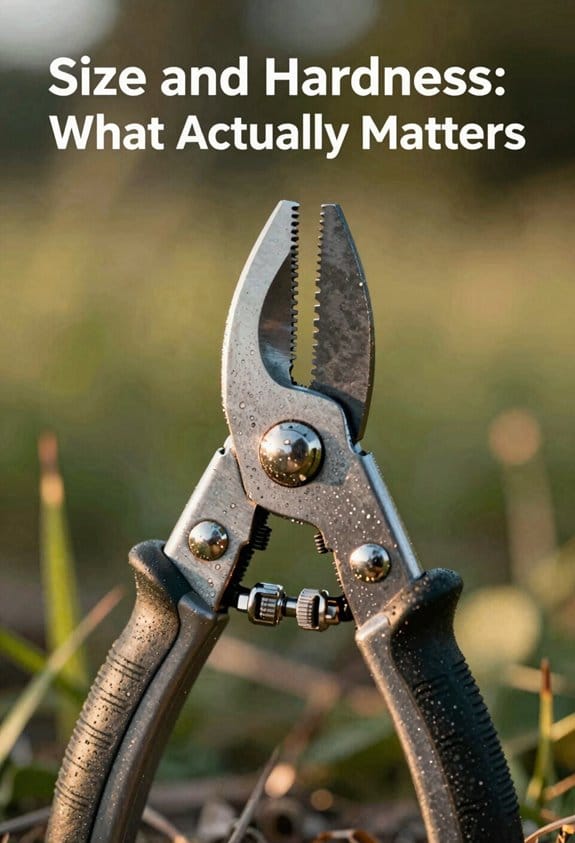
Because you’ll encounter branches of varying thicknesses and wood types in your garden, understanding how size and hardness affect your tool choice becomes essential for successful pruning. Pruners work well on thin branches up to 3/4 inch, but they struggle when wood density increases or branch taper creates resistance. Loppers handle branches up to 2 inches in diameter because their long handles provide mechanical advantage. Wood type matters markedly—softer woods like willow cut easily with pruners, while harder woods like oak demand the extra leverage loppers offer. When a branch resists your pruner’s squeeze or feels unusually hard, switching to loppers prevents hand fatigue and guarantees cleaner cuts.
Reduce Fatigue on Borderline Cuts: When Loppers Win
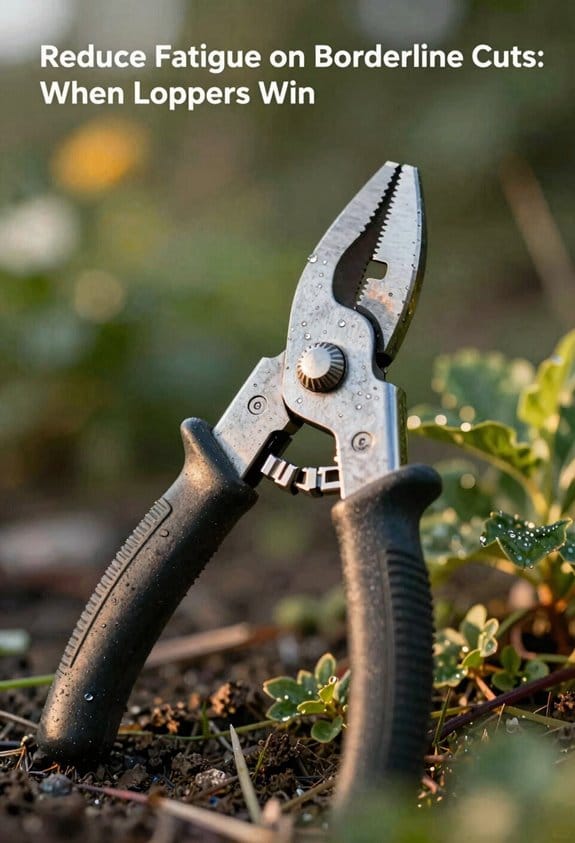
Squeezing a pruner repeatedly on branches near the upper limit of its cutting capacity will exhaust your hand faster than you’d expect, and this is precisely where loppers demonstrate their value. When you’re cutting stems approaching three-quarters of an inch thick, your hand experiences significant grip fatigue from the concentrated pressure required. Loppers eliminate this problem through their long handles and mechanical advantage, which distribute the cutting force across both arms rather than concentrating it in your fingers and palm. This dual-handed approach reduces arm strain substantially during extended pruning sessions. If you notice yourself squeezing harder with each cut or feeling pain in your forearm, switching to loppers will preserve your energy for the entire job.
Make Your First Cut: Which Tool to Grab Today
When you’re standing in front of a branch that needs cutting, the right tool choice depends on understanding what you’re actually dealing with. First, measure the branch diameter with your fingers or a ruler. If it’s under 3/4 inch thick, grab your pruners for quick, precise cuts. For branches between 3/4 and 2 inches, reach for loppers instead.
Your task timing matters too. During active growing seasons, you’ll make frequent small cuts where pruners excel. However, when tackling heavier pruning jobs or removing thick dead wood, loppers save you time and energy. Consider the wood type as well—softer woods like willow yield to pruners more easily than harder varieties like oak. Making this initial assessment prevents frustration and guarantees efficient cutting.
For a useful next step, clean pruning tools safely, sharpen pruning shears and compare pruning shears. These guides cover the related maintenance or buying decision without changing the task explained here.
Frequently Asked Questions
Do Bypass or Anvil Loppers Work Better for Different Types of Wood?
I’ll tell you true: bypass precision glides through soft woods like willow, while anvil power crushes harder specimens like oak. You’ve got to match your blade type to the wood’s resistance—that’s your winning formula.
How Do Extendable Lopper Handles Compare to Standard Fixed-Length Handles?
extendable handles give you telescoping reach for higher branches, but they sacrifice some handle leverage compared to fixed-length models. You’ll notice longer handles can feel less rigid when fully extended.
Can Loppers Effectively Remove Small Branches Without Damaging Surrounding Foliage?
Yes, loppers are like surgical instruments in skilled hands. I find their bypass blades make precision cuts cleanly, and their extended reach lets me selectively remove branches while foliage protection remains my priority through careful positioning.
What Maintenance Keeps Loppers Sharp and Performing at Peak Capacity?
Consider regular blade care by wiping and sharpening your loppers after each use. Hinge lubrication with light oil keeps them operating smoothly, ensuring you’ll maintain peak cutting performance season after season.
Are There Situations Where Pruners Actually Outperform Loppers Despite Thickness?
Yes, I’d argue pruners outperform loppers when you need precise hand dexterity and control over your cutting angle. Their one-handed design lets me maneuver into tight spaces where loppers can’t fit, making quick, accurate cuts.