

I maximize my weekend garden time by planning tasks first, ranking them by importance and dependencies. I gather essential tools beforehand—pruners, soil knife, trowel, and a garden fork—so I’m not wasting daylight searching for equipment. Wearing protective gloves and sturdy footwear keeps me safe and comfortable. I organize my tools on a magnetic board for quick access, then batch similar tasks together to work efficiently. The right preparation and tool selection cuts my wasted time in half, letting me accomplish twice as much during those two days.
Key Takeaways
- Plan your weekend by creating a task inventory and prioritizing by importance and time required.
- Select essential hand tools beforehand—pruners, soil knife, trowel, weeder—to avoid wasted time searching.
- Prepare soil efficiently using a garden fork or power tiller before planting or weeding tasks.
- Wear protective gear including gloves, sturdy footwear, and cooling hats for comfort and safety.
- Organize tools with color-coded labels and magnetic boards to maximize productivity and minimize downtime.
Assess Your Weekend Garden Tasks Before You Start
Before you head outside on Saturday morning, you’ll want to spend a few minutes thinking about what you’re actually going to accomplish in your garden. Consider creating a task inventory by listing everything that needs doing: weeding, soil prep, planting, or pruning. Once you’ve written down all possible tasks, use priority mapping to rank them by importance and time required. Consider which tasks depend on completing others first. For example, you’ll need to loosen soil before planting seedlings. By organizing your work this way, you’ll avoid wasting precious weekend hours deciding what to do next. This planning guarantees you’ll select the right tools beforehand and maximize your gardening productivity.
Choose Essential Hand Tools for Precision Work
You may be interested
Now that you’ve identified your weekend tasks and ranked them by priority, you’ll need to gather the right hand tools to complete your work efficiently. Precision pruning requires quality pruners that cut stems cleanly without crushing plant tissue. A soil knife technique involves using this versatile multi-tool for weeding, digging, and cutting roots with controlled motions. A garden trowel handles planting bulbs and transplanting seedlings accurately. For targeted weeding around delicate plants, consider a cobrahead weeder that scrapes soil precisely. The Hori Hori knife combines multiple functions: it saws roots, measures spacing, and digs holes. These hand tools provide the control and accuracy necessary for detailed weekend gardening work, allowing you to accomplish tasks effectively within your limited timeframe.
Select Soil Prep Equipment for Faster Digging
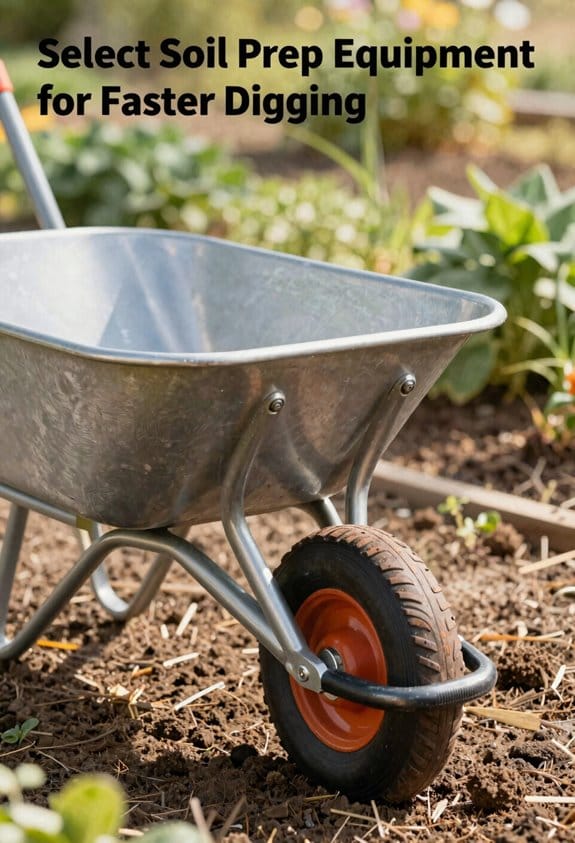
Once you’ve completed your precision hand work, you’ll want soil prep equipment that handles larger areas and tougher soil conditions more efficiently. A garden fork loosens and aerates compacted soil, lifting roots and turning compost effectively. For heavier jobs, a power tiller breaks up stubborn, compacted ground with rotating tines, saving significant time and effort on larger plots. A bow rake handles heavy soil preparation by breaking apart soil clods into manageable pieces. Before using any equipment, consider adding soil amendment to improve your garden bed’s structure and nutrient content. These tools working together transform hard ground into workable planting beds, preparing your space for successful plant establishment and growth during your weekend gardening session.
Wear Protective Gear Without Sacrificing Comfort
Gardening frequently exposes your hands, feet, and body to soil, moisture, sharp tools, and abrasive materials, making protective gear essential for safe weekend work. breathable gloves strike the right balance between protection and comfort, allowing air circulation while resisting dirt and water. Nitrile-coated options are particularly effective, offering dexterity for detailed tasks like seeding and planting without sacrificing safety.
For extended sessions, Consider sturdy footwear that prevents slips on wet ground while supporting your feet during hours of digging and raking. Cooling hats protect your head from sun exposure while keeping you comfortable during warm-weather gardening.
Ergonomic handles on quality tools reduce hand strain markedly. Investing in well-designed protective equipment means you’ll work longer, safer, and more enjoyably throughout your weekend garden projects.
Pick Carrying Tools That Match Your Project Scale
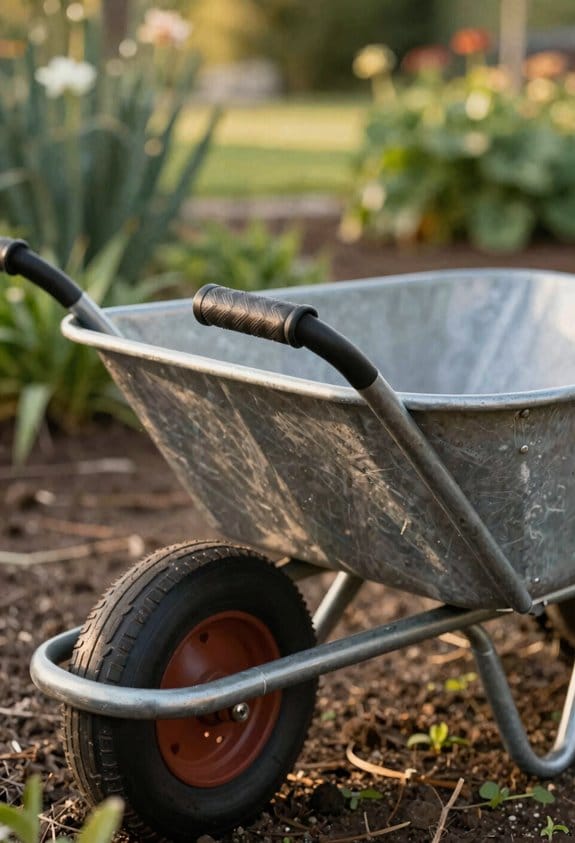
With your hands and feet protected, you’re ready to contemplate how you’ll move materials around your garden, and the tools you choose depend directly on the size and scope of your weekend projects. For smaller tasks, collapsible tubs offer flexibility and easy storage without consuming much space. If you’re hauling larger quantities of mulch or compost, a garden cart with substantial load capacity transport handles heavy materials efficiently. A Gorilla cart proves invaluable for traversing obstacles across varied terrain adaptability, while a barrow works well for single trip movements of lighter loads. Consider your garden’s layout and the distances you’ll travel; matching your carrying tool to your project’s demands guarantees you’ll complete work in one session without excessive back-and-forth hauling.
Plan Spacing and Measure Before You Dig
Before you insert your spade into the soil, taking time to plan your garden layout saves you from costly mistakes and wasted effort. I use spacing templates and planting templates to map out where each plant goes, ensuring they’ll have room to grow properly. A seed spacing ruler helps me measure distances accurately between seedlings, preventing overcrowding that invites disease. I sketch my layout in my garden planner notebook, noting sunlight patterns and soil conditions. The measuring tools on my multi-function knife aid quick calculations during placement. Hori Hori knives mark spacing points precisely in the soil. This preparation prevents replanting work later and maximizes your garden’s productivity, making your weekend session far more efficient and successful.
Apply Mulch and Clear Debris Efficiently
Once you’ve finished planting, applying mulch and clearing away debris becomes essential to protect your garden’s health and appearance. I use a garden rake to level soil and spread mulch evenly, which helps retain moisture and regulate soil temperature. For mulch distribution, I choose a wide rake to cover larger areas efficiently in minimal passes. Simultaneously, I tackle debris collection using a leaf rake for light materials like fallen leaves and small branches. A tubtrug holds collected debris conveniently, and I empty it regularly to maintain workspace organization. This two-step process—spreading mulch and removing unwanted materials—creates a clean, healthy garden bed. Combining these tasks during one session maximizes your weekend’s productivity and prepares your garden for sustained growth.
Organize Your Tools for Speed and Easy Access
After you’ve completed the physical work of spreading mulch and clearing debris, you’ll want to establish a system that keeps your tools organized and ready for your next gardening session. color coded labels on storage containers work well for grouping similar tools together. A magnetic toolboard mounted in your shed or garage provides quick access to frequently used items like pruners and soil knives. Store heavier tools like spades and forks vertically to save space and prevent damage. Keep a durable sheath nearby for hip-worn tools you use regularly. This organizational approach reduces setup time, minimizes tool searching, and guarantees your weekend sessions run smoothly and efficiently.
Work Smarter: Time-Saving Techniques for Weekend Sessions
Through thoughtful planning and strategic tool selection, weekend gardening sessions become markedly more productive when you approach them with intention rather than impulse. Task batching—grouping similar activities together—streamlines your workflow considerably. For example, I complete all weeding tasks in one session using my cobrahead weeder and soil knife, then move to planting with my trowel and hori hori knife.
Batch watering at specific times, rather than scattered throughout your session, conserves energy and time. I organize my tools in a durable sheath beforehand, ensuring quick access without searching. Using a garden cart to haul materials reduces multiple trips. This systematic approach transforms weekend sessions into focused, efficient gardening experiences where you accomplish more meaningful work in less time.
Frequently Asked Questions
How Often Should I Maintain and Sharpen My Gardening Tools for Optimal Performance?
I sharpen my pruners and soil knife seasonally—typically spring and fall—to maintain peak cutting edges. Regular edge maintenance between uses keeps my tools performing efficiently throughout the growing season.
What’s the Best Way to Store Gardening Tools During Off-Season to Prevent Rust and Damage?
storing tools in airtight bins with humid control packs prevents rust effectively. You’ll protect your investment by keeping moisture out and maintaining stainless steel blades’ longevity during off-season storage months.
Can I Use the Same Gloves for All Gardening Tasks or Do I Need Different Types?
Consider having different gloves for various tasks. You’ll want nitrile-coated gloves for general work, latex gloves for wet conditions, and thorn-resistant gloves when handling prickly plants. This approach protects your hands effectively.
How Do I Choose Between a Garden Cart and a Wheelbarrow for My Space Needs?
I’d pick based on your plot’s particulars. Garden carts offer superior capacity versus maneuverability in cramped quarters, while wheelbarrows handle load distribution versus tipping better on uneven terrain. Consider your space’s size.
What Budget-Friendly Alternatives Exist for Expensive Specialized Gardening Tools and Equipment?
Consider exploring repurposed household tools—old spoons work as trowels, forks aerate soil cheaply. You’ll also find upcycled container gardens using buckets and bottles, stretching your gardening budget considerably while maintaining functionality.