

To protect your wrist while troweling, I’d start by choosing a lightweight tool with a rubber-padded handle that fits your hand comfortably. I use a power grip—wrapping my entire hand around the handle—to distribute force evenly rather than pinching with my fingers. Keeping my wrist straight and neutral prevents nerve compression and strain. I take breaks every 20 to 30 minutes, shake out my hands gently, and watch for tingling or numbness as warning signs. Pacing myself with varied tasks helps prevent cumulative injury, though you’ll discover additional strategies that can further strengthen your technique.
Key Takeaways
- Choose a lightweight trowel with a rubber-padded handle and length extending beyond your widest hand measurement.
- Use a power grip with your entire hand wrapped around the handle and thumb covering fingers.
- Keep your wrist in a neutral, straight position and use body rotation instead of wrist twisting.
- Take micro breaks every 20 to 30 minutes, gently shake hands, and rotate wrists slowly in circles.
- Watch for tingling, numbness, or difficulty straightening fingers, and seek medical attention if symptoms persist beyond a few days.
Choose the Right Trowel for Your Hand and Wrist
Selecting the right trowel is your first defense against wrist pain and injury. When choosing a trowel, consider your hand size and grip strength, since an ill-fitting tool forces your muscles to work harder. Look for a handle length that extends beyond your widest hand measurement, giving you better control and leverage. Rubber padding on the handle is essential because it reduces contact stress on your skin and absorbs shock from repetitive motions. Padded handles also prevent your hand from slipping during use. The tool’s weight matters too—pick one that’s balanced and lightweight to minimize strain on your wrist and forearm. A comfortable, properly sized trowel with adequate padding helps you maintain a neutral wrist position throughout your work.
Master the Power Grip to Reduce Hand Strain

You may be interested



Once you’ve chosen the right trowel, learning how to grip it properly makes a significant difference in preventing wrist pain. Consider using a power grip, where your entire hand wraps around the handle with your thumb covering your index or middle finger. This technique distributes force evenly across your palm, reducing strain on individual tendons and joints.
Your grip strength matters less than proper hand alignment. Position your hand so your wrist stays straight and neutral, avoiding bent positions that stress nerves. Keep your fingers relaxed rather than tensely squeezed. A full hand grip beats pinching with just fingers, since it engages larger muscle groups that tire less quickly. Practice this positioning before tackling projects, ensuring comfort and control while minimizing repetitive strain injuries.
Keep Your Wrist Straight While You Work

While mastering your grip establishes a strong foundation, maintaining proper wrist alignment during the actual work is equally important for injury prevention. I keep my wrist straight in a neutral position, which allows my tendons to slide smoothly without strain. When my wrist bends, I risk nerve compression and muscle injury that can develop into carpal tunnel syndrome.
I incorporate wrist neutrality drills into my routine, practicing straight-wrist movements before starting projects. Through posture microadjustments—shifting my standing position or adjusting my seat—I make certain my wrist stays aligned naturally. I use my body’s rotation instead of twisting just my wrist or arm. This approach distributes work stress across larger muscle groups rather than concentrating it in my hand and forearm, preventing repetitive motion injuries and tendonitis.
Take Strategic Breaks to Prevent Fatigue
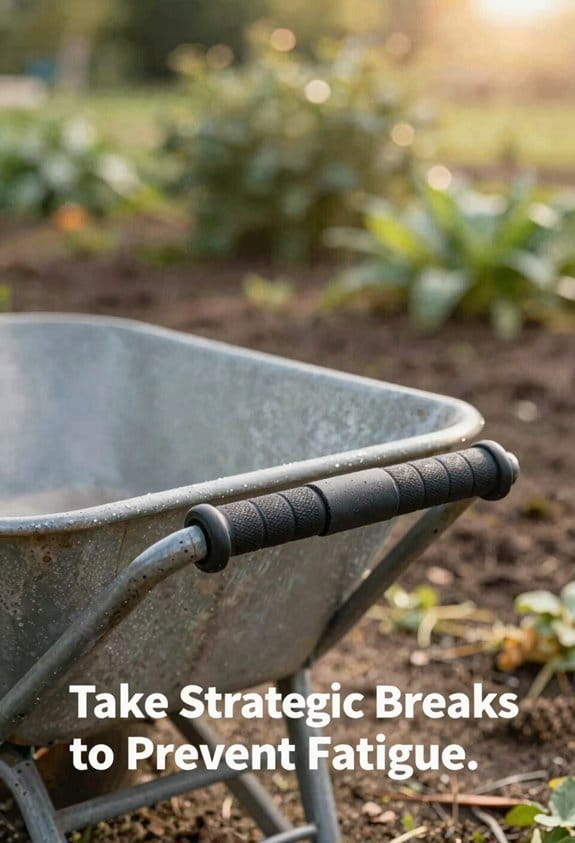
As fatigue sets in during trowel work, your focus diminishes and you’re more likely to develop poor form, increasing your injury risk markedly. scheduling micro breaks every 20 to 30 minutes appreciably reduces strain on your wrists and hands. During these brief pauses, I step away from my work, shake out my hands gently, and rotate my wrists slowly in circles.
Hydration reminders matter too—dehydration worsens fatigue and muscle cramping. I keep water nearby and drink regularly throughout the day. These strategic breaks prevent the cumulative stress that leads to tendonitis and carpal tunnel syndrome. When you return to troweling after resting, you’ll notice improved control, better form, and decreased pain, making breaks essential for long-term hand health.
Pace Your Work to Avoid Repetitive Motion Injuries

Repetitive motion injuries develop gradually when you perform the same troweling movements over and over without varying your technique or workload, and I’ve learned that pacing your work strategically can substantially reduce this risk. I maintain a slow cadence rather than rushing through tasks, which gives my muscles and tendons time to recover between motions. Switching between varied tasks throughout the day prevents the same muscle groups from becoming overworked. When I alternate between troweling and other activities, I distribute physical stress across different parts of my hand and wrist. This approach minimizes the cumulative damage that causes tendonitis and carpal tunnel syndrome. By working deliberately and mixing different hand movements, I protect myself from the injuries that develop when one repetitive motion dominates my entire workday.
Spot Early Warning Signs and When to Seek Help
Even with proper pacing and technique, your body sends signals when hand and wrist strain begins to cause problems, and recognizing these early warning signs can help you stop an injury before it becomes serious. Pay attention to tingling sensations in your fingers or palm, which indicate nerve pressure. Night numbness, where your hand falls asleep during rest, suggests inflammation from overuse. You might notice achy or tired hands that improve after resting. Difficulty straightening your fingers or gripping objects signals tendonitis developing. If these symptoms persist beyond a few days or worsen, seek medical attention from a doctor or occupational therapist. Early intervention prevents minor strain from becoming chronic injury requiring extended recovery time.
For a useful next step, clean garden tools after use, decide when a garden tool is too worn to repair and compare garden rakes. These guides cover the related maintenance or buying decision without changing the task explained here.
Frequently Asked Questions
How Often Should I Inspect My Trowel for Damage or Wear?
I’d inspect your trowel before every use, checking for wear indicators like rust, cracks, or dull blades. You’ll notice defects early when you’re most focused, catching damage before it causes injury or compromises your work quality.
What Type of Gloves Best Support Proper Grip and Wrist Alignment?
Consider padded gloves with ergonomic cuffs that cushion your grip and support your wrist’s neutral position. They’ll reduce contact stress while you’re working, helping prevent strain injuries from repetitive trowel use.
Can Anti-Vibration Wraps Reduce Hand-Arm Vibration Syndrome From Power Tools?
Like a shock absorber cushioning a rough road, yes—anti-vibration wraps genuinely reduce hand-arm vibration syndrome. I’ve found ergonomic sleeves and vibration damping technology minimize numbness and grip loss, protecting your hands from power tool strain.
How Should I Adjust My Body Position for Optimal Wrist Neutrality?
I’ll adjust my body position by aligning my shoulders squarely toward my work, keeping my elbow height at waist level. This positioning lets me maintain my wrist’s neutral alignment naturally without bending or twisting.
What Are the Differences Between Power Grip and Precision Grip Techniques?
I’ll tell you what I’ve learned from ancient stonemasons: I use power grip when I’m holding the trowel with my whole hand for heavy work, but I switch to precision pinch grip when I need delicate control—though I avoid pinching whenever possible.