

I’m switching to stainless steel tools because they resist rust far better than carbon steel, which deteriorates quickly when exposed to moisture and soil. Stainless steel contains chromium that forms a protective barrier against corrosion, so I spend less time oiling and drying my tools. While stainless steel costs more upfront, I’ll replace these tools less frequently, saving money long-term. They’re strong enough for standard gardening tasks like digging and hoeing. Discover exactly how much maintenance time you’ll actually reclaim.
Key Takeaways
- Stainless steel resists rust naturally through a self-healing chromium oxide barrier, eliminating constant oiling requirements.
- Minimal maintenance—just rinse and dry—saves gardeners time compared to carbon steel’s demanding upkeep routine.
- Stainless steel tools last significantly longer, reducing replacement frequency and lowering total ownership costs over years.
- Superior corrosion resistance preserves tool integrity through moisture, rain, and salt exposure across seasons.
- Stainless steel provides adequate strength for common gardening tasks while maintaining sharp edges longer than carbon steel.
The Rust Problem Carbon Steel Can’t Solve
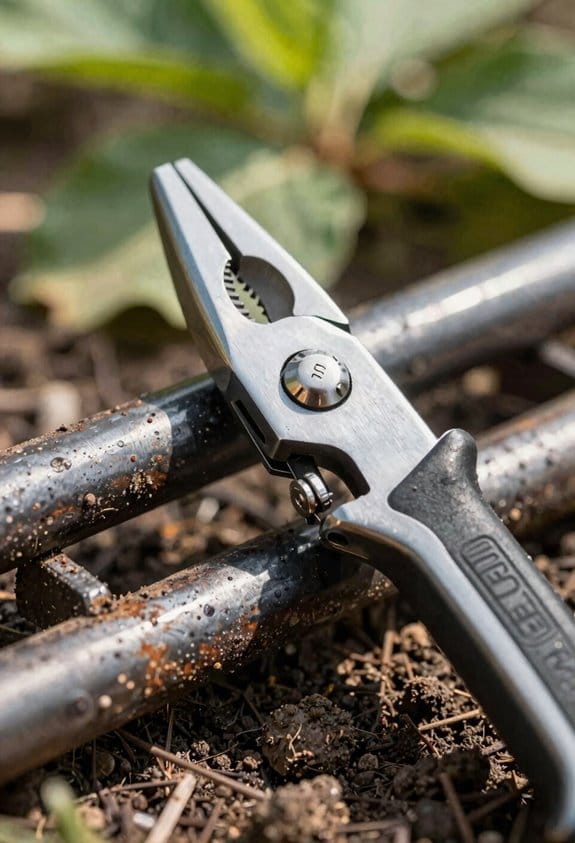
Carbon steel garden tools, which contain iron and carbon but lack the chromium protection found in stainless steel, frequently succumb to rust when exposed to moisture and oxygen. When you leave carbon steel tools in damp conditions, rust forms quickly on the surface. This corrosion doesn’t just look bad—it weakens your tools. Surface pitting develops as rust eats into the metal, creating tiny holes that compromise structural integrity. To prevent this damage, you’d need to apply protective coatings regularly and oil your tools constantly. That’s exhausting maintenance work. Stainless steel eliminates this problem entirely. Its chromium layer forms a self-healing oxide barrier that resists rust naturally, even in rain and coastal environments, making it ideal for gardeners tired of endless upkeep.
Stainless vs. Carbon Steel: Which Lasts Longer?
You may be interested
When you stack up the two materials side by side, stainless steel pulls ahead in longevity because of how it handles rust and corrosion over time. Carbon steel requires constant maintenance—regular oiling, careful drying, and vigilant cleaning—to prevent rust formation. Without this attention, carbon steel deteriorates quickly through corrosion fatigue, where repeated moisture exposure weakens the metal structurally.
Stainless steel, however, resists this degradation naturally. Its chromium content creates a protective oxide layer that shields against moisture and oxidation. Additionally, stainless steel maintains better edge retention during use, meaning your tools stay sharper longer with minimal upkeep. While stainless steel costs more initially, you’ll replace carbon steel tools far sooner. For most gardeners, investing in stainless steel means fewer replacements and genuinely longer-lasting performance.
Why Low Maintenance Wins for Busy Gardeners
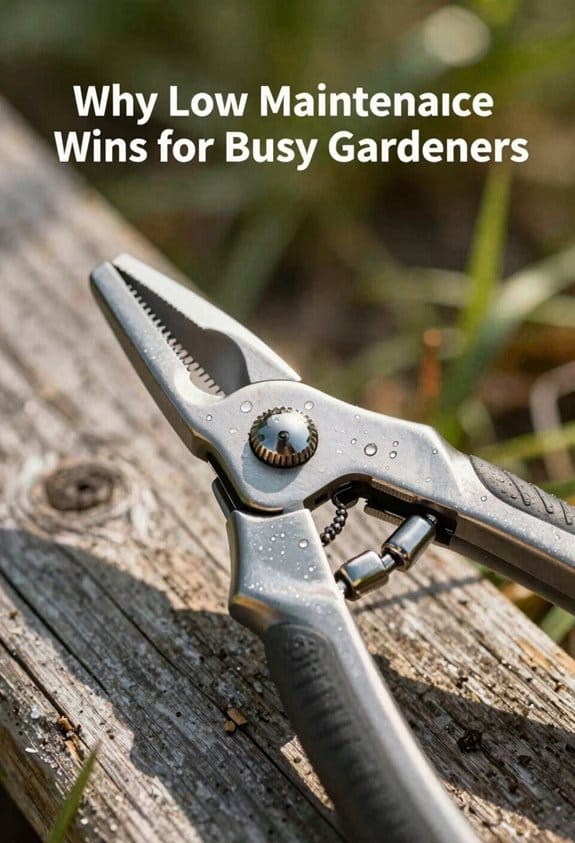
Beyond the durability advantage stainless steel offers, there’s another significant benefit that appeals to gardeners with packed schedules: the minimal maintenance required to keep these tools in working condition. Unlike carbon steel tools that demand regular oiling and careful drying, stainless steel eliminates these time-saving routines entirely. Weekend gardeners particularly appreciate this convenience, as they can spend their limited free time actually gardening rather than maintaining equipment. After use, you simply rinse and dry your tools—no special treatments needed. Soil doesn’t cling to stainless steel surfaces like it does carbon steel, enabling quick cleanup. This hassle-free upkeep means busy gardeners can focus on their plants instead of worrying about rust prevention and tool deterioration.
Stainless Steel Outlasts Carbon Steel: Here’s Why
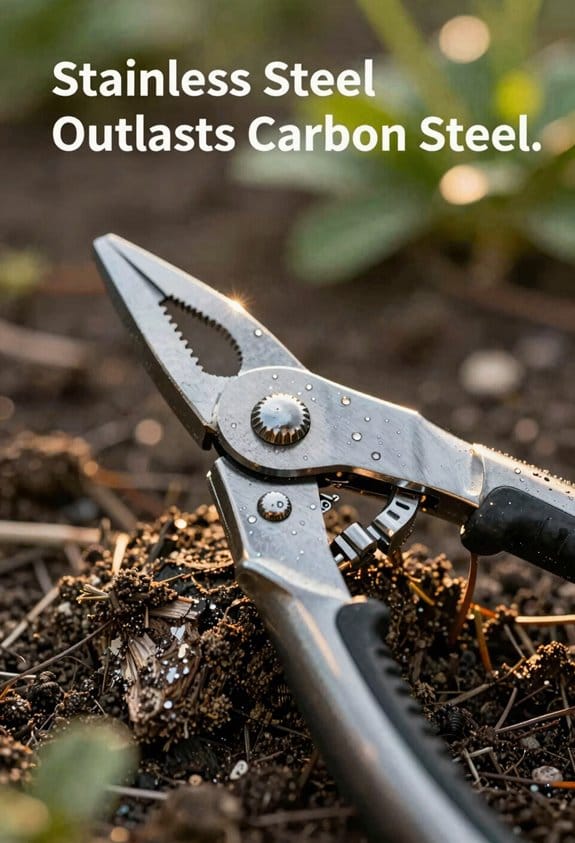
Durability isn’t just about how well a tool performs today—it’s about how well it serves you five, ten, or even twenty years down the road. Stainless steel outperforms carbon steel in long term durability because of its superior corrosion resistance. While carbon steel requires constant oiling and maintenance to prevent rust formation, stainless steel’s chromium content creates a protective oxide barrier that shields the tool from moisture and oxidation naturally. This means your spade or fork maintains its structural integrity through seasons of rain, damp soil, and salt exposure without degrading. Over time, you’ll replace carbon steel tools multiple times, while a quality stainless steel tool ages gracefully, delivering reliable performance with minimal upkeep and markedly lower replacement costs.
Does Stainless Steel Have Enough Strength?
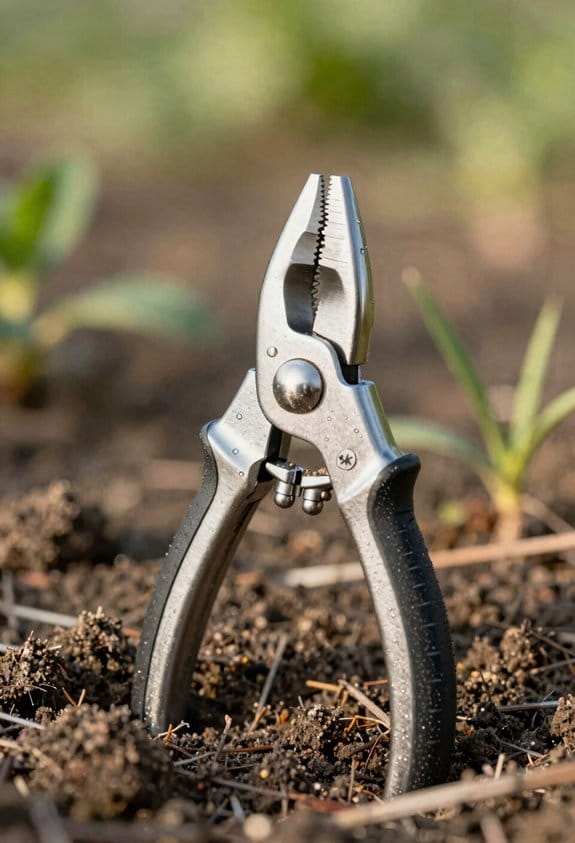
Many gardeners worry that choosing stainless steel means sacrificing the raw power needed for demanding tasks like breaking through compacted soil or turning heavy garden beds. this concern isn’t entirely justified. Stainless steel’s alloy composition—which includes iron, carbon, chromium, nickel, titanium, and nitrogen—creates sufficient strength for most gardening applications. While it’s true that stainless steel is slightly less robust than carbon steel, it delivers adequate performance for spades, trowels, forks, and hoes. The ergonomic strength of these tools, combined with their durability in moisture-heavy conditions, makes them reliable for regular gardening work. You won’t experience compromised structural integrity during soil penetration or border maintenance tasks.
Is the Investment Actually Worth It?
While stainless steel garden tools cost more upfront than carbon steel alternatives, the long-term value becomes clear when you consider both the financial and practical benefits. You’ll spend less on maintenance since these tools don’t require constant oiling or intensive cleaning routines. Over time, the reduced replacement frequency saves you money, as stainless steel tools last markedly longer than their carbon steel counterparts. When planning your budget, factor in the extended lifespan rather than just the initial purchase price. Should you ever decide to sell used stainless steel tools, they retain resale value better than rusty carbon steel options. For gardeners in humid climates or those seeking convenience, this investment pays dividends through years of reliable performance without constant upkeep demands.
For a useful next step, clean garden tools after use and decide when a garden tool is too worn to repair. These guides cover the related maintenance or buying decision without changing the task explained here.
Frequently Asked Questions
What Specific Hardwood Types Pair Best With Stainless Steel Blades for Optimal Performance?
hickory ash and Brazilian cherry pair exceptionally well with stainless steel blades. Hickory ash offers superior shock absorption, while Brazilian cherry provides durability and natural grip comfort, enhancing your tool’s overall performance.
How Does Soil pH Affect Stainless Steel Tool Longevity Compared to Carbon Steel Alternatives?
Like a shield deflecting arrows, stainless steel’s chromium layer resists soil acidity better than carbon steel. acidic soils create electrolyte corrosion risks for carbon tools, while stainless steel withstands pH variations effortlessly.
Can Stainless Steel Tools Be Sharpened as Easily as Traditional Carbon Steel Implements?
stainless steel tools don’t sharpen as easily as carbon steel. You’ll need specialized sharpening techniques and patience since stainless steel’s edge retention is superior but harder to work with initially.
What Is the Typical Price Difference Between Stainless and Carbon Steel Garden Tool Sets?
You’ll typically pay 30-50% more upfront for stainless sets, but retail markup reflects their longevity. You’ll offset higher initial costs through reduced replacement costs over time.
Do Stainless Steel Tools Perform Differently in Cold Versus Warm Climates Long-Term?
I’ve found stainless steel tools perform consistently across climates. Their cold tolerance means they won’t become brittle in freezing conditions, while thermal expansion from heat doesn’t compromise integrity. You’ll notice reliable, long-term durability regardless.