
A spade has a flat, square blade that cuts through hard soil with precision, making it perfect for edging beds and digging straight holes. A shovel features a curved, bowl-shaped blade that scoops and holds loose materials like mulch or gravel. Spades are shorter and lighter for control in tight spaces, while shovels have longer handles for leverage when moving bulk material. Choosing between them depends on your primary gardening tasks and available storage space, though understanding their specific strengths reveals which tool truly fits your needs.
Key Takeaways
- Spades have flat, square blades for precise cutting and edging; shovels have curved, bowl-shaped blades for scooping materials.
- Spades excel at penetrating hard, compact soil; shovels efficiently move large volumes of loose materials like mulch and gravel.
- Spade handles are shorter for control in confined spaces; shovel handles are longer for increased leverage when moving bulk.
- Spades require frequent edge maintenance and sharpening to maintain their sharp cutting ability for hard ground work.
- Spades suit precision tasks like bed edging and planting; shovels suit transporting materials across terrain with minimal spillage.
When to Use a Spade vs. a Shovel
When you’re deciding which tool to grab for your gardening project, you’ll want to take into account what task you’re actually performing, since spades and shovels handle different jobs in distinctly different ways. I use my spade for precise cutting tasks like edging garden beds, digging straight-sided holes for planting, and slicing through roots. My shovel works better for scooping and moving loose materials like soil or mulch. During seasonal maintenance, I reach for my spade to cleanly define bed borders and remove weeds. For safety tips, remember that spades require controlled, downward pressure, while shovels demand proper lifting technique to prevent back strain. Choosing the right tool protects both your garden and your body.
Blade Shape: Flat Edges vs. Curved Scoops
You may be interested
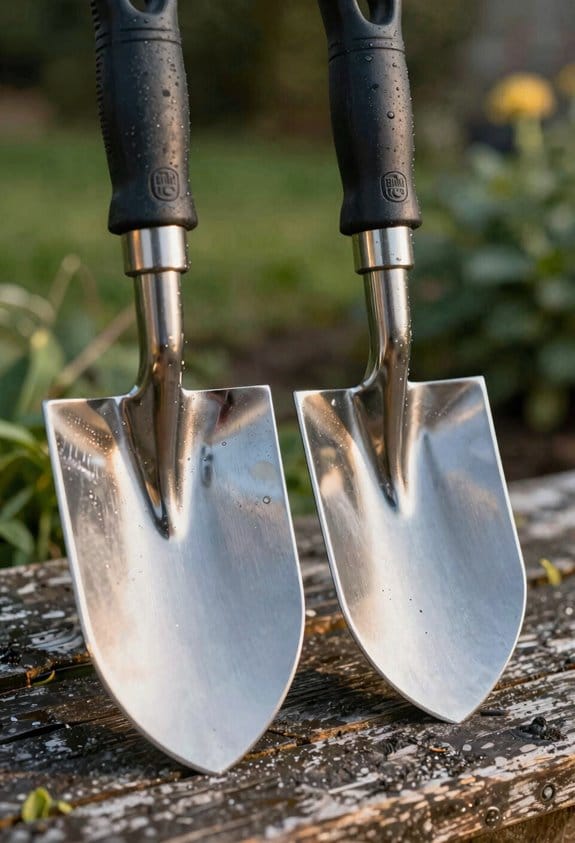
The shape of a tool’s blade fundamentally determines how it interacts with soil and other materials, making this one of the most important differences between spades and shovels. Spade blades feature flat, square edges that cut cleanly through turf and roots, while shovel blades curve into bowl shapes designed for scooping. spade edges provide visual cues indicating their cutting purpose, requiring more frequent edge maintenance to preserve sharpness. Shovel curved designs prioritize user ergonomics for lifting and transporting loose material. The steel finish on spades typically shows wear faster because they penetrate hard ground repeatedly. Understanding these blade differences helps you select the right tool for your specific gardening task, whether you’re edging beds or moving soil volumes.
Why Handle Length Matters
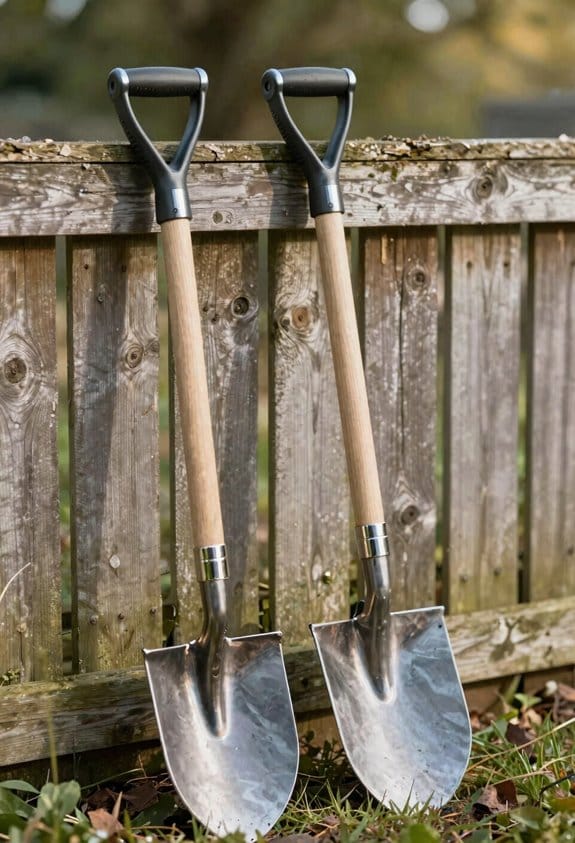
Grab a spade and a shovel side by side, and you’ll immediately notice they differ markedly in handle length, a feature that directly impacts how you’ll use each tool in your garden. Spades typically feature shorter handles, around four feet long, which I’ve found provides better reach control for precision work in confined spaces. Shovels, by contrast, sport longer, straight handles that extend your leverage for deep digging and moving bulk materials. The length difference matters considerably because shorter handles reduce ergonomic fatigue when you’re working in tight areas among plants, while longer handles distribute weight differently, allowing you to move larger quantities without excessive strain. Understanding these distinctions helps you select the appropriate tool for your specific gardening task.
Spade Strengths: Cutting, Edging, and Precision Work
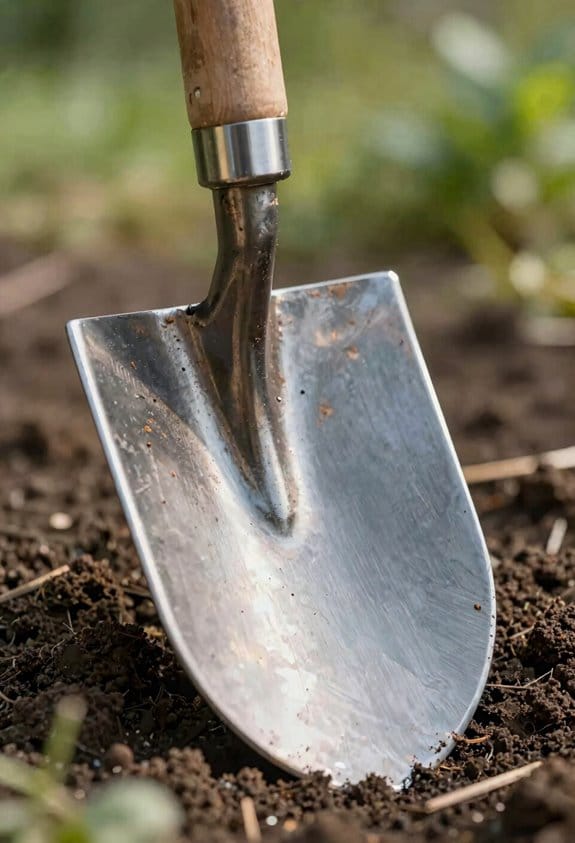
Where spades truly shine is in tasks requiring precision cutting and clean edges, making them indispensable for gardeners who need to define planting beds or remove unwanted vegetation. a spade’s flat, sharp blade penetrates hard, compact soil without excessive disruption, allowing me to slice through roots cleanly and create straight-edged holes for transplanting delicate plants.
The key to maintaining these advantages lies in regular blade maintenance and edge sharpening. When I keep my spade’s edge honed, it cuts more efficiently through turf and performs intricate edging work that prevents lawn overlap into garden beds. Unlike shovels, spades excel at scraping and stabbing tasks, making them superior for breaking up dead roots and weeds while minimizing broad soil displacement.
Shovel Strengths: Scooping and Moving Bulk Material
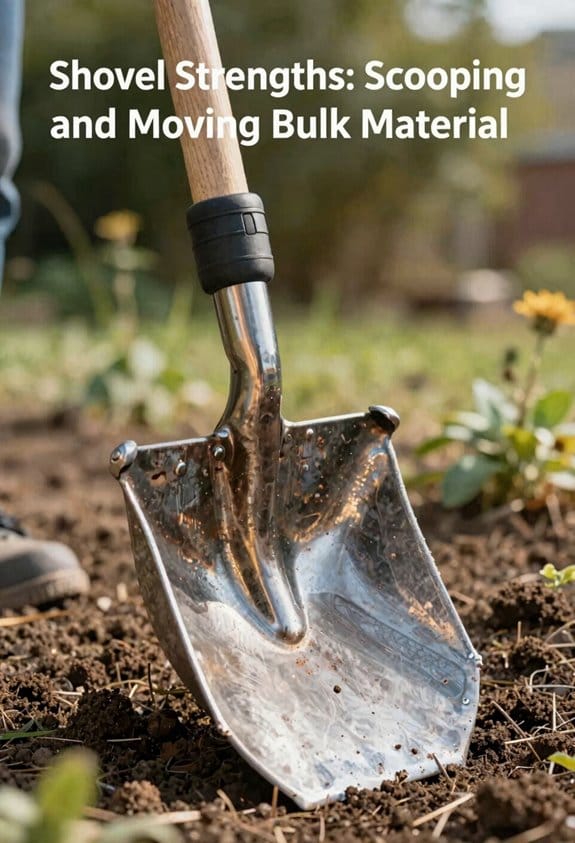
While spades prioritize precision and clean cuts, shovels excel at the opposite end of the gardening spectrum—moving large quantities of material efficiently. I find that shovels’ curved, bowl-shaped blades make them ideal for bulk scooping tasks like moving soil, sand, or gravel across your yard. Their design allows you to hold more material per load than a spade would, which means fewer trips back and forth. The pointed or rounded ends penetrate loose material easily, and the load capacity of larger shovels markedly outperforms narrower spades. When you’re transporting soil from one garden bed to another or moving stone for a pathway project, a shovel’s ability to retain its contents during movement makes it the better choice for handling volume efficiently.
Penetrating Hard, Compact Soil
When you encounter densely packed earth or hardened soil that resists easy movement, the spade becomes your most valuable tool. The spade’s flat, sharp blade cuts through soil compaction more effectively than a shovel’s curved design. I find that the spade’s straight edge penetrates hard ground by slicing rather than scooping, which reduces the energy needed for each thrust. You can apply foot pressure directly onto the blade’s top edge, using your body weight to drive through resistant earth. This leverage advantage makes spades ideal for breaking up compacted layers that would frustrate shovel users. The spade’s narrower profile concentrates force precisely where you need it, making difficult digging tasks manageable and efficient.
Preventing Spillage During Transport
During the transport phase of gardening work, the design differences between spades and shovels become critically important for efficiency and material retention. shovels excel at preventing spillage because their curved, bowl-shaped blades create natural edge seals that contain soil, sand, or gravel during movement. The curved sides act as barriers, holding material securely even when traversing uneven terrain.
Spades, conversely, struggle with load retention due to their flat blade design. Material tends to slide off the sides and edges during transport, creating waste and requiring multiple trips. When I need to move significant quantities without loss, I consistently choose a shovel. The bowl shape’s inherent containment makes it superior for bulk material handling, while a spade’s design prioritizes cutting precision over transportation efficiency.
Task Breakdown: Which Tool for Which Job
Because gardening tasks vary widely in their demands, selecting the right tool—spade or shovel—makes a significant difference in your work’s success and efficiency. I’d use a spade when I’m edging garden beds, digging precise holes for transplanting, or slicing through roots. Its flat blade cuts cleanly without disrupting surrounding soil, preventing unnecessary soil compaction. For moving bulk materials like mulch or gravel, I’d reach for a shovel instead. Its curved design scoops and transports larger volumes efficiently. When breaking hardpan or compacted earth, the spade’s sharp edges penetrate better than a shovel’s rounded end. Proper tool maintenance—keeping blades sharp and handles intact—ensures both tools perform ideally for their intended purposes throughout your gardening season.
Size and Weight: Matching Your Physical Capacity
Since gardening tasks demand sustained physical effort, understanding how tool size and weight affect your ability to work comfortably matters greatly. Garden spades, being smaller and lighter, require less physical strain during repetitive motions, making them ideal if you’re building ergonomic training habits or have limited strength. Shovels weigh more because their larger blades increase load capacity, allowing you to move substantial soil volumes, though they demand greater muscular endurance. Your choice depends on both the task and your physical capabilities. Lighter tools suit precision work in confined spaces, while heavier shovels excel when moving bulk materials over distance. Consider your strength level, the job’s demands, and how long you’ll work before selecting your tool, ensuring you can maintain proper form throughout your gardening session.
Making Your Final Choice
Once you’ve evaluated your physical capabilities and understand the fundamental differences between these tools, selecting the right one becomes straightforward. Consider your primary gardening tasks first—if you’re edging beds and planting, a spade’s precision cutting makes it ideal. For moving soil or mulch in volume, a shovel’s scooping design wins. Think about seasonal storage space available in your shed or garage, especially if you’re limited on room. Budget considerations matter too; quality spades and shovels vary in price, so invest in whichever tool you’ll use most frequently. Many gardeners benefit from owning both, allowing them to tackle diverse projects efficiently throughout the year.
For a useful next step, prepare garden soil with hand tools and understand how mulch affects soil. These guides cover the related maintenance or buying decision without changing the task explained here.
Frequently Asked Questions
Can a Spade Blade Be Sharpened, and How Often Should Maintenance Occur?
Yes, I sharpen my spade blade regularly through blade sharpening and edge maintenance. Consider maintaining your spade’s edge annually or whenever you notice dulling, ensuring it cuts efficiently through tough soil and roots.
Are There Left-Handed Versions of Spades and Shovels Available for Purchase?
left-handed versions exist, though they’re harder to locate. You’ll discover mirrored handles and left-handed ergonomics in specialized garden suppliers, but standard right-handed tools remain more common and affordable options.
What Materials Are Spade and Shovel Handles Typically Made From for Durability?
Consider fiberglass handles for their durability and lightweight strength. They’re resistant to rot and weathering. Stainless steel ferrules protect the handle’s base, preventing splitting and extending your tool’s lifespan considerably.
How Do Climate Conditions Affect the Performance of Each Tool Over Time?
soil freezing makes spades harder to penetrate frozen ground, while shovels struggle similarly. You’ll notice corrosion resistance matters greatly—rust develops faster on metal handles in wet climates, degrading both tools’ durability over seasons.
What Is the Typical Lifespan of a Quality Spade Compared to a Shovel?
I’ll tell you that quality spades ironically outlast shovels despite their delicate appearance. You’d expect the opposite, but a spade’s expected lifespan reaches 10-15 years versus a shovel’s 5-8 years. Replacement indicators include blade dulling and handle cracking.