
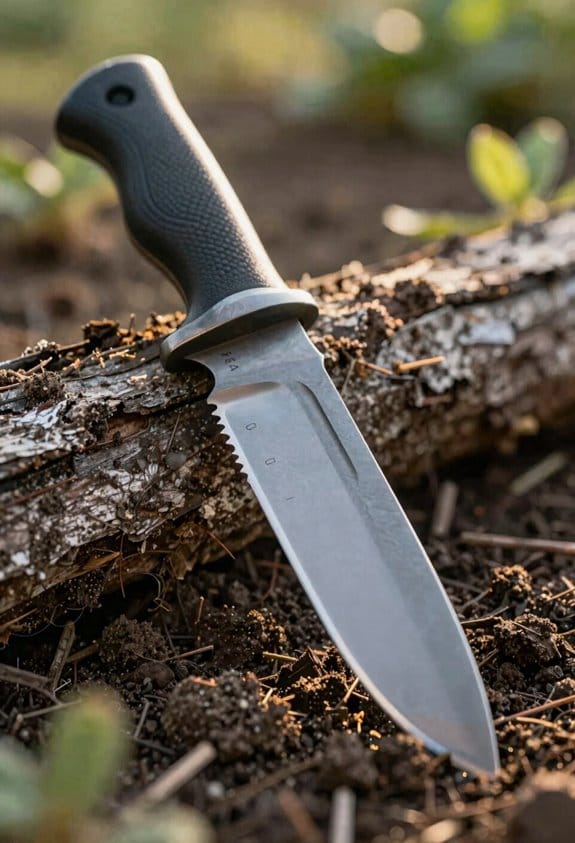
The hori hori knife is a Japanese gardening tool featuring a dual-edged blade—one smooth edge for cutting and one serrated edge for tough roots. Its pointed tip excels at precise digging and weeding. Gardeners love it because it replaces three separate tools: a trowel, pruner, and weeder. The compact, lightweight design fits easily in a toolbelt and maneuvers through tight spaces where larger tools can’t reach. Understanding the differences between stainless and carbon steel options reveals why this single blade becomes indispensable.
Key Takeaways
- Japanese gardening tool with dual-edge blade design consolidates trowel, pruner, and weeder functions into one compact, portable implement.
- Serrated and smooth edges enable precise cutting of stems, roots, and tough materials while the pointed tip excels at digging and weeding.
- Measurement markings on the blade allow gardeners to dig exact hole depths for bulbs and seedlings with consistency and accuracy.
- Lightweight, ergonomic design fits easily in toolbelts and maneuvers through tight container spaces where larger traditional garden tools cannot reach.
- Choice between low-maintenance stainless steel and high-performance carbon steel allows gardeners to select based on their preferred maintenance commitment level.
What’s a Hori Hori Knife and What Can It Do?
Imagine having a tool that combines the functions of a trowel, pruner, and weeder all in one compact design, and you’ll understand why the hori hori knife, also called a soil knife or weeding knife, has become so popular among gardeners. This Japanese instrument, originating from centuries of garden history, features a 15-18 cm blade with dual edges—one smooth for precise cuts and one serrated for tough materials. The pointed tip excels at prying weeds and piercing soil. Tool etiquette dictates proper handling when sharing this versatile implement. You’ll use it for digging holes, harvesting vegetables, cutting roots, and managing containers. Its portability and all-encompassing capabilities make it invaluable for serious and casual gardeners alike.
Why One Knife Replaces Three Tools
You may be interested



The hori hori knife‘s real advantage lies in its ability to consolidate three separate gardening tools into a single, efficient implement. Instead of carrying a trowel, pruner, and weeder separately, you’re holding one versatile blade that handles all three tasks. The smooth edge cuts stems and foliage like pruners do, while the serrated edge tackles tough roots as effectively as dedicated weeders. The pointed tip functions as a precision digging tool, replacing your standard trowel for planting bulbs and seedlings. Because it’s compact and lightweight with an ergonomic handle, it fits easily in your compact toolbelt without weighing you down. This consolidation means fewer tools to maintain, sharpen, and store while accomplishing more in your garden.
Five Tasks to Master With Your Hori Hori Knife
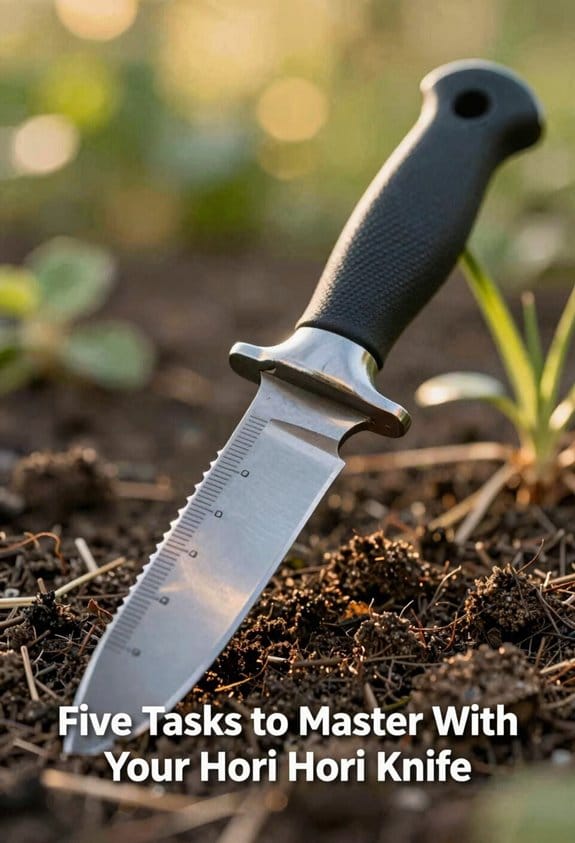
Once you’ve understood how the hori hori knife consolidates multiple tools, you’ll want to develop proficiency with its core gardening applications. First, master planting depth by using the blade’s measurement markings to dig precise holes for seeds and bulbs. Second, practice root extraction by positioning the pointed tip beneath weeds and cutting taproots cleanly to prevent regrowth. Third, refine your cutting technique for stems, foliage, and herbs using the smooth blade edge. Fourth, learn to split bulbs and trim dead vegetation with controlled pressure. Finally, develop skill maneuvering the tool in tight container spaces where larger implements won’t fit effectively. Consistent practice with these five applications will maximize your efficiency and gardening results.
Hori Hori Knife Blades: Stainless Steel vs. Carbon Steel
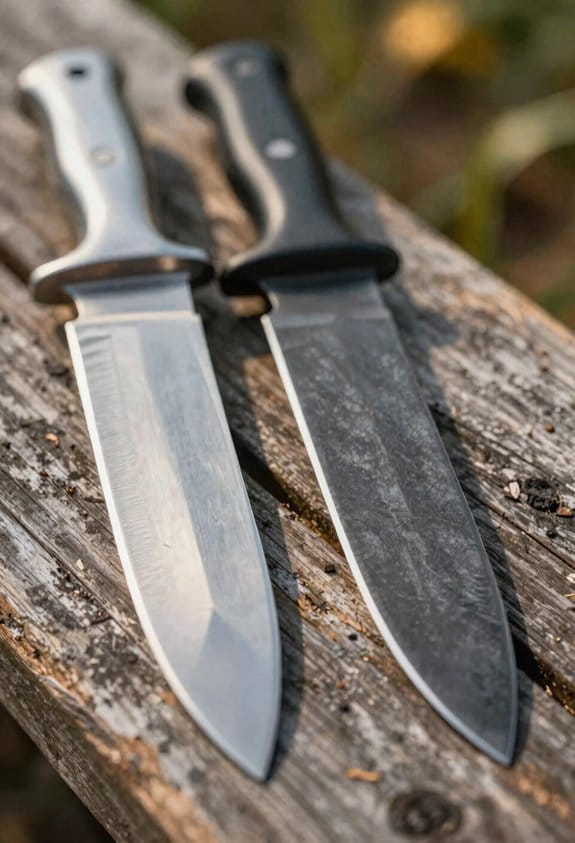
Most hori hori knife owners don’t realize that their blade’s material makes a significant difference in performance, maintenance, and longevity. You’ll encounter two primary options: stainless steel and carbon steel, each offering distinct advantages.
Stainless steel provides superior stainless durability, resisting rust and corrosion even with minimal care. However, it sacrifices some initial sharpness and requires more frequent honing to maintain a keen edge.
Carbon steel delivers exceptional carbon sharpness, holding a fine point longer than stainless alternatives. The tradeoff? It demands regular maintenance, including annual rust cleaning with steel wool and consistent sharpening to prevent dulling.
Your choice depends on your commitment level. If you prefer low-maintenance tools, stainless steel suits you. If you’re willing to invest time in upkeep for superior cutting performance, carbon steel rewards your effort.
Care and Maintenance: Keeping Your Hori Hori Sharp Year-Round
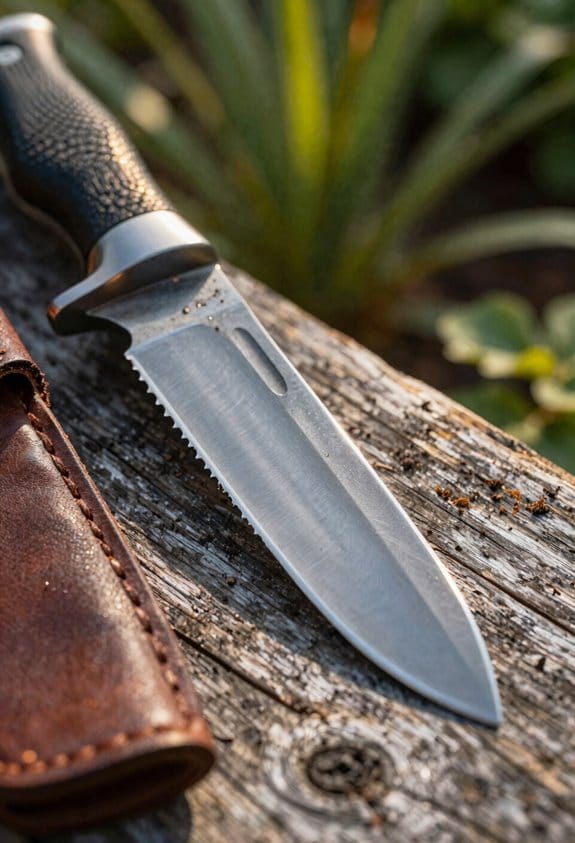
Choosing between stainless and carbon steel sets the foundation for your maintenance routine, but understanding how to care for your hori hori knife guarantees it’ll serve you well for years. For carbon steel blades, you’ll need to sharpen them frequently using a whetstone or honing steel to maintain their edge. Rust prevention is critical with carbon steel, so Consider cleaning your blade immediately after use and storing it in a dry location. Stainless steel requires less frequent sharpening but still benefits from regular honing. For blade storage, always use the included sheath or holster to protect the sharp edges and prevent damage. Store your knife in a cool, dry place away from moisture to extend its lifespan markedly.
For a useful next step, prepare garden soil with hand tools and understand how mulch affects soil. These guides cover the related maintenance or buying decision without changing the task explained here.
Frequently Asked Questions
Where Did the Hori Hori Knife Originate, and Why Is It Called “Hori Hori”?
I’ll paint you a picture of misty Japanese mountains where this tool’s story begins. The hori hori knife originates from Japan, its name deriving from “hori”—meaning “to dig”—with the repetition creating onomatopoeia mimicking digging sounds.
What Handle Materials Are Available, and Which Is Most Comfortable for Gardeners?
I’ll tell you that wooden handles paired with cushioned grips offer the most comfort for extended gardening sessions. You’ve also got bamboo, rosewood, plastic, rubber, and metal options available, but ergonomic wood handles truly reduce hand fatigue.
How Do Depth Markings on Hori Hori Knives Help With Precise Planting?
I’ll show you exactly how depth markings guide your planting. These etched measurements let you dig consistent holes for seed spacing and proper planting depth, eliminating guesswork and ensuring uniform germination across your garden beds.
Are Hori Hori Knives Suitable for Heavy Clay Soil and Tough Gardening Tasks?
Yes, Consider a hori hori for heavy clay soil. Its wide blade cuts through soil compaction effectively, though you’ll need regular blade maintenance to keep the edge sharp for tough gardening tasks.
What Size Hori Hori Knife Is Ideal for Most Home Gardeners and Containers?
Consider an 11-15 inch hori hori for your container gardening needs. This compact size lets you maneuver easily in tight spaces while maintaining excellent blade control. You’ll find it’s perfect for precision work, though regular blade maintenance keeps it performing at its best.