

I’ve cut my garden’s water waste markedly by selecting drought-tolerant plants that need 55% less irrigation than traditional ornamentals. I use drip irrigation, which reduces water loss by up to 60% compared to sprinklers, and I water during early morning hours when evaporation is minimal. I’ve improved my soil with compost to boost water retention, applied 2–3 inches of mulch around plants, and I capture gray water from household sources. These practical strategies work together to create substantial savings.
Key Takeaways
- Plant drought-tolerant natives and succulents that require substantially less water than traditional ornamental plants.
- Apply 2–3 inches of organic mulch around plants to reduce evaporation and improve soil water retention.
- Water during early morning or late evening to minimize water loss through evaporation.
- Amend soil with compost to increase organic matter and boost water-retention capacity near roots.
- Capture and reuse gray water from household sources like showers and sinks for garden irrigation.
Pick Plants That Thrive on Less Water
One of the most effective ways to reduce garden water waste is selecting plants that naturally require less water to survive and flourish. Drought tolerant natives adapted to your region need substantially less irrigation than traditional ornamental plants. xerophytic species—plants evolved for dry conditions—perform exceptionally well while demanding up to 55% less water than conventional landscaping choices.
You may be interested
Consider incorporating succulent groundcovers, which store water in their leaves and require minimal supplemental watering once established. Woody plants and non-turf species similarly thrive with reduced irrigation schedules. Mediterranean-climate plants and desert species represent excellent alternatives that maintain visual interest while supporting conservation goals. By replacing water-intensive plants with these hardy options, you’ll establish a landscape requiring minimal maintenance while protecting environmental resources and reducing household utility costs.
Choose Your Watering Method
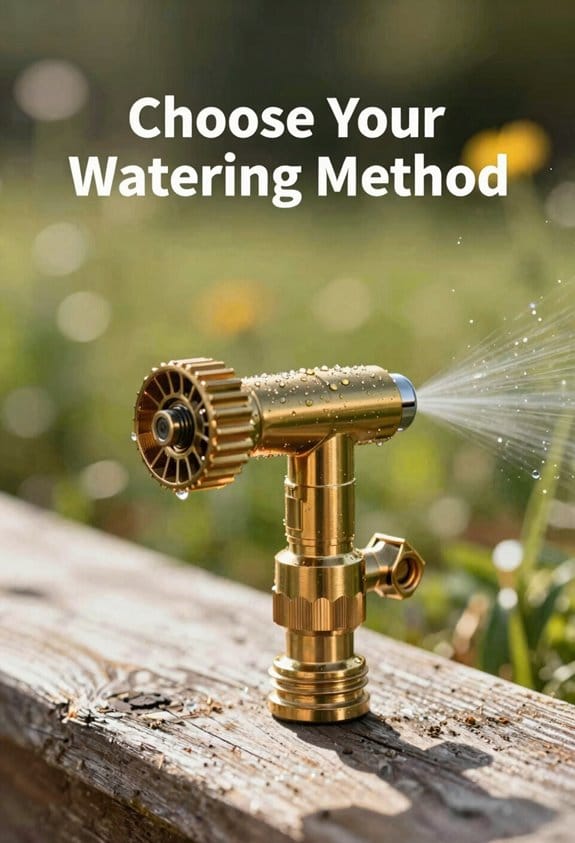
After you’ve selected plants suited to drier conditions, the next critical step involves picking the right irrigation system, since how you deliver water to your garden markedly impacts how much you’ll actually waste. Drip irrigation systems reduce water loss by up to 60% compared to traditional methods, delivering water in gallons per hour for slow, direct root penetration. Soaker hoses offer similar efficiency by placing water exactly where plants need it. Hand watering provides precision but requires more time and effort. Overhead sprinklers waste water on non-planted areas, while ditch irrigation uses the most water overall. Pairing your chosen system with proper irrigation scheduling—watering during cooler periods to minimize evaporation—maximizes your conservation efforts and protects both your plants and water resources.
Improve Your Soil to Retain More Water
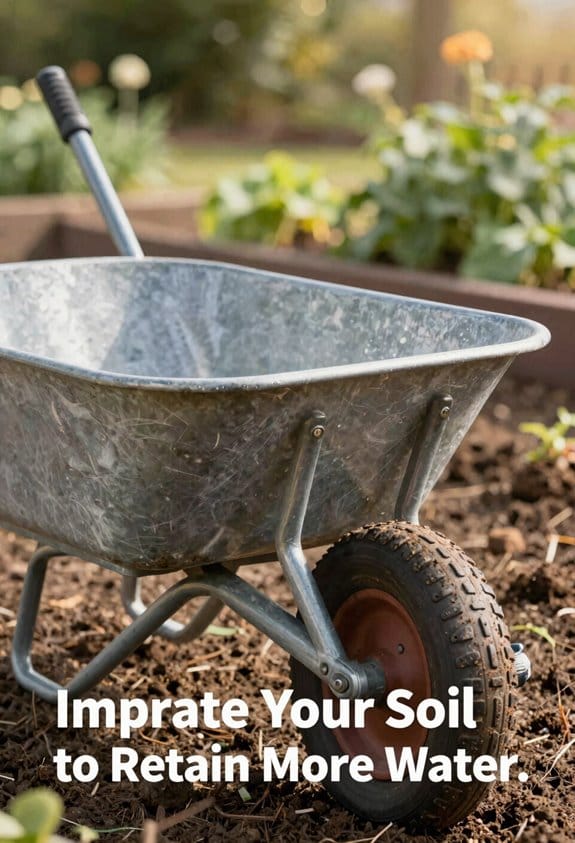
Healthy soil acts like a sponge, holding water near plant roots where it’s needed most, and you can markedly improve your soil’s water-retention capacity through strategic management practices. Consider increasing organic matter by incorporating compost and conservation tillage, which leaves at least 30% of crop residue on the soil surface. This residue boosts water absorption while reducing evaporation. Additionally, you should amend clay content to allow water to spread evenly and penetrate slowly for efficient absorption. When soil contains adequate clay combined with increased organic matter, it retains moisture longer, reducing your irrigation frequency. Proper soil preparation also prevents water runoff and nutrient loss. These amendments create ideal conditions for plant root systems to access stored water during dry periods.
Water During Cool Hours to Minimize Evaporation
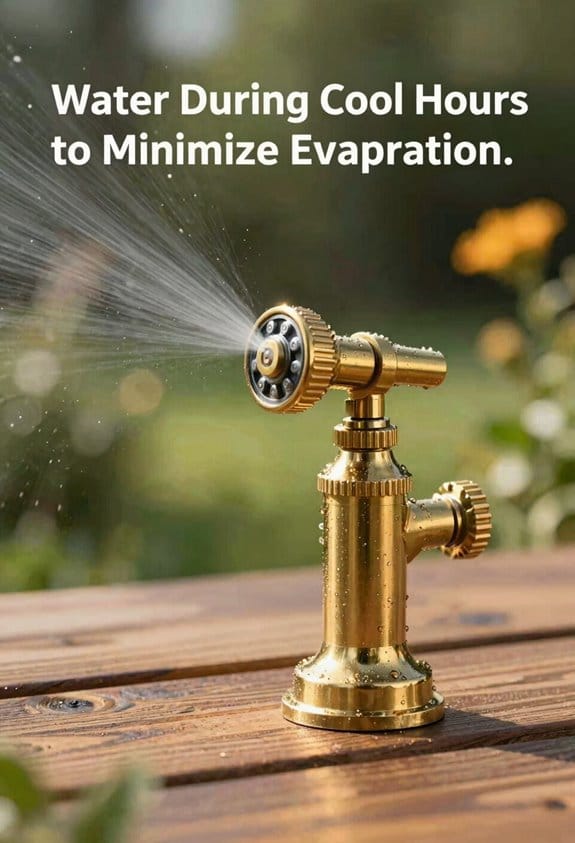
By timing your watering during cooler periods of the day, you’ll reduce evaporation losses and deliver more water directly to your plants’ roots where it’s needed most. Early morning watering allows soil to absorb water before peak temperature hours arrive, ensuring your plants receive maximum hydration. Late evening watering also works well, though early morning is often preferred because it helps plants withstand daytime heat stress.
During hot summer conditions, sprinklers waste markedly more water through evaporation than necessary. Drip irrigation applied directly to soil rather than sprayed through air reduces water loss even further when used during these cooler times. Strategic timing combined with efficient watering methods means your garden gets more water where it matters, protecting both your plants and your water resources.
Add Mulch to Reduce Evaporation
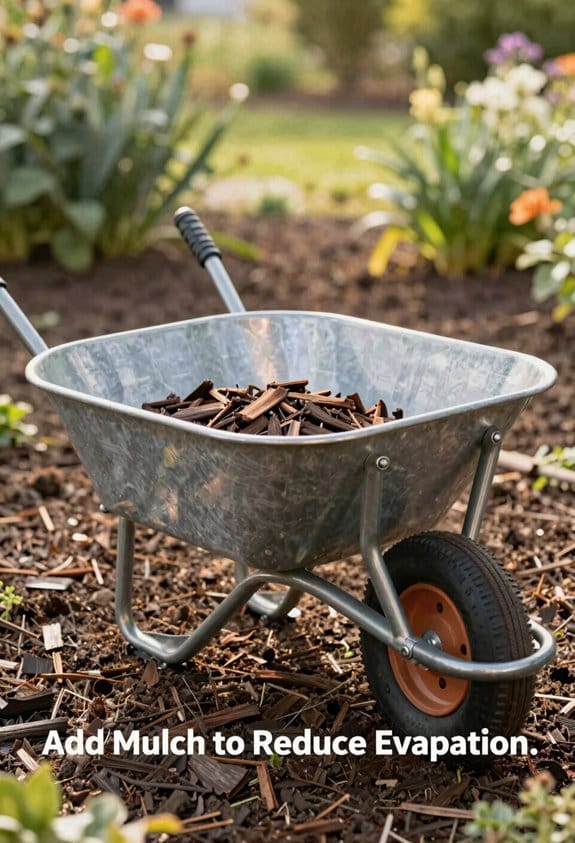
While timing your watering schedule helps reduce evaporation losses, you can further protect your soil moisture by adding a layer of mulch to your garden beds. Organic mulch creates a moisture barrier that shields soil from direct sun exposure, markedly decreasing water loss through evaporation. Consider applying two to three inches of mulch around your plants, keeping it slightly away from plant stems to prevent rot. As organic mulch breaks down over time, it simultaneously improves soil structure and increases the soil’s water retention capacity. This dual benefit means you’ll water less frequently while your plants receive better moisture availability. Mulching represents one of the most cost-effective and straightforward conservation methods available to gardeners seeking sustainable landscaping practices.
Capture and Reuse Gray Water From Home
Beyond mulching and timing your watering schedule, you can tap into another valuable water source that’s already flowing through your home: gray water. Gray water—collected from washing machines, dishwashers, showers, bathtubs, and sinks—can irrigate your garden instead of going to waste. Before implementing a gray water system, check your local regulations, since some municipalities restrict this practice.
To maintain soap safe practices, use biodegradable detergents, as standard cleaners contain sodium salts that may alter your soil chemistry over time. When routing gray water through your household plumbing system for garden use, direct it to drought-tolerant plants that tolerate slight chemical variations. This supplemental water source reduces demand on treated supplies, particularly valuable during drought conditions or water restrictions, while lowering your utility costs.
For a useful next step, compare drip irrigation with sprinklers and clean garden tools after use. These guides cover the related maintenance or buying decision without changing the task explained here.
Frequently Asked Questions
How Much Water Can I Save by Switching From Overhead Sprinklers to Drip Irrigation?
You’ll hit the jackpot saving up to 60% water by switching to drip irrigation. Consider focusing on proper emitter placement near plant roots—this drip efficiency means you’re watering what matters, not wasting water on bare soil.
What Percentage of Residential Water Consumption Goes Toward Landscape Irrigation Annually?
I’ll tell you that landscape irrigation accounts for approximately 50% of your annual residential water consumption, though this varies—it’s around 30% in coastal areas and 60% or more in inland suburban communities where you live.
Can Lawn Irrigation Be Reduced During Drought Without Permanently Damaging the Turf?
Yes, I can reduce your lawn irrigation 20-30% for several weeks during drought without permanent damage. Your turf’ll enter dormancy and recover when watering resumes, though you’ll want to defer overseeding until conditions improve.
Are There Local Regulations I Should Know Before Implementing a Gray Water System?
Yes, you’ll need to check your local regulations before installing gray water systems. Most municipalities have specific permits needed and disposal restrictions that vary by location. Consider contacting your water department first.
How Does Conservation Tillage Improve Water Retention in Agricultural and Garden Settings?
I’ll improve your soil structure by leaving 30% of crop residue on the surface, which increases water absorption and reduces evaporation. This practice also enhances root depth penetration, allowing plants to access moisture more efficiently during dry periods.