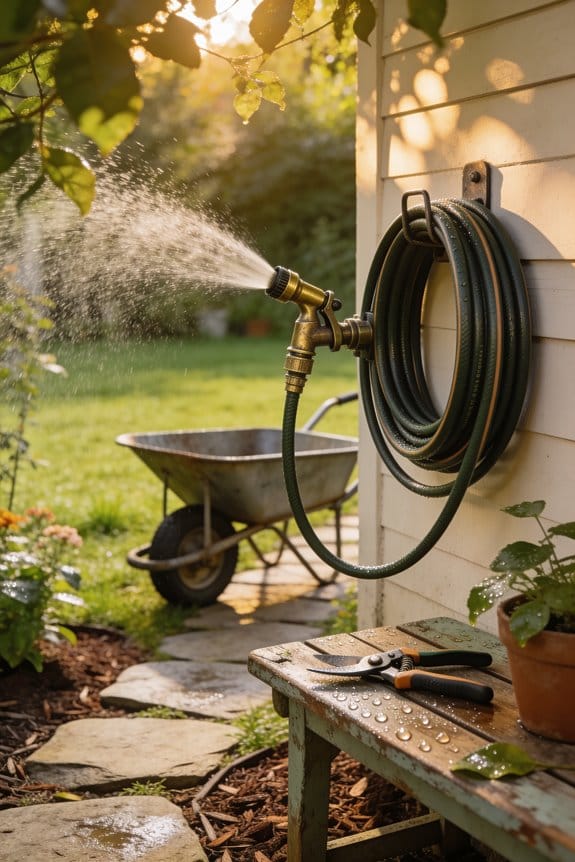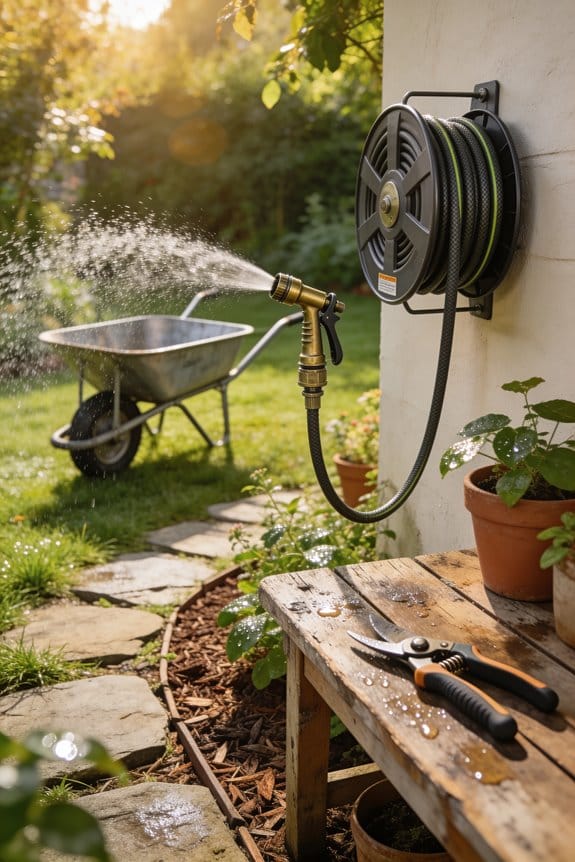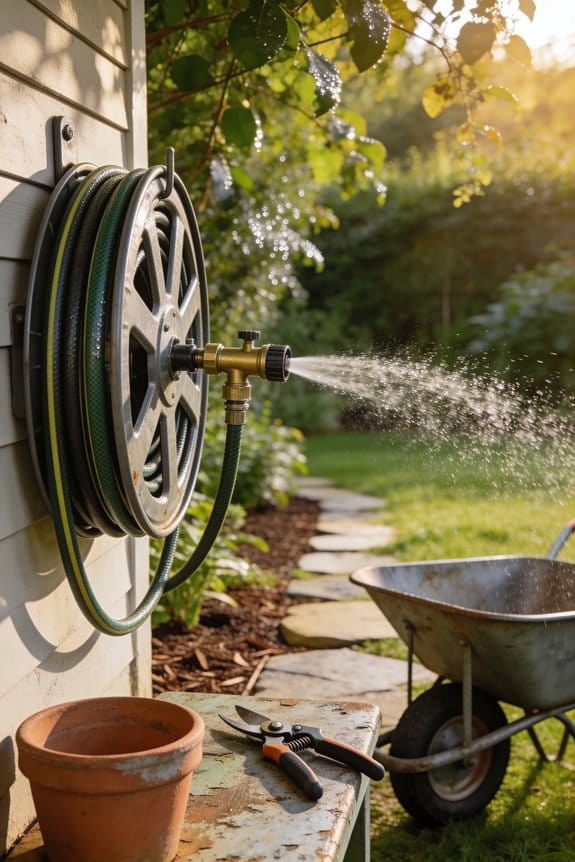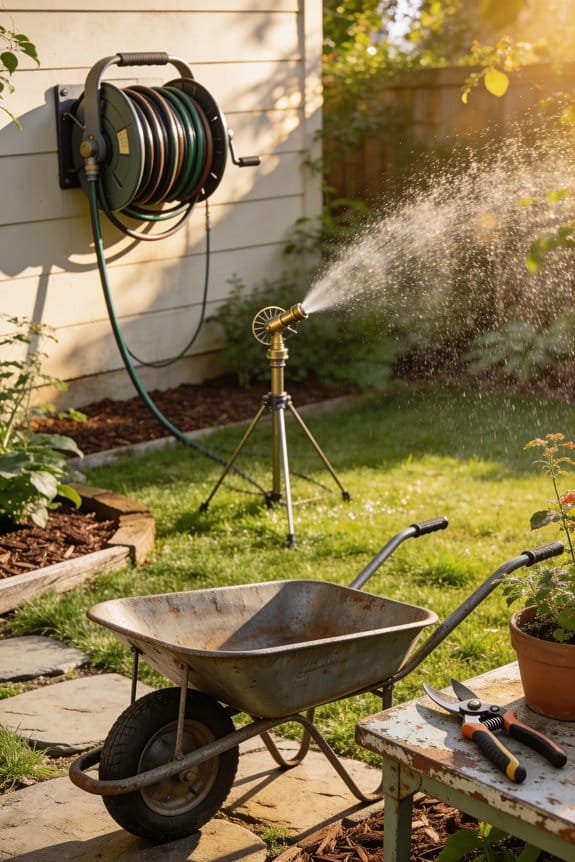
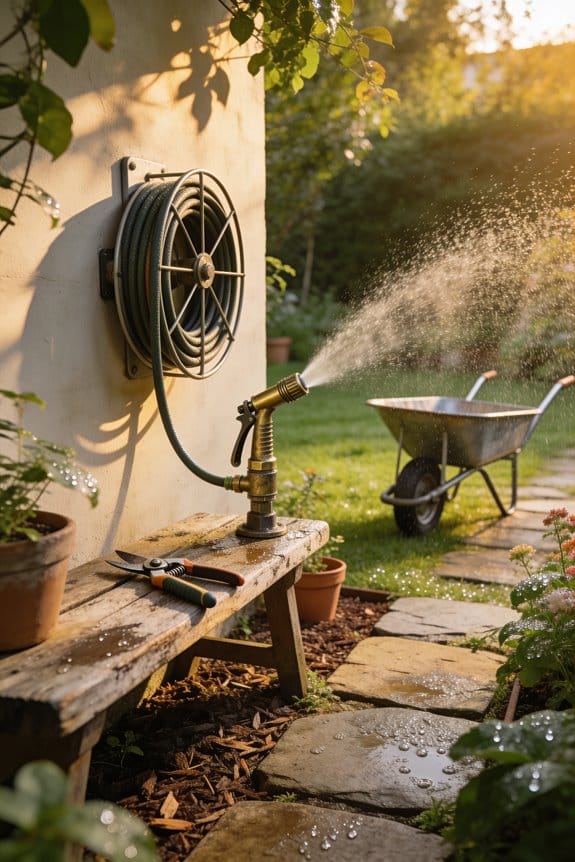

Rubber hoses feature solid outer layers of vinyl or rubber stacked for durability, lasting decades with minimal maintenance. Expandable hoses contain a latex core wrapped in elastic polyester fabric that stretches when pressurized, then shrinks to one-third size when drained. While rubber hoses resist heat and punctures better, they’re heavier and need substantial storage space. Expandable hoses offer lightweight portability and compact storage, but their fabric layers tear easily and typically need replacement within a few years. Your yard type and storage situation should guide your choice, and we’ll explore exactly how to match each hose to your specific needs.
Key Takeaways
- Rubber hoses feature solid multi-layer construction; expandable hoses use elastic polyester fabric with latex core for dramatic stretching capability.
- Expandable hoses compact to one-third size when drained, while rubber hoses maintain fixed structure requiring significant year-round storage space.
- Rubber hoses last decades with minimal maintenance; expandable hoses typically fail within years as fabric layers tear and leak.
- Rubber hoses weigh considerably more and are harder to transport; expandable hoses offer lightweight portability for convenient gardening tasks.
- Rubber hoses suit sprawling, rough yards with heavy use; expandable hoses work best for compact patios with limited storage.
What’s Actually Inside These Hoses?
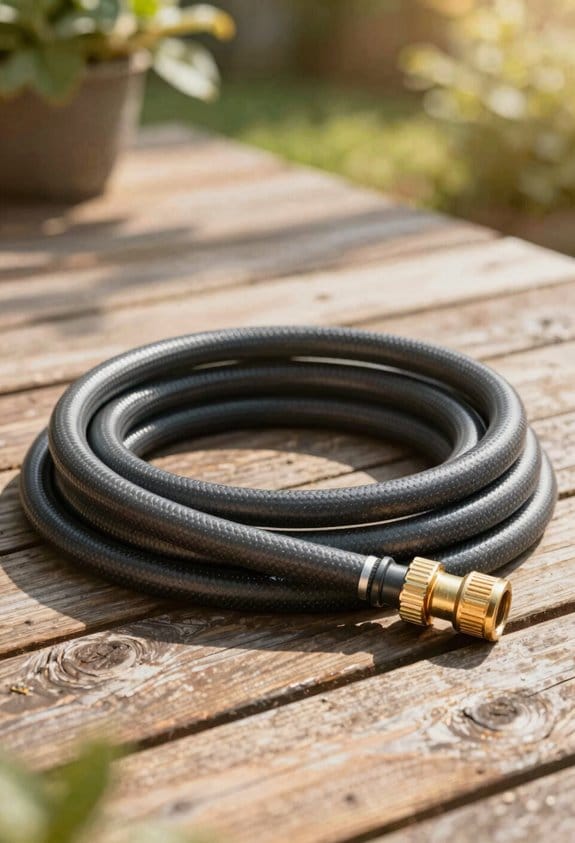
When you peel back the outer layer of a garden hose, you’ll find two fundamentally different internal structures that determine how each type performs. Rubber hoses feature a solid rubber or vinyl outer layer protecting a reinforced inner tube that maintains rigid structure. Expandable hoses, by contrast, use latex cores covered by elastic polyester fabric, with nylon braiding providing additional support throughout multiple layers.
You may be interested


Rubber hoses employ several layers of vinyl or rubber stacked together, creating strength against abrasion and pressure. Expandable hoses consist of just two to four layers, which allow them to stretch dramatically. This layered construction difference explains why expandable hoses can elongate up to three times their original length when water flows through them, while rubber hoses maintain a consistent, fixed structure regardless of water pressure inside.
How Water Pressure Keeps Expandable Hoses Kink-Free
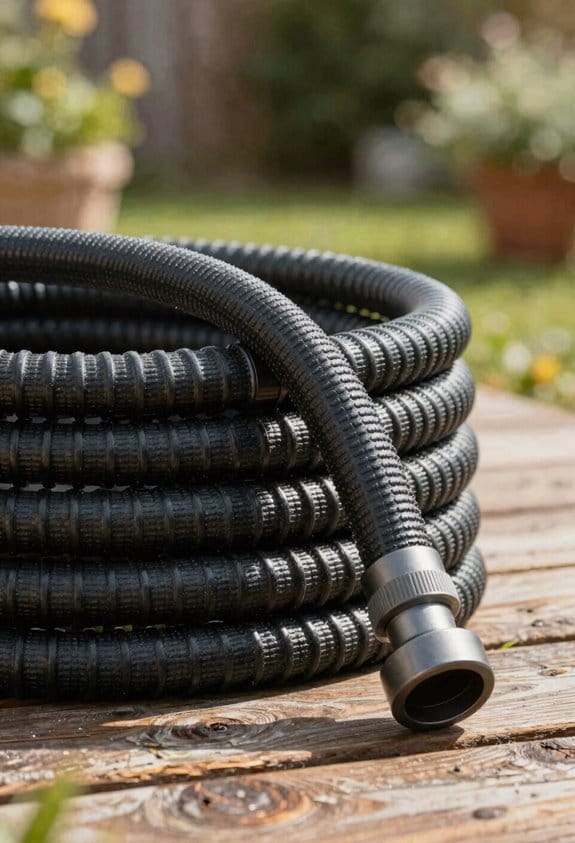
Understanding why expandable hoses resist kinking requires looking at how water pressure interacts with their unique layered design. When you turn on the water, internal pressure builds inside the hose, pushing outward against the elastic polyester fabric layer. This outward force creates tension throughout the hose’s structure, keeping it rigid and straight. The material elasticity of the rubber inner core allows the hose to expand uniformly rather than collapse or fold. This pressurized state prevents the twists and kinks that commonly plague traditional rubber hoses. Once you shut off the water, the internal pressure decreases, allowing the hose to contract back to its compact size. This pressure-based mechanism makes expandable hoses particularly useful in tight spaces and cluttered gardens.
Which Lasts Longer: Durability Head-to-Head
Because durability directly impacts your investment and long-term satisfaction, understanding how rubber and expandable hoses hold up over time becomes essential. Rubber hoses typically last decades when maintained properly, resisting abrasion and extreme temperature changes. Their solid construction prevents material fatigue from repeated expansion and contraction cycles. Expandable hoses, however, experience faster deterioration, with their fabric outer layer prone to tears and leaks within just a few years of outdoor use. When damage occurs, repair options differ markedly: rubber hoses can often be patched or have sections replaced affordably, while expandable hoses generally require complete replacement. If you prioritize longevity and want fewer replacements, rubber hoses offer superior durability. For temporary or light-duty applications, expandable hoses remain cost-effective despite their shorter lifespan.
Rubber vs. Expandable: Weight and Storage
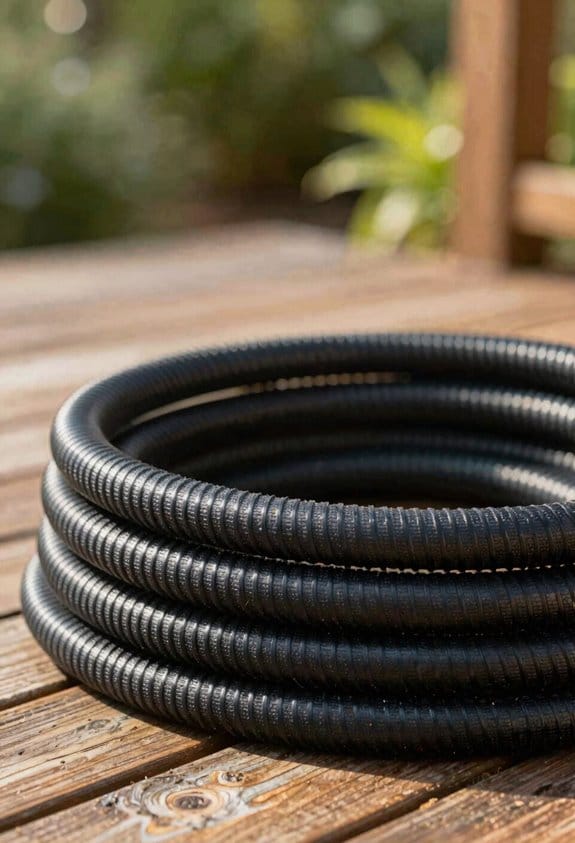
While durability determines how long your hose lasts, weight and storage considerations directly affect your day-to-day experience using it. Rubber hoses are markedly heavier than their expandable counterparts, which makes lightweight handling more challenging during transport and setup. Because rubber hoses maintain their fixed structure, they demand substantial storage space in your garage or shed year-round. Expandable hoses offer a distinct advantage here: after you drain them completely, they shrink to approximately one-third their expanded size, enabling compact storage in tight spaces. This dramatic size reduction means you’ll spend less time managing equipment and more time gardening. If you have limited storage areas or prefer easier portability, expandable hoses provide practical benefits that rubber hoses simply cannot match.
Navigate Tight Spaces Without Kinking
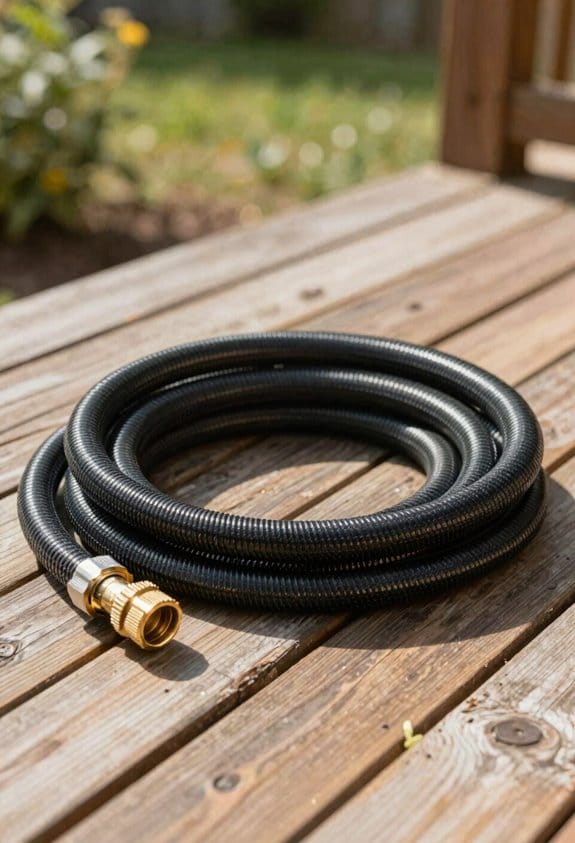
When you’re watering plants around garden beds, patios, or decorative elements, you’ll quickly discover that hose maneuverability matters far more than you might initially think. Rubber hoses, while durable, tend to kink and twist during movement, restricting water flow around corners and obstacles. Expandable hoses excel in compact maneuverability because their pressurized design prevents kinking as water flows through them. This feature makes obstacle navigation markedly easier in cluttered spaces. Their flexibility allows you to weave between plants, furniture, and landscaping without interrupting water delivery. Since expandable hoses contract when drained, you can store them in tight areas without worrying about maintaining their shape. For gardeners working in confined spaces, expandable hoses provide the adaptability and ease that rigid rubber hoses simply cannot match.
Match Your Hose to Your Yard Type
Your yard’s size and layout fundamentally determine which hose type will serve you best, since different environments demand different performance characteristics. If you’ve got a sprawling yard with full sunlight exposure, a rubber hose handles the heat and UV rays better than expandable alternatives. However, Consider expandable hoses for compact patios or gardens where storage space is limited. Consider your soil type as well—rough, rocky terrain can puncture expandable hoses more easily, making rubber the smarter choice for rocky yards. For small, organized gardens with gentle soil conditions, expandable hoses offer convenient portability. Ultimately, match your hose selection to your yard’s specific demands: durability and strength for large properties, or lightweight convenience for intimate garden spaces.
Making Your Final Choice
After considering your yard’s specific needs and conditions, you’re ready to make a decision between rubber and expandable hoses by weighing what matters most to you. Budget considerations play an important role, since expandable hoses cost less upfront despite their shorter lifespan. However, rubber hoses offer better long-term value through decades of reliable use. Think about environmental impact too; expandable hoses eventually end up in landfills due to material degradation, while quality rubber hoses last longer and reduce waste. Evaluate your typical gardening tasks, storage space, and how frequently you’ll use your hose. If you need durability and perform heavy-duty work, rubber is worth the investment. For occasional light watering in compact spaces, expandable hoses provide practical convenience and affordability.
For a useful next step, store a garden hose correctly and diagnose garden hose pressure loss. These guides cover the related maintenance or buying decision without changing the task explained here.
Frequently Asked Questions
Can Expandable Hoses Handle High-Pressure Water From Professional Cleaning Equipment?
I wouldn’t recommend expandable hoses for professional cleaning equipment. They’re prone to bursts under high pressure and lack proper safety ratings. You’ll want rubber hoses that handle intense pressure reliably.
What Temperature Extremes Can Rubber Hoses Withstand Compared to Expandable Hoses?
I’ll tell you that rubber hoses markedly outperform expandable ones in temperature tolerance. Rubber resists extreme heat and cold better, while expandable hoses’ latex and polyester materials degrade faster under temperature stress, limiting their operational range.
How Often Should I Replace an Expandable Hose for Optimal Performance?
Consider replacing your expandable hose every 1-2 years due to material degradation. The fabric outer layer weakens with frequent outdoor exposure, so monitoring your replace frequency helps maintain peak performance and prevent unexpected leaks or bursts.
Are Rubber Hoses Safe for Drinking Water or Food Garden Use?
Consider checking for lead-free certification on rubber hoses before using them for drinking water or food gardens. Some hoses can impact taste, so food-grade options are safer choices for edible purposes.
Do Expandable Hoses Work Properly in Freezing Winter Conditions?
I’d caution you against using expandable hoses in freezing conditions. They’re prone to freeze cracking because their fabric layers don’t insulate well. Consider insulation options like neoprene covers for winter protection.