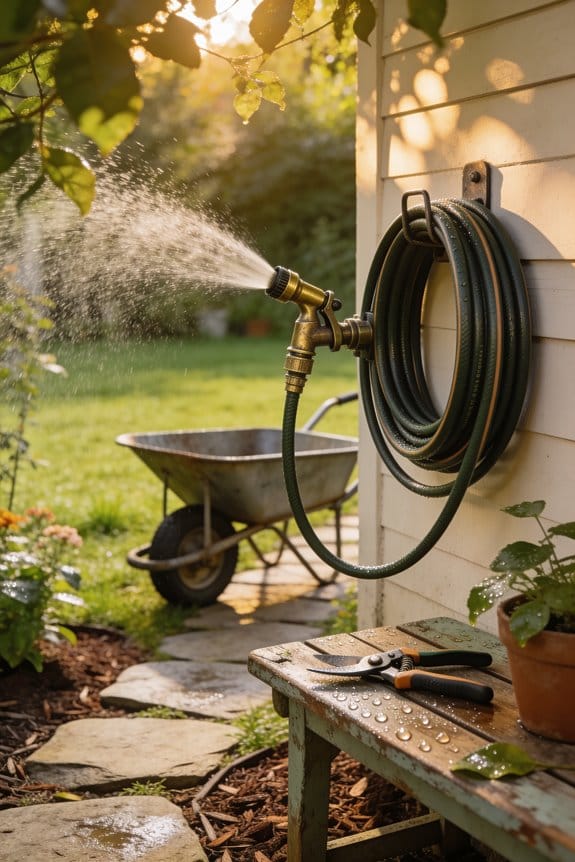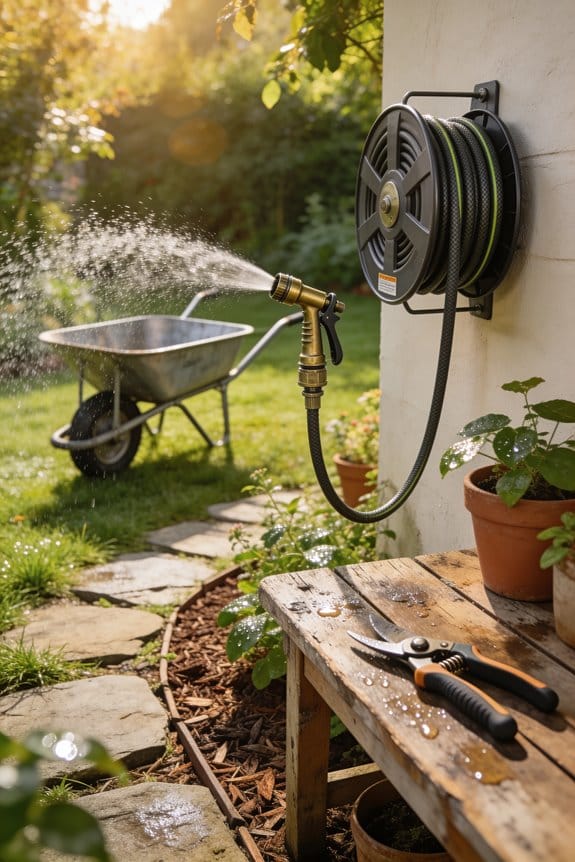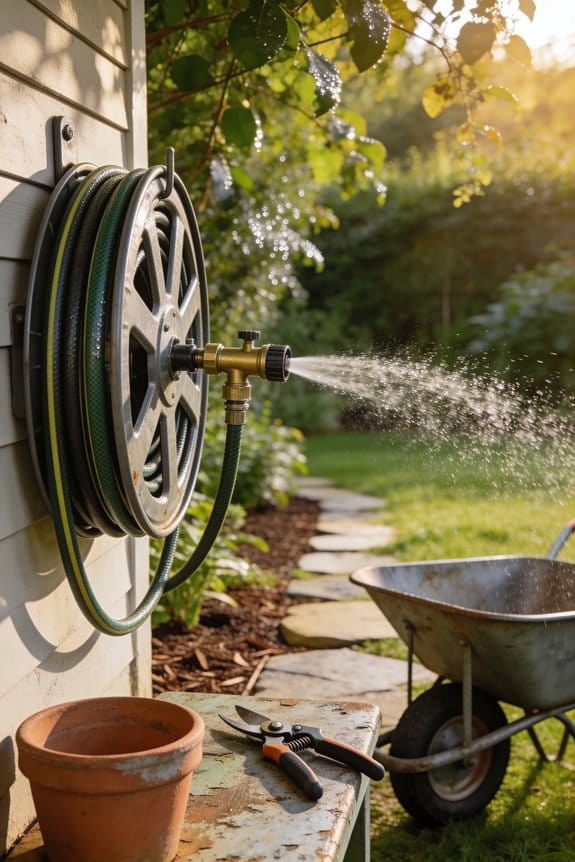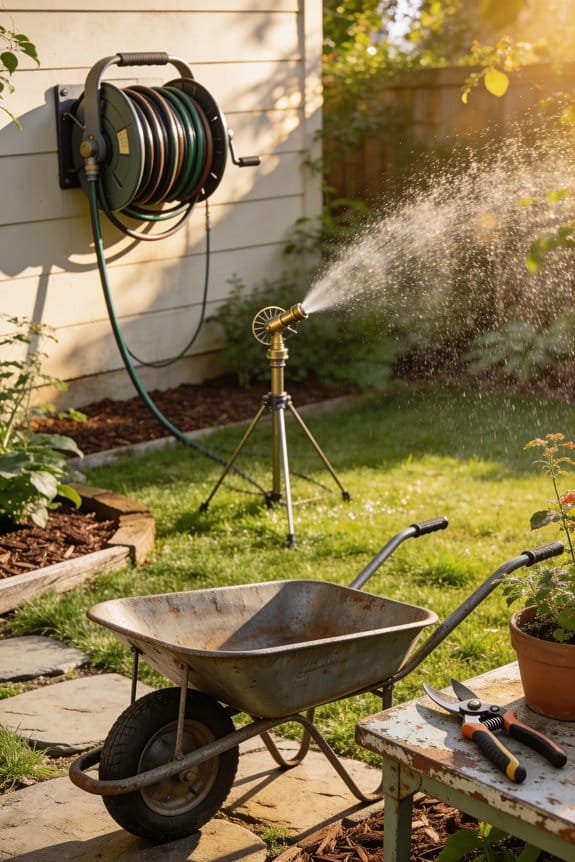


I’ll help you determine your garden’s watering duration by first measuring your hose’s flow rate using a bucket timer method. Established plants typically need twice-weekly watering for about 2 inches weekly, while new plantings require daily sessions. Water early morning before 10 a.m. to minimize evaporation and prevent disease. Your soil type matters too—sandy soil needs shorter, frequent watering, while clay retains moisture longer. Test soil depth with a screwdriver after watering to confirm you’ve reached the root zone, and we’ll explore specific adjustments for different plants next.
Key Takeaways
- Measure your hose flow rate using a 5-gallon bucket and timer to determine watering duration needed.
- Water established plants twice weekly for 2 inches total; adjust duration based on your measured flow rate.
- New plantings and potted plants require daily watering until roots mature, then reduce to twice-weekly.
- Water early morning before 10 a.m. to minimize evaporation and reduce disease risk on foliage.
- Sandy soil needs shorter, frequent watering; clay soil needs longer, less frequent sessions for proper penetration.
Calculate Hand-Watering Duration by Flow Rate
To determine how long you’ll need to water your garden with a hose, you’ll first need to measure your hose’s flow rate, which is the amount of water it delivers per minute. Consider using a simple bucket timing method for accurate hose calibration. Place a 5-gallon bucket under your hose nozzle and time how long it takes to fill completely. If it takes two minutes, your flow rate is 2.5 gallons per minute. This bucket timing technique gives you precise measurements without special equipment. Once you know your flow rate, you can calculate exact watering durations needed to deliver the recommended 2 inches of water weekly. Different nozzles and hose diameters affect flow rates, so recalibrating periodically guarantees consistent results.
Hand-Watering Frequency: Daily vs. Twice-Weekly

You may be interested
Once you’ve calculated how long to water with your hose, the next decision involves determining how often you should water each week, since most gardens benefit from either twice-weekly or daily watering depending on several factors. Established plants typically need watering twice weekly during the growing season, which allows soil to dry slightly between sessions. However, newer plantings, potted plants, and shaded areas require daily watering because their shallow root depth demands consistent moisture. During summer heat, monitor for leaf wiltage as an indicator that you should increase frequency. Check soil moisture regularly by inserting a screwdriver to measure how deeply water penetrates. Starting with daily watering, then adjusting to twice-weekly as plants mature, helps you find the right schedule for your garden’s specific needs.
Water in the Morning to Cut Waste

The timing of your watering can dramatically reduce how much water you waste, so Consider watering your garden in the early morning, ideally before 10 a.m., when temperatures are cooler and evaporation is at its lowest. Morning watering takes advantage of the morning dew already present on plants, which helps water penetrate soil more effectively. By watering before the sun reaches its peak, you’ll achieve significant evaporation reduction compared to midday or afternoon watering. Additionally, morning irrigation allows foliage to dry quickly as temperatures rise, reducing disease risk. If morning watering isn’t possible, evening watering between 4 and 6 p.m. serves as an acceptable alternative. Avoid midday watering entirely, as intense heat causes substantial water loss before it reaches plant roots.
Adjust Duration for Plant Type and Soil

While morning watering reduces waste, how long you water matters just as much, and the right duration depends on what you’re growing and the soil type in your garden. Sandy soil drains quickly, requiring shorter, more frequent watering sessions to keep moisture in the root zone. Clay soil retains water longer, so I water less often but for extended periods. Adding mulch retention helps regulate moisture levels and reduces how frequently you’ll need to water. Established plants generally need two inches weekly, while newer plantings require more frequent watering. I adjust my hose duration based on these factors, checking soil moisture regularly to make certain proper hydration without overwatering.
Verify Depth: Test Soil After Watering

After watering your garden, I always check how deep the moisture has penetrated into the soil, since this tells me whether I’m watering long enough to reach the root zone where plants actually absorb water. I use a screwdriver or trowel to test soil every 15 minutes during watering, pushing it into the ground to feel for moisture. This reveals moisture gradients, showing me where dry soil shifts to wet soil. I’m looking to soak the top 6-8 inches for turfgrass roots. Soil compaction affects how water moves downward, so harder clay soils may require longer watering times than looser, sandy soils. By measuring the actual depth reached, I can adjust my watering duration to make sure plants receive adequate hydration for healthy growth.
For a useful next step, store a garden hose correctly and diagnose garden hose pressure loss. These guides cover the related maintenance or buying decision without changing the task explained here.
Frequently Asked Questions
How Do I Measure My Garden Hose Flow Rate Accurately?
As they say, “measure twice, water once.” Consider you use the bucket test method: time how long it takes to fill a 5-gallon bucket. Divide five by your minutes for accurate flow rate. A flow meter provides precise verification.
Should I Water if It Rained Recently, or Adjust My Schedule?
I’d skip watering if it’s rained recently—check if your soil’s moist 6-8 inches deep. You’ll save water and money. Add mulch around plants to retain moisture longer, reducing how often you’ll need to water anyway.
Can I Water in Evening Instead of Morning Without Problems?
You can water in the evening, though I’d gently suggest mornings are preferable. Evening watering invites plant disease since foliage stays wet overnight. You’ll also experience more evening evaporation, reducing efficiency and wasting water.
What’s the Difference Between Soaker Hoses and Regular Garden Hoses?
I’ll tell you the key difference: regular garden hoses spray water out, while soaker hoses use porous tubing that slowly releases water along their length. This drip irrigation method delivers water directly to soil, reducing waste and evaporation markedly.
How Do I Know if My Hose Connections Are Leaking?
Like water finding cracks in a dam, I’d inspect my hose fittings for drips. I’ll run a pressure test by turning on the water and watching connections closely. Any leaks mean I need tightening or replacement before watering.