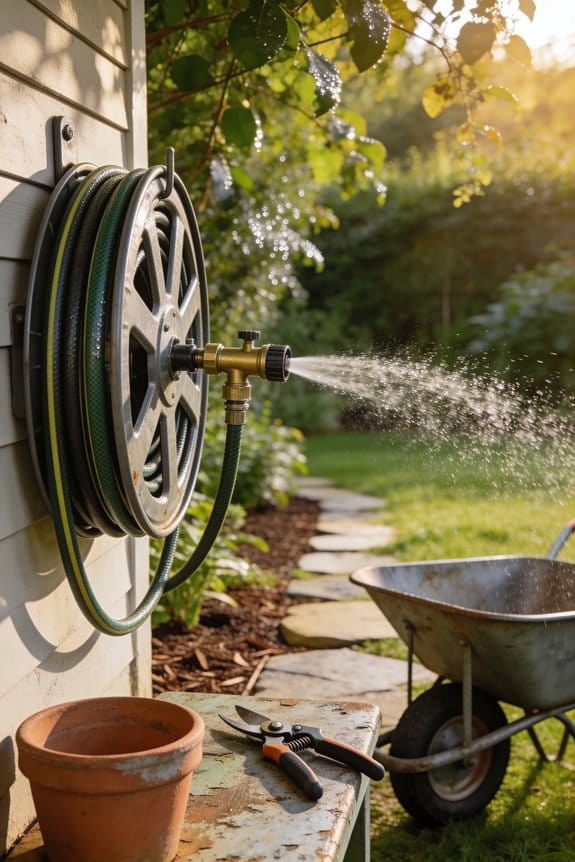

the best watering schedule applies one inch of water weekly in a single deep soak rather than shallow daily waterings. Water early morning to reduce evaporation and prevent fungal diseases. This approach encourages deeper root growth and drought tolerance. Your specific schedule depends on soil type, climate, and what you’re growing—sandy soils dry faster while clay retains moisture longer. Discover how to calculate exact amounts and adjust for your garden’s unique conditions.
Key Takeaways
- Water deeply once weekly, applying one inch per week to encourage deep root growth and drought tolerance.
- Water early morning to mid-morning to reduce evaporation, improve absorption, and help prevent fungal diseases.
- Check soil moisture in top 1–2 inches before watering; water only when this layer feels dry.
- Adjust frequency by growth stage: seedlings need light daily watering; mature plants need deeper weekly soaking.
- Use mulch and organic matter to retain moisture and reduce watering frequency while maintaining consistent hydration.
Are You Watering Wrong? Signs Your Vegetables Need Help
I’ve often seen gardeners water their vegetables regularly, yet the plants still struggle, which suggests that frequency alone doesn’t guarantee healthy growth. Overwatering causes root rot and fungal diseases, while underwatering leads to wilting and leaf curling. You’ll notice yellowing leaves that indicate nutrient deficiency, since waterlogged soil prevents roots from absorbing essential minerals. Check your soil’s top 1-2 inches before watering; if it’s moist, wait longer. Poor drainage in compacted soil exacerbates problems, so amending with organic matter helps. Pay attention to your plants’ appearance rather than following a rigid schedule. Each garden requires adjustments based on climate, soil type, and weather conditions. Observing these signs prevents damage and promotes vigorous growth.
The One-Inch Rule: Calculate Exact Water Amounts for Your Garden
You may be interested
Once you’ve identified watering problems in your garden, the next step is determining exactly how much water your vegetables actually need. The one-inch rule provides a straightforward benchmark: most vegetable gardens require one inch of water weekly, though arid climates need double that amount. You can calculate this precisely by using soil moisture meters to check if your garden’s top two inches are dry before watering. For raised beds specifically, one inch equals approximately 0.623 gallons per square foot. Consider supplementing with rainwater harvesting systems to reduce waste while meeting your plants’ needs consistently. This measurement-based approach eliminates guesswork and guarantees your vegetables receive adequate hydration for peak growth.
Why One Deep Soak Beats Shallow Daily Watering
Resist the temptation to water your garden a little bit every day, because shallow, frequent watering actually weakens your plants rather than strengthens them. When you water deeply once per week, roots grow deeper into the soil searching for moisture, which increases root depth and builds drought tolerance. This means your plants become more resilient during hot, dry spells.
Shallow daily watering, by contrast, keeps roots near the surface where they’re vulnerable to heat and drying conditions. Plants watered this way depend on constant moisture and struggle when you skip a day. Deep soaking encourages roots to establish strong foundations, making your vegetables hardier and more self-sufficient. One thorough weekly soak outperforms multiple light sprinklings, giving your garden the foundation it needs to thrive.
Early Morning Watering: The Single Best Time to Water
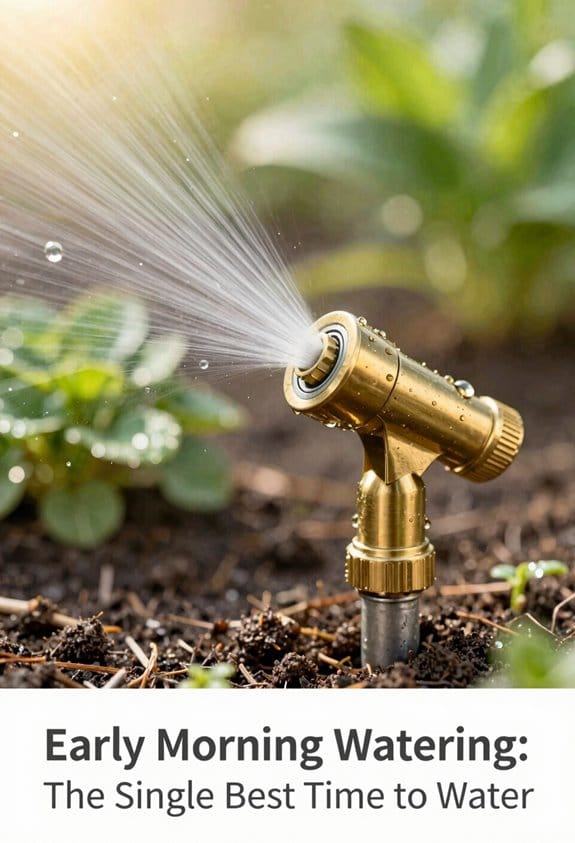
Now that you’ve built a strong watering foundation with deep weekly soaks, the timing of when you apply that water matters just as much as how much you give your plants. Consider watering during early morning through mid-morning hours for maximum efficiency. In the cool morning, your soil absorbs water more effectively before the sun’s heat intensifies. This timing also provides reduced evaporation, meaning more water reaches your plants’ roots instead of disappearing into the air. Additionally, morning watering helps prevent fungal diseases that thrive in wet evening conditions. If you’re using a drip system or soaker hose, adjusting your automatic timers seasonally makes certain consistent early morning delivery. This simple scheduling adjustment markedly improves your garden’s water efficiency and plant health.
Watering Vegetables by Growth Stage: Seedling to Harvest
Because your vegetables’ water needs change dramatically as they develop from seeds to mature plants, I adjust my watering approach at each stage to match their requirements. During the seedling phase, I keep the soil surface moist by watering lightly three to four times daily, which supports root development without drowning delicate sprouts. As transplants establish themselves, I gradually reduce frequency while increasing depth to encourage deeper, more resilient roots. At transplant timing, I make certain adequate moisture before moving seedlings outdoors to minimize transplant shock. Once vegetables reach maturity, I shift to deeper, less frequent soaking—typically one inch weekly—allowing roots to penetrate further into the soil. This staged approach prevents common problems like damping-off in seedlings while building stronger, drought-tolerant plants at harvest.
Best Watering Systems: Drip Irrigation, Soaker Hoses, and Hand-Watering
While choosing the right watering method can markedly impact your garden’s health and water efficiency, you’ll find that each system has distinct advantages depending on your garden’s size, layout, and your available time. Drip irrigation stands out as the most efficient option, delivering water directly to plant roots while minimizing evaporation. Consider using pressure regulators to maintain consistent water flow and prevent damage to delicate plants. Soaker hoses offer a simpler, more affordable alternative for smaller gardens, requiring only occasional repositioning. Hand-watering works well for container gardens or when you need flexibility. Regardless of your chosen method, filter maintenance remains essential for preventing clogs and ensuring proper water distribution throughout your garden system.
How Climate, Soil, and Season Change Your Watering Schedule
Once you’ve selected the right watering system for your garden, you’ll discover that the amount and frequency of water your vegetables need isn’t fixed—it changes based on where you live, what type of soil you have, and which season you’re gardening in.
In arid climates, you’ll need to double your water amount to two inches weekly, while coastal areas require less frequent watering. Through microclimate mapping, you can identify specific zones in your garden that dry out faster. Soil type matters greatly; sandy soil drains quickly and needs more frequent watering, whereas clay retains moisture longer. Root depth profiling helps determine how deeply to water—shallow-rooted seedlings need frequent light watering, while established vegetables benefit from deeper, less frequent soaking. Seasonal changes also shift your schedule considerably, with summer requiring daily checks and winter needing less attention.
Crop-Specific Water Needs: Basil, Tomatoes, and 5 Other Vegetables
Different vegetables require different amounts of water to thrive, and understanding these crop-specific needs helps me water more effectively and avoid both drought stress and overwatering problems. Basil needs 1-1.5 inches weekly, and consistent moisture directly impacts flavor impact—inconsistent watering produces bitter leaves. Tomatoes prefer deep, infrequent soaking to encourage strong root systems. Peppers and eggplants tolerate drier conditions better than leafy greens. Lettuce and spinach need frequent, light watering to prevent bolting. Cucumbers and zucchini require steady moisture during fruiting stages. When I’m using container culture, I water more frequently since containers drain faster than garden beds. Checking soil moisture regularly and adjusting based on each vegetable’s preferences guarantees peak growth and harvest quality.
Mulch and Soil Prep: Water Less While Growing More
By preparing your soil properly and adding mulch to your garden beds, you can markedly reduce the amount of water your vegetables need while actually improving their growth and overall health. incorporating organic amendments like compost into your soil increases its water-holding capacity, meaning moisture stays available to plant roots longer. Adding a 2-3 inch mulch layer around plants further conserves water by reducing evaporation from the soil surface. You can even apply compost tea, a nutrient-rich liquid made from steeped compost, to boost soil health and water retention simultaneously. Well-prepared soil with adequate mulch coverage allows you to water less frequently while maintaining consistent moisture levels, creating an efficient garden that thrives despite reduced watering schedules.
Fix Watering Mistakes: Recover Underwatered and Overwatered Plants
Even with the best soil preparation and mulching strategies, I’ve learned that watering mistakes happen in every garden, and recognizing the signs of underwatering or overwatering is the first step toward recovery. Underwatered plants display wilting and leaf curling, indicating they need immediate hydration. Overwatered plants develop root rot, a serious condition where roots suffocate in soggy soil and cannot absorb nutrients. To recover underwatered plants, increase watering frequency gradually while checking soil moisture regularly. For overwatered plants, reduce watering immediately and improve soil drainage by adding organic matter. Allow the top inch of soil to dry between waterings. Both situations require patience; recovery takes several weeks as plants rebuild their root systems.
For a useful next step, reduce water waste in the garden. These guides cover the related maintenance or buying decision without changing the task explained here.
Frequently Asked Questions
How Do I Adjust Watering Frequency for Raised Beds Versus In-Ground Gardens?
I adjust raised beds more frequently because their shallower soil depth drains faster than in-ground gardens. You’ll need daily checks in heat since there’s less root competition for moisture in the confined space.
Should I Water Before or After Transplanting Seedlings Into the Garden?
I’ll tell you what timing matters most: water *before* transplanting. You’ll want moist soil for settling roots properly, then water again after planting to eliminate air pockets and establish contact.
What’s the Ideal Duration to Run Drip Irrigation Systems During Summer?
I’d run your drip system for about 3.15 hours during summer to deliver a deep soak. You’ll want to make evap adjustments based on your local heat and wind conditions to guarantee you’re hitting that one-inch weekly target efficiently.
How Does Wind Affect Vegetable Watering Needs and Frequency Adjustments?
Wind markedly increases your evapotranspiration rates, meaning Consider checking soil moisture more frequently. Hot, windy conditions can double water loss, so you’ll need to adjust your schedule upward to combat wind stress effectively.
Can I Use the Same Watering Schedule for Container Gardens and Beds?
No, I can’t use the same schedule. Container gardens dry faster because their potting mix and container drainage differ from beds. I’d water containers more frequently, often daily in summer heat.