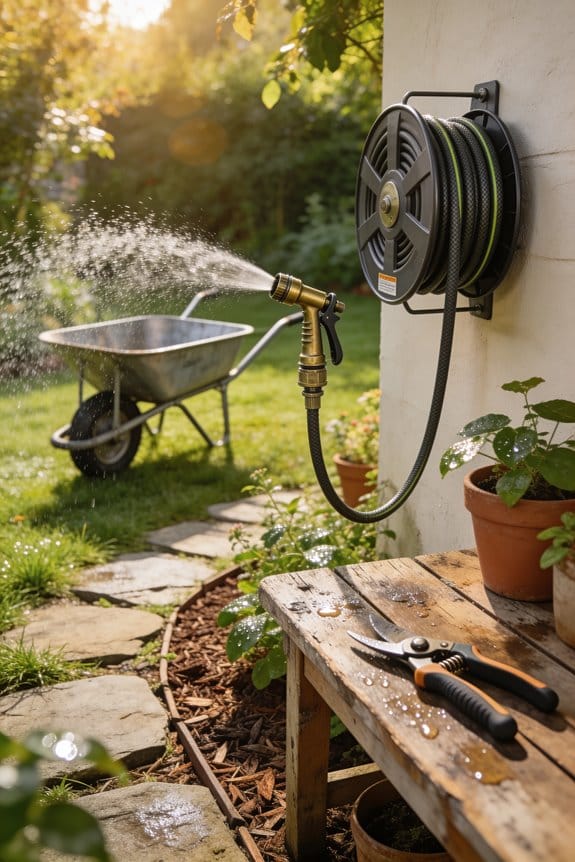

Garden hoses kink because of poor storage, weak construction, and how you deploy them. Consider buying no-kink hoses with reinforced circular knit construction, then sun-soften them before first use. Store your hose straight on a wall-mounted reel near your outdoor tap rather than coiling it tightly. When you use it, unroll the entire length slowly without rotating it, and use corner guides to prevent sharp bends. Regular inspections and quick patches keep small damage from becoming bigger problems that’ll make kinking worse.
Key Takeaways
- Choose no-kink hoses with circular knit reinforcement and thicker walls for superior flexibility and kink resistance.
- Sun-soften new hoses completely before first use to relax factory-induced kinks from storage coils.
- Store hoses straight on wall-mounted reels away from sunlight to prevent permanent bends and deformities.
- Unroll the entire hose length straight before watering, avoiding rotation or coiling tension during deployment.
- Inspect hoses every few weeks for wear and patch small damage immediately to maintain performance.
Select No-Kink Hoses With Reinforced Construction
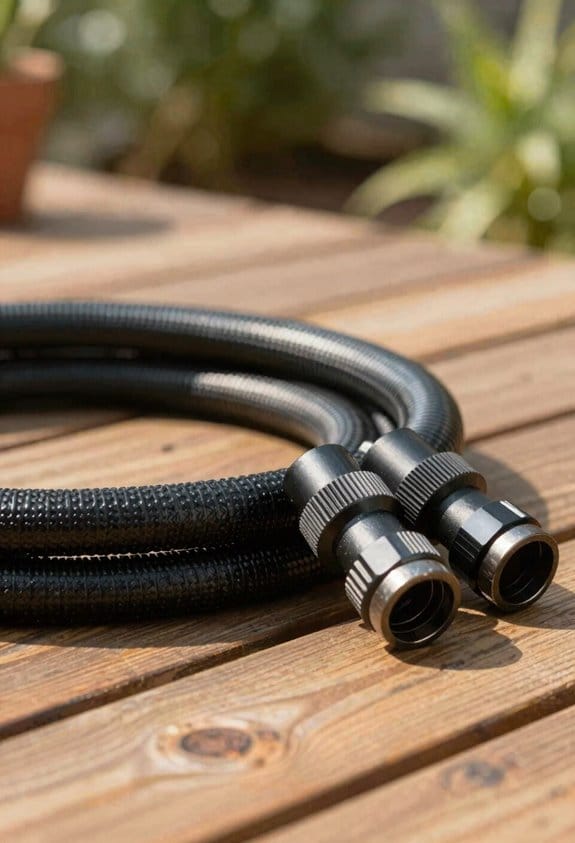
When you’re shopping for a garden hose, looking for one labeled “no-kink” or “kink-free” is your first line of defense against frustrating bends and creases. Consider selecting hoses with reinforced designs that include circular knit reinforcement rather than spiral wrap, as this construction provides superior flexibility. Pay attention to material coatings that protect the rubber from UV damage and weather exposure, which can weaken the hose over time. Check warranty terms carefully, since quality no-kink hoses typically offer longer coverage periods. Additionally, prioritize hoses with tight wall concentricity to prevent thinning and flattening. Consider thicker walls and rigid materials that resist both tension and compression, ensuring your hose maintains its shape during storage and use.
Sun-Soften and Test New Hoses Before First Use
You may be interested

Once you’ve selected a quality no-kink hose with reinforced construction, the next step involves preparing it for use through proper sun-softening and testing. Consider unrolling your new hose completely and laying it in the hottest sun available for several hours. This sun baking softens the rubber material, which helps eliminate factory-induced kinks from storage. After the rubber relaxes, I suggest performing material testing by forming a two-foot diameter loop using a six-foot section of hose. Hold both sides of the loop flat against the ground without letting it collapse or fold back on itself. If your hose maintains this shape without kinking, you’re ready for regular use. This preparation process guarantees peak performance and extends your hose’s lifespan markedly.
Store Hoses Straight to Prevent Kinks
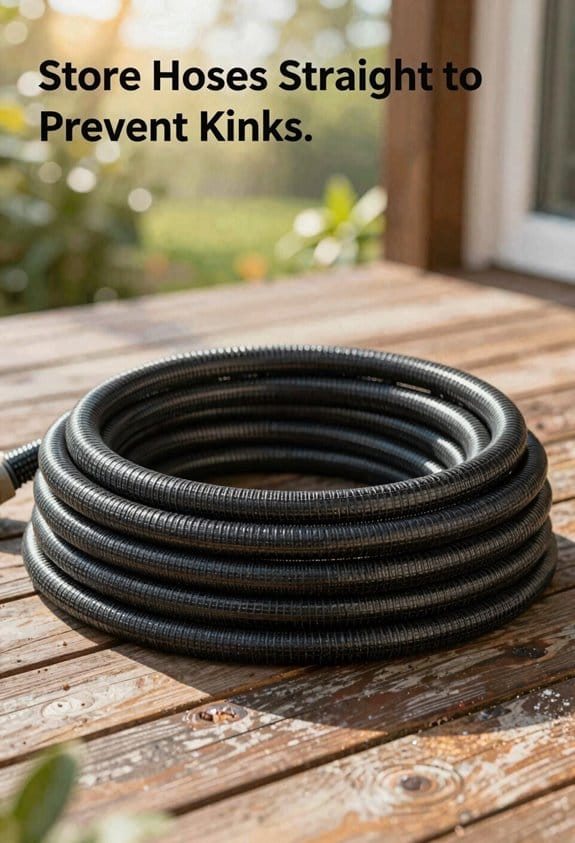
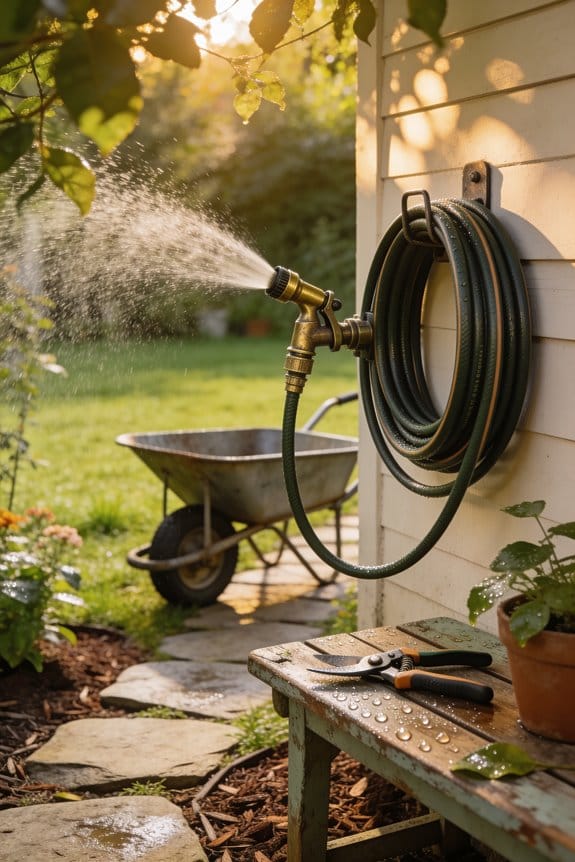
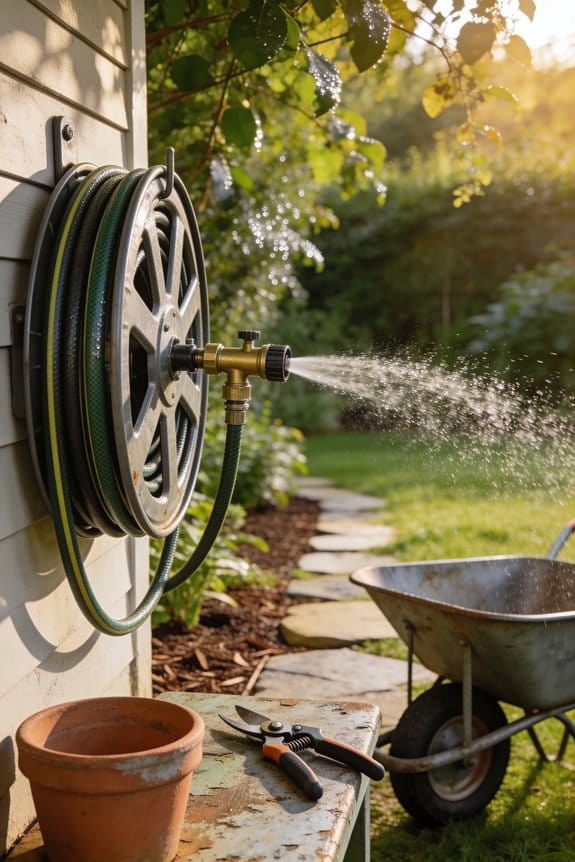
After you’ve finished watering and tested your hose for kink resistance, proper storage becomes your most important defense against future damage. Consider storing your hose straight rather than coiled tightly, which can create permanent bends. When you lay your hose flat or use gentle supports like wall-mounted reels, you avoid folds that damage the rubber interior. Position your hose away from heavy traffic areas where people might trip over it or crush it. Keep it out of direct sunlight, as heat causes the rubber to expand and contract unevenly, creating deformities. Using retractable reels near your outdoor tap provides organized storage while protecting your hose from weather and physical damage. These practices greatly extend your hose’s lifespan.
Organize With Reels and Wall-Mounts to Reduce Kinking
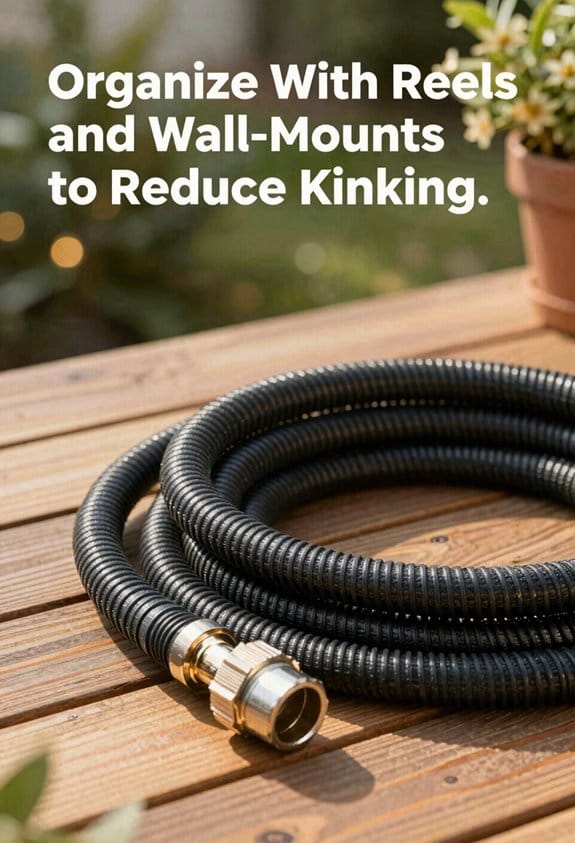
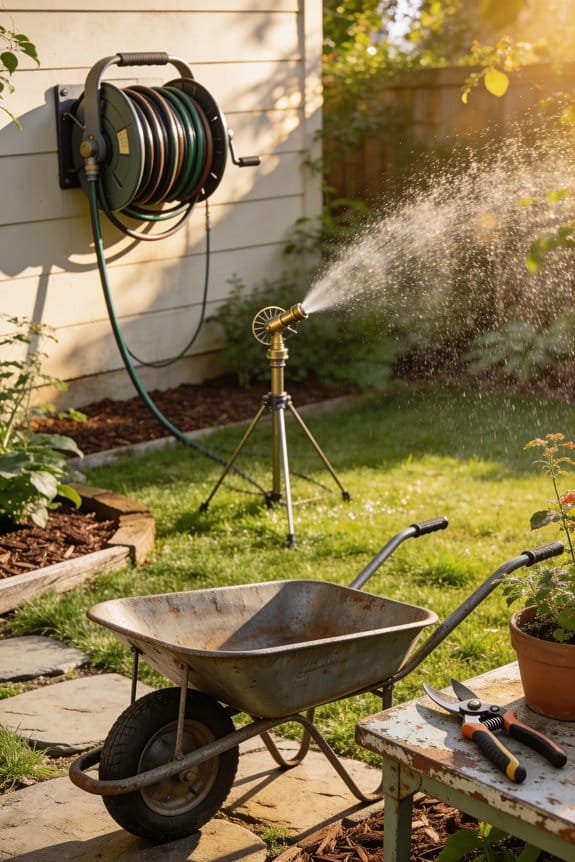
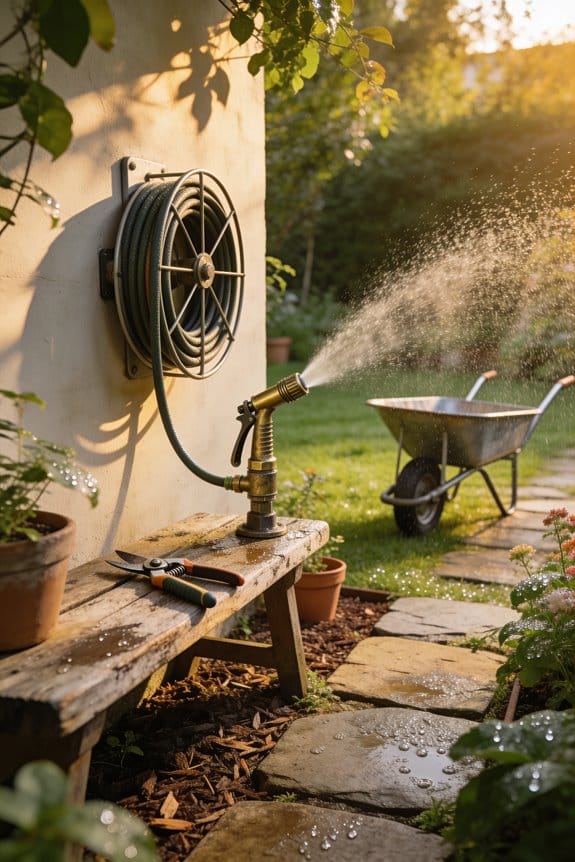
While proper storage lays the foundation for preventing kinks, organizing your hose with reels and wall-mounts takes your defense strategy to the next level by actively reducing stress on the hose material. strategic reel placement near outdoor taps makes watering more convenient while keeping your hose protected. Wall-mounted reels shield hoses from direct sunlight and weathering, which extends their lifespan markedly. When considering mounting heights, position reels at chest level for easy access and prime deployment. Using figure-eight coiling on reels prevents twists that accumulate during storage. Installing multiple wall-mounted spools creates organized storage that accommodates several hoses without tangling. This systematic approach transforms how you manage your garden equipment while substantially reducing kinking problems.
Unroll Your Hose Straight to Avoid Rolling Kinks
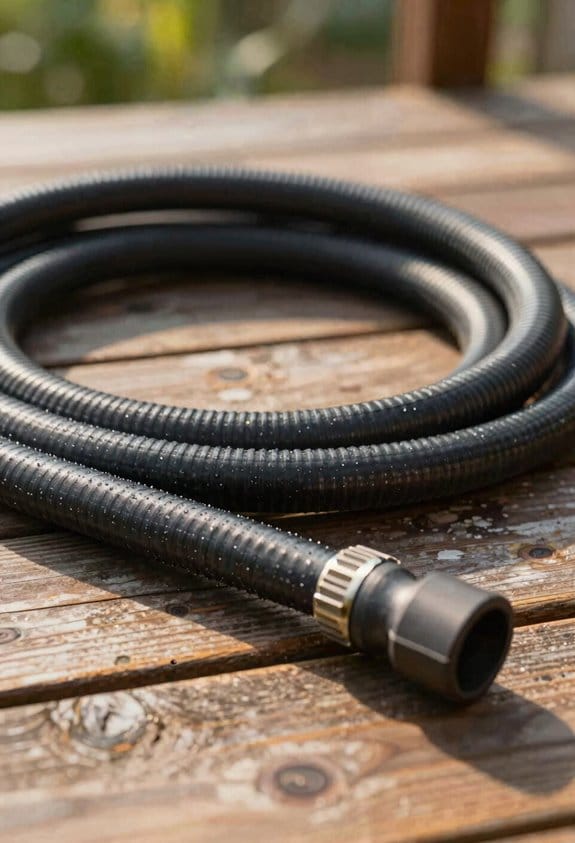
Beyond organizing your storage system, how you actually deploy your hose matters just as much—rolling and twisting during use can create kinks that undo all your preventive efforts. When you unroll your hose, prioritize straight deployment by keeping it aligned without rotating or coiling as you pull it across your yard. This straight deployment method prevents the twists that naturally lead to kinking. Consider unrolling the entire length before watering begins, ensuring smooth uncoiling without tension or compression. Use hose guides at corners to maintain proper angles and avoid sharp bends. By deploying your hose methodically and keeping it straight throughout use, you’ll greatly reduce kinking and protect your investment while maintaining consistent water flow.
Inspect Regularly and Patch Damage Early
Regular inspection of your garden hose is essential to catching problems before they become costly damage, since small leaks and kinks can quickly worsen and compromise your watering system’s effectiveness. Consider conducting routine inspections every few weeks, checking the entire hose length for visible wear, cracks, and existing kinks that might indicate weak spots. Pay special attention to connection maintenance where the hose attaches to spigots and nozzles, as these areas experience significant stress and frequently develop leaks. When you spot small damage, use a repair kit immediately to patch holes before they expand. Early intervention prevents minor issues from becoming major failures, extending your hose’s lifespan and maintaining consistent water pressure throughout your garden.
For a useful next step, store a garden hose correctly and diagnose garden hose pressure loss. These guides cover the related maintenance or buying decision without changing the task explained here.
Frequently Asked Questions
What’s the Best Way to Coil a Hose on a Reel to Prevent Twists?
Consider using figure-eight winding on your reel—it’s the most effective method. I alternate over-under coiling to balance twists and prevent tangling. This technique keeps your hose straight and ready for use.
How Can I Fix Kinks That Have Already Formed in My Hose?
I’ll lay your hose out straight in the sun—it’s a golden ticket to kink removal. The heat softening relaxes those stubborn bends so they straighten naturally. This method works like magic for existing damage.
Why Does My Hose Kink Even When I Use a Retractable Reel?
Your hose might still kink on a retractable reel due to poor reel maintenance or sudden pressure surges when you’re using it. Consider checking your reel’s mechanism and ensuring smooth retraction to prevent kinking issues.
Should I Store My Hose in Sunlight or Shade When Not Using It?
I’d store your hose in shade—think of sunlight as a villain expanding and contracting your rubber. Direct rays cause deformities, so shade preference protects longevity. Sunlight storage warps hoses; cool shade keeps them supple and kink-resistant.
What Type of Reinforcement Material Prevents Kinking Better—Circular Knit or Spiral Wrap?
Consider circular knit reinforcement over spiral wrap because it provides better flexibility when you’re forming loops. This superior flexibility means you’ll experience fewer kinks during regular use and storage compared to spiral wrap alternatives.