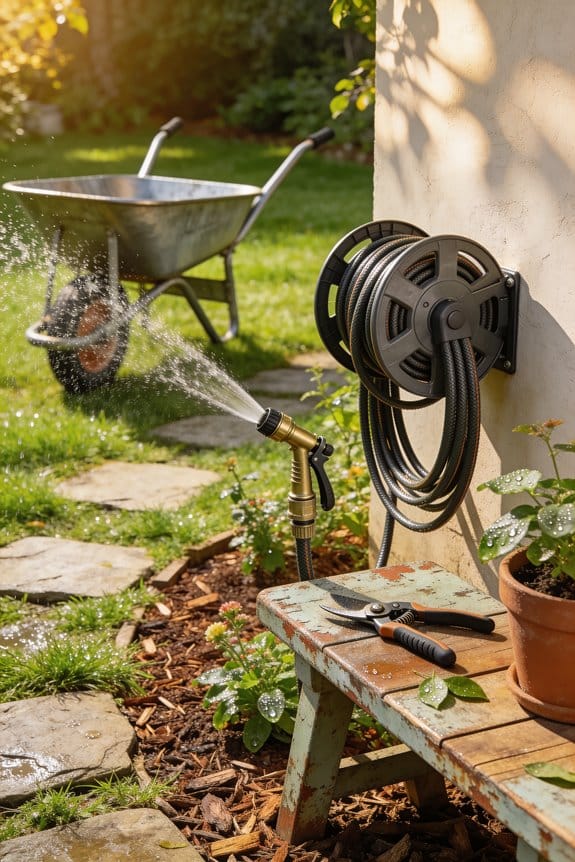

To choose the right garden hose length, measure from your water spigot to your yard’s farthest point, then add 5–10 feet for obstacles and movement. For small yards under 2,000 square feet, a 50-foot hose works well, while larger properties need 75–100 feet. Select a 5/8-inch diameter for longer distances because it resists pressure loss better than thinner options. Avoid hoses that are too short, which require constant repositioning, or too long, which become heavy and difficult to manage. Understanding how diameter, length, and pressure interact will help you make the best decision.
Key Takeaways
- Measure the distance from your water spigot to the farthest point, adding 5–10 feet for obstacles and slack allowance.
- Select hose length based on lawn size: 50 feet for 500–2,000 sq ft; 75–100 feet for larger properties.
- Choose 5/8 or 3/4-inch diameter hoses for longer lengths to maintain water pressure and flow rate efficiency.
- Understand that pressure loss increases significantly with hose length, especially beyond 50 feet with smaller diameters.
- Avoid excessively long hoses that cause kinking, weight strain, and storage difficulties while still meeting your yard’s reach needs.
Measure From Your Water Spigot to the Farthest Point
Before you buy a garden hose, you’ll need to figure out what length works best for your space, and the most reliable way to do this is by measuring the distance from your water spigot to the farthest point in your yard that you’ll want to reach. Consider walking through your garden with a measuring tape to identify this distance. Consider spigot accessibility when planning your measurement, since the hose must connect to your water source. Add an extra 5-10 feet to your measurement to account for obstacles, curves, and the need for slack. This measurement technique guarantees you’ll have adequate coverage without purchasing an unnecessarily long hose that’s cumbersome to store and maneuver around your yard.
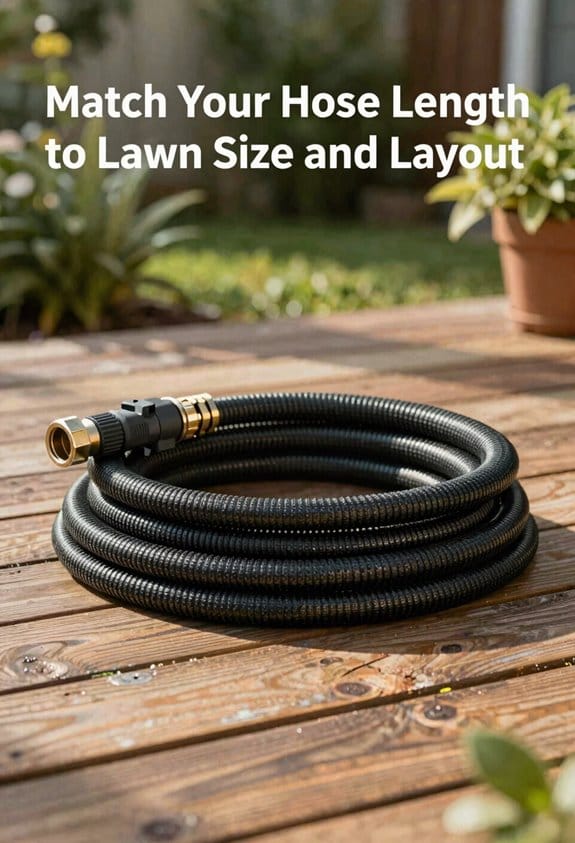
Match Your Hose Length to Lawn Size and Layout
You may be interested
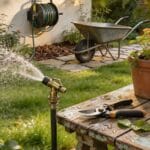
Once you’ve measured the distance from your water spigot to your yard’s farthest point, you’ll want to take into account how your lawn’s overall size and layout affect the hose length you’ll need. Your yard shape matters notably, since irregularly shaped yards may require longer hoses to reach corners efficiently. Consider accessibility points throughout your property, including areas where you might want to water or clean. A 500-2,000 square foot lawn typically needs a 50-foot hose, while larger properties of 2,000-5,000 square feet demand 75-100 foot options. Account for obstacles like trees, sheds, or fences that might obstruct direct paths. Understanding these spatial factors helps you select a hose length that balances coverage with practical maneuverability around your unique landscape.
Choose the Right Hose Diameter for Pressure and Distance
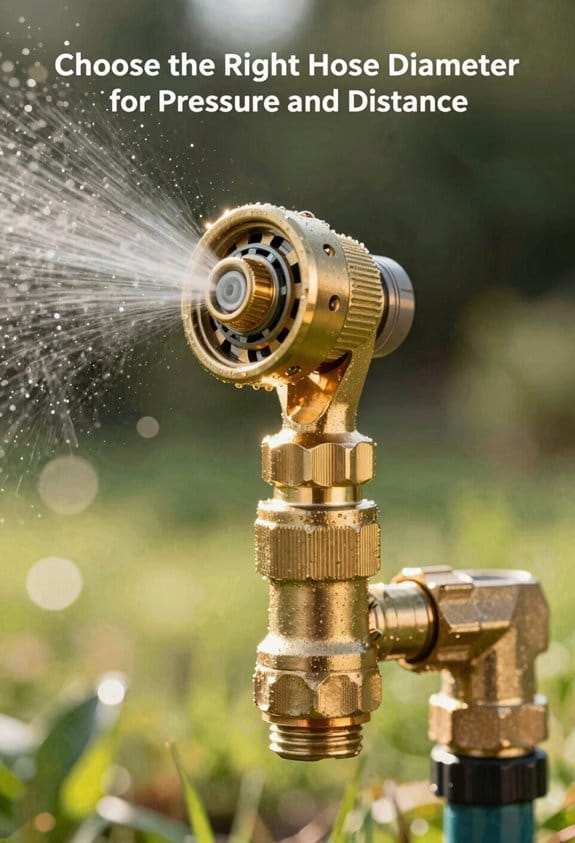
While you’ve selected a hose length that matches your yard size, the diameter of that hose plays an equally important role in how effectively water reaches your plants and lawn. The pipe diameter—typically 1/2, 5/8, or 3/4 inches—directly affects flow dynamics and water pressure. A 1/2-inch hose delivers adequate water for small gardens but loses pressure over longer distances. The 5/8-inch diameter offers a balance, maintaining reasonable flow for most residential applications. If you’re using a 75 or 100-foot hose, Consider the larger 5/8 or 3/4-inch options to combat pressure loss. Understanding these relationships between diameter, length, and flow guarantees your watering system performs efficiently throughout your entire yard.
Account for Water Pressure Loss Over Length
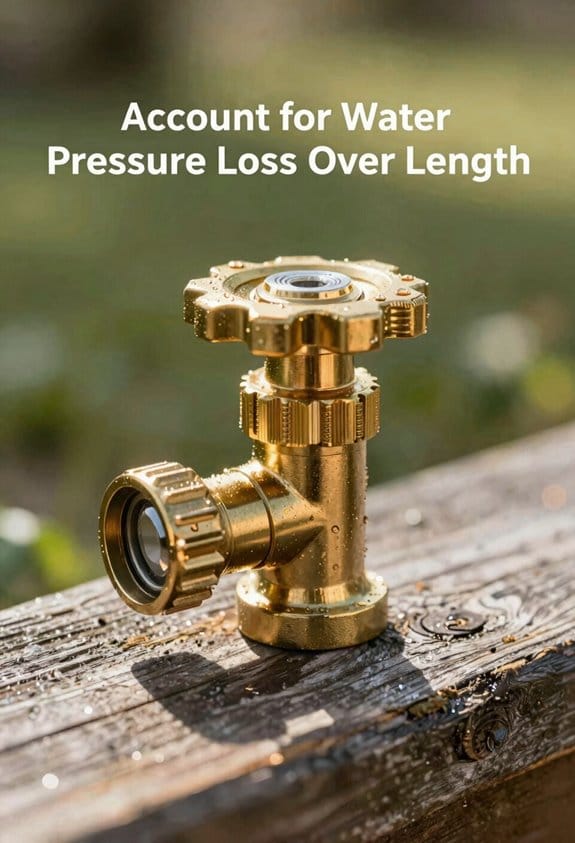
As water travels through a hose, friction inside the pipe gradually reduces both the pressure and flow rate, a phenomenon that becomes increasingly noticeable the longer your hose extends from the spigot. This pressure drop means you’ll experience weaker water output at the nozzle end when using longer hoses.
For example, a 25-foot hose maintains strong pressure, while a 100-foot hose experiences significant flow reduction. The 5/8-inch diameter hoses resist pressure loss better than 1/2-inch options because their larger opening allows water to move more freely. If you need substantial reach, consider using a wider diameter hose to counteract these effects. Understanding this relationship helps you select appropriate lengths that balance coverage with adequate water pressure for your specific watering tasks.
Avoid Hose Length Mistakes That Kill Pressure and Handling
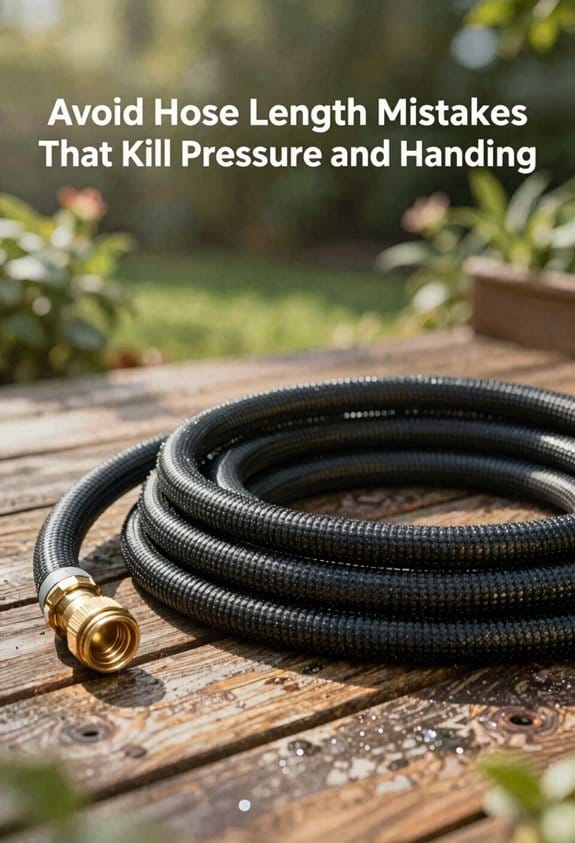
Selecting a hose length that’s either too short or too long creates distinct problems that compromise both your watering efficiency and your ability to manage the equipment effectively. A hose that’s too short won’t reach distant garden areas, forcing you to relocate your water source repeatedly. Conversely, an excessively long hose introduces multiple challenges. Excessive coiling causes kinking and reduces water pressure markedly, while the added weight makes maneuvering around your yard frustrating and exhausting. Storage challenges emerge when you’re dealing with unwieldy lengths that don’t fit neatly in sheds or garages. Additionally, longer hoses suffer greater pressure loss, meaning water flow diminishes substantially by the time it reaches your sprayer or nozzle. Finding the right balance guarantees efficient watering and easier handling.
For a useful next step, store a garden hose correctly and diagnose garden hose pressure loss. These guides cover the related maintenance or buying decision without changing the task explained here.
Frequently Asked Questions
Can I Connect Multiple Shorter Hoses Together for Occasional Longer Reaches?
Yes, Consider connecting shorter hoses together for occasional longer reaches. I suggest using quality couplings and ensuring tight connections for leak prevention. This approach gives you flexibility without investing in one lengthy hose.
What Hose Diameter Should I Choose for Optimal Water Flow and Pressure?
choosing between 1/2-inch and 5/8-inch diameters directly impacts your results. Larger diameters reduce pipe friction and pressure loss, delivering superior flow rate. Consider 5/8-inch for ideal hose diameter performance.
Are Expandable Hoses a Good Solution for Variable Watering Needs and Storage?
expandable hoses are excellent for you if you value storage convenience and need flexibility. They’re compact when empty, perfect for variable watering tasks, though expandable durability varies by brand quality.
How Do Kink-Resistant Designs Help With Managing Long Garden Hoses Effectively?
kink-resistant designs help me manage long hoses by preventing kinks that interrupt flow consistency. You’ll appreciate how reinforced materials maintain your water pressure and kink prevention means I’m spending less time untangling frustrations around my lawn.
Which Hose Length Works Best for Specific Tasks Like Cleaning or Car Washing?
For cleaning, Consider 50-75 feet to reach most surfaces without pressure loss. For car washing, I suggest 25-50 feet—it’s easier to maneuver around vehicles while maintaining adequate pressure without damaging delicate plants nearby.