

I’ll explain how drip irrigation dramatically cuts water waste. Drip systems deliver water directly to plant roots at controlled rates of 0.5–2 gallons per hour, reducing usage by 60–70% compared to overhead sprinklers. While overhead systems lose 25–35% of water to evaporation and wind drift before plants can use it, drip irrigation loses only 5–10%. By keeping water at soil level instead of spraying it across large areas, drip systems eliminate evaporation hotspots and wind-related losses. There’s more to discover about how these systems benefit your specific situation.
Key Takeaways
- Drip irrigation delivers water directly to roots, reducing usage by 60–70% compared to overhead sprinklers.
- Drip systems lose only 5–10% of water to evaporation versus 25–35% for overhead sprinklers.
- Ground-level water delivery eliminates wind drift losses that waste water on non-target areas.
- Drip systems operate at lower pressures (10–30 psi), consuming less energy than overhead sprinklers.
- Precision watering limits water supply to weeds, reducing their establishment in irrigated areas.
Why Drip Irrigation Cuts Water Use by 60–70%?
Because drip irrigation delivers water directly to plant roots instead of spraying it across large areas, it eliminates the massive water losses that occur with overhead sprinkler systems. When you use drip systems, water flows at controlled rates of 0.5 to 2 gallons per hour, which allows better root uptake and reduces waste. Overhead sprinklers lose 25-35% of water to evaporation before plants even use it, while drip systems lose only 5-10%. Additionally, flow scheduling—timing water delivery to match plant needs—prevents runoff and soil erosion. Since drip irrigation targets only your desired plants and avoids watering sidewalks, driveways, and weeds, you’re not wasting water on unintended areas. This precision is why drip systems reduce water usage by 60-70% compared to traditional sprinkler methods.
How Evaporation and Wind Waste Water in Overhead Systems
You may be interested
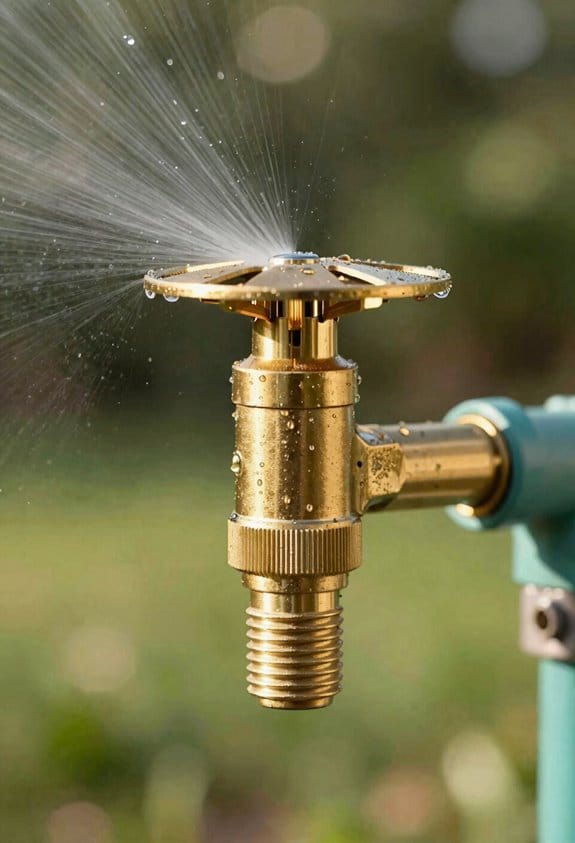
While overhead sprinkler systems seem like a straightforward way to water your lawn or crops, they’re actually quite wasteful because of two major environmental factors: evaporation and wind drift. When water sprays into the air, it creates evaporation hotspots where 25-35% of the water disappears before reaching plants. This happens because water droplets travel through warm air, gradually evaporating instead of soaking into soil. Additionally, wind drift carries water away from intended areas, wasting it on sidewalks, driveways, and undesired sections. In contrast, drip irrigation delivers water directly to root zones at soil level, losing only 5-10% to evaporation. By keeping water grounded, drip systems eliminate both evaporation hotspots and wind-related losses, making them markedly more efficient for water conservation.
Lower Pressure, Lower Bills: Energy Savings With Drip Irrigation
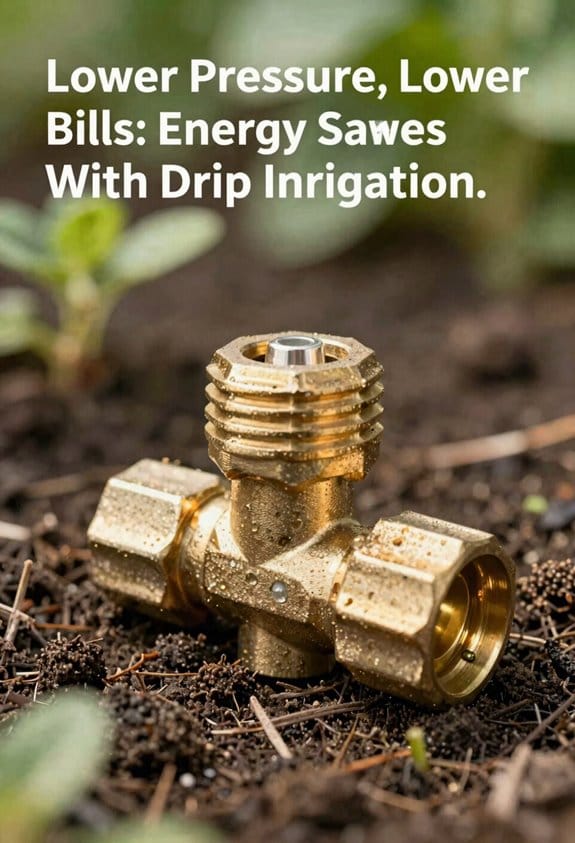
You’ll find that drip irrigation systems consistently operate at markedly lower pressures than overhead sprinklers, which directly translates to reduced energy costs for your water delivery. While drip systems require only 10-30 psi to function effectively, overhead sprinklers demand 30-80 psi, forcing pumps to work appreciably harder. This difference in pressure requirements directly impacts pump efficiency and your electricity bills.
Lower operating pressures mean your pump consumes considerably less energy throughout the irrigation season. Because energy consumption directly affects your utility tariff reduction potential, switching to drip irrigation can substantially lower your monthly water bills. The reduced strain on pump equipment also extends system lifespan, minimizing maintenance expenses over time.
Why Drip Irrigation Prevents Plant Diseases
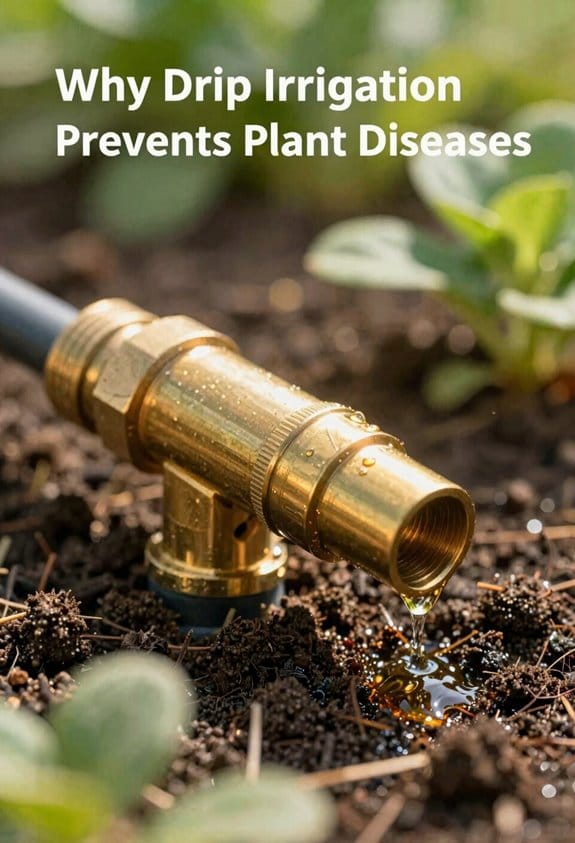
Beyond saving energy and money through lower operating pressures, drip irrigation delivers another significant advantage that directly impacts your garden’s overall health: disease prevention. When you use overhead sprinklers, water settles on leaf surfaces, creating humid conditions where fungal pathogens thrive. Drip systems eliminate this problem by applying water directly to soil, keeping foliage completely dry. This microclimate control reduces moisture-dependent diseases like leaf fungus and blight markedly. Your plants’ stomatal response—the opening and closing of tiny leaf pores—occurs naturally without excess surface moisture promoting pathogen suppression. By preventing water contact with foliage, you reduce fungicide applications and crop losses. The targeted, soil-level approach of drip irrigation creates an environment where plants stay healthier, stronger, and more resistant to disease naturally.
Precision Watering: Less Weeds, Better Soil
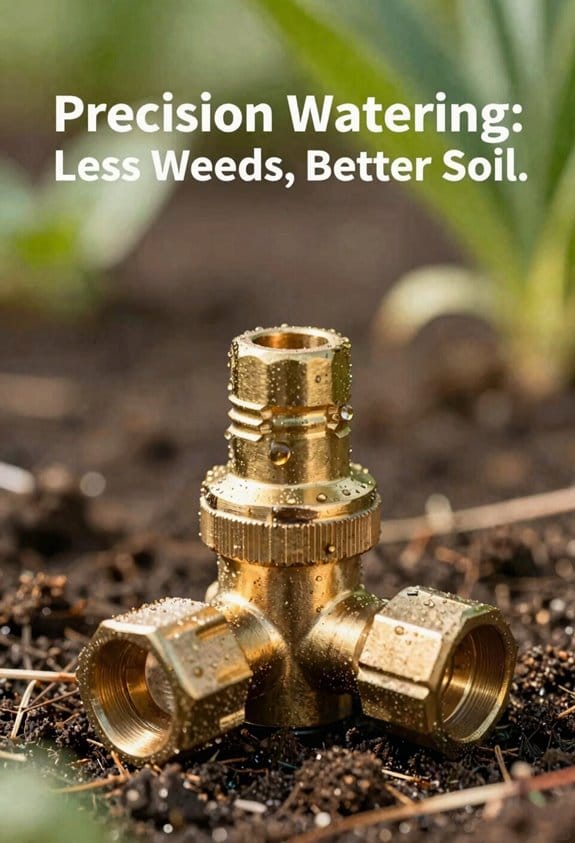
Drip irrigation transforms how water reaches your garden by delivering moisture exclusively to the plants you want to grow, not to every square inch of soil. This precision prevents water from reaching weeds in unwanted areas, which markedly reduces weed competition around your crops. When weeds don’t receive water, they can’t establish themselves as effectively, meaning you’ll spend less time weeding.
Beyond weed control, drip systems protect your soil’s structure. The slow, steady water distribution prevents excessive erosion that overhead sprinklers cause. This gentle approach maintains soil integrity while allowing proper root aeration. When combined with mulch integration around your plants, drip irrigation creates an ideal growing environment that maximizes water efficiency while minimizing maintenance demands.
How Much Does Drip Irrigation Cost?
Installing a drip irrigation system requires a bigger upfront investment than traditional overhead sprinklers, but the long-term savings often make it worthwhile. You’ll need to purchase filters, tubing, emitters, drip tape, and valves, which increases your installation costs markedly. However, the component lifespan of quality drip systems typically extends many years, making them durable investments. While overhead sprinklers have lower maintenance expenses initially, drip systems save you money through reduced water usage and decreased energy consumption over time. Your operating costs drop because drip irrigation uses 60-70% less water than sprinkler methods. Though the initial expense is higher, you’ll recover your investment through lower monthly bills, making drip irrigation economically sensible for most homeowners and farmers seeking long-term efficiency.
When Drip Systems Don’t Work: Limitations and Trade-Offs
While drip irrigation systems offer impressive efficiency gains and long-term savings, they aren’t the right solution for every situation or application. You’ll find that drip systems require high maintenance, including regular filter cleaning and tubing inspections to prevent clogging. They’re also vulnerable to rodent damage, as small animals often chew through tubing in search of water. Additionally, drip irrigation cannot effectively handle frost protection, which overhead sprinklers manage successfully. The initial installation costs remain substantial, and you’ll need UV-protective measures to shield tubing from sun damage. For certain crops and large-scale agricultural operations, overhead sprinklers still provide practical advantages despite lower efficiency rates. Understanding these limitations helps you make informed decisions about which irrigation method best suits your specific needs and circumstances.
For a useful next step, reduce water waste in the garden. These guides cover the related maintenance or buying decision without changing the task explained here.
Frequently Asked Questions
Can Drip Irrigation Systems Be Used for Frost Protection in Agricultural Applications?
No, I can’t use drip irrigation for frost protection or crop heating. Overhead sprinkler systems are better for freeze mitigation because they distribute water across broader areas, which drip systems simply aren’t designed to accomplish effectively.
How Do Rodents and Shovels Damage Drip Irrigation Systems, and What Preventative Measures Exist?
I’ll protect your drip system like a medieval knight guards his castle. Rodent gnawing and shovel strikes damage tubing—prevent this through buried line placement, protective guards, and regular inspections you’ll appreciate.
What UV Protection Methods Prevent Sun Damage to Drip Irrigation Tubing?
Consider you use UV blockers and reflective sheathing to protect your drip tubing from sun damage. These methods shield the tubing from harmful ultraviolet rays, extending your system’s lifespan greatly.
How Often Do Drip System Filters Require Cleaning to Prevent Clogging and Emitter Failure?
An ounce of prevention’s worth a pound of cure—I’ll tell you that filter maintenance keeps your drip system thriving. You’ll want regular emitter flushing and filter cleaning every few weeks, depending on your water quality and usage patterns.
What Specific Fertilizers and Chemicals Work Best With Drip Irrigation Chemigation and Fertigation Applications?
Consider you use liquid fertilizers and soluble micronutrients for your chemigation and fertigation applications. They’ll dissolve completely through drip systems, preventing clogging while delivering nutrients directly to plant roots efficiently.