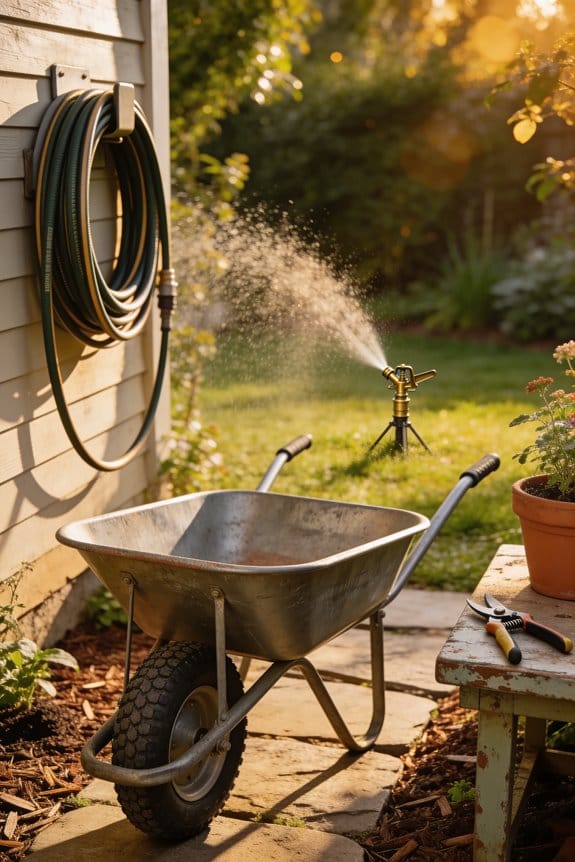


Two-wheel wheelbarrows distribute weight evenly across both wheels, significantly reducing the physical strain on your shoulders, back, and arms compared to single-wheel models. They’re gaining popularity because they offer superior stability on uneven surfaces and slopes while requiring less operator balance and control. The ideal 4–6 cubic foot capacity balances substantial load capacity with manageable maneuverability for residential and commercial tasks. Their ergonomic design minimizes repetitive stress on joints, making extended use more comfortable. Understanding their specific advantages reveals why professionals and homeowners increasingly prefer this design.
Key Takeaways
- Two-wheel designs distribute weight evenly, significantly reducing operator strain compared to single-wheel models.
- Superior stability on uneven surfaces and slopes makes two-wheel wheelbarrows safer for diverse terrain.
- Even weight distribution prevents tipping, making two-wheel models ideal for residential and commercial tasks.
- Ergonomic leverage and natural arm positioning reduce repetitive stress injuries during extended use periods.
- Two-wheel construction enhances maneuverability for DIY tasks while maintaining control with substantial load capacity.
How Two-Wheel Wheelbarrows Reduce Fatigue and Strain
Because two-wheeled wheelbarrows distribute weight more evenly across both wheels rather than concentrating it on a single point, they’re fundamentally different from traditional single-wheel models in how they affect your body during use. This balanced distribution provides superior ergonomic leverage, allowing you to push and maneuver with less muscular effort. When weight spreads across two wheels, your shoulders, back, and arms experience reduced strain during extended work sessions. The design also offers better joint protection by minimizing repetitive stress on your wrists, elbows, and knees. Ergonomic handles further enhance comfort by positioning your arms naturally. These combined features mean you’ll experience less fatigue when moving soil, rocks, or construction materials, making two-wheel models particularly valuable for both professional and residential users tackling demanding landscaping projects.
4-6 Cubic Feet: The Sweet Spot for Capacity and Control

You may be interested



While reducing fatigue through better weight distribution helps you work longer, you’ll also want to take into account how much your wheelbarrow can actually hold, because capacity directly affects both your productivity and your ability to control the load. The 4-6 cubic foot capacity represents the most dominant segment in today’s market, and there’s a practical reason for this. Mid capacity wheelbarrows strike an ideal balance between carrying substantial loads and maintaining maneuverability. This size range accommodates most residential and commercial tasks while preserving your control during maneuvering space constraints like narrow pathways or tight corners. Additionally, these models offer excellent storage compatibility with standard garage dimensions and load distribution characteristics that prevent tipping. You’ll find that this sweet spot maximizes efficiency without sacrificing safety or control.
Two-Wheel Design vs. Single-Wheel: Which Wins for DIY

The choice between a two-wheel and single-wheel wheelbarrow fundamentally shapes how you’ll work on DIY projects, and understanding the practical differences helps you select the right tool for your needs. Two-wheel models offer superior stability comparison because they distribute weight evenly across both wheels, reducing strain on your back and arms during extended use. Single-wheel designs, conversely, require more operator balance and control. Regarding terrain adaptability, two-wheel wheelbarrows navigate uneven surfaces more smoothly, preventing tipping on slopes or rough ground. For DIY enthusiasts moving soil, rocks, and construction materials around residential properties, two-wheel variants provide enhanced maneuverability through improved structural engineering. This design choice ultimately determines comfort, safety, and efficiency throughout your gardening projects.
Heavy-Duty Wheelbarrows for Construction and Landscaping

Construction sites and landscaping businesses demand wheelbarrows built to withstand intense, repetitive work, which is why heavy-duty models represent a critical investment for professionals in these fields. These specialized wheelbarrows feature reinforced trays constructed from durable materials that resist dents and corrosion, even when transporting rocks, soil, and concrete debris daily. Pneumatic tires provide superior shock absorption and traction across uneven terrain, reducing operator fatigue during extended use. Heavy-duty models support loads up to 200 kilograms, meeting demanding project requirements that standard wheelbarrows cannot handle. The combination of robust construction, enhanced weight capacity, and reliable performance makes two-wheeled heavy-duty wheelbarrows essential equipment for professionals seeking long-term durability and consistent productivity on job sites.
Customizable Attachments: Building Your Ideal Configuration

Beyond selecting a heavy-duty wheelbarrow, you can further customize your equipment to match your specific needs through interchangeable attachments and modular components. Modular toolkits allow you to adapt a single wheelbarrow for various tasks, transforming it from a soil carrier to a rock transporter with simple component swaps. Ergonomic adapters enhance comfort during extended use, reducing strain on your back and shoulders. You might add storage containers for organizing smaller tools, or increase cargo capacity with specialized pallets designed for specific materials. This customization approach means you’re not purchasing multiple wheelbarrows; instead, one versatile unit handles diverse horticultural and construction duties. Manufacturers now offer extensive configuration options, enabling you to build your ideal setup based on your unique project requirements and operational preferences.
Where to Find Quality Two-Wheel Wheelbarrows Near You
Once you’ve decided that a two-wheel wheelbarrow suits your needs, locating a reliable retailer becomes your next priority. Your local retailers, including garden centers and hardware stores, offer the advantage of hands-on inspection before purchasing. You can examine construction quality, test the ergonomic handles, and verify weight capacity firsthand. Online marketplaces like Amazon and specialized gardening websites provide extensive selection and customer reviews that guide your decision-making. These platforms often feature detailed product specifications, comparison tools, and competitive pricing. Consider visiting both options: local retailers for immediate availability and personal assessment, while online marketplaces offer convenience and broader inventory. Reading customer feedback helps identify durable models suited to your specific tasks, whether residential gardening or heavier construction work.
For a useful next step, choose between a wheelbarrow and a garden cart and store a wheelbarrow in a small space. These guides cover the related maintenance or buying decision without changing the task explained here.
Frequently Asked Questions
What Is the Projected Global Wheelbarrow Market Value by 2035?
I’ll tell you the global wheelbarrow market’s projected value by 2035 is USD 3,310.79 million. Market drivers like ergonomic advancements and construction demand fuel these global forecasts, reflecting sustained growth momentum.
How Much Weight Can Heavy-Duty Two-Wheel Wheelbarrows Typically Support?
heavy-duty two-wheel wheelbarrows can support up to 200 kilograms. Their reinforced frames enable this impressive load capacity, making them ideal for demanding construction and landscaping projects where you’re moving substantial materials regularly.
Which Region Dominates Wheelbarrow Manufacturing Production Globally?
You might think Europe dominates, but I’ll tell you—Asia-Pacific actually controls nearly 45% of global wheelbarrow manufacturing production. While China manufacturing leads this region, European craftsmanship remains respected for quality.
What Percentage of the Market Do DIY and Gardening Projects Represent?
DIY gardening and backyard landscaping projects capture roughly one-fifth of the wheelbarrow market share by 2029. You’re seeing homeowners invest more heavily in outdoor spaces, driving this substantial growth segment.
What Are the Expected Growth Rates for North American and Mexican Markets?
I’m telling you that like a medieval blacksmith forging steel, today’s North American market’s growing at 6.7% CAGR while Mexico’s expanding at 5.7%, driven by construction demand and agricultural trends strengthening both regions.