

Japanese pruners are gaining popularity because they deliver precision cuts that help plants heal faster and stay healthier. Their lightweight design, typically around 188 grams, reduces hand fatigue during longer gardening sessions. Carbon steel blades hold their edge longer than stainless alternatives, maintaining cutting performance over time. The ergonomic handles conform to your palm, distributing pressure evenly. Additionally, many pruners use recycled materials, appealing to environmentally conscious gardeners. Understanding what makes them different reveals why they’ve become essential tools for serious gardeners.
Key Takeaways
- Japanese pruners deliver superior edge retention through carbon steel blades that maintain precision cutting performance longer than standard alternatives.
- Precision cuts enable faster plant wound-sealing, reducing disease risk and supporting healthier growth compared to crushing damage from dull tools.
- Lightweight, ergonomic designs with padded grips and contoured handles reduce hand fatigue during extended pruning sessions in gardens.
- Compact, multifunctional designs suit urban gardeners with limited space like balconies, rooftops, and small-scale bonsai cultivation areas.
- Centuries of Japanese craftsmanship combined with modern manufacturing precision create tools with proven performance records and authentic quality assurance.
Centuries of Japanese Metalwork Meets Modern Tool Design
When you hold a Japanese pruner, you’re experiencing the result of centuries of metalworking tradition combined with today’s manufacturing techniques. Japanese artisans employ artisanal forging methods that date back generations, creating blades from single pieces of carbon steel that hold their edges longer than stainless steel alternatives. These tools often feature symbolic motifs reflecting nature and craftsmanship principles. Modern innovations enhance traditional designs through precision engineering, producing slimmer blades weighing around 188 grams with contoured handles. The combination of hand-forged quality and contemporary manufacturing guarantees each pruner delivers clean, precise cuts. This fusion allows gardeners to benefit from time-tested metalworking expertise while gaining improvements in ergonomics and durability that contemporary technology provides.
Why Precision Cutting Matters More Than You Think?
You may be interested



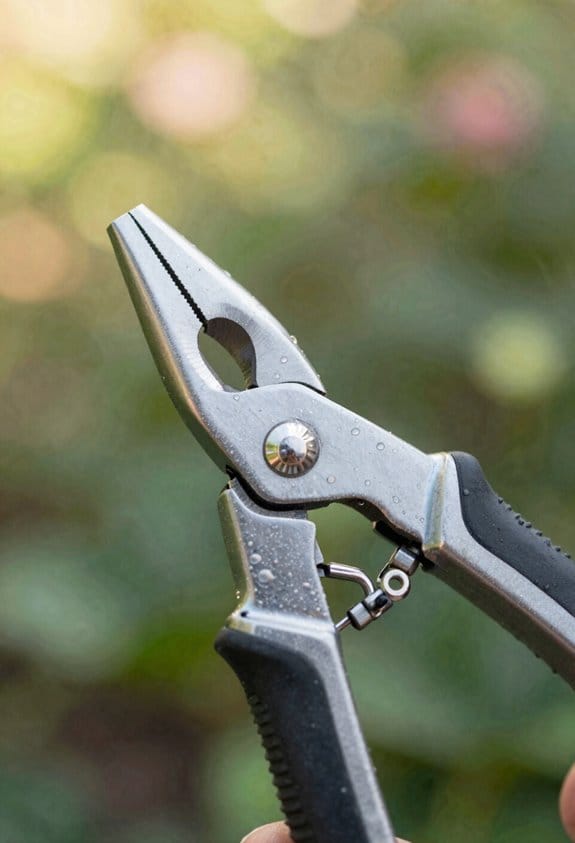
Because your plants depend on clean, accurate cuts to thrive, I’d encourage you to understand how precision pruning directly affects their health and appearance. When you make micro clipping precision cuts with Japanese pruners, you’re enabling faster wound sealing physiology in the plant. Ragged cuts from dull tools crush plant tissue, creating openings for disease and pests to enter. Clean cuts, by contrast, allow plants to heal quickly and redirect energy toward growth. The blade alignment in Japanese pruners guarantees each cut severs stems cleanly rather than crushing them. This matters because 78% of users report improved plant health and appearance from quality pruning shears. Investing in precision tools isn’t just about aesthetics; it’s about supporting your garden’s long-term indispensability and resistance to damage.
Ergonomic Design That Reduces Hand Fatigue
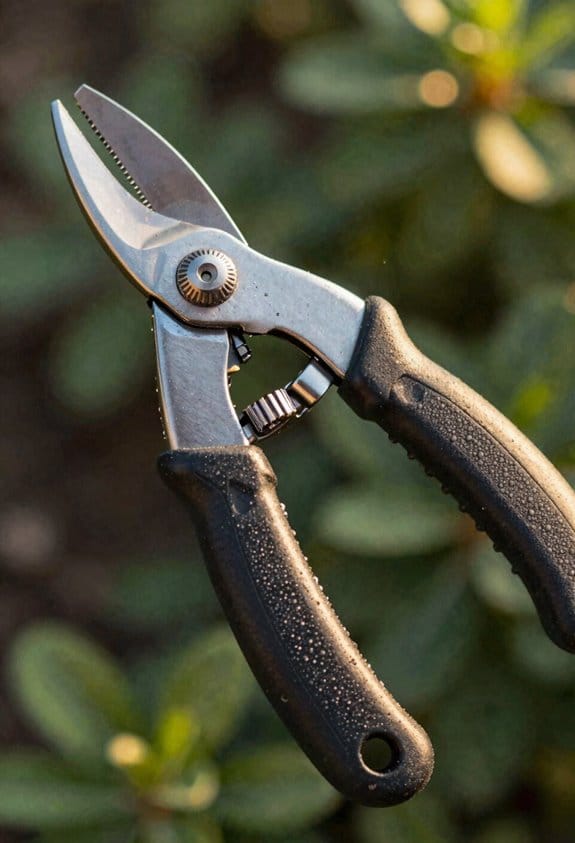
Japanese pruners consistently demonstrate superior ergonomic features that markedly minimize hand fatigue during extended gardening sessions. The slender blade design, weighing just 188 grams, reduces strain on your hands and wrists. Padded grips conform to your palm’s natural contours, distributing pressure evenly across your hand during repetitive cutting motions. These thoughtfully designed handles incorporate wrist support through subtle angles that align your arm in biomechanically ideal positions.
When you’re pruning for hours, this matters considerably. The contoured grip reduces the muscular effort needed for each cut, allowing you to maintain consistent control without developing soreness. Carbon steel blades that hold their edge longer mean you’ll experience less resistance, further decreasing fatigue. Japanese artisans prioritize this practical comfort alongside precision, recognizing that sustained gardening requires tools supporting your body’s natural mechanics.
Why Japanese Pruners Cut Cleaner?
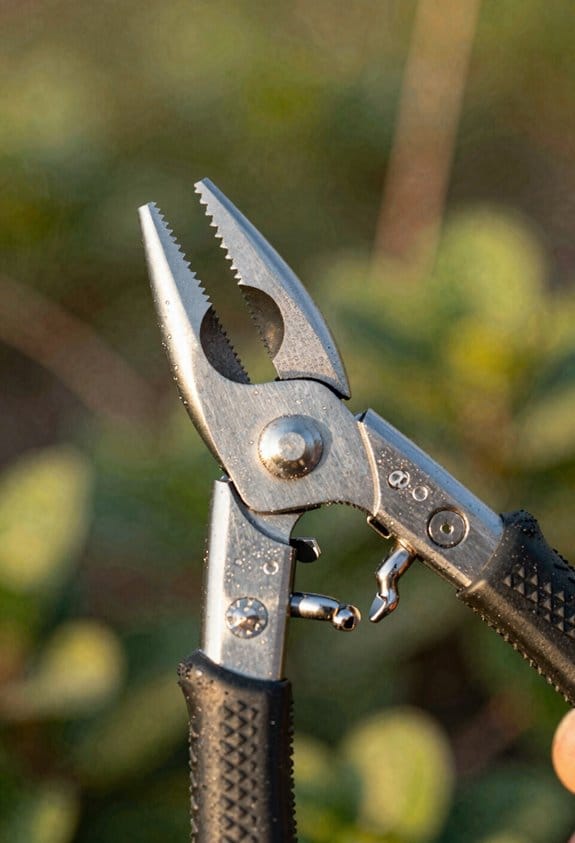
Beyond the comfort that ergonomic design provides, the cutting performance of your Japanese pruners sets them apart from ordinary garden tools. Japanese craftsmen create sharper cuts through precision manufacturing techniques, particularly the micro bevels ground into each blade. These micro bevels, combined with polished edges, reduce friction between the blade and plant material, enabling cleaner cuts that damage fewer plant cells. When you make precise cuts, your plants heal faster and recover more quickly from pruning. The blades, often forged from single pieces of carbon steel, maintain their edge longer than stainless alternatives. This superior edge retention means your pruners stay sharper through more cuts, delivering consistent performance throughout your gardening season. The result is healthier plants with improved appearance.
Carbon Steel vs. Stainless Steel: Which Blade Wins?
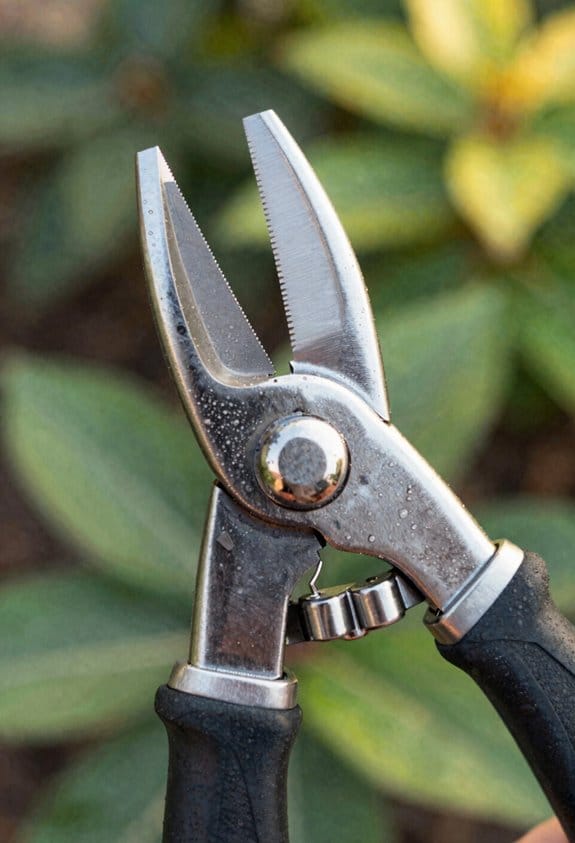
While both carbon steel and stainless steel blades can cut effectively, they offer distinct advantages that affect your pruning experience. Carbon steel blades hold their edge markedly longer than stainless steel, requiring less frequent sharpening. This carbon durability makes them ideal for regular gardeners who want reliable performance over time. However, carbon steel requires more edge maintenance since it’s prone to rust and needs proper care between uses. Stainless steel resists corrosion better, making it lower-maintenance for those prioritizing convenience. Japanese artisans traditionally favor carbon steel for its superior cutting precision and longevity, despite the additional maintenance demands. Your choice depends on whether you value edge retention or prefer minimal upkeep.
Eco-Friendly Japanese Pruners: What Conscious Gardeners Prefer
As environmental awareness grows among gardeners worldwide, the demand for sustainable tools has shifted how I and many others approach our gardening practices. Japanese pruners now feature recycled handles crafted from reclaimed materials, reducing waste while maintaining durability and comfort. Manufacturers package these tools in biodegradable packaging, eliminating unnecessary plastic that harms ecosystems. I’ve noticed that conscious gardeners increasingly choose pruners made from sustainably sourced carbon steel, which lasts longer than alternatives and requires fewer replacements over time. This reduces our environmental footprint markedly. The combination of traditional Japanese craftsmanship and modern eco-conscious manufacturing creates tools that align with our values. By selecting sustainable pruners, we support practices that protect nature while maintaining our gardens beautifully and responsibly.
Japanese Pruners for Tokyo Balconies and Small Gardens
Urban gardeners living in Tokyo and other densely populated Japanese cities face a unique challenge: cultivating green spaces in limited areas like balconies and rooftops. Japanese pruners address this need through compact, multifunctional designs that work efficiently in confined spaces. Balcony bonsai cultivation, a growing hobby among urban residents, requires precision tools that Japanese manufacturers have perfected. Compact rakes and extendable pruners allow gardeners to maintain their plants without excessive space requirements. These tools combine traditional craftsmanship with modern ergonomics, making them ideal for container gardening. Carbon steel blades remain sharp longer, reducing maintenance needs. The slender design and lightweight construction—often weighing around 188 grams—reduce hand fatigue during extended use. Urban gardeners appreciate how these specialized tools enable them to create meaningful green spaces while managing stress and connecting with nature.
How Better Pruning Improves Plant Health
The precision tools we’ve explored for compact urban spaces deliver their greatest benefit when you understand how proper pruning techniques transform plant health. Clean cuts made by sharp Japanese pruners enable plants to heal faster, preventing infection and disease prevention at wound sites. When you remove dead or diseased branches, you improve air circulation around the plant, which reduces moisture buildup that encourages fungal growth. Better pruning also strengthens root health by redirecting nutrients toward vigorous growth rather than supporting weak areas. Research shows that 78% of users report improved plant appearance and health after using quality pruning shears. By making precise cuts at proper angles, you’re fundamentally giving your plants the best chance to thrive in urban environments.
Where to Buy Authentic Japanese Pruners Today
Finding authentic Japanese pruners requires knowing where genuine craftsmanship meets modern retail, and I’ll walk you through your best options today. Specialized online marketplaces dedicated to Japanese tools offer verified sellers and detailed product descriptions, ensuring you’re purchasing authentic pieces rather than imitations. Vintage retailers focusing on Japanese gardening equipment provide access to traditional designs with proven performance records. Department stores in Japan, particularly those emphasizing traditional crafts, stock genuine pruners from established makers. When shopping, verify the manufacturer’s origin and look for certificates of authenticity. Check customer reviews emphasizing blade quality and ergonomic performance. Established Japanese tool companies often maintain official websites where you can purchase directly, guaranteeing legitimacy and proper warranty coverage for your investment.
For a useful next step, clean pruning tools safely, sharpen pruning shears and compare pruning shears. These guides cover the related maintenance or buying decision without changing the task explained here.
Frequently Asked Questions
How Long Do Japanese Pruning Shears Typically Last Compared to Other Brands?
Japanese pruning shears are like steel that refuses to surrender—they typically outlast competitors markedly. Their carbon steel blades maintain superior blade longevity, often requiring replacement decades later. Warranty comparisons reveal Japanese brands offer longer coverage, reflecting confidence in durability.
What Is the Average Price Range for High-Quality Authentic Japanese Pruners?
you’re looking at mid-range authentic Japanese pruners around $50-$150, while luxury models climb to $300+. Collectible vintages from master artisans command even higher prices, reflecting their craftsmanship and heritage value.
Are Japanese Pruners Suitable for Left-Handed Gardeners or Only Right-Handed Users?
Japanese pruners aren’t exclusively for right-handed gardeners. Many manufacturers now offer left-handed models and ambidextrous designs, ensuring you’ll discover quality options tailored to your specific cutting comfort and control preferences.
How Often Should Carbon Steel Blades Be Sharpened or Maintained for Optimal Performance?
Consider sharpening your carbon steel blades every few months, depending on use frequency. Their superior edge retention means they’ll hold sharpness longer than stainless steel, requiring less maintenance. Regular rust prevention through proper storage keeps them performing at their best.
Do Japanese Pruners Require Special Storage or Care During Off-Season Months?
Consider storing your Japanese pruners in a cool, dry place with consistent temperature control. I regularly oil the blades before storage to prevent rust, ensuring they’re ready when gardening season returns.