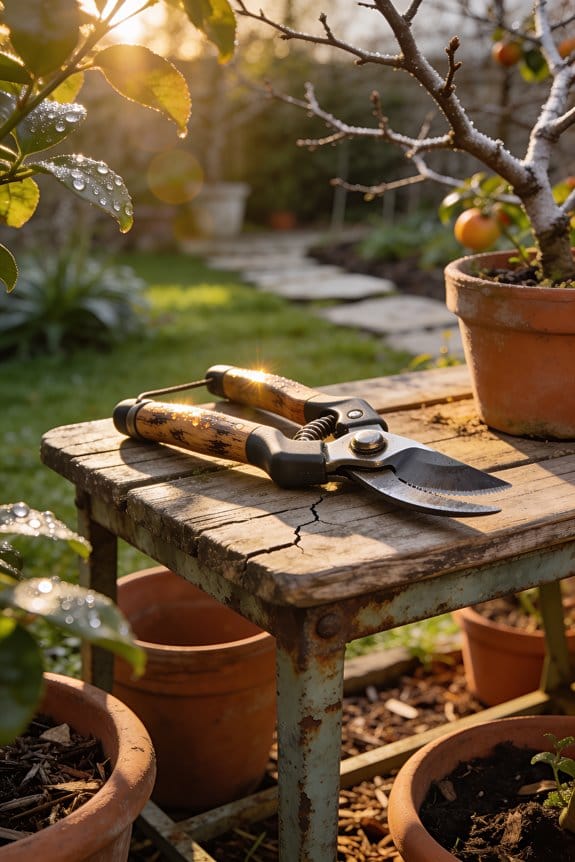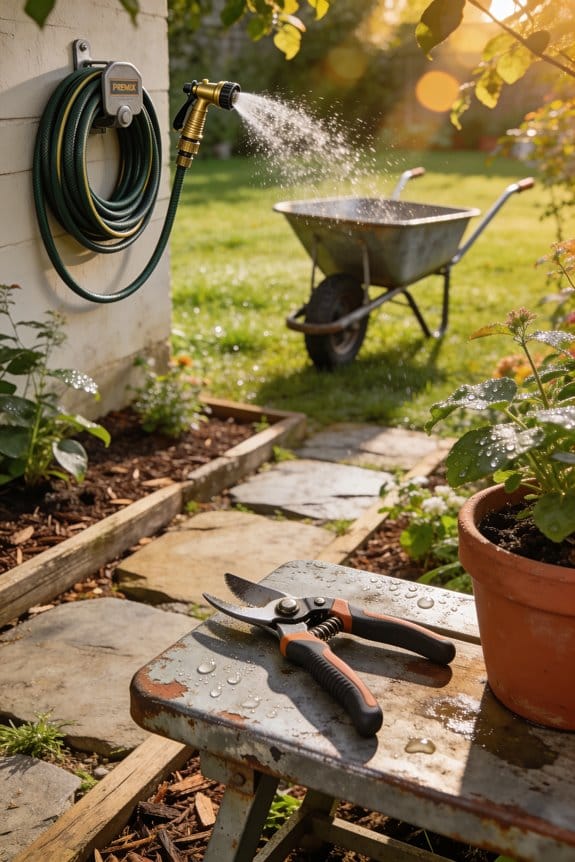


A pruning saw is a specialized cutting tool that uses a back-and-forth sawing motion to trim branches too thick for shears. You’ll want to use one instead of shears when branches exceed ¾ inch diameter, since forcing shears through thick wood crushes fibers and disrupts sap flow, inviting disease. Pruning saws feature narrow, tapered blades with heat-treated teeth for durability and come in curved or straight varieties depending on your speed or precision needs. Understanding the right blade type and cutting technique guarantees healthier plants and cleaner results.
Key Takeaways
- Pruning saws use back-and-forth sawing motions with heat-treated blade teeth, designed for branches exceeding ¾ inch diameter.
- Shears effectively cut branches up to ¾ inch thick; forcing them through thicker wood crushes fibers and invites disease.
- Pruning saws feature narrow, tapered blades for maneuvering tight spaces around trunks and limbs safely and efficiently.
- Curved blades prioritize cutting speed for thick branches; straight blades provide precision cuts on hardwood with cleaner results.
- Proper technique involves starting cuts on the branch underside at a slight angle using controlled strokes and steady pressure.
What a Pruning Saw Is and How It Works
A pruning saw is a specialized cutting tool designed specifically for trimming branches from live shrubs and trees, and it works quite differently from the shears you might find in most gardens. Rather than using a squeezing action, I use a back-and-forth sawing motion to cut through woody material. The blade mechanics involve sharp, hard-point teeth that are heat-treated for durability. The tooth geometry varies depending on branch thickness—finely toothed blades handle thinner branches up to 2½ inches, while coarse-toothed blades tackle heavier wood. The narrow blade, typically tapering from 2¼ inches to 1½ inches, allows me to maneuver through tight spaces between branches. This design makes pruning saws ideal for branches exceeding ¾ inch diameter, where standard shears become ineffective.
Branch Size: When Shears Fall Short
You may be interested



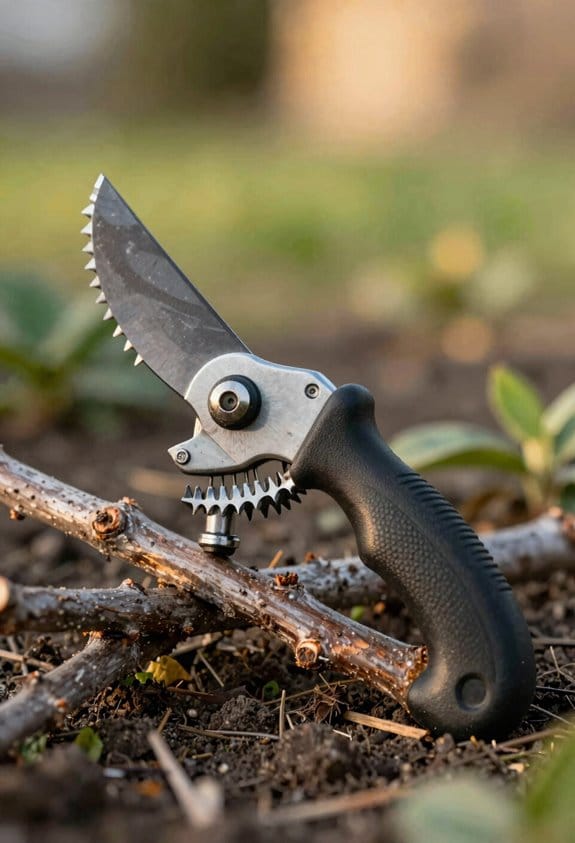
Understanding when to switch from shears to a saw is just as important as knowing how each tool works, because using the wrong tool can damage your plants and waste your effort. Shears work well for branches up to 3/4 inch thick, but anything larger requires a pruning saw. When you try forcing shears through thick wood, you’ll crush the branch fibers instead of making clean cuts, which disrupts sap flow and invites disease. A saw’s reciprocating blade cuts smoothly through woody material over 3/4 inch, creating proper safety clearance around trunks and limbs. Thicker branches also demand the saw’s power for efficient cutting. Knowing this size threshold helps you choose the right tool, protecting your plants’ health while completing tasks more effectively.
Pruning Saw Types: Choosing the Right Blade for Your Task
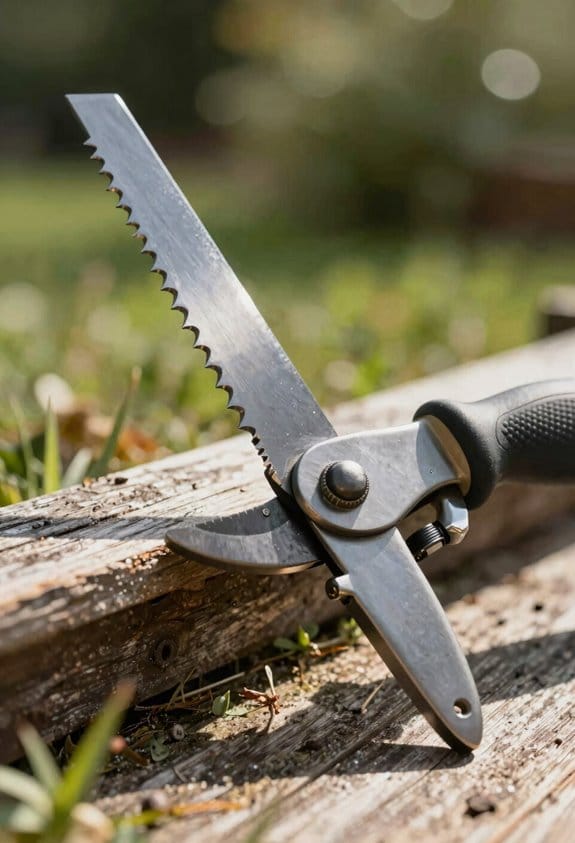
Once you’ve determined that you need a pruning saw instead of shears, your next decision involves selecting the right type of blade for your specific gardening task. Consider considering two main factors: teeth configuration and handle ergonomics.
Curved blades with fine teeth work well for branches up to 2½ inches diameter, cutting quickly through live wood. Straight blades offer precision cuts on hardwood and larger logs. The teeth configuration matters because coarser teeth handle heavier branches faster, while finer teeth produce cleaner cuts on smaller growth.
Handle ergonomics affect your comfort during extended use. Folding saws fit easily in tool bags, while pole saws reach high branches without ladders. Carbon steel blades maintain sharpness longer, reducing maintenance needs throughout your gardening season.
Curved Blades for Speed, Straight Blades for Precision
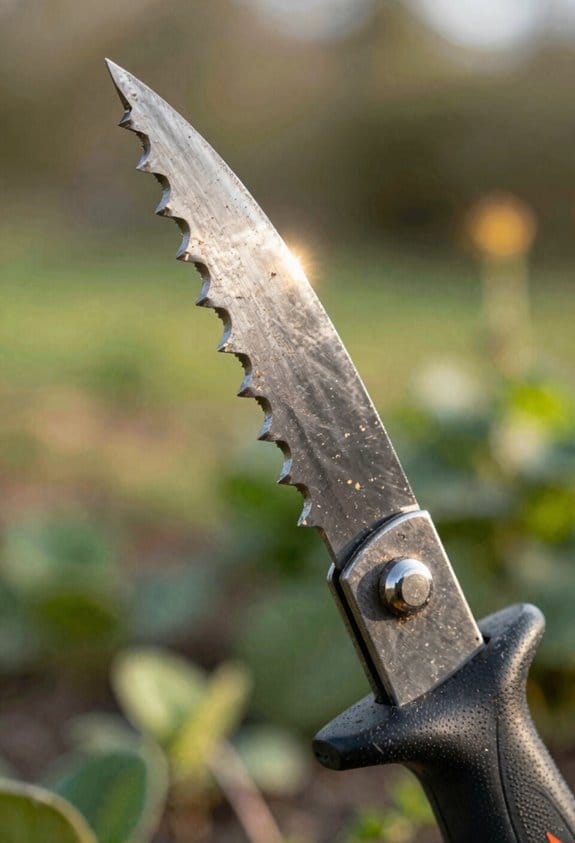
When you’re deciding between curved and straight pruning saw blades, the choice depends on your primary goal: cutting efficiency or cutting quality. Curved blades excel at speed, making them ideal when you’re tackling high-volume pruning above shoulder height. Their aggressive tooth geometry cuts through thick branches quickly, though the cuts aren’t always the cleanest. Straight blades, however, prioritize precision and clean cutting, making them better for decorative trees where appearance matters. The tooth geometry on straight blades creates smoother results on hard wood. Both blade types come with ergonomic handles designed to reduce hand fatigue during extended use. Consider your project’s demands: choose curved blades when speed matters most, straight blades when cut quality is essential.
Reaching High Branches: Pole Saws vs. Hand Saws
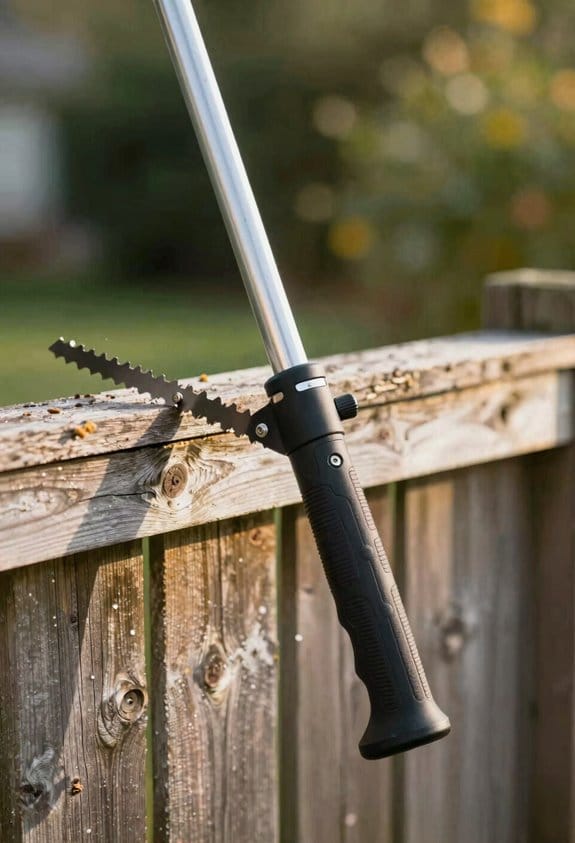
One major challenge I face when pruning trees is accessing branches that grow too high for hand saws to reach safely, which is where pole saws become essential. These specialized tools attach cutting blades to extension poles, allowing me to trim branches up to 2 inches in diameter from the ground. When working at heights, I always use safety harnesses to prevent falls, especially on ladders or unstable ground. Hand saws work best for lower branches where I can maintain proper balance and control. Pole saws sacrifice some precision for reach and convenience, making them ideal for high canopy work. Choosing between them depends on branch height, thickness, and my ability to work safely at that elevation.
Carbon Steel Blades: Why They Stay Sharp Longer
Investing in a pruning saw with a carbon steel blade makes a real difference in how long your tool stays sharp between sharpenings. Carbon steel undergoes heat treatment, a process that hardens the metal and strengthens the teeth, allowing them to maintain their cutting edge through repeated use. This special treatment also provides corrosion resistance, protecting your blade from rust and degradation when exposed to moisture and outdoor conditions. Because carbon steel blades retain their sharpness longer than standard steel, you’ll spend less time maintaining your tool and more time pruning. The initial investment costs more, but the extended durability and reduced sharpening frequency make carbon steel blades a practical choice for serious gardeners who tackle frequent pruning projects.
How to Cut Without Crushing the Branch
While a sharp carbon steel blade keeps your pruning saw effective between maintenance sessions, how you use that blade matters just as much as its quality. Proper positioning of your saw is essential to making clean cuts without crushing the branch. Consider starting your cut on the underside of the branch, positioning the blade at a slight angle rather than straight down. This technique prevents the branch weight from crushing fibers as it falls. Use controlled strokes with steady, even pressure rather than forcing the saw through the wood. Let the blade’s teeth do the work. By maintaining a consistent rhythm and angle throughout your cutting motion, you’ll achieve precise cuts that promote healthy tree healing and reduce damage to surrounding bark and tissue.
For a useful next step, clean pruning tools safely, sharpen pruning shears and compare pruning shears. These guides cover the related maintenance or buying decision without changing the task explained here.
Frequently Asked Questions
How Often Should I Sharpen or Replace My Pruning Saw Blade?
I’d sharpen your blade when it’s cutting slower or duller. Carbon steel holds its edge longer, reducing sharpening frequency. Replace when tooth geometry deteriorates beyond restoration—typically after seasons of heavy use before the blade’s lifespan ends completely.
What Safety Equipment Do I Need When Using a Pruning Saw?
Consider you always wear protective eyewear to shield your eyes from flying debris. Cut resistant gloves protect your hands from the sharp blade. Don’t forget sturdy footwear and long pants for complete safety coverage.
Can I Use a Pruning Saw on Fresh, Green Wood or Only Dead Branches?
You can absolutely use a pruning saw on fresh, green wood and live branches. Consider pruning during dormant seasons to minimize sap flow, though you’ll manage green wood fine anytime with proper timing.
How Do I Properly Maintain and Store My Pruning Saw Between Uses?
As the saying goes, “a tool well maintained is a tool well kept.” Consider blade oiling after each use to prevent rust, then store your saw in a dry storage location away from moisture and extreme temperatures.
What’s the Best Technique to Prevent Branch Bark Damage When Making Cuts?
I’ll prevent bark damage by using proper backing—supporting the branch underneath while cutting. Make angled bevel cuts just outside the branch collar, never flush against the trunk. You’ll guarantee clean wounds that heal properly.