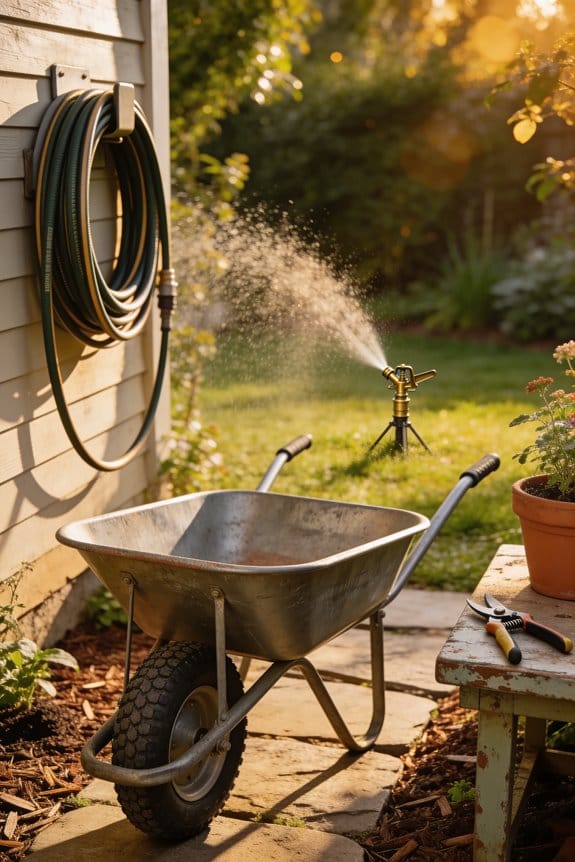


I need to select a wheelbarrow with a reinforced steel frame and pneumatic wheels for uneven terrain before hauling rocks and soil. I’ll distribute materials evenly, keeping the center of gravity over the wheel, then lift by bending my knees with my back straight. I’ll wear cut-resistant gloves, sturdy boots, and safety glasses to protect myself from sharp edges and flying debris. Pushing at a controlled pace while watching for obstacles keeps me safe, and I’ll maintain my wheelbarrow regularly to prevent equipment failures that could cause accidents.
Key Takeaways
- Select a reinforced steel wheelbarrow with pneumatic wheels and verify load capacity before moving heavy rocks and soil.
- Distribute materials evenly with heavier items toward the wheel center to maintain stability and prevent load shifting during transport.
- Bend at knees with a straight back and lift smoothly using leg strength rather than straining your back muscles.
- Push at controlled, steady pace while watching for obstacles and uneven surfaces; never run with a loaded wheelbarrow.
- Wear cut-resistant gloves, sturdy boots, and safety eyewear to protect against sharp rocks, dropped materials, and flying debris.
Select the Right Wheelbarrow for Rocks and Soil
Before you start hauling rocks and soil, you’ll need to choose a wheelbarrow that’s built to handle these heavy materials. Material compatibility matters considerably because rocks and soil have different weight distributions and textures that demand specific wheelbarrow features. Look for a sturdy frame constructed from reinforced steel or heavy-duty plastic that won’t crack under pressure.
You may be interested



Your wheel configuration depends on your terrain. Pneumatic wheels work best on uneven ground where rocks are scattered, while solid wheels suit flat, prepared surfaces better. Consider a wheelbarrow with a larger capacity bucket if you’re moving substantial quantities, but remember that heavier loads require more control and effort.
Before purchasing, inspect the handles for ergonomic design and grip comfort. Check the frame for any signs of damage or weakness. A well-selected wheelbarrow makes transporting heavy materials safer and more efficient.
Inspect Your Wheelbarrow Before Every Use
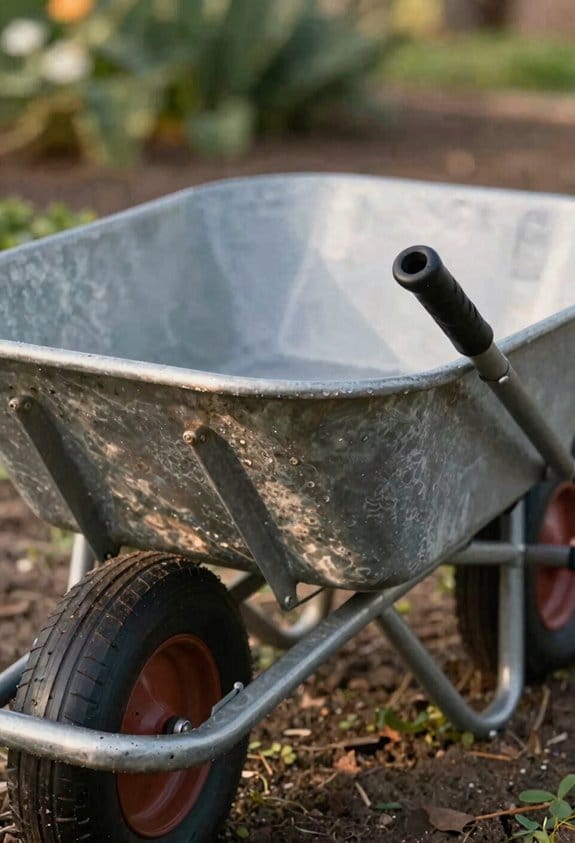
Every time I prepare to move rocks or soil, I should inspect my wheelbarrow carefully to catch potential problems before they cause accidents or injuries. I check the tires first, examining them for wear, cracks, or proper tire pressure, since damaged tires can cause loss of control on uneven terrain. Next, I inspect the frame and handles for cracks or bending that might compromise structural integrity. I tighten all nuts and bolts to make sure nothing shifts during transport. I also examine the wheel bearings and bracing for damage. Finally, I verify the load capacity hasn’t been exceeded by checking manufacturer specifications. This routine storage and pre-use inspection prevents equipment failure and keeps me safe while transporting heavy materials.
Wear Proper Protective Gear
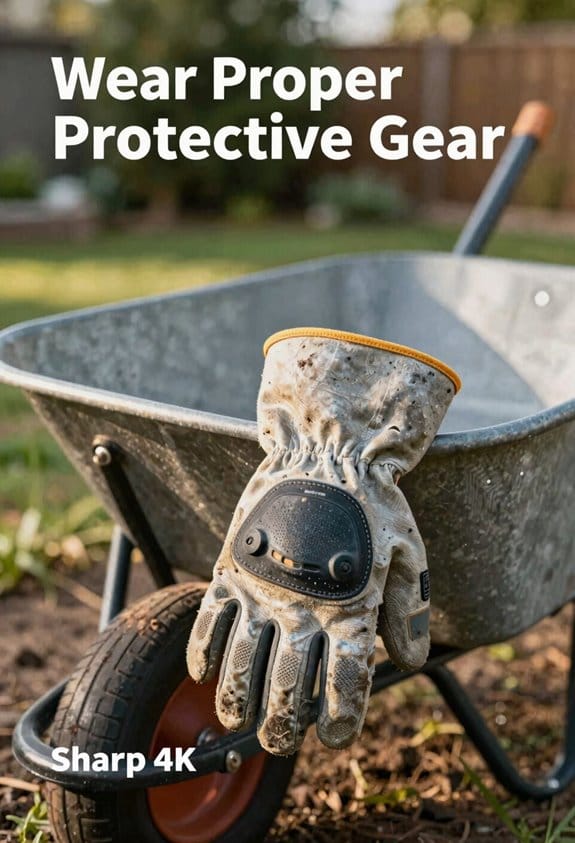
Once I’ve confirmed my wheelbarrow is in good working condition, I need to protect myself with the right gear before I start moving heavy rocks and soil. Cut resistant gloves shield my hands from sharp edges and abrasions during loading and transport. Sturdy boots provide ankle support and protect my feet from dropped materials. Breathable eyewear guards my eyes from dust particles and flying debris, which are common hazards when handling soil and rocks. A hard hat protects my head from overhead hazards, particularly important on job sites. Safety glasses with proper ventilation prevent eye strain while maintaining visibility. Together, this protective equipment considerably reduces injury risk and allows me to work confidently with heavy materials.
Balance and Distribute Your Wheelbarrow Load Correctly
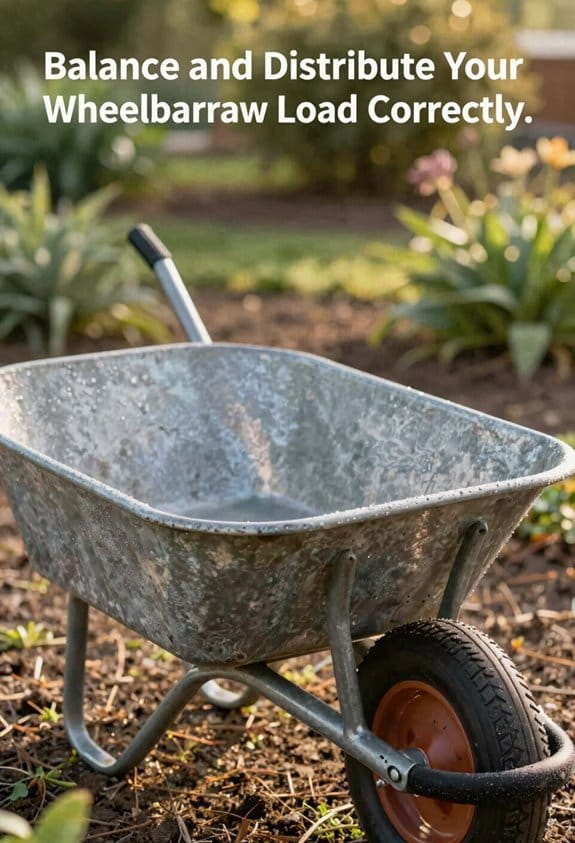
As I prepare to load my wheelbarrow with heavy rocks and soil, proper weight distribution becomes critical to maintaining control and preventing accidents. I place materials evenly across the wheelbarrow bed, keeping the center of gravity directly over the wheel. This positioning guarantees stability during transport and reduces the risk of tipping on uneven ground.
I’m careful to avoid load shifting by securing materials firmly within the wheelbarrow’s boundaries. When transporting rocks and soil on slopes or around corners, I reduce the total amount, making multiple trips rather than overloading. I position heavier items toward the wheel’s center, distributing weight uniformly to maintain balance. By following these distribution techniques, I prevent muscle strain and loss of control, guaranteeing safer, more efficient material transport across job sites.
Lift Correctly: Bend Knees and Keep Your Back Straight
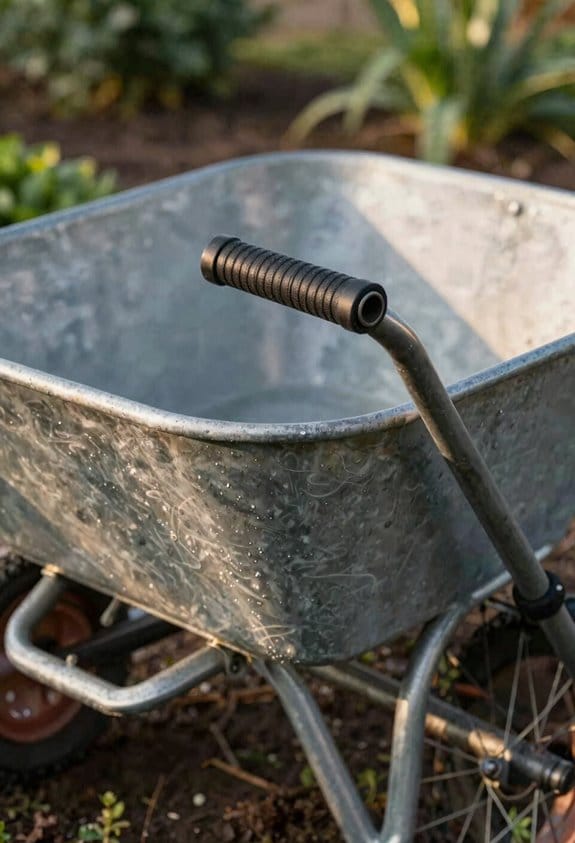
To protect your back and lift the wheelbarrow handles safely, you’ll need to use proper lifting mechanics that distribute the load through your leg muscles rather than your spine. Position yourself close to the wheelbarrow with your feet shoulder-width apart, then bend at your knees while keeping your back straight. This proper posture guarantees your legs bear the weight instead of your lower back, which can’t handle heavy loads effectively.
As you lift, use controlled breathing technique by inhaling before the lift and exhaling as you raise the handles. Lift smoothly to waist or horizontal level, avoiding jerky movements that strain muscles. Practice these techniques consistently so they become automatic when you’re working with heavy rocks and soil.
Load Only What You Can Safely Handle
Even though you’ve learned the proper lifting technique with bent knees and a straight back, your body still has limits on how much weight it can handle safely. Understanding your personal weight limits is vital when moving rocks and soil.
Before you start, honestly assess what you can comfortably lift and push without straining. Don’t fill your wheelbarrow to capacity just because it fits. Instead, load only what you can manage while maintaining control and proper form.
Smart trip planning prevents injuries. Making multiple smaller trips is safer than overloading once. On hills or when steering around corners, reduce your load further since these situations demand extra stability and control. Remember, protecting your body today means you’ll stay healthy for tomorrow’s projects.
Push Your Wheelbarrow at a Controlled Pace
Once you’ve loaded your wheelbarrow with a manageable amount of material, how you move it matters just as much as what you’ve put in it. Consider pushing your wheelbarrow at a controlled pace, maintaining a steady momentum that matches your walking speed. Never run, as this increases your risk of losing balance and tipping the load. Keep a tight grip on the handles throughout your journey, allowing you to adjust direction smoothly and stop quickly if needed. Watch for obstacles, other workers, and uneven surfaces ahead of you. By moving deliberately and carefully, you’ll transport your rocks and soil safely while preventing muscle strain and accidents that could result from rushing or moving too quickly.
Navigate Slopes and Obstacles Safely
While maintaining your controlled pace works well on flat ground, you’ll face additional challenges when slopes and obstacles enter the picture. When encountering stepped terrain, Consider crossing at right angles rather than diagonally, which helps maintain stability and control. For slopes, I load only what I can physically handle, making multiple trips if necessary to prevent tipping or losing control. I also avoid steep inclines entirely when possible. Using visibility aids like reflective tape on my wheelbarrow helps others see me on job sites. Before approaching any obstacle, I confirm my load sits securely and won’t shift during transport. I never run or rush, keeping my speed steady and deliberate. This cautious approach prevents accidents and injuries while moving heavy rocks and soil effectively.
Respond to Accidents and Loss of Control
Despite your best efforts to maintain control, accidents can happen when operating a wheelbarrow with heavy loads. If you feel the wheelbarrow tipping or sliding, perform an emergency release by letting go of the handles immediately and stepping away. Shouting a warning alerts nearby workers to the danger. Never attempt to regain control of a runaway wheelbarrow, as this increases injury risk.
After any accident, document what happened through post incident reporting. Record the conditions, load type, and how the accident occurred. This information helps identify hazards and prevent future incidents. If someone’s injured, seek medical attention immediately and notify supervisors. Review what went wrong—was the load unbalanced, the terrain too steep, or the speed too fast? Understanding these factors guarantees safer wheelbarrow operation moving forward.
Maintain Your Wheelbarrow to Prevent Future Failures
Regular maintenance keeps your wheelbarrow functioning safely and reliably for years of heavy-duty work. Consider checking handles for cracks and tightening nuts and bolts regularly to prevent structural failure. Inspect the bracing system, which supports the load-bearing capacity, for any signs of wear or damage.
Regular lubrication of wheel axles and pivot points reduces friction and extends equipment life. Use appropriate lubricants designed for outdoor equipment to prevent rust and corrosion.
Your storage protocol matters greatly. I store my wheelbarrow in a dry location away from extreme weather, ensuring it doesn’t obstruct aisles or create trip hazards. Replace worn wheels promptly since damaged wheels compromise control and safety. Maintaining accessory equipment like knuckle guards and reinforcement rails prevents accidents during transport. These preventive measures eliminate future failures before they occur.
For a useful next step, choose between a wheelbarrow and a garden cart and store a wheelbarrow in a small space. These guides cover the related maintenance or buying decision without changing the task explained here.
Frequently Asked Questions
How Often Should I Lubricate My Wheelbarrow Wheels and Moving Parts?
I’ll lubricate my wheelbarrow regularly—not just when it squeaks. Consider seasonal maintenance before heavy use periods and bearing replacement when parts wear. This prevents rust and extends equipment life markedly.
Can I Use a Wheelbarrow to Transport Rocks on Uneven or Muddy Terrain?
Yes, I can use a wheelbarrow on uneven or muddy terrain if I select pneumatic wheels for better traction aids and plan drainage properly. I’ll make multiple trips with lighter loads to maintain control.
What Is the Maximum Weight Capacity for a Standard Wheelbarrow?
Consider checking your wheelbarrow’s specifications, as standard models typically handle 300-400 pounds. You’ll want to verify your specific payload capacity and make certain proper load distribution to prevent tipping or injury.
Should I Wear a Hard Hat When Moving Rocks and Soil Outdoors?
Consider wearing a hard hat if you’re in an area with overhead hazards. Don’t forget wearing gloves for grip and sun protection outdoors. You’ll stay safer following complete PPE guidelines while handling rocks and soil.
How Do I Prevent Rocks From Shifting or Spilling During Transport?
I’ll secure your rocks by lining the wheelbarrow with a tarp and positioning the load low and centered. I’ll use an apron guard to contain shifting materials, ensuring everything stays confined during transport.