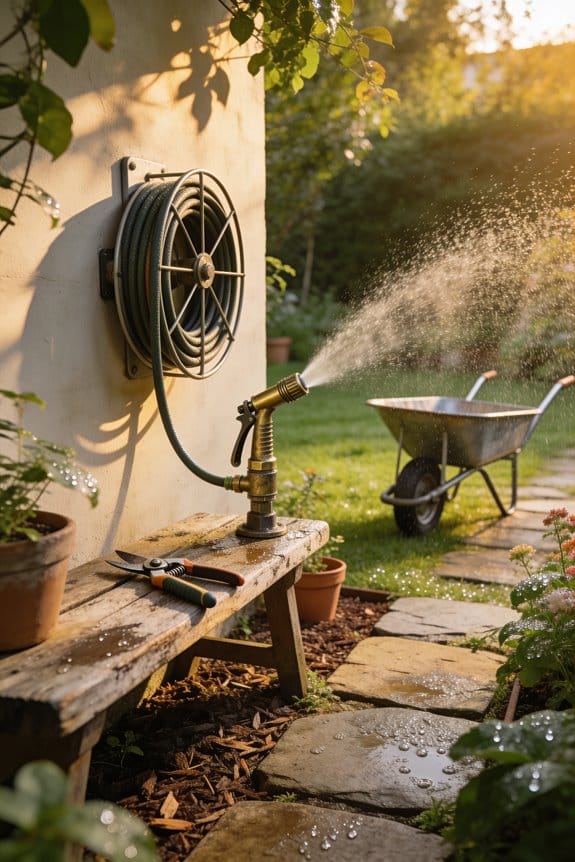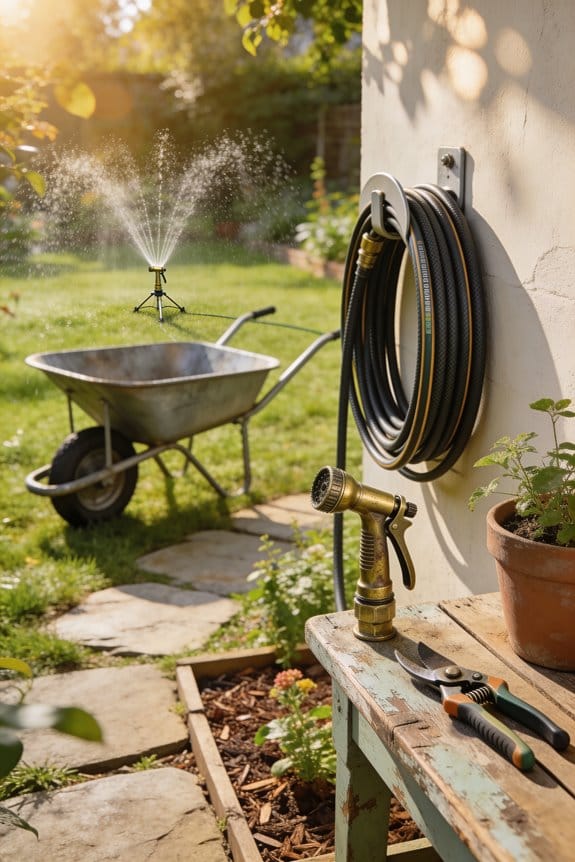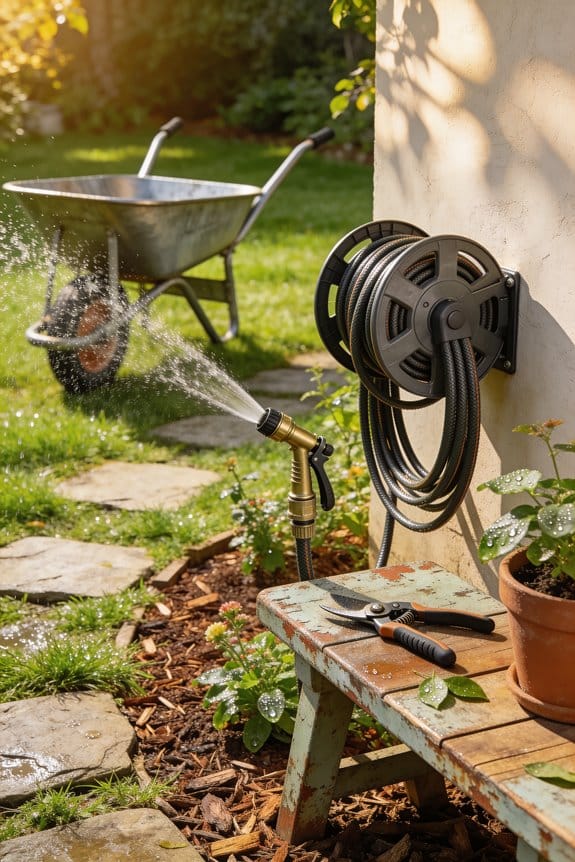
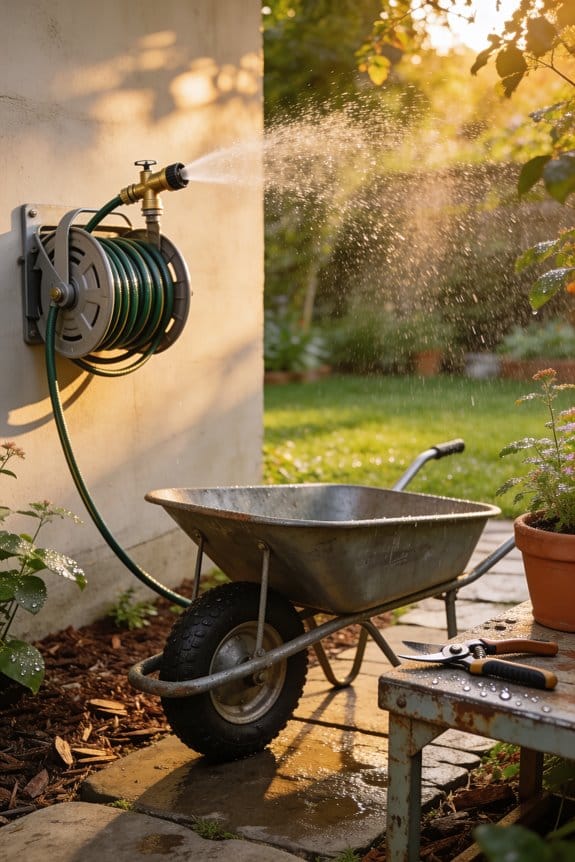

I’ll extend your hose’s lifespan by following these essential steps. First, drain all water completely and bleed the fittings before storage. Next, coil your hose in large, uniform loops to prevent kinks and damage. Store it in a cool, dry location away from direct sunlight, using a reel or wall mount to keep it elevated. Clean and inspect the hose thoroughly, then cap both ends. Finally, protect it from UV rays with covers or shaded storage, and winterize if you live in cold climates. These practices will reveal surprising benefits.
Key Takeaways
- Drain all water completely and bleed fittings before storage to prevent ice damage and mold development.
- Store hose in cool, dry locations protected from direct sunlight, such as garages, sheds, or basements.
- Coil hose in large, uniform loops of two to three feet diameter to avoid kinks and damage.
- Use space-saving reels, wall-mounted hangers, or covered storage equipment to keep hose elevated off the ground.
- Inspect hose for cracks and wear before storage, then cap both ends to prevent debris contamination.
Prepare Your Hose Before Storage
Before you store your garden hose away, you’ll need to prepare it properly to make sure it lasts for years to come. First, disconnect the hose from your water source and turn off the faucet. Next, drain all remaining water completely by holding the hose at an angle and letting gravity do the work. This step prevents ice formation and cracking during winter months. After draining, bleed fittings by loosening connection points slightly to release trapped water and pressure. Inspect your hose for cracks, leaks, or visible wear that might worsen during storage. If you’ve used your hose for chemicals or specialized fluids, purge it with compressed air. Finally, cap or plug both ends to block debris and contaminants before storing.
Select the Best Storage Equipment for Your Space
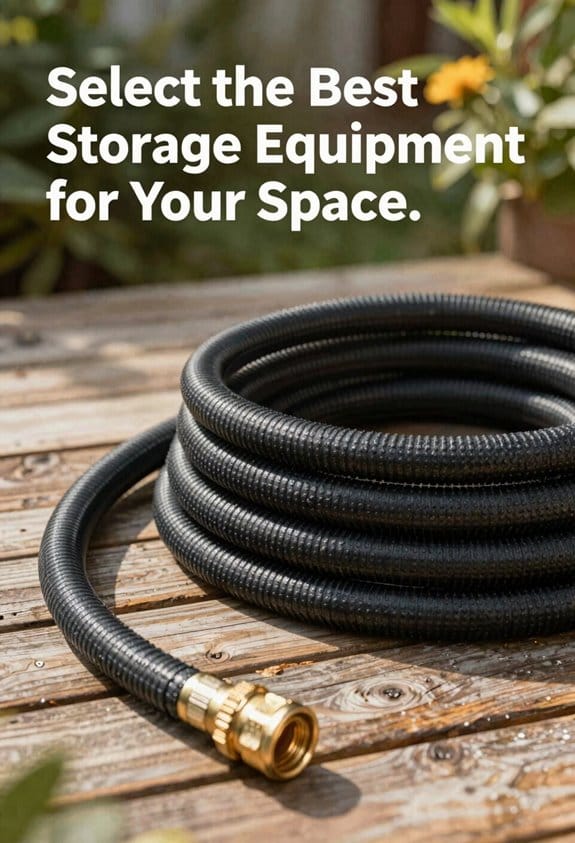
Now that you’ve prepared your hose for storage, choosing the right equipment will keep it organized, protected, and ready for next season. Space saving reels work well if you’ve got limited room, since they compactly store your hose while preventing tangling. Wall-mounted hangers or racks keep your hose elevated off the ground, protecting it from moisture and damage. If aesthetics matter to you, decorative hose pots offer a tidy, attractive storage solution that blends into your yard or patio. For those without garage or shed access, a covered hose reel provides both protection from UV rays and weather while keeping everything neatly coiled. Consider your available space, climate conditions, and storage location when selecting equipment that best fits your needs.
Recommended Products

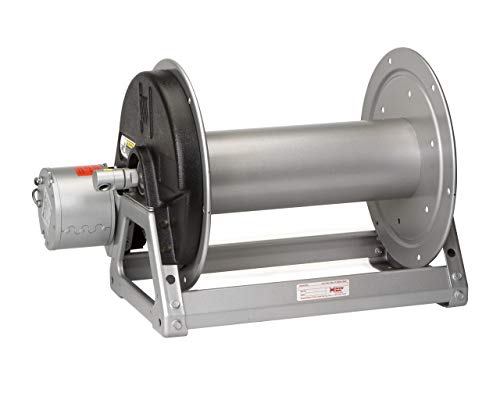
UNDERHILL HC-TRL-100 HOSE CADDIE TRAILER: Includes our commercial quality outdoor hose reel, full size golf cart tires, and hubs for smooth use. The strongest hose trailer on the market.

EASY MAINTENANCE: With our exclusive Super-Hub triple axel support, our spring-driven truck fuel hose reel is among the toughest around! A solid brass swivel provides simple seal maintenance, the cartridge-style motor ensures safe, convenient upkeep.
Choose the Right Storage Location
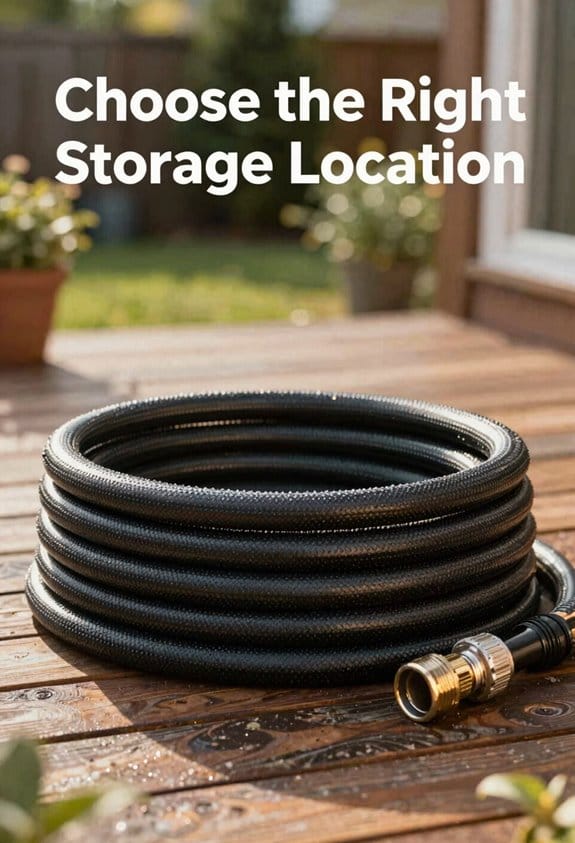
Once you’ve selected your storage equipment, determining where to place it matters just as much as what you choose. I’d recommend storing your hose in a cool, dry location that’s protected from direct sunlight. A garage, shed, or basement works well because these spaces shield your hose from UV rays and temperature extremes that degrade rubber over time. If you’re limited on indoor space, consider using elevated shelving or a shaded closet to keep the hose off the ground, which prevents moisture damage and mold growth. Avoid areas near heating sources or where temperatures fluctuate markedly. The goal is creating a stable environment that minimizes environmental stress on your hose’s material, ultimately extending its lifespan and maintaining its functionality for years.
Recommended Products

【What Will You Receive?】 You will receive: ① Stainless Steel Outdoor Sink Cabinet X1, ② Stainless Steel Outdoor Drawer Cabinet X1, ③ Stainless Steel 30 Inch 5-Burner Propane Gas Grill X1, ④ Stainless Steel 30 Inch Outdoor kitchen BBQ drawer Cabinet X1. This outdoor kitchen storage cabinets can be better suited for decks, patios or outdoor areas. Easily create a personalized outdoor kitchen island space.
【What Will You Receive?】 You will receive: ① Stainless Steel Outdoor Sink Cabinet X1, ② Outdoor Drawer Cabinet For Refrigerator X1. ③ Stainless Steel 30 Inch 5-Burner backyard BBQ grill X1, ④ Stainless Steel Outdoor kitchen BBQ drawer Cabinet X1. This outdoor kitchen cabinets combo can be better suited for decks, patios or outdoor areas. Easily create a personalized outdoor kitchen island space.

Water Tank: Pressurized 10-gallon tank with easy-filling for large top-cap that simplifies replenishment, allowing low-effort access for on-the-go water needs
Coil Your Hose Properly to Prevent Damage
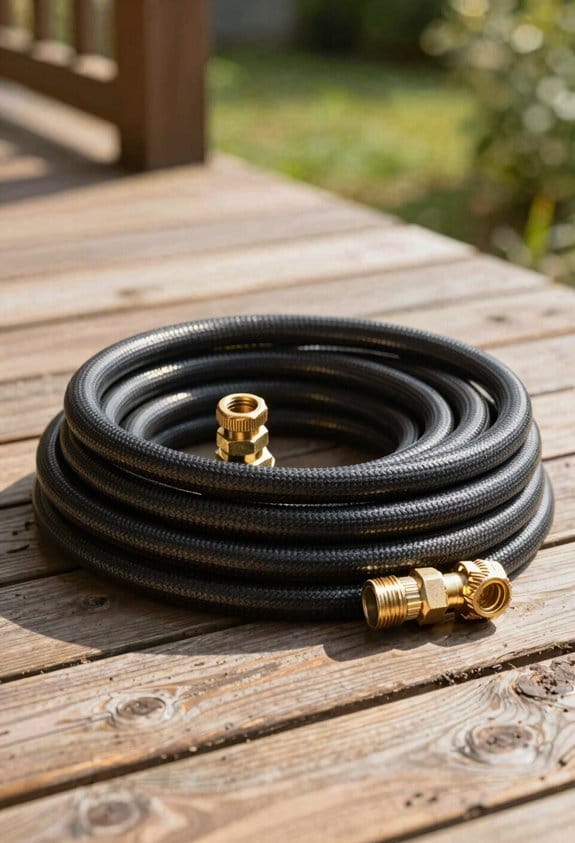
To set up your hose for storage, you’ll want to start by disconnecting it from the water source and draining out any remaining water, which prevents ice damage during freezing temperatures and stops mold from developing inside the hose. Once drained, I recommend forming large, uniform loops to avoid tight bends or kinks that weaken the material.
The loop size matters considerably—aim for loops roughly two to three feet in diameter. Your coil direction should remain consistent, coiling in one direction rather than switching back and forth. This prevents tangling and confusion when you unwind it later.
If you have a hose reel available, use it for organized, compact storage. Otherwise, manual coiling works fine when you store your hose in a shaded area away from temperature extremes.
Recommended Products

SWIVEL - Machined from solid brass 90° full-flow NPT swivel for fuel dispensing applications.
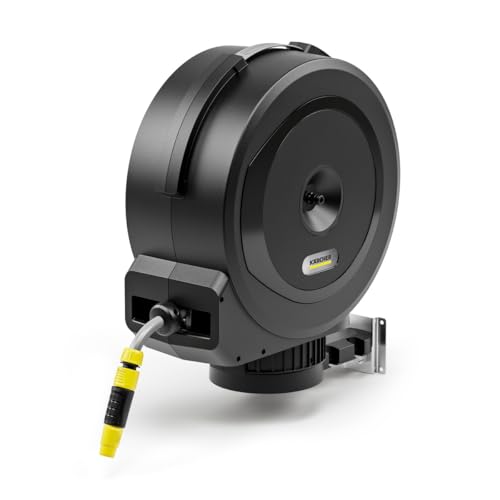
No screws, no tools, no stress: with the unique Kärcher FlexChange system, the hose box can be removed from the wall mount or ground spike in seconds (e.g. in winter).

Super Swivel - Heavy Duty Hose Reel Swivel 1/2" - SW9-08-08 (pack of 12)
Clean and Inspect Your Hose Before Storage
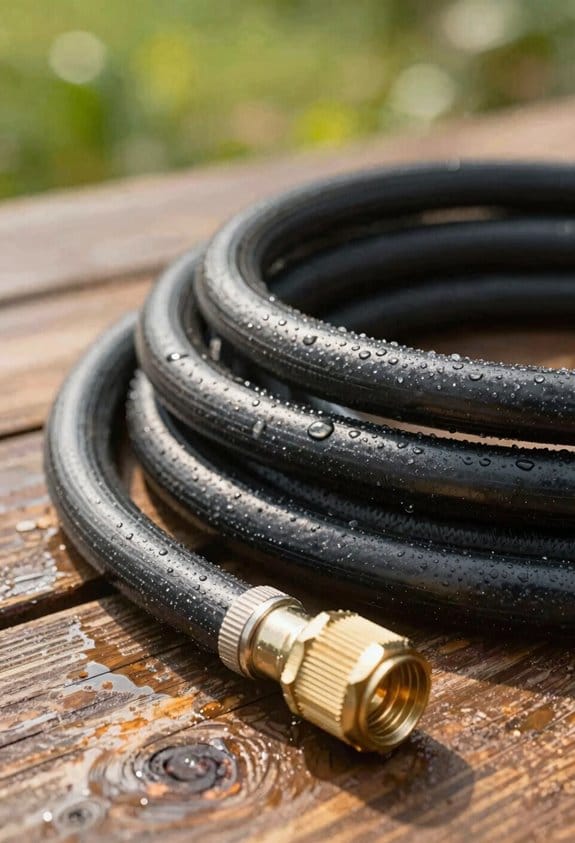
Before you store your hose away, you should always clean it thoroughly and inspect it for any signs of damage that might worsen during storage. I recommend flushing out dirt, debris, and any chemicals that accumulated during use. If you’ve used your hose for fertilizers or pesticides, purge it with compressed air to remove residual fluids completely. While cleaning, sanitize fittings by wiping them with a cloth to prevent corrosion. Next, perform visual cataloging of your hose by examining it inch by inch for cracks, leaks, or worn sections. Check connections and coupling points carefully. Once inspection’s complete, cap or plug both ends to block contaminants. This preparation makes certain your hose remains in excellent condition throughout storage and ready for next season’s use.
Protect Your Hose From Sun and Heat Damage
Now that your hose is clean and ready for storage, protecting it from sun and heat damage becomes your next priority. UV rays gradually degrade rubber and vinyl materials, causing cracks and brittleness over time. I recommend storing your hose in a shaded location like a garage, shed, or basement where sunlight can’t reach it directly. If you must keep it outdoors, consider using UV blocking covers or reflective wraps specifically designed for garden hoses. These protective accessories shield your hose from harmful rays and temperature fluctuations. Additionally, hose reel covers provide excellent protection while keeping your storage organized. By taking these precautions, you’ll notably extend your hose’s lifespan and maintain its flexibility and durability for years of reliable use.
Recommended Products

Clear polycarbonate roof panels provide protection from harmful UV rays while allowing 65% of sunlight to be transmitted through
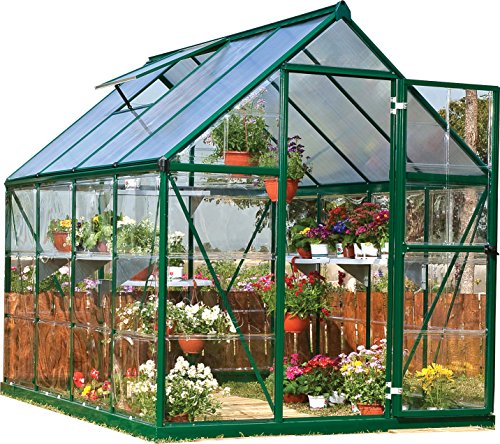
Virtually unbreakable 4 mm twin-wall polycarbonate roof panels block up to 99.9% of UV rays and diffuse sun light eliminating the risk of plant burn and shade areas
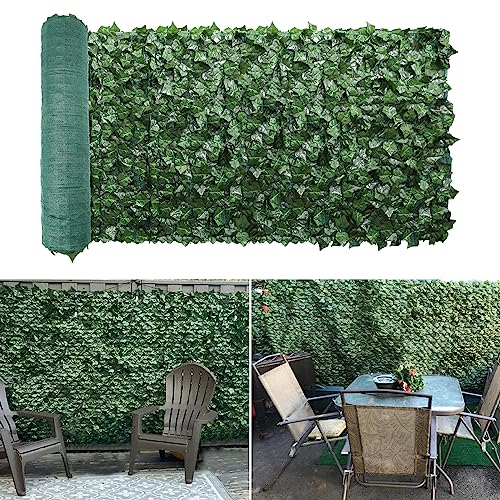
NATURAL LOOKING LEAVES - Our faux leaves fence screen will give you a realistic look and is a beautiful decoration both indoor and outdoor.
Winterize Your Hose to Prevent Freezing Cracks
Preparing your garden hose for winter requires draining all remaining water before freezing temperatures arrive, since trapped moisture expands when it freezes and creates cracks that permanently damage the hose. I recommend disconnecting your hose from the outdoor faucet and storing it indoors in a garage or heated shed where temperatures remain stable. If you must keep your hose outside, use freeze plugs on both ends to seal the openings and prevent ice formation inside the hose. Additionally, wrapping your outdoor faucet with thermal wraps provides insulation against freezing conditions. For extra protection, cap both hose ends to block debris and moisture. By taking these winterization steps now, you’ll protect your investment and make certain your hose functions properly when spring arrives.
Recommended Products

RV Macerator Pump 12V,Portable Macerator Waste Pump,12GPM Suction 3.2 feet Lift 10 feet with Garden Hose Discharge Port,Quick Release Sewage Pump with Fresh Water Crushing for Halloween Christmas

4 Blade Anti-Clog Design: Kohree macerator pump for RV features upgraded 4 Spiral blades with SK5 steel blades that grind toilet paper and solid waste into ≤1/16 inch (1.6mm) slurry. Compared to ordinary pumps, clog risk is reduced by 95% – even with heavy toilet paper loads, it keeps pumping without stalling.

【ETL Certified for Superior Safety】ETL certification, trusted in North America, ensures safety and quality compliance with rigorous standards. Our self-regulating heating cable holds full ETL certification, guaranteeing exceptional performance and reliability. The plug is also UL certified for extra safety. Always choose a fully certified heating cable for true safety. Plug-only certification is insufficient; the entire cable must be certified.
Use FIFO Rotation to Extend Hose Life
While winterizing your hose protects it from immediate cold damage, I’ve found that implementing a FIFO (First In, First Out) rotation system helps you prolong the overall lifespan of all your hoses over time. This inventory rotation method means using your oldest hoses first before reaching for newer ones.
When you practice first in/first out rotation, you prevent any single hose from sitting unused for extended periods. Hoses that remain dormant can develop weak spots and material degradation, even in storage. By regularly cycling through your hoses, you distribute wear evenly across your collection.
To start this system, label your hoses with purchase dates. Store them in visible locations so you’ll naturally grab the oldest ones. This practical approach maximizes durability and guarantees you’re getting the most value from your investment.
Storage Mistakes That Ruin Your Hose
Even with the best winterization practices and rotation system in place, many people still damage their hoses through careless storage mistakes. I’ve noticed that knotting hazards commonly occur when hoses are coiled too tightly or stored in cramped spaces, restricting water flow and weakening the material over time. Chemical exposure presents another serious problem; storing your hose near fertilizers, pesticides, or cleaning supplies can degrade the rubber or vinyl substantially. Additionally, leaving hoses coiled in direct sunlight accelerates UV damage, while storing them on cold concrete grounds promotes moisture absorption and mold growth. Neglecting to drain water completely before storage invites freezing damage during winter months. These preventable errors directly reduce your hose’s lifespan, making proper storage techniques essential for long-term durability.
Frequently Asked Questions
How Often Should I Inspect My Stored Hose for Damage or Deterioration?
I recommend you conduct monthly inspections during active use and perform seasonal checkups before storage. This guarantees I catch cracks, leaks, or wear early, preventing costly replacements and extending your hose’s lifespan markedly.
Can I Store My Garden Hose in a Basement That Experiences Occasional Moisture?
I’d caution against it—moisture causes 40% of hose failures. You’ll face mildew risk in damp basements. Instead, I’d recommend elevating your hose on wall-mounted hangers, avoiding metal fixtures that corrode, and choosing truly dry storage spaces.
What’s the Maximum Recommended Length for Manual Hose Coils Without a Reel?
I’d recommend keeping your manual coils to 50 feet maximum for easier handling. Larger hoses become unwieldy without reels. Maintain a coil diameter of at least 2 feet to prevent kinks and damage during storage.
Should I Remove Hose Attachments and Nozzles Before Storing for the Season?
I’d recommend you remove fittings and nozzles before storing your hose for the season. This protects threads from corrosion and damage. Cap the hose ends separately to prevent debris and contamination during storage.
How Long Can a Properly Stored Garden Hose Typically Last Before Replacement?
I’ve found that properly stored hoses typically last 5-10 years. Studies show improper storage cuts this by half. Your expected lifespan depends on warranty terms, usually 2-5 years, but quality storage extends durability markedly beyond manufacturer guarantees.