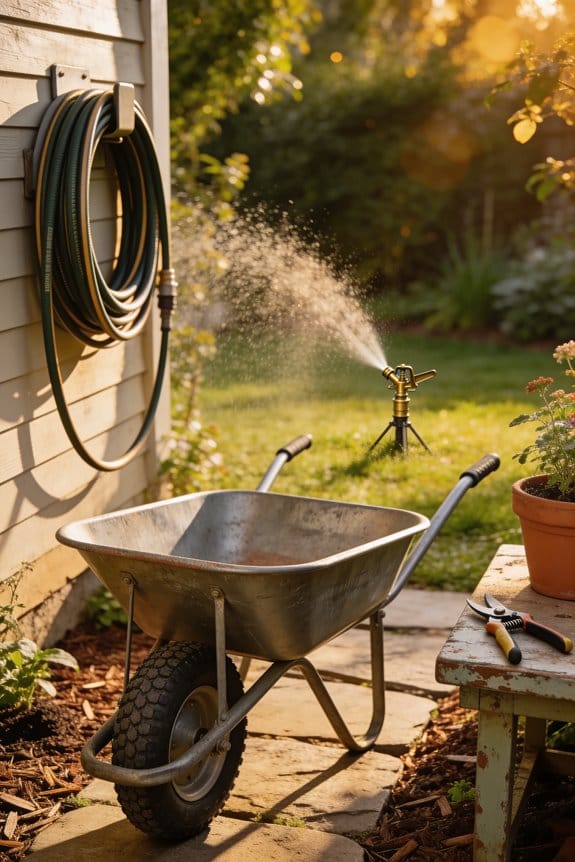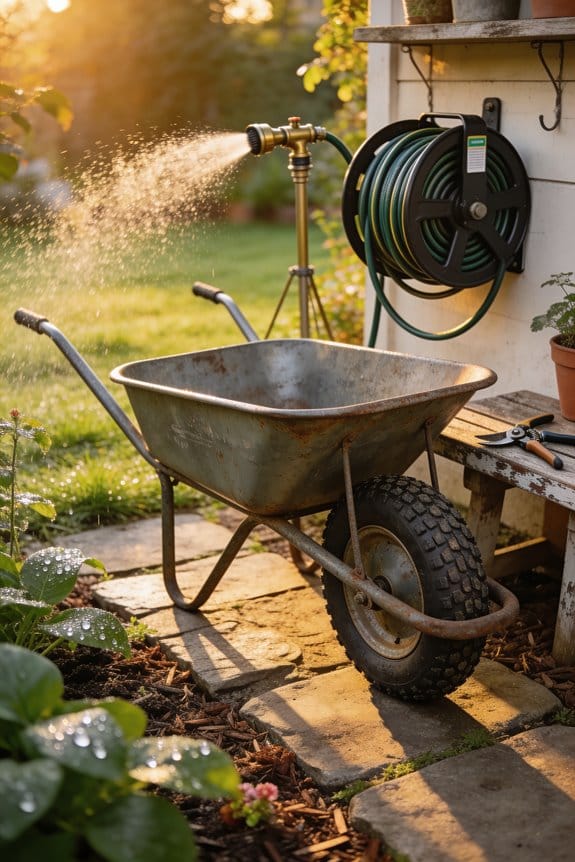


Garden dump carts and wheelbarrows differ fundamentally in design: carts use four wheels that distribute weight evenly, while wheelbarrows rely on a single wheel and leverage system. Carts offer superior stability and capacity, making them ideal for heavy or bulky materials like bricks. Wheelbarrows excel in tight spaces and require less maintenance since they don’t need wide pathways. Carts feature hinged dump beds for effortless unloading, whereas wheelbarrows demand manual tilting. Understanding these distinctions helps you select the right tool for your specific yard projects and physical capabilities.
Key Takeaways
- Garden dump carts feature four wheels for superior stability, while wheelbarrows use one wheel with handles for leverage-based maneuverability.
- Dump carts include hinged release systems for effortless full material discharge, whereas wheelbarrows require manual tilting for unloading.
- Dump carts accommodate larger volumes in single loads compared to standard wheelbarrows holding approximately six cubic feet of material.
- Dump carts use solid rubber tires with high puncture resistance, while wheelbarrows rely on pneumatic tires requiring regular maintenance.
- Wheelbarrows excel in confined spaces between raised beds, while dump carts require wider pathways and open ground for maneuvering.
Four Wheels vs. One: Core Design Differences
When you’re comparing garden dump carts and wheelbarrows, the most obvious difference you’ll notice is the number of wheels they use. Garden dump carts feature four wheels, while wheelbarrows operate on just one wheel with two handles. This fundamental design choice creates a significant stability comparison between the two tools. The four-wheel design lowers the cart closer to the ground, which improves its center of gravity analysis by distributing weight more evenly across all wheels. This means the cart stays balanced even when carrying heavy loads over uneven terrain. Conversely, wheelbarrows rely on a single wheel and leverage system, making them less stable with bulky items but more maneuverable in tight spaces. Understanding these structural differences helps you choose the right tool for your specific gardening needs.
Identify Your Use Case: Homeowner, Landscaper, or Limited Mobility

You may be interested



Since your gardening situation differs from your neighbor’s, choosing between a dump cart and wheelbarrow requires you to take into account your specific needs and circumstances. Single homeowners tackling modest yard projects benefit from a homeowner checklist that prioritizes versatility, making wheelbarrows ideal for tight spaces and composting tasks. Landscapers managing large-scale material movement need dump carts’ superior capacity and dumping mechanisms for efficiency. Users with limited mobility should prioritize accessibility features that reduce physical strain. Garden carts offer stability and minimal effort through their four-wheel design and hinged dump beds. Wheelbarrows demand more manual control but fit between raised beds easily. Assess your primary tasks, physical capabilities, and workspace constraints to determine which tool serves your situation best.
Load Capacity: Which Tool Handles Your Materials

Consider your typical load requirements before deciding between a garden dump cart and wheelbarrow, because material volume and weight directly impact which tool performs best for your projects. Standard wheelbarrows hold approximately 6 cubic feet of material, while smaller versions carry only 3 cubic feet. Garden dump carts accommodate larger volumes in single loads, making them ideal when you’re moving substantial quantities of landscaping materials.
The volume comparison matters greatly when planning your work. Wheelbarrows excel with granular items like crushed stone and dirt due to their design characteristics. Dump carts handle cumbersome materials such as bricks and wood better because their four-wheel support provides superior load distribution. Understanding these capacity differences helps you select the tool that matches your material-handling needs efficiently.
Solid vs. Pneumatic Tires: Maintenance Burden and Durability

One of the most significant differences between garden dump carts and wheelbarrows lies in their tire construction, which directly affects how much time and money you’ll spend on maintenance throughout the year. Dump carts feature solid rubber tires that provide exceptional puncture resistance and tire longevity, meaning you’ll rarely face flat tires or unexpected repairs. Wheelbarrows, conversely, rely on pneumatic tires that require regular pumping, patching, and eventual replacement. These air-filled tires are vulnerable to punctures from thorns, sharp debris, and rocks commonly found in yards. When a wheelbarrow tire fails, your yard work halts completely, often requiring trips to service facilities. The solid tire construction on dump carts guarantees continuous usability without downtime, making them more economical and reliable for consistent gardening projects.
Tight Spaces vs. Open Ground: Where Each Tool Works Best

While tire durability and maintenance certainly matter for keeping your tools in working order, where you’re actually using these tools matters just as much for getting the job done efficiently. Wheelbarrows excel in confined areas because their narrow passages between raised beds and around garden gates require minimal clearance. Their slender profile lets you navigate planting rows with precision, making them ideal for detailed yard work in compact spaces.
Garden dump carts, however, demand wider pathways and open ground to function effectively. Their four-wheel design needs room to maneuver, so they work best in expansive landscapes where you’re moving materials across driveways or large lawn sections. Choosing between them depends on your yard’s layout and the spaces you’ll regularly access.
Dumping Mechanisms: Complete Discharge vs. Manual Tilting
Because how you empty your garden tool affects both efficiency and effort, understanding the differences between dumping mechanisms becomes essential for choosing the right equipment. Garden dump carts feature a hinged release system that allows you to fold the bed back completely, enabling full material discharge without remnants left behind. This mechanism requires minimal manual effort once activated. Wheelbarrows, by contrast, demand that you manually tilt and control the load by lifting the handles upward. While this traditional tilting process remains effective, it requires active user engagement throughout the unloading sequence. The hinged design provides better residue clearing compared to wheelbarrow tilting, which sometimes leaves material clinging to the sides. Your choice depends on whether you prefer automated dumping convenience or hands-on control.
Why Wheelbarrows Still Win for Solo Gardeners
If you’re a single gardener managing your yard alone, the wheelbarrow frequently proves to be the more practical choice despite the dump cart‘s advantages in other situations. The wheelbarrow’s slimmer profile allows you to navigate tight spaces around shrubs and raised beds with single handed convenience, maneuvering easily through cramped garden areas where a four-wheel cart won’t fit. Additionally, the wheelbarrow’s narrow nose design enables precision unloading of soil and mulch between plants, giving you control over material placement. For composting operations and soil mixing tasks, the wheelbarrow remains superior. While dump carts excel with heavy landscaping projects, solo gardeners benefit from the wheelbarrow’s versatility and accessibility, making it the more economical choice for thorough yard maintenance.
For a useful next step, choose between a wheelbarrow and a garden cart and store a wheelbarrow in a small space. These guides cover the related maintenance or buying decision without changing the task explained here.
Frequently Asked Questions
Can Garden Dump Carts Be Towed Behind Riding Mowers or ATVS for Larger Properties?
Yes, I can tow garden dump carts behind my riding mower or ATV for larger properties. They’re designed with pull functionality and proper trailer hitching systems. I’ll maintain safe tow speeds to guarantee stability and complete material discharge.
How Do Garden Cart Tires Compare in Vulnerability to Punctures From Thorns and Sharp Debris?
I’ll tell you that garden cart tires, while thinner on some models, show mixed puncture resistance. You’ll find they’re vulnerable to thorns and sharp debris during thorn testing, though solid rubber constructions offer better protection than pneumatic wheelbarrow tires.
What Is the Typical Cubic Footage Capacity Difference Between Dump Carts and Standard Wheelbarrows?
if you’re moving mulch around your property, you’ll notice dump carts accommodate noticeably larger volumes than wheelbarrows’ 6 cubic feet capacity. This load variance makes the capacity comparison substantial for serious gardening projects.
Are Dump Cart Dumping Mechanisms More Physically Demanding Than Traditional Wheelbarrow Leverage Systems?
Yes, I’ll tell you that dump cart dumping mechanisms require slightly more weight-lifting compared to wheelbarrow leverage systems. However, many models now feature spring assists that reduce the physical demand of manual tipping markedly.
How Do Solid Rubber Tires on Dump Carts Prevent Downtime Compared to Wheelbarrow Maintenance?
solid rubber tires are maintenance free and puncture resistant, eliminating the flat tire problems that halt wheelbarrow work. You’ll appreciate significant downtime reduction.