
The best way to hang garden tools depends on three factors: weight capacity, available wall space, and how often you access each tool. For heavy items like shovels and rakes, you’ll want wall-mounted systems or French cleats rated for 250–300 pounds secured to studs. Single-layer setups prioritize quick access, while multi-layer configurations with 12-inch spacing maximize storage density. Proper installation requires locating studs, using 3.5-inch screws, and maintaining level alignment. Understanding these variables helps you select the system that fits your specific garage setup and tool collection.
Key Takeaways
- Choose wall-mounted systems rated for 250–300 pounds to safely support heavy garden tools like shovels and rakes.
- Locate studs and use 3.5-inch screws for secure installation; undersized fasteners cause the most common mounting failures.
- Single-layer arrangements maximize accessibility; multi-layer setups with 12-inch spacing increase capacity for larger tool collections.
- French cleats offer reconfigurable flexibility without permanent installation, enabling seasonal tool rotation and adjustments.
- Vertical organization reclaims floor space, improves tool visibility, clears pathways, and reduces time spent searching for items.
Why Wall Mounting Beats Every Other Storage Method
Wall mounting garden tools consistently outperforms other storage methods because it reclaims valuable floor and shelf space while keeping your most-used equipment within arm’s reach. vertical organization dramatically improves space optimization, especially in smaller garages or sheds where floor room’s limited.
You may be interested

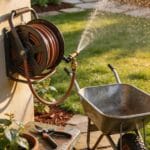
When you mount tools on walls, you achieve visual orderliness that makes identifying what you need simple and quick. Unlike floor storage, which creates clutter and tripping hazards, wall systems keep pathways clear. You’ll spend less time searching for rakes, shovels, or hoses when they’re organized at eye level.
Additionally, wall mounting protects your tools from damage caused by stacking or improper storage. The accessibility factor can’t be overstated—grabbing equipment takes seconds rather than minutes. This efficiency translates directly into saved time during yard work.
Five Wall Storage Systems: Ranked by Cost, Capacity, and Installation Time

Several practical options exist for organizing garden tools on walls, each with distinct advantages depending on your budget, the weight of equipment you’re storing, and how much time you want to spend installing the system. Wire hook methods offer the most budget options, using inexpensive 12-gauge copper wire bent to custom shapes on plywood. Pegboard systems provide quick installs with standardized hooks, though they suit lighter tools better. DIY wood runners enable modular upgrades by stacking two layers with adjustable spacing. Wall-mounted commercial systems deliver aesthetic finishes and maximum capacity up to 300 pounds, requiring stud mounting for security. French cleats allow reconfigurable setups without permanent installation, balancing flexibility with stability for various tool weights and organizational needs.
Choosing Your System: Weight Limits, Space, and Access

Now that you understand the available options, you’ll need to evaluate which system fits your specific situation by considering three key factors: how much weight you’re storing, how much wall space you have available, and how easily you need to access your tools. Heavy items like shovels and rakes require sturdy systems rated for 250–300 pounds, such as wall-mounted organizers or French cleats. Limited wall space calls for multi-layer configurations with 12-inch spacing between runners. If you rotate tools seasonally, adjustable systems like French cleats offer flexibility without reinstallation. Child safety demands secure mounting to wall studs with proper fasteners, ensuring hooks won’t dislodge during accidental contact. Single-layer arrangements prioritize accessibility, while deeper systems maximize density but require reaching past forward tools.
Single vs. Multi-Layer Wall Storage: Trade-Offs You Need to Know

When you’re deciding how to organize your garden tools on a wall, one of the most important choices you’ll make is whether to use a single row of hanging space or stack multiple layers. Single-layer systems prioritize accessibility, letting you grab any tool without moving others first. However, multi-layer setups maximize your available space by installing runners or French cleats with 12-inch spacing between rows. This creates significant space tradeoffs: you gain storage capacity but sacrifice convenience. Access sequencing becomes critical in multi-layer configurations—you’ll need to remove wall-proximal tools before reaching items behind them. Consider your garage dimensions and how frequently you use each tool. Single layers work best for smaller collections, while multi-layer systems suit extensive tool inventories where space efficiency matters more than immediate access.
Installation Fundamentals: Studs, Fasteners, and Safety

Before you install any wall-mounted tool system, you need to locate the studs in your wall, as they’re the only structural elements strong enough to safely support heavy garden tools like rakes and shovels. Consider using a stud finder to identify these wooden beams behind your drywall. Once located, use 3.5-inch screws through runners directly into studs, or 2.5-inch wood screws for French cleats, making certain they’re level and secure.
Perform load bearing checks by verifying your system’s weight capacity matches your tool collection. Base systems typically support 250–300 pounds when properly mounted. Maintain safety clearances by spacing multi-layer systems 12 inches apart, allowing safe tool access without interference. This foundation prevents accidents and makes sure your storage system remains stable and reliable long-term.
Building Custom Wire Hooks or Wood Runners (Advanced DIY)
If you’re ready to move beyond standard commercial systems, building custom wire hooks or wood runners allows you to create storage solutions tailored specifically to your garden tools and wall space. For wire hooks, I’d use 12-gauge Romex copper wire, which bends into custom shaping that accommodates various tool sizes better than pegboard alternatives. Mount plywood first, then fashion wire directly for each tool, enabling denser spacing. With wood runners, I’d use 1×3 or 1×4 lumber placed over two layers, securing them to studs with 3.5-inch screws spaced 12 inches apart. Mark tool positions on runners for consistent placement. Both methods require wire finishing touches like smoothing sharp edges, ensuring safety while maximizing your storage efficiency and accessibility.
Mistakes That Fail: And How to Fix Them
Since most wall-mounted garden tool systems fail due to improper installation rather than poor design, understanding common errors makes prevention straightforward. Overloaded hardware ranks as the primary culprit, when people exceed weight limits by ignoring manufacturer specifications. Consider checking capacity ratings before mounting anything. Misaligned runners create accessibility problems and structural weakness. When installing two-layer systems, I make certain runners sit perfectly level using a spirit level and maintain exactly 12 inches between layers. Another frequent mistake involves skipping stud location altogether, which causes catastrophic failure on drywall alone. I always locate studs first with a finder tool. Additionally, using undersized screws weakens connections. Verify you’re using 3.5-inch screws into studs for runners, securing your investment properly and preventing costly accidents.
For a useful next step, clean garden tools after use, decide when a garden tool is too worn to repair and compare garden rakes. These guides cover the related maintenance or buying decision without changing the task explained here.
Frequently Asked Questions
How Do I Protect Wall-Mounted Garden Tools From Rust and Weather Damage?
Consider you apply rust inhibitors and weatherproof coatings directly to your tools before hanging them. The Weatherproof Tool Rack made of Larchwood naturally resists moisture, and you’ll want to regularly inspect hooks for corrosion.
Can I Install Wall Storage Systems on Drywall Without Studs, and if So, How?
You’ve got to think outside the box here. Consider toggle anchors for lighter loads or removable cleats that mount without studs. French cleats work best—they’re adjustable and won’t damage your drywall permanently.
What’s the Best Way to Organize Tools by Frequency of Use on Wall Systems?
I’d place your Everyday Essentials—pruners, shears, hoses—at eye level for quick access. Store Infrequent Specials like hedge trimmers higher up. This arrangement minimizes reaching time for tools you’ll constantly grab.
How Do I Safely Remove and Relocate Wall-Mounted Storage Systems After Installation?
Like a chess player repositioning pieces, I’ll help you master relocation. You’ll need hardware removal tools—unscrew anchors carefully, patch holes, then plan relocation logistics by measuring new stud locations and reinstalling with fresh fasteners.
Are There Specific Seasonal Maintenance Requirements for Outdoor Wall-Mounted Tool Storage?
Consider conducting seasonal inspections before winter arrives to check for rust and corrosion. Winterizing hardware by applying protective coatings helps prevent deterioration from moisture and freezing temperatures throughout the colder months.