


I’d retire a garden tool when repair costs exceed half its replacement price, since you’ll spend more fixing it than buying new. If your tool’s over five years old, out of warranty, or breaking down every few weeks, replacement makes financial sense. Safety issues like cracked handles, dull blades requiring extra force, or rust damage signal it’s time to replace it. Continuing to use worn equipment compromises both your safety and gardening results, so weighing these factors helps you decide wisely and discover when replacement truly becomes your better option.
Key Takeaways
- Compare repair costs against replacement prices; if repairs exceed 50% of a new tool’s value, replacement is more economical.
- Tools over five years old with frequent breakdowns every few weeks signal end-of-life; accumulated repairs cost more than replacement.
- Visible safety hazards like rust holes, broken teeth, cracked handles, or loose components cannot be fully repaired safely.
- Dull blades requiring extra force, reduced cutting accuracy, and ergonomic discomfort indicate replacement prevents injury and restores efficiency.
- Check warranty expiration dates; repair costs rise significantly after coverage ends, making replacement more practical for older equipment.
When Repair Costs Exceed 50% of Replacement Value
When you’re facing a repair bill that’s climbing toward half the price of a brand-new tool, it’s time to pause and do the math. I recommend checking current market comparisons for equivalent replacement models, since this shows your actual replacement cost. The 50% rule helps you decide: if repairs exceed half that replacement value, buying new becomes more economical. Beyond the repair expense itself, consider the opportunity cost—money spent fixing an aging tool is money you can’t invest in newer equipment with better efficiency and features. Accumulating repair bills drain your budget faster than a single replacement purchase would. By comparing repair costs against today’s market prices, you’ll make the smarter financial decision for your situation.
Recommended Products
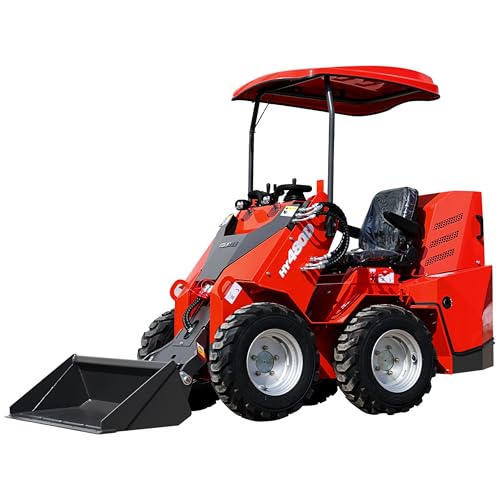
**POWERFUL B&S V-TWIN ENGINE:** Driven by a robust 23HP B&S V-twin double-cylinder gasoline engine (3600 rpm) with an electric start. Features a 6 gal fuel tank for reliable operations with highly efficient fuel consumption (under 6.7 L/h).

【Powerful】❶Adopts ZONSEN 750cc 25hp 45° V-twin design, horizontal shaft, air cooled, 4-stroke, OHV gasoline engine, and equipped with a 12V36Ah lead-acid battery. ❷Upgraded electric start, simple and fast startup. ❸Strong power, stable working, long time chipping. Suitable for enterprises, project managers, farmers, homeowners, contractors, and horticulturists.

TOUGHEST MATERIAL: Our woven polypropylene sand bags are built to endure the elements. All DURASACK Heavy Duty Sand Bags and tie strings are treated with a UV inhibitor so they can stay intact after prolonged sun exposure
Is Your Tool Too Old or Out of Warranty to Fix?
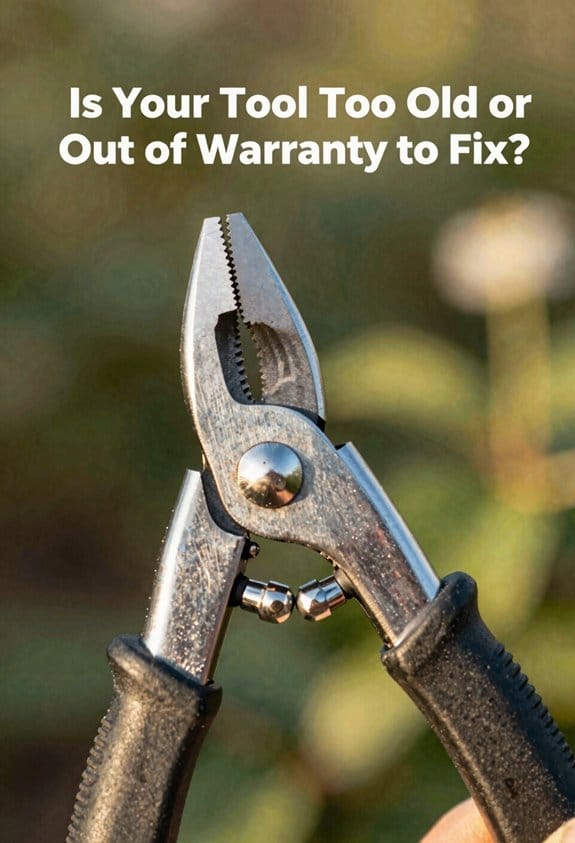
As your garden tools age, the question of whether they’re worth repairing becomes harder to answer, yet the warranty expiration date often provides a clear turning point. Once a tool’s warranty expires, repair costs climb markedly because you’re no longer protected by manufacturer coverage. Tools exceeding five years old typically show performance decline and rising maintenance expenses. Consider your tool’s resale value—older equipment often loses market appeal quickly. Additionally, warranty transferability varies by manufacturer; some warranties don’t transfer to second owners, limiting your tool’s future value. If your equipment has reached this age threshold and requires expensive repairs, replacement usually makes more financial sense than investing in fixes for aging machinery that’s approaching the end of its functional lifespan.
Recommended Products

Stens replacement parts have become a favorite among lawn and landscape professionals thanks to exceptional performance.


Does the Damage Prevent Safe or Reliable Operation?
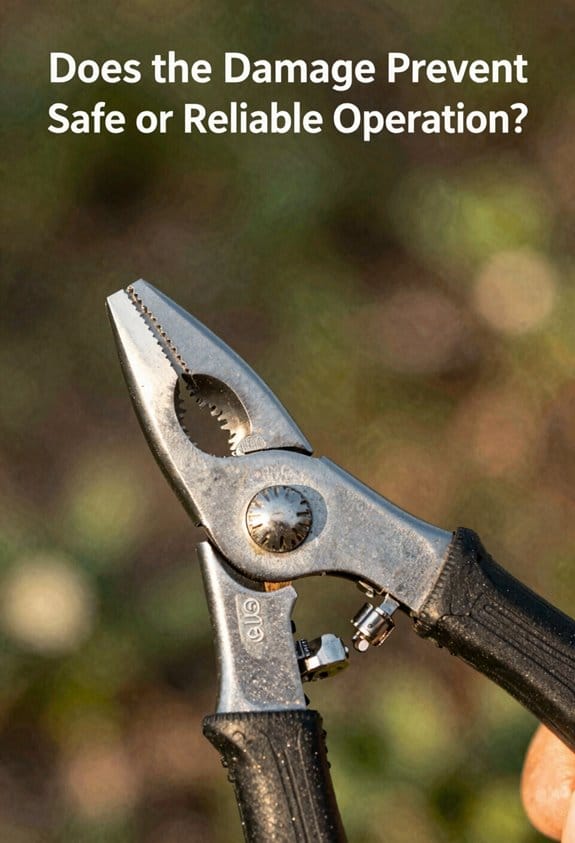
Beyond cost considerations, you’ll find that safety and reliability become the decisive factors in whether your tool deserves repair or replacement. Damaged blades, compromised structural integrity, or worn components create hazards that repairs can’t always fix. When a mower deck develops holes from rust or a chainsaw shows dull, broken teeth, you’re looking at safety risks that extend beyond performance. Ergonomic concerns matter too—if your tool feels unstable or uncomfortable to hold due to damage, it’s signaling replacement time. Tools with compromised safety features shouldn’t be repaired; they should be replaced. Newer models often include improved safety mechanisms and better efficiency ratings. When you’re questioning whether damage affects safe operation, replacement typically offers the better solution for protecting yourself and maintaining reliable performance.
Recommended Products

Peak Power plus Technology combines the power of up to six EGO 56V ARC Lithium batteries

Genuine Exmark Toro Factory Part Number 126-2814

Genuine Exmark Toro Factory Part Number 135-0139
Has This Tool Broken Down Repeatedly in Recent Months?
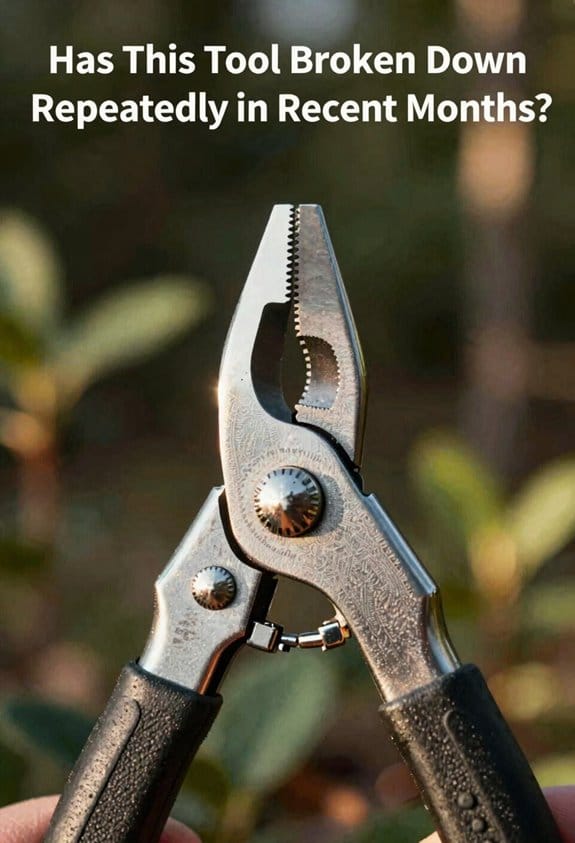
If your garden tool frequently breaks down—requiring repairs every few weeks or even every few months—you’re likely facing a decision that extends beyond simple fix-or-replace math. When you examine your maintenance history, pay attention to the repair timeline and usage patterns. Tools needing constant repairs accumulate downtime that costs more than replacement would. Frequent failures signal that your equipment has reached the end of its functional lifespan. Rather than investing repeatedly in fixes, you’re better served by purchasing new equipment. A tool requiring multiple repairs within short intervals compromises your productivity and workflow efficiency. The accumulated repair expenses, combined with lost time and frustration, make replacement the more economical choice than continued maintenance attempts.
Recommended Products


PLEASE NOTE! YOUR PACKAGE IS SENT IN TWO PARTS. ① Wiseld GT3-4WD 4X4 Wagon and Accessories, ② Battery*1,Wagon Cover*1. As the battery belongs to the hazardous material transportation channel, its arrival time will be 1-2 days later than the GT3 wagon. Please be patient and thank you for your cooperation!

Bell & Gossett 111042 Motor Power Pack & Bracket Genuine B&G
What Safety or Efficiency Risks Does Continued Use Pose?
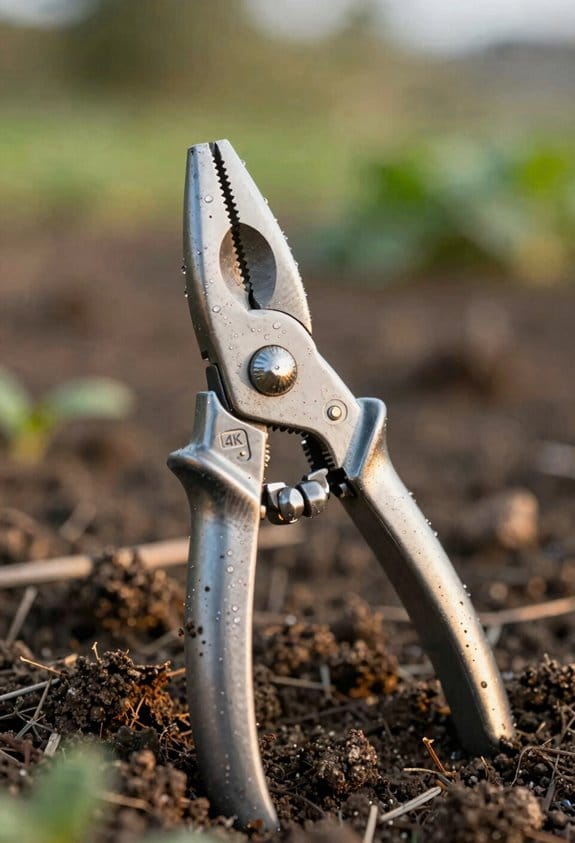
While your worn garden tool might still operate, continuing to use it exposes you to genuine safety hazards and performance decline that shouldn’t be ignored. Dull blades, for instance, require extra force to cut through vegetation, increasing your injury risk and causing fatigue. Blade dullness also reduces accuracy, meaning you’ll struggle to make clean cuts and may damage plants unnecessarily. Tools with compromised safety features—cracked handles, loose components, or electrical damage—create unpredictable failures during use. Chainsaw maintenance directly impacts user safety because high-speed operation combined with worn parts dramatically increases injury potential. Newer equipment typically offers improved safety features and better performance. When a tool consistently underperforms or feels unsafe in your hands, replacement becomes the responsible choice for protecting yourself and maintaining efficient work.
Recommended Products

At full capacity, this battery will last a full 12 hours and will complete more than 15, 000 cuts on 1. 5-inch/35mm branches. This pruner is super light weighing in at 1. 9-pounds/0. 9kg

12-Pack, 13.5-inch (350mm) straight edge saw blade

Great garden shears for serious gardeners. This is a heavy, high quality pruning shear you’ll be proud to own or gift. These garden pruners are a classic design and feel expensive. Every gardener needs this pruner, but most gardeners don’t have one.
Frequently Asked Questions
Where Can I Find Replacement Parts for Discontinued or Older Garden Tool Models?
I’ve found that hunting for vintage parts feels like archaeological digs. Try online replacement catalogs, local salvage yards, and specialty retailers who stock obscure models. You’ll need patience, but they’re goldmines for discontinued equipment components.
How Do I Assess My Own Repair Skills Before Attempting Complex Tool Fixes Myself?
I’d honestly assess your skill level by evaluating past repair successes and recognizing realistic limits. If you’ve successfully handled similar fixes, you’re probably capable. When complexity exceeds your experience, professional repair’s worth considering.
Should I Keep a Backup Tool for Heavy-Use Garden Equipment as Preventive Planning?
Yes, I’d keep a backup for heavy-use equipment. While a spare investment costs more upfront, redundancy planning prevents costly downtime when your primary tool fails. You’ll maintain productivity without scrambling for repairs.
What Environmental Benefits Do Newer Garden Tools Offer Compared to Older Models?
Newer garden tools I’d recommend offer better energy efficiency and significant emissions reduction compared to older models. They’re designed with cleaner engines, improved fuel consumption, and environmentally responsible features that minimize your carbon footprint.
How Does Equipment Downtime Impact My Overall Garden Maintenance Productivity and Scheduling?
Your broken mower’s basically a fancy paperweight now. Every breakdown creates lost time and a mounting task backlog that’ll have your garden looking like a jungle. You’re sacrificing productivity for repair roulette.


