

Drip irrigation and sprinkler systems deliver water differently. Drip systems use low-pressure tubes to target water directly at plant roots, achieving up to 90% efficiency. Sprinklers spray water broadly over large areas at higher pressure, losing more water to evaporation and runoff—only reaching 50–70% efficiency. Drip systems work best for gardens and smaller spaces, while sprinklers suit large lawns. Your choice depends on your space size, climate, budget, and maintenance preferences, each offering distinct advantages worth exploring further.
Key Takeaways
- Drip irrigation delivers water directly to roots at low pressure (8–20 psi), while sprinklers spray water broadly at higher pressure (45–70 psi).
- Drip systems achieve up to 90% efficiency; sprinklers achieve 50–70% efficiency, reducing water waste significantly.
- Drip irrigation suits small gardens and individual plants; sprinklers work best for large lawns and commercial spaces.
- Drip systems require higher upfront costs but save 60–80% on water bills long-term through reduced consumption.
- Drip irrigation keeps foliage dry, reducing fungal disease; sprinklers create leaf wetness that promotes fungal growth.
How Each System Delivers Water
When you’re deciding between drip irrigation and sprinkler systems, understanding how each one gets water to your plants is essential, because the delivery method affects everything from water usage to plant health. Drip irrigation delivers water slowly through tubes and emitters directly to the root zone, where plants need it most. This targeted approach means water soaks gradually into the soil near plant roots. Sprinkler systems, by contrast, spray water over large areas to cover multiple plants simultaneously. Drip systems operate at low pressure between 8-20 psi, while sprinklers require higher pressure of 45-70 psi. The strategic emitter placement in drip systems minimizes overspray and waste, whereas sprinklers distribute water broadly across your landscape regardless of where plants actually grow.
Recommended Products

High-Quality Material: Professional quality drip hose made by high quality, UV resistant materials, unmatched resistance to chemicals. Be a Gardening Master with the help of our superior and complete Drip Tape Row Irrigation Kit: 2 x 1,000' Rolls Low-Flow Drip Tape + 1 x 100' Roll 1/2" Mainline Tubing + 1 x Home Garden Filter + 2 x 1/2" Easy Loc Female Hose Beginnings + 2 x 1/2" Easy Loc Couplers.


Complete 3-in-1 Solution: Single unit combines filter, 30 PSI pressure regulator, and Drip-Lock adapter in one compact design; eliminates multiple connection points that can leak
Drip vs. Sprinklers: Water Efficiency
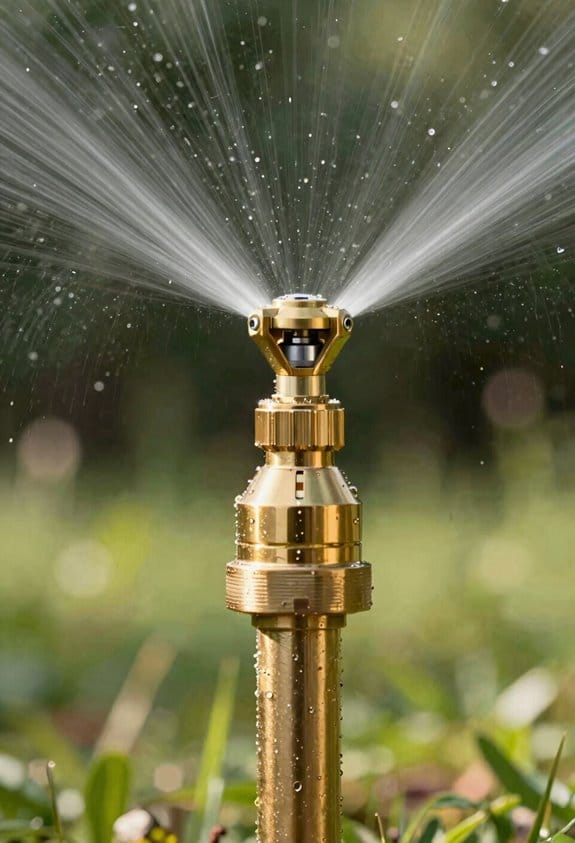
If you’re concerned about water waste, you’ll find that drip irrigation systems markedly outperform sprinklers in efficiency. Drip systems achieve up to 90% efficiency compared to sprinklers’ 50-70% rate, meaning more water reaches your plants’ roots rather than evaporating or running off. This targeted delivery reduces water use by 60-80%, providing substantial water savings over time. Sprinklers lose significant water to evaporation, particularly during hot, dry conditions, and often oversaturate some areas while underwatering others. Drip irrigation minimizes these problems through precise root-zone targeting. While drip systems require more maintenance to prevent emitter longevity issues from clogs, their superior efficiency makes them economically sensible for environmentally conscious gardeners seeking long-term water conservation.
Recommended Products
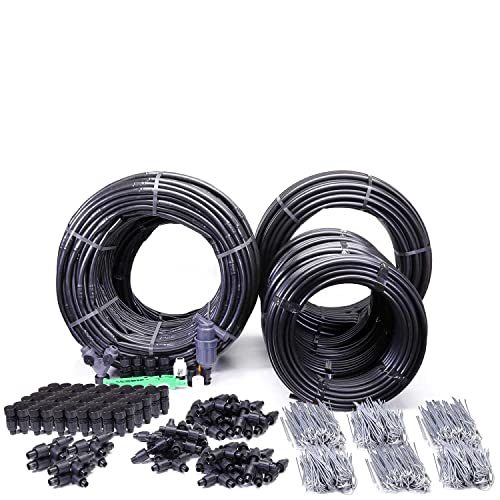
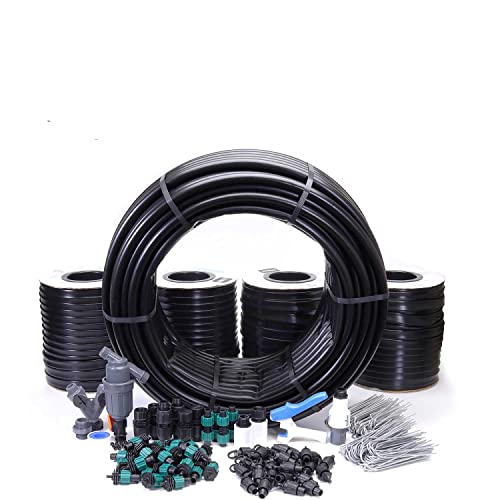
Waters up to 40 100ft rows (1/4 acre) based on 33 inches row spacing. Watering sprinkler system delivers just the right amount of water slowly and precisely right where your plant needs it at the root zone. The drip tape row crop irrigation system provides plant’s roots with slow, steady moisture. Save you from bothering your neighbours to help you take care of your plants when you are away.

3/4" Mainline Tubing Allows Higher Flow and Longer Rows
Choosing the Right System for Your Space
Since your garden’s layout, plant types, and water needs vary greatly, selecting between drip irrigation and sprinklers requires you to take into account your specific situation carefully. If you’re watering a sprawling lawn or large commercial space, sprinklers offer quick, uniform coverage that drip systems can’t match. However, for smaller gardens, individual plants, or shrubs, drip irrigation provides precise, efficient watering directly to roots. You’ll also want to take into account microclimate considerations—hot, dry areas benefit from drip’s reduced evaporation, while cooler climates work with either system. The aesthetic impact matters too; hidden drip lines preserve garden appearance better than visible sprinkler heads. Finally, weigh your budget against long-term water savings and maintenance demands before deciding which system suits your needs.
Recommended Products

Along with 20 x Drip Tape Row Starts + 20 x Drip Tape End Plug + 3 x Drip Tape Couplers + 10 x 1/4" Goof Plugs (1 x 10 pack) + 1 x Punch Tool + 100 x 1/2" Hold Downs - (1 x 100 pack) + 1 x Galcon Bluetooth Flip Open LCD Timer + 1 x Galcon Alternator Valve + 2 x 10 PSI Pressure Regulator. Ideal for Row Crops and Garden Beds needing low pressure, low volumes of water.

Specifications: Pipe Size: 3/4" NPT Weight: 4 lbs. Dimensions: 19 1/8" x 6 5/16" GPM: 0.05 to 14 GPM (0.19 to 50 LPM) Pressure: 4.3 to 85 PSI Ratio: 1:500 to 1:50 Percentage: 0.2 to 2% Available Options: PVDF (white housing), PAA Seals, Bypass Included Accessories: Mounting Bracket, Suction Hose, Weight, Strainer and Operating Manual 22"L x 6.75"W x 5.75"H
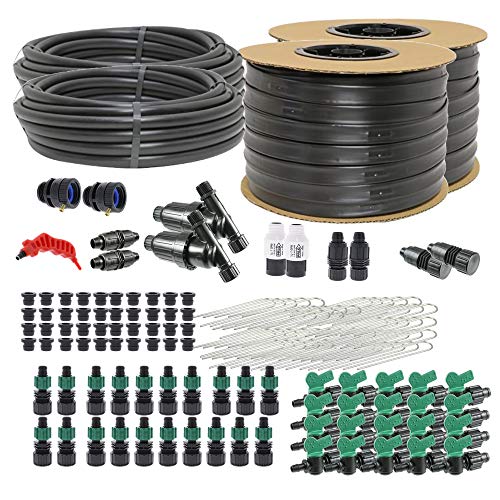
Timer Compatible : Yes; Rain Barrel Compatible : Yes; Expandable : Yes; Average Assembly Time : 60 + min.; Operating Pressure : 10-15 PSI; Maximum Flow Capacity : 480 GPH;
Installation and Long-Term Costs
Once you’ve narrowed down your choice based on your garden’s specific needs, the financial picture becomes your next consideration. Sprinkler systems typically cost less upfront, requiring simpler installation and lower labor costs. However, drip irrigation demands higher initial investment due to complex tubing and emitter placement, though installation labor costs may vary depending on your garden’s size and layout.
The real savings emerge over time. Drip systems reduce water consumption by 60-80%, markedly lowering your utility bills. While drip requires more frequent maintenance to prevent clogs and occasional replacement parts like emitters and tubing, sprinklers demand repairs from pressure-related damage and soil compaction issues. Calculate your five-year costs, factoring in water savings, maintenance, and replacement parts to determine which system offers better long-term value for your specific situation.
Recommended Products

Push Fit Tubing ports make for fast installation

Standard 3/4" Garden Hose Thread Connections
Designed for GNB batteries
Maintenance Demands and Disease Prevention
Maintaining your irrigation system properly determines whether you’ll enjoy years of reliable garden watering or face frustrating breakdowns at critical moments. Drip systems require more frequent attention because emitter clogging can disrupt water flow to individual plants. You’ll need to inspect and clean emitters regularly, which takes extra time and effort. However, this maintenance pays off through disease prevention. Since drip irrigation keeps foliage dry by delivering water directly to roots, you’ll experience fewer fungal diseases compared to sprinkler systems. Sprinklers, conversely, spray water overhead, creating leaf wetness that promotes fungal growth. While sprinklers demand less routine maintenance, their disease risks and water waste make them less ideal for most gardens. Understanding these trade-offs helps you choose the system matching your commitment level.
Recommended Products

ENZYMATIC IRRIGATION LINE CLEANER FOR DRIP SYSTEMS: Clear Flow Irrigation Line Cleaner uses advanced enzymatic cleaning technology to break down biofilm, organic residue, and mineral buildup inside irrigation lines, helping maintain clean and efficient irrigation systems.

ADVANCED HYDROPHONIC SYSTEM CLEANER: Powerful bio-activated enzymatic formula designed to scrub irrigation lines, emitters, tanks, and pumps. ENDzyme actively breaks down mineral salts, sludge, and organic buildup that causes clogging. Keeps systems flowing freely and reduces maintenance downtime compared to traditional line cleaners.

Plant-Safe Descaling Solution for All Growth Stages: Non-toxic cleaning formula safe to use during vegetative or flowering phases without harming plants. Breaks down inanimate scale, residue, and inanimate organic matter to clear irrigation lines. Prevents dripper clogging and system blockages. Works in hydroponics, drip systems, and all irrigation equipment.
Frequently Asked Questions
Can Drip Irrigation and Sprinkler Systems Be Used Together in the Same Garden?
Why wouldn’t you combine both systems? Yes, I’d use them together through companion layout—drip for individual plants and vegetables, sprinklers for expansive lawn areas. Seasonal zoning lets me adjust each system’s efficiency throughout the year.
How Does Water Pressure Affect Plant Health in Drip Versus Sprinkler Systems?
I’ve found that drip’s low pressure (8-20 psi) protects your plants from damage and soil compaction, while sprinklers’ higher pressure (45-70 psi) risks both. Drip’s gentle flow guarantees uniform water delivery to roots without harming delicate foliage.
Which System Is Better for Watering During Extreme Heat or Drought Conditions?
I’d say drip irrigation’s your lifeline during extreme heat and drought. Its high efficiency emitters deliver water directly to the root zone cooling, minimizing evaporation. You’ll conserve up to 80% more water than sprinklers.
Do Drip Systems Work Effectively on Sloped or Uneven Terrain?
I’ll tell you that drip systems work well on slopes because they’re low-pressure and minimize soil erosion. However, you’ll need to watch for emitter clogging on uneven terrain where water pools differently.
How Long Does Each Irrigation System Typically Last Before Replacement?
I’d say drip systems typically last 8-10 years before component degradation requires replacement, while sprinklers last 15-20 years. Your drip’s UV vulnerability and emitter clogs accelerate deterioration compared to sprinklers’ durability.