

Mulch is a protective layer—organic or inorganic—that improves soil by retaining moisture, regulating temperature, and suppressing weeds by 50–95%. It prevents erosion, protects soil structure from compaction, and organic mulches decompose into nutrient-rich humus that feeds microbial networks. Apply mulch 2–4 inches deep, spacing it 3–6 inches from plant stems to avoid damage. While hand application works, spreader tools ensure even coverage and reduce labor. Understanding proper depth and spacing techniques unleashes mulch’s full potential for your garden’s long-term health.
Key Takeaways
- Mulch reduces soil evaporation by 10–50%, improving moisture availability and decreasing irrigation needs significantly.
- Organic mulches decompose into nutrient-rich humus, enhancing soil fertility and supporting microbial activity.
- Apply 2–4 inches of mulch to suppress 50–95% of weeds while protecting soil structure.
- Mulch regulates soil temperature extremes, promoting stronger root systems and improved nutrient uptake.
- Space mulch 3–6 inches from plant stems and use spreaders for even 2–4 inch application depth.
What Mulch Is (And Why It Matters)
When you spread a protective layer of material over soil around plants, you’re applying mulch, which is fundamentally any covering that shields the ground from direct exposure to air, sunlight, and rain. Mulch originates from various sources, including organic materials like wood chips and leaves, or inorganic options such as plastic and landscape fabric. Understanding types of mulch helps you choose what works best for your garden’s needs. Organic mulches decompose over time, enriching soil with nutrients and organic matter. Inorganic mulches provide longer-lasting coverage without breaking down. Both categories offer distinct advantages: organic mulches improve soil health, while inorganic mulches reduce maintenance requirements. Selecting the right mulch type depends on your climate, plants, and long-term gardening goals, making this foundational choice fundamental for successful plant growth.
How Mulch Transforms Soil Moisture and Root Health?
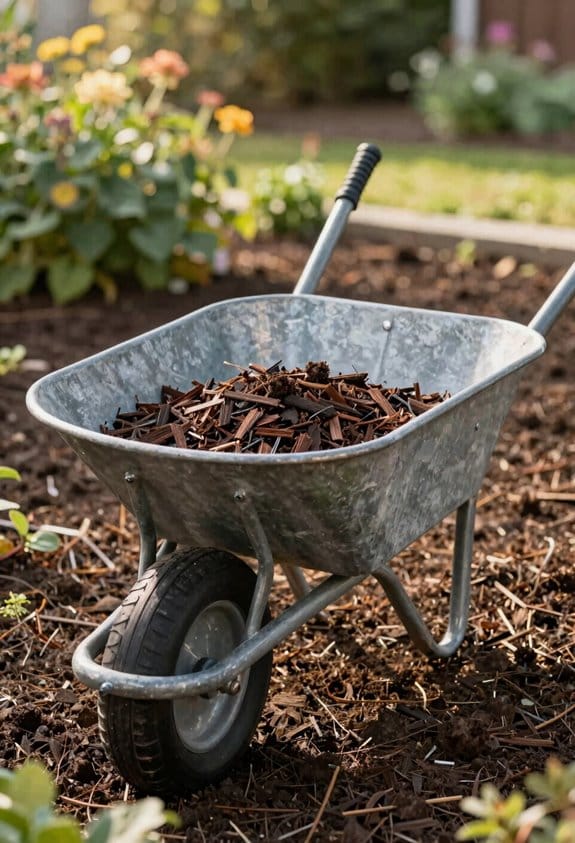
Mulch fundamentally transforms how soil retains and manages water, creating a protective barrier that dramatically improves conditions for root development and plant health. When you apply mulch, it reduces evaporation from the soil surface, increasing moisture availability by 10-50% in the root zone. This enhanced moisture supports better root aeration by maintaining ideal soil structure and preventing compaction. Mulch also improves capillary action, which allows water to move upward through soil layers, extending water supply during critical growth phases. By suppressing runoff and enhancing rainwater infiltration, mulch guarantees plants access consistent moisture. These improved conditions promote robust root activity and reduce irrigation needs, making mulch an essential tool for establishing healthy, resilient plants.
Recommended Products

Superior Quality: Experience premium, long needle pine mulch for unmatched landscaping results.
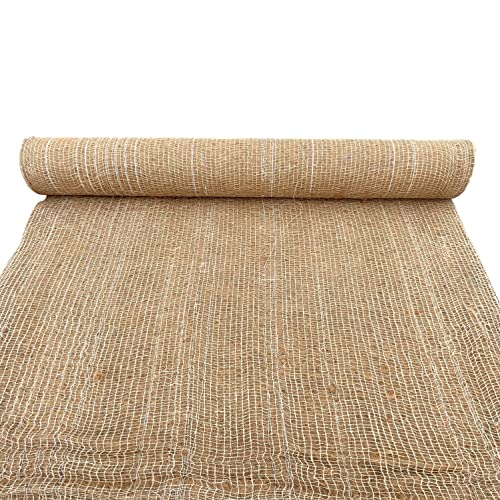
100% COCONUT FIBER FOR EROSION CONTROL: Made from 100% coconut fiber, this mat stabilizes steep slopes and controls erosion while supporting natural seed germination in eco-restoration and highway landscaping projects.

WEED BARRIER – The (8 Pack) of DeWitt Pro needle-punched, polypropylene fabric designed for professional and commercial use is great for greenhouses, outdoor displays, and gardens. Designed to provide unparalleled weed control, this premium weed barrier fabric will keep those pesky weeds out
Regulate Soil Temperature for Optimal Plant Growth
Beyond moisture management, soil temperature plays an equally important role in supporting plant health and growth. Mulch acts as soil insulation, moderating temperature extremes through diurnal buffering—keeping soil cooler during hot days and warmer at night. This temperature regulation promotes optimal root growth and enhances microbial activity in the soil.
Different mulch types affect temperature differently. Organic mulches like wood chips or straw provide cooling effects, while black plastic mulches warm the soil beneath. White plastic mulches, conversely, reflect sunlight and cool the soil.
When soil temperature remains stable within ideal ranges, plants develop stronger root systems and improve chlorophyll production. This leads to better nutrient uptake and overall plant vigor. By selecting appropriate mulch materials and applying them correctly, you’ll create conditions where your plants thrive year-round.
Recommended Products

A TRULY HEAVY DUTY FABRIC - Sandbaggy Commercial Grade Landscape Fabric offers unparalleled durability & longevity, designed to withstand the test of time. Our fabric is engineered to last 40+ years (when buried under at least 3" of gravel, mulch, or under roads). It boasts an exceptional tear resistance - crafted from 100% virgin polypropylene resin for maximum tensile strength, and provides reliable UV protection, maintaining a minimum of 80% strength even after 500 hours of UV ray exposure.

10 ft Wide Landscape Fabric: Extra wide 10 ft weed barrier fabric is ideal for large landscaping projects, gravel driveways, garden rows, greenhouses, nurseries, parking areas, and broad weed control coverage with fewer seams.

Heavy-Duty Woven Ground Cover: Woven polypropylene fabric helps block weed growth while allowing air, water, and nutrients to move through, supporting long-term soil and plant health
How Mulch Cuts Weeds by 50–95% Without Extra Labor?
Controlling weeds without spending hours pulling them is one of mulch’s most valuable benefits, and it works through a simple but effective mechanism: by blocking sunlight from reaching the soil surface, a proper mulch layer prevents weed seeds from germinating. I’ve found that a 2-4 inch thickness reduces weed biomass by 50-95%, dramatically lowering competition for water and nutrients that your plants need. As mulch decomposes over time, it continues suppressing weeds while enriching your soil. Some organic mulches also release compounds through weed allelopathy, naturally inhibiting weed growth. This dual approach—physical barrier plus chemical suppression—means you’ll spend markedly less time weeding. The result is reduced labor costs and more energy devoted to actual gardening rather than endless weed removal.
Recommended Products


Protect Topsoil From Erosion and Compaction
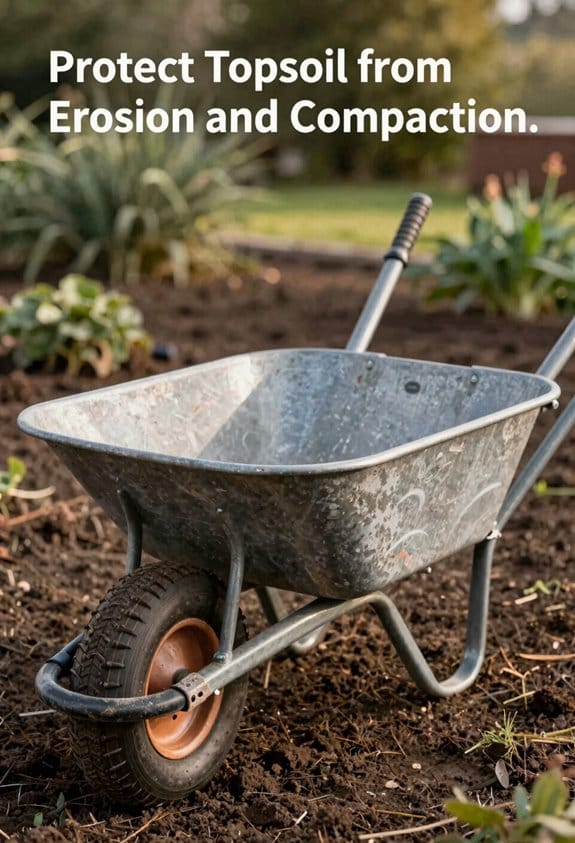
While weed control addresses competition for your plants’ resources, erosion and compaction pose a different threat to your garden’s foundation. I’ll explain how mulch protects your soil from these damaging forces.
When rain falls heavily, it can wash away your topsoil through sheet and splash erosion. Mulch acts as a protective barrier, absorbing the impact and reducing runoff control problems considerably. By preventing soil particles from dislodging, you preserve the fertile upper layers that contain essential nutrients your plants need.
Surface compaction occurs when foot traffic or equipment repeatedly presses soil. A mulch layer cushions this pressure, maintaining soil structure and porosity. This protection guarantees better water infiltration, stronger root systems, and healthier overall plant development while preserving your garden’s long-term productivity.
Recommended Products
100% COCONUT FIBER FOR EROSION CONTROL: Made from 100% coconut fiber, this mat stabilizes steep slopes and controls erosion while supporting natural seed germination in eco-restoration and highway landscaping projects.

TOUGHEST MATERIAL: Our woven polypropylene sand bags are built to endure the elements. All DURASACK Heavy Duty Sand Bags and tie strings are treated with a UV inhibitor so they can stay intact after prolonged sun exposure — ideal for long-term outdoor storage, job sites, and any application where bags must hold up to sun, rain, and wind.
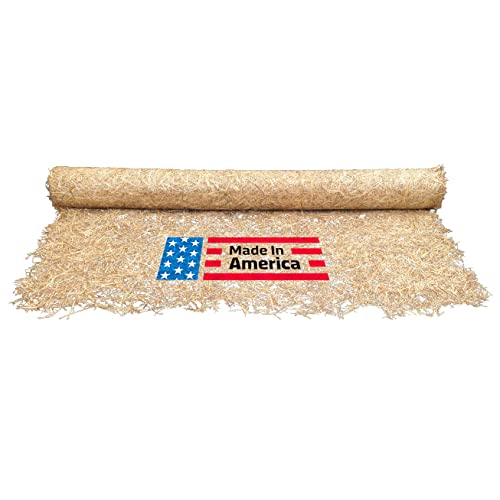
PROMOTE SLOPE STABILITY FOR 3:1 - 2:1 SLOPES: Perfect for all types of slopes (landfill slopes, drainage slopes, road slopes, etc.). Straw helps to prevent run-off since it’s able to absorb and retain water.
Why Organic Mulch Boosts Soil Fertility and Microbial Life?
As organic mulch breaks down over time, it transforms into rich humus that fundamentally changes your soil’s chemistry and biology. This decomposition process feeds microbial networks—the countless bacteria and fungi living in your soil—which thrive on the organic material you’ve added. These microorganisms break down complex compounds through nutrient mineralization, converting locked-up nutrients into forms your plants can actually absorb. When you layer organic mulch, you’re effectively creating a living system. The microbial activity improves soil structure, increases nitrogen availability, and enhances the overall fertility of your growing area. This biological activity creates better conditions for root development and stronger plant growth, making organic mulch an investment in your soil’s long-term health and productivity.
Applying Mulch Correctly: Depth, Spacing, and Common Mistakes
Getting the depth and spacing right when you apply mulch is crucial to releasing all those soil benefits we’ve discussed, yet many gardeners either apply too much or too little without considering their specific situation. I recommend applying mulch 2-4 inches thick, which provides ideal moisture retention and weed suppression without causing root suffocation. Incorrect depth represents a common mistake that undermines mulch effectiveness. Space mulch 3-6 inches away from tree trunks and plant stems to prevent moisture accumulation and disease. Another frequent error involves piling mulch directly against plants, which traps moisture and invites pest problems. Using measuring tools like rulers guarantees consistency across your garden beds. Proper application transforms mulch from a cosmetic addition into a powerful soil-enhancing tool.
Recommended Products

Ideal for measuring slippery fish on your boat

Ideal for measuring slippery fish on your boat.

Rhino Rulers have an easy-to-close folding joint design to help you get accurate measurements when laying brick, block, or stone.
Frequently Asked Questions
What Specific Tools Work Best for Distributing Mulch Evenly Across Large Garden Areas?
I’d recommend using a mulch spreader for large areas—it guarantees uniform thickness efficiently. A landscape rake helps you distribute materials evenly afterward, while a wheelbarrow transports bulk mulch quickly between locations.
How Long Does Mulch Typically Last Before Needing Reapplication or Replacement?
I’ve found that mulch longevity typically ranges from one to three years, depending on the material type. Organic mulches break down faster, requiring annual replacement, while inorganic options last longer before replacement timing becomes necessary.
Can Different Mulch Types Be Combined, and if So, What Are the Benefits?
Why limit yourself to one mulch type? I’ve found combining organic blends with decorative chips creates superior results—you’ll get enhanced soil fertility from organics while enjoying aesthetics and extended coverage from chips.
Which Mulch Color or Type Is Best for Specific Climate Zones or Seasons?
I’d recommend black plastic mulches when you’re in cooler zones needing warmth, especially during spring planting. White mulches work best in hot climates for summer cooling. Time color choices with seasonal timing to maximize temperature benefits year-round.
How Does Mulch Application Affect Existing Plant Roots and Newly Planted Seedlings?
I’ll bury your seedlings under mulch if you’re not careful—but done right, mulch provides root insulation for existing plants while you’re avoiding seedling smothering by applying just 2-4 inches thick around new growth.