

Hose diameter is the internal width of your hose, and it directly controls how much water flows through. A wider hose allows more water volume to pass with less resistance, while a narrower hose restricts flow and increases water velocity. At 50 feet with standard pressure, a 3/4-inch hose delivers 38 gallons per minute, whereas a 1/2-inch hose only delivers 13 gallons per minute. Choosing the right diameter for your garden’s size and distance guarantees efficient watering. Understanding these flow differences reveals which hose truly suits your needs.
Key Takeaways
- Hose diameter controls the volume of water flowing through, directly determining gallons per minute (GPM) and watering efficiency.
- Larger diameters (3/4-inch) maximize flow for expansive lawns; smaller diameters (1/2-inch) provide precise control for container gardening.
- Friction loss increases with hose length, so longer runs require wider diameters to maintain adequate flow rates.
- At 50 feet and 45 PSI, a 3/4-inch hose delivers 38 GPM versus only 13 GPM for 1/2-inch.
- Match diameter to your water pressure and intended hose length to optimize delivery and prevent flow restriction.
Why Hose Diameter Matters Most
When you’re choosing a garden hose, you might think the diameter doesn’t matter much, but it’s actually the most important factor that determines how much water flows out of your nozzle. The diameter directly controls water volume, which affects soil moisture levels in your garden. A wider hose delivers more gallons per minute than a narrower one, ensuring your plants receive adequate hydration for peak health. For example, a 3/4-inch hose delivers markedly more flow than a 1/2-inch hose at the same pressure. This increased flow rate means you can water larger areas faster and more efficiently. When soil moisture remains consistent, plant health improves because roots access water more reliably. Selecting the right diameter ultimately determines your watering success.
The 3 Standard Hose Diameters and Their Best Uses
You may be interested
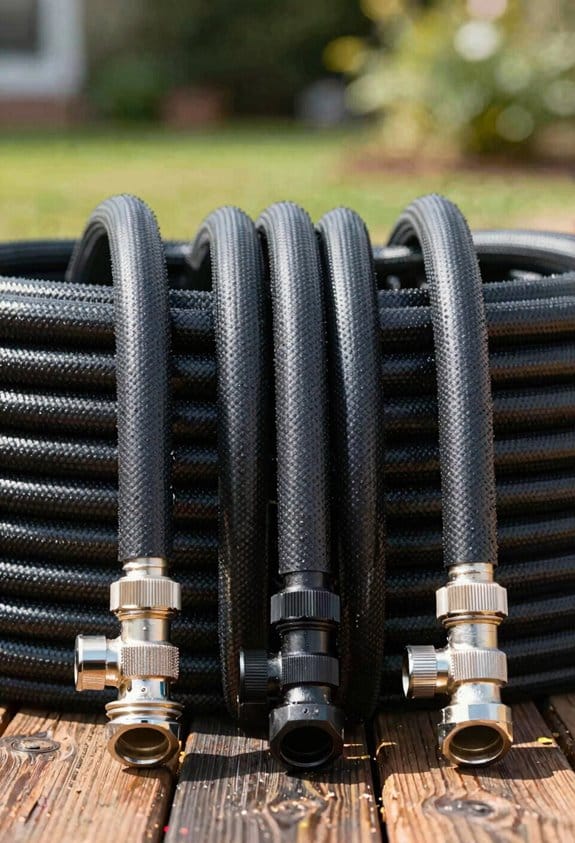
To get the right amount of water flowing through your garden hose, you’ll want to choose from three standard diameters: 1/2 inch, 5/8 inch, and 3/4 inch. The 1/2 inch hose works best for small-scale tasks like kitchen gardening and watering decorative planters, since it delivers limited water volume. The 5/8 inch size balances flow nicely for general purposes, including patio watering and routine garden maintenance. The 3/4 inch hose maximizes flow for larger areas and demanding applications. If you’re caring for delicate bonsai or need precise watering control, the narrower 1/2 inch suits your needs. For expansive lawns or multiple zones, the wider 3/4 inch performs better. Match your diameter to your specific gardening tasks for peak results.
How Diameter Directly Controls Your Water Flow Rate
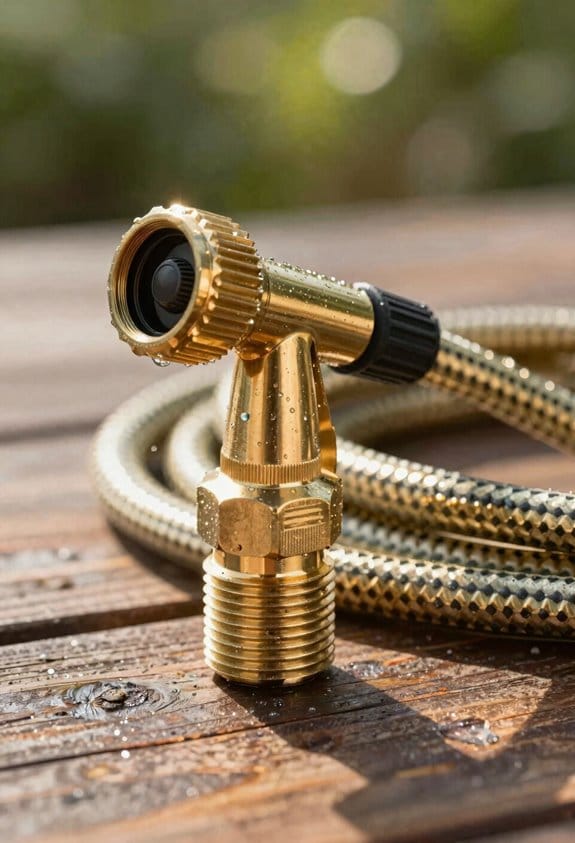
Once you’ve matched a hose diameter to your gardening task, you’ll want to understand how that diameter actually controls the water flow rate coming out of your nozzle. Wider hoses deliver more water because they create less resistance inside the pipe. This concept, rooted in pipe physics, means larger diameters allow water molecules to move through with minimal friction. At the nozzle dynamics level, a 3/4-inch hose delivers considerably more gallons per minute than a 1/2-inch hose under identical pressure conditions. For example, at 50 feet and 45 PSI, a 3/4-inch hose achieves 38 GPM compared to just 13 GPM from a 1/2-inch hose. Simply put, choosing a larger diameter directly translates to greater water volume reaching your garden.
What You’ll Actually Get: Flow Rates at 25, 50, and 100 Feet
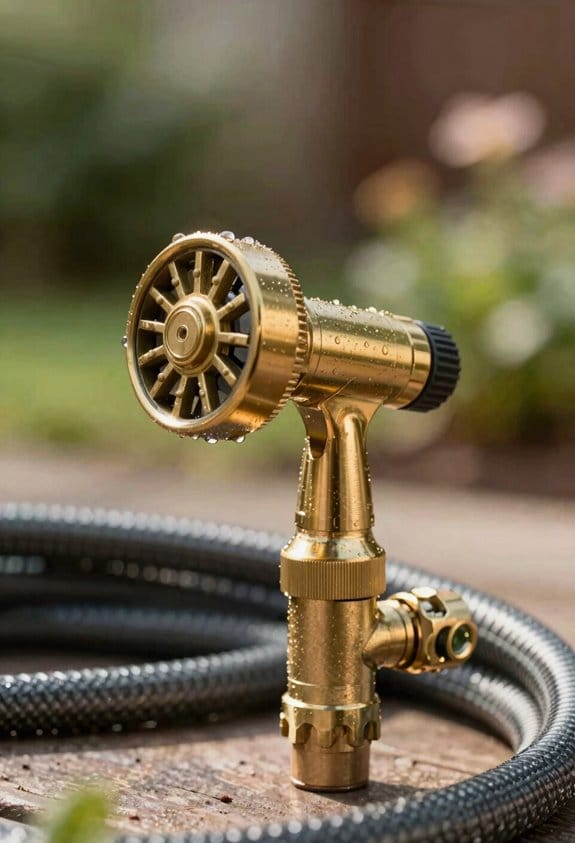
Most gardeners don’t realize that hose length dramatically affects the water flow you actually receive at your nozzle, and understanding these real-world numbers helps you choose the right hose for your setup. At 25 feet, a 1/2 inch hose delivers 9.5 GPM, while a 3/4 inch manages 10 GPM. Extending to 50 feet, the 1/2 inch drops to 8.5 GPM and the 3/4 inch to 9.8 GPM. At 100 feet, performance diminishes further: 1/2 inch yields only 7.5 GPM versus 9 GPM for 3/4 inch. Consider performing a bucket test to verify your actual flow, accounting for seasonal variation in water pressure. This measurement assures your hose selection matches your specific garden needs.
How Hose Length Reduces Flow and Why Diameter Offsets It
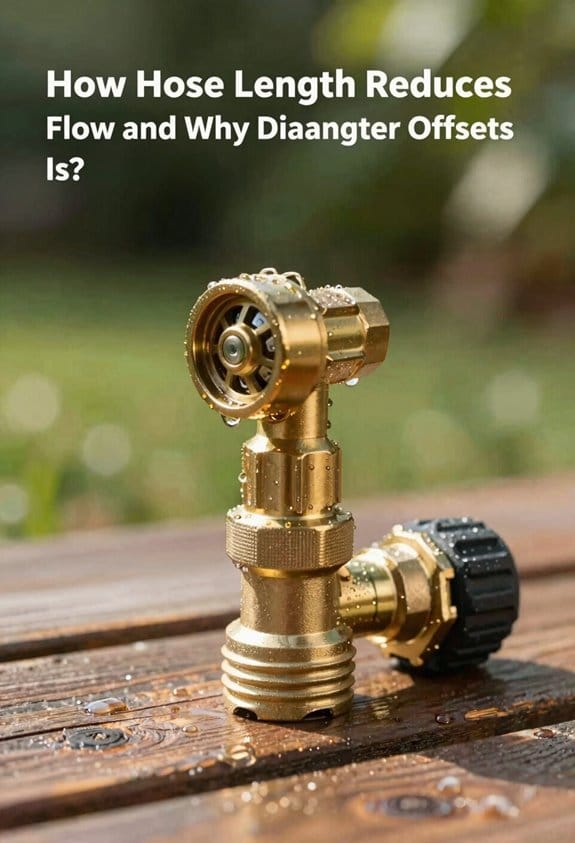
As water travels through a hose, it encounters friction against the hose walls, and this friction increases the longer the distance the water must travel, which means that every additional foot of hose length reduces the gallons per minute reaching your nozzle. This phenomenon, called friction loss, directly causes pressure drop as water moves through the hose. At 50 feet, a 5/8 inch hose delivers 24 GPM, but extend it to 100 feet and you’ll only get 12 GPM—exactly half the flow. However, you can offset this reduction by choosing a larger diameter. A 3/4 inch hose maintains better flow over distance because its wider interior reduces friction loss. Matching hose diameter to your length compensates for pressure drop and guarantees adequate water delivery to your garden tasks.
Why You Can’t Max Out Flow Without Both Pressure and Diameter
If you’ve ever wondered why upgrading your hose diameter alone doesn’t solve your water flow problems, the answer lies in understanding that pressure and diameter work together as a team. Without adequate pressure, even a wide 3/4 inch hose underperforms because water moves too slowly through the pipe. Conversely, high pressure through a narrow 1/2 inch hose can cause flow turbulence and reduce efficiency. You also risk pump cavitation, where excessive pressure creates vapor bubbles that damage equipment. The ideal setup balances both factors: sufficient pressure pushing water through an appropriately sized diameter. Consider testing your specific water source pressure before selecting a hose, then matching diameter accordingly to achieve maximum, sustainable flow for your garden tasks.
Match Hose Diameter to Your Garden Task
Selecting the right hose diameter depends entirely on what you’re trying to accomplish in your garden, since each size delivers different water volumes suited to specific tasks. For container gardening and drip irrigation, Consider a 1/2 inch hose because it restricts flow just enough for precise watering without overwhelming delicate plants. When you’re tackling general watering chores like washing your car or filling pools, a 5/8 inch hose strikes the ideal balance, delivering 17-24 GPM. If you’re maintaining large lawns with sprinkler systems, I’d go with 3/4 inch, which maximizes flow at 38 GPM. Match your diameter to your task’s demands, and you’ll water efficiently without wasting pressure or resources.
Why 1/2-Inch Hoses Underperform on Long Runs
While a 1/2 inch hose works perfectly for small, nearby tasks like watering flower beds, distance creates a significant problem for this narrower diameter. At 100 feet, a 1/2 inch hose delivers only 7.5 GPM, compared to 9 GPM from a 3/4 inch hose. The reduced flow happens because water must squeeze through the tighter opening, creating greater resistance over longer distances.
As hoses age, material aging compounds this issue, potentially reducing flow even further. Air locks can also develop inside the hose during extended runs, trapping water and decreasing delivery. For garden areas more than 50 feet from your water source, Consider upgrading to a 5/8 or 3/4 inch hose to maintain adequate water pressure and volume for effective watering.
Test Your Actual Hose Flow Before Buying
Before you invest in a new hose, testing your actual water flow gives you reliable data to guide your purchase decision. Consider the bucket method, which requires only a bucket and stopwatch. Turn on your faucet at full pressure, fill a bucket, and time how many seconds it takes. Divide the bucket’s gallons by seconds, then multiply by 60 to calculate GPM. Use a pressure gauge simultaneously to record PSI, since dynamic pressure at your bib determines real performance. Test during different seasons, as seasonal variation affects water pressure and flow rates. This practical approach reveals whether your current setup meets your garden’s needs before purchasing an expensive upgrade.
Choose Your Hose Diameter: The Final Decision
Now that you’ve tested your actual water flow and understand how diameter affects performance, you’re ready to make an informed choice about which hose size best fits your needs. Consider your specific tasks: use 1/2 inch for small flower beds, 5/8 inch for general watering and cleaning, or 3/4 inch for large lawns and sprinklers. When budget shopping, remember that larger diameters deliver more water efficiently, reducing overall water usage. Look for eco friendly materials like recycled rubber or sustainable vinyl when selecting your hose. Match the diameter to your water pressure and hose length to maximize performance. If you’re running 50 feet or more, choosing a wider diameter compensates for pressure loss, ensuring adequate flow for your garden tasks.
For a useful next step, store a garden hose correctly. These guides cover the related maintenance or buying decision without changing the task explained here.
Frequently Asked Questions
Can I Increase Flow Rate by Adjusting Pressure at the Water Source or Faucet?
Yes, I can increase your flow rate by adjusting pressure at the faucet or installing a booster pump. Higher pressure maintains better flow through your hose. You’ll find flow control valves and faucet regulators helpful for optimization.
Does Hose Material Quality Affect Water Flow Rate Beyond Diameter Alone?
Yes, hose material quality materially impacts flow. Premium hoses with better internal lining smoothness and material elasticity reduce friction losses, delivering measurably higher GPM than cheaper alternatives of identical diameter.
How Often Should I Replace My Garden Hose to Maintain Optimal Flow?
Like a garden that withers without renewal, your hose demands periodic replacement—typically every 5-7 years. Consider replacing it sooner if you notice reduced flow. Proper seasonal storage extends its life, so drain it thoroughly before winter storage.
Will Using Multiple Hoses Connected Together Significantly Reduce Overall Water Pressure?
Yes, connecting multiple hoses together noticeably reduces your water pressure. You’ll experience connector losses and hose hydraulics working against you—each joint adds resistance, and longer combined lengths drop your PSI markedly.
Can Kinks or Coiling Affect Hose Performance the Same Way Length Does?
Kinks and coiling don’t affect flow like length does, but Consider kink prevention techniques to maintain performance. Coil memory can restrict water passage temporarily, though straightening restores normal flow rates.