

You’ll start your vegetable garden with five essential tools that handle every task. A spade breaks up compacted soil, preparing beds for planting. A hand fork loosens earth and removes weeds precisely. A trowel digs small holes for seeds and seedlings with proper spacing. A watering can delivers gentle hydration without waste or erosion. Finally, hand pruners make clean cuts to keep plants healthy. Using these tools in sequence—spade, hand fork, trowel, hoe, then wheelbarrow—creates an efficient workflow that establishes your garden’s foundation for success, though specific techniques matter greatly.
Key Takeaways
- Use a spade to break up and turn compacted soil, creating a prepared bed foundation for healthy plant root development.
- Employ a hand fork to loosen earth and remove weeds with precision before planting your vegetable seeds or seedlings.
- Dig small, properly-spaced holes with a trowel for seeds and seedlings, ensuring correct soil aeration around each plant.
- Water delicate plants gently with a watering can to deliver moisture without waste or soil erosion around seedlings.
- Wear garden gloves throughout all activities to protect your hands while digging, weeding, planting, and maintaining your garden.
The Five Essential Tools You Actually Need
When you’re just starting out with vegetable gardening, you don’t need to break the bank with every tool on the market. five basic tools cover most tasks effectively. A spade turns soil and prepares beds for planting. A hand fork loosens earth and removes weeds with precision. A trowel digs small holes for seeds and seedlings. A watering can delivers water to delicate plants without waste. Finally, garden gloves protect your hands during all activities. Before using any tools, perform tool sterilization to prevent disease spread between plants. I’d also recommend conducting soil testing to understand your garden’s nutrient levels and pH balance. These fundamentals guarantee successful vegetable gardening without excessive investment.
Trowel: Digging Holes for Seeds and Seedlings
You may be interested
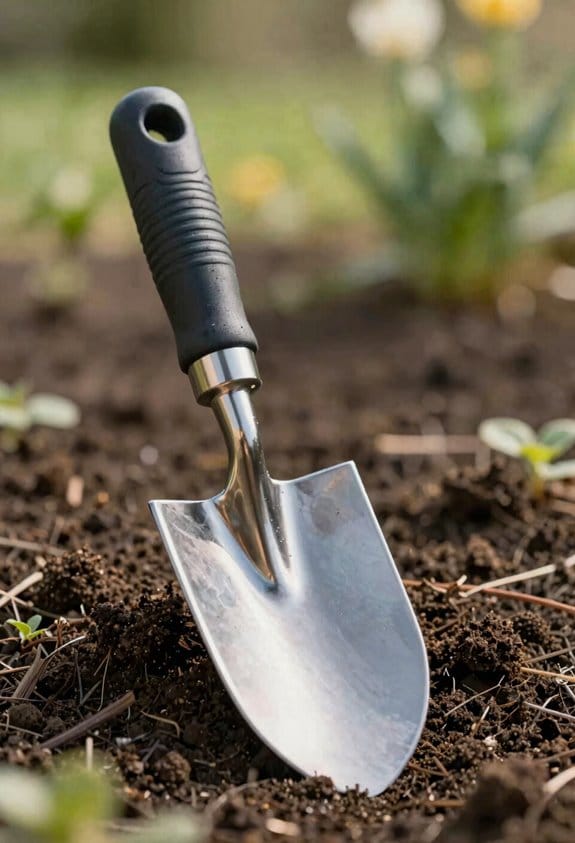
Among the five foundational tools I mentioned, the trowel stands out as your most versatile hand tool for planting work. This simple tool excels at digging small, precise holes for seeds and seedlings, making it indispensable for vegetable gardening. When you use a trowel, you create proper soil aeration around each planting area, which allows roots to establish more effectively. The trowel’s blade also helps you maintain correct seed spacing, ensuring your vegetables have adequate room to grow without competing for resources. Consider choosing a trowel with an ergonomic handle to reduce hand strain during extended planting sessions. Whether transplanting seedlings or sowing seeds directly into beds, this single tool handles most planting tasks you’ll encounter as a beginning gardener.
Garden Hoe: Keeping Beds Weed-Free and Ready

Your garden hoe‘ll become one of your most frequently used tools once you start expanding your vegetable beds, because weeds constantly compete with your plants for nutrients, water, and sunlight. A garden hoe features a flat, rectangular blade that scrapes along soil surfaces, effectively removing unwanted plants while preparing beds for planting. Consider using shallow cultivation techniques, which involve skimming just below the soil surface to uproot weeds without disturbing deeper soil layers or damaging plant roots. When combined with mulch barriers around your vegetables, hoeing markedly reduces weed growth. Regular hoeing keeps your garden aisles organized and accessible, making it easier to water, harvest, and maintain your plants throughout the growing season.
Spade: Turning and Preparing Your Soil

Transforming compacted soil into a nutrient-rich growing medium requires the right tool, and that’s where a spade becomes essential to your gardening success. I find that a spade’s 14-gauge hardened steel blade and 45+ inch handle make it ideal for breaking up dense earth and improving soil structure. When you turn the soil deeply, you’re creating pathways that allow roots to penetrate further into the ground. This process, called root aeration, enables your vegetables to access nutrients and water more effectively. By using a spade to work your beds before planting, you’ll establish a foundation for healthier plants and more productive harvests throughout your growing season.
Watering Can: Hydrating Seedlings and New Plants

Getting water to your seedlings and new plants calls for a tool that delivers precision and control, and that’s where a watering can proves invaluable. Unlike spraying with a hose, a watering can lets you direct water exactly where it’s needed. I find that maintaining proper seedling moisture during early growth stages is critical for healthy development. Watering timing matters markedly—early morning watering reduces disease risk and allows plants to absorb moisture before heat builds. A watering can’s gentle flow prevents soil erosion around delicate seedlings that might wash away under stronger pressure. For hard-to-reach garden areas or containers, this tool becomes especially useful. Its manageable size means I can refill it easily and water consistently throughout my garden beds.
Hand Pruners: Keep Plants Healthy From the Start
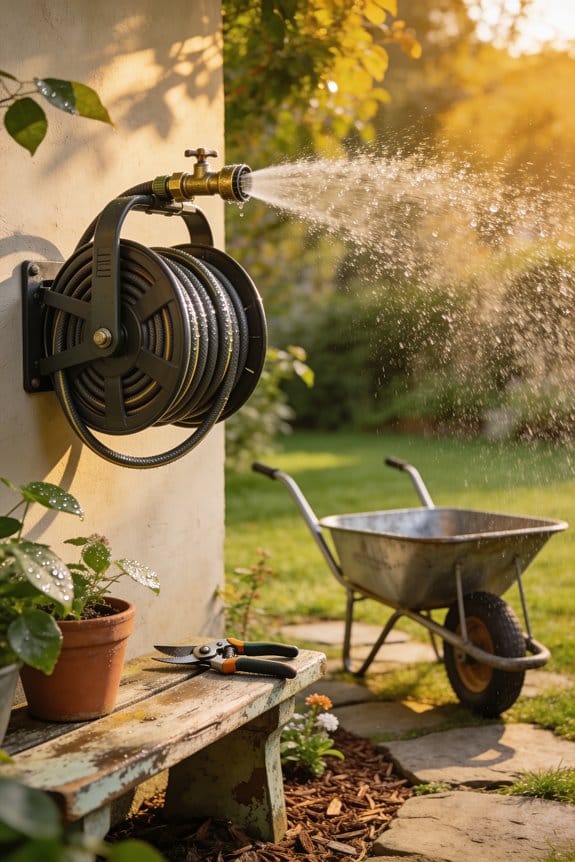
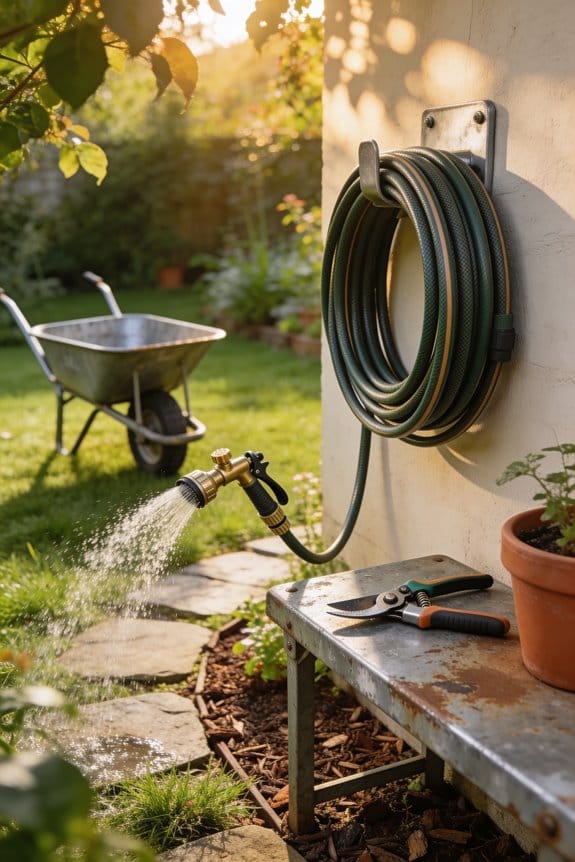
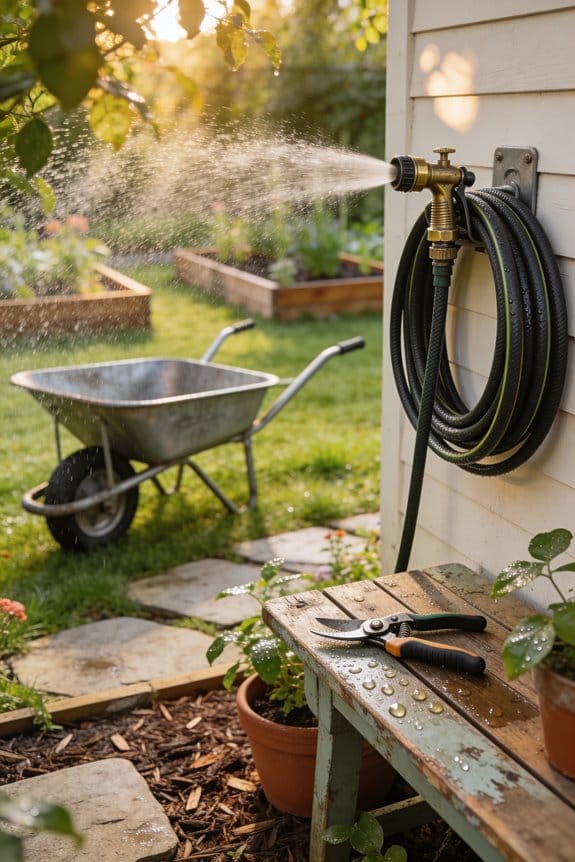
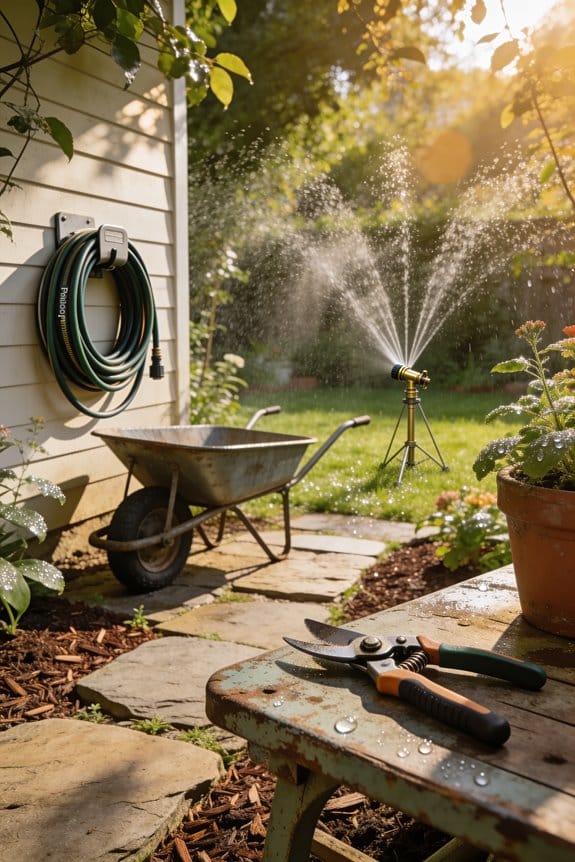
Hand pruners deserve a prominent place in any gardener’s toolkit because they perform essential maintenance work that directly impacts plant health. regular pruning encourages stronger growth and prevents disease spread throughout my garden. When I use sterile pruning techniques—cleaning my blades between cuts—I minimize the risk of transferring plant disease from one plant to another. Sharp hand pruners make clean cuts that heal quickly, whereas dull blades crush stems and create openings for pathogens. During the growing season, I trim dead or diseased branches promptly, which redirects the plant’s energy toward producing healthy new growth. This simple tool becomes invaluable for maintaining vigorous vegetables and preventing problems before they become serious issues in my garden beds.
Combine These Five Gardening Tools for Faster Setup
When you bring together five essential tools—a trowel, hand fork, garden hoe, spade, and wheelbarrow—you create an efficient system that reduces setup time and streamlines your gardening workflow. This tool pairing approach minimizes unnecessary trips and simplifies your gardening process. Workflow sequencing matters markedly; start by using your spade to turn soil, then employ the hand fork to loosen and level the bed. Next, use your trowel to dig individual planting holes. The garden hoe removes weeds and prepares rows effectively. Finally, your wheelbarrow transports soil amendments and harvested materials throughout your garden. When these tools work together strategically, you’ll accomplish more in less time, reducing fatigue while establishing a productive vegetable garden efficiently.
Beginner Mistakes: Misusing These Five Gardening Tools
While having the right five tools certainly helps you garden more efficiently, knowing how to use them properly matters just as much. I’ve learned that beginners often make critical mistakes that damage their gardens. Overwatering warnings go unheeded when gardeners rely too heavily on watering cans, drowning plant roots and promoting disease. Using a spade incorrectly causes soil compaction, which restricts root growth and nutrient absorption. I’ve noticed new gardeners use hand forks too aggressively, compressing soil rather than loosening it. Improper trowel technique creates uneven planting depths, affecting seed germination. Finally, neglecting to maintain pruners leads to jagged cuts that invite infection. Understanding each tool’s proper technique prevents these common errors and establishes a healthier, more productive vegetable garden from the start.
Frequently Asked Questions
What Ergonomic Features Should I Look for in Garden Tool Handles to Reduce Hand Strain?
I’d look for cushioned grips and contoured handles designed to fit your hand’s natural shape. You’ll want tools with ergonomic grip handles that reduce fatigue during repetitive gardening activities, minimizing strain and improving efficiency.
Do I Need Protective Gloves, and What Type Works Best for Vegetable Gardening?
Consider protective gloves—they’re essential. Cotton garden gloves offer affordable protection, but I prefer latex gloves or nitrile liners for better durability and grip during digging, weeding, and handling soil.
How Can I Organize and Store These Five Tools for Easy Access During Gardening?
I’ve discovered the game-changer for tool organization: I mount my five essentials on a vertical rack near my garden entrance, then keep backup tools on a mobile cart I wheel between beds—everything’s within arm’s reach when I need it most.
Should I Invest in Tool Sheaths or Other Accessories to Carry Tools While Working?
Yes, Consider investing in a tool holster or belt pouch. They’ll keep your essentials accessible during work, reducing time searching for tools and minimizing hand fatigue while you’re actively gardening.
What Maintenance Routine Keeps These Five Basic Tools in Good Working Condition Long-Term?
Consider establishing a regular cleaning schedule after each use, wiping blades dry to prevent rust. Sharp blades work better, so I sharpen mine seasonally. Store tools in a dry place, and you’ll keep them performing well for years.