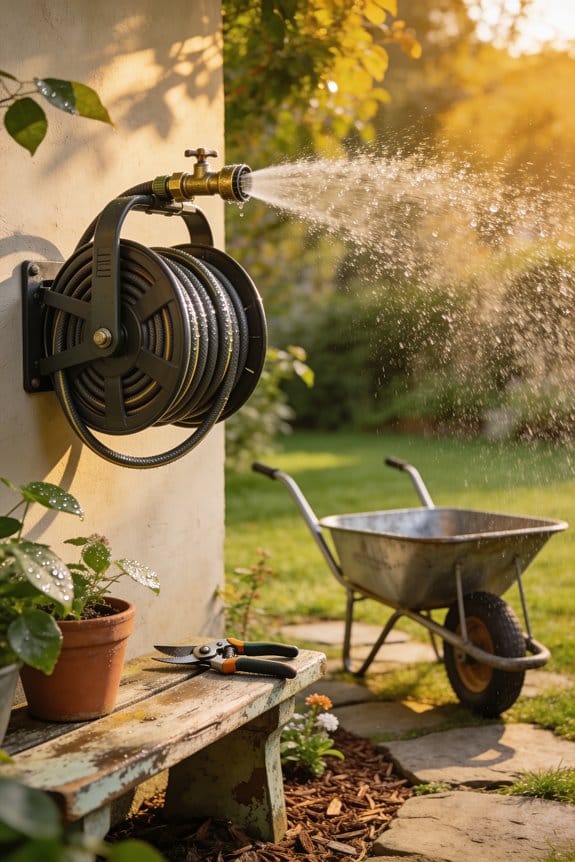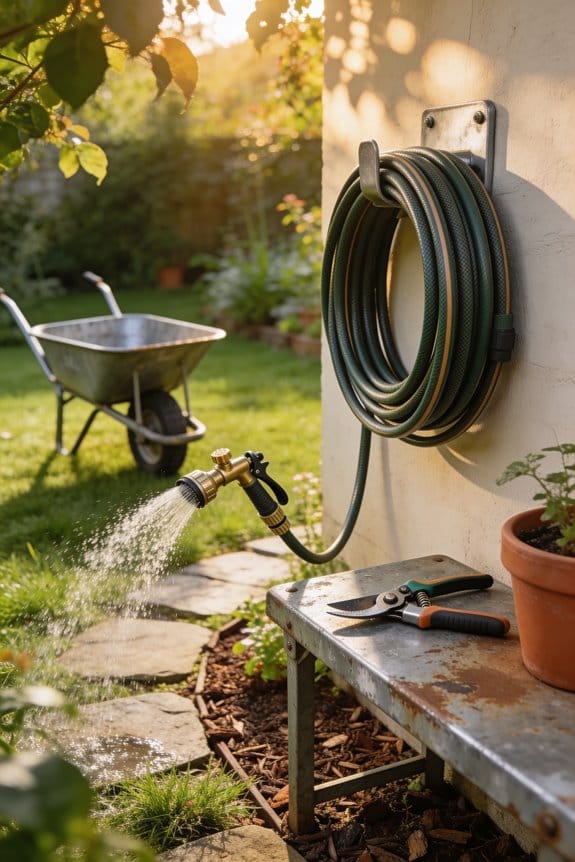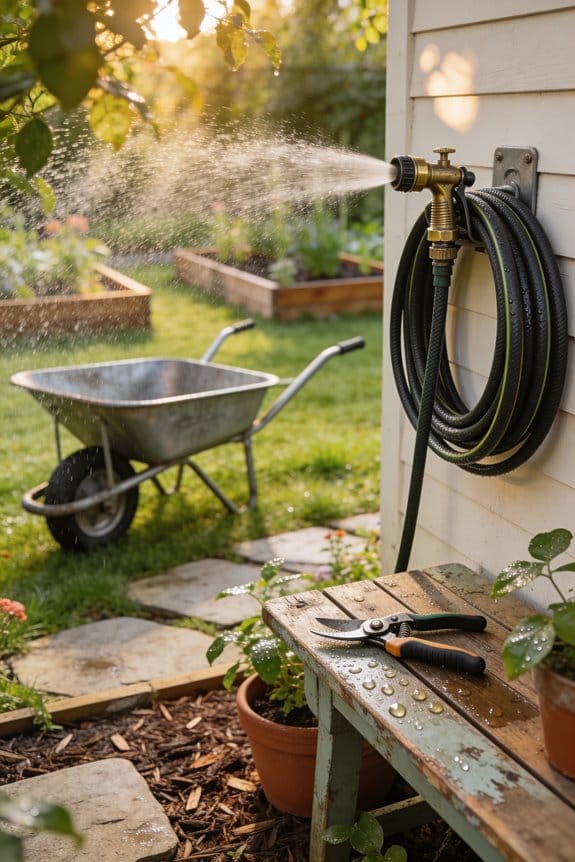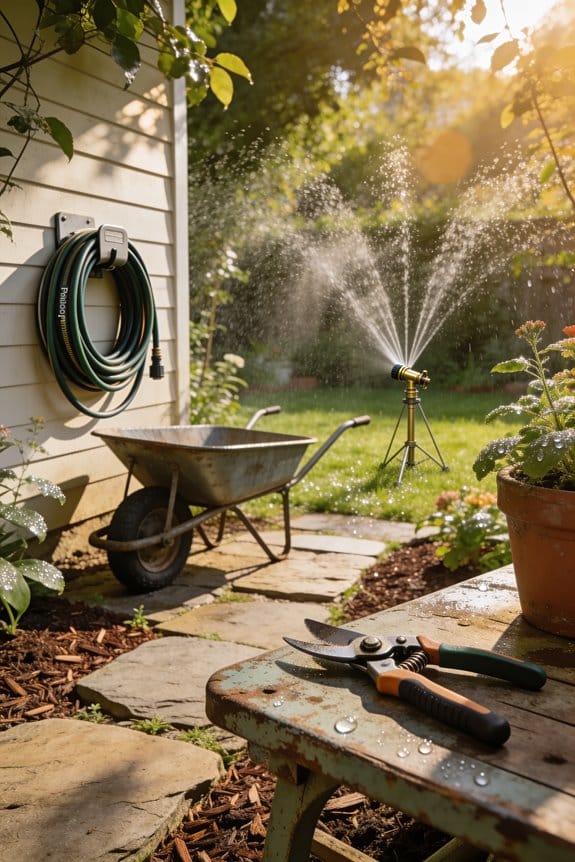


Consider starting with five essential hand tools: a trowel for planting, pruning shears for clean cuts, a hand fork for soil work, a soil thermometer for seed timing, and a seed dibbler for precise depth. Begin with budget-friendly options to discover what matches your gardening style before upgrading to quality versions. Add a long-handled spade, appropriate weeding tool based on your garden size, gloves, and a wheelbarrow as your needs grow. This gradual approach saves money and storage space while preventing expensive mistakes on unsuitable equipment.
Key Takeaways
- Start with budget-friendly essentials like trowels, hand forks, and pruning shears to avoid costly mistakes.
- Invest in a long-handled spade and garden fork to reduce back strain while managing soil.
- Use hand weeders and hoes suited to your garden size rather than expensive mechanized equipment initially.
- Add a wheelbarrow and tubtrug for efficient transport of soil, compost, and harvested plants.
- Build your toolset gradually, replacing affordable tools with quality versions once you understand your gardening style.
Start With These 5 Garden Tools for Beginners
When you’re setting out to build your garden toolkit, it’s important to zero in on the essentials rather than purchasing every tool available. Consider starting with a trowel for digging small holes and transplanting seedlings. A hand fork breaks up soil and removes weeds effectively. Pruning shears maintain plant health by making clean cuts that prevent disease. A soil thermometer tells you when soil temperature is right for planting, which is vital for seed success. Finally, a seed dibbler creates precise planting holes at the correct depth for seeds. These five tools handle most beginning gardener tasks without overwhelming your budget or storage space. Each serves multiple purposes, making them practical investments for someone just starting their gardening journey.
Budget First: Why Spending Less Now Saves Regret Later

You may be interested
Since most beginning gardeners feel tempted to purchase expensive tools immediately, I’ve learned that starting with budget-friendly options actually prevents costly mistakes down the road. Frugal experimentation allows you to discover which tools match your gardening style before investing heavily. When you start small, you’ll understand your actual needs rather than buying items you’ll never use.
Building a planned toolset gradually means you can replace affordable tools with quality versions once you’ve confirmed they’re essential. This approach saves money and storage space. You’ll also avoid the regret of purchasing premium equipment that doesn’t fit your hand comfortably or suits your garden’s specific demands. Starting modestly builds confidence while keeping your initial investment minimal and manageable.
Digging and Soil Management: Tools That Save Your Back

Once you’ve decided which tools fit your needs and budget, you’ll want to focus on the equipment that handles the physically demanding work of gardening. A long handled spade lets you turn and mix soil while reducing strain on your back during extended work. Garden forks aerate soil and help you dig root vegetables like carrots and beets. A rolling garden seat provides comfortable support when you’re working at ground level, minimizing knee and back stress. Leaf rakes move mulch without getting stuck, while garden rakes reposition soil and gravel effectively. These tools work together to make soil management less exhausting, allowing you to garden longer without physical fatigue or injury.
Weeding Tools by Garden Size: Small Plots to Large Beds

Your garden’s size determines which weeding tools will work best for you, and selecting the right equipment can make the difference between an enjoyable task and a frustrating chore. For small plots and container gardening, a hand weeder offers an affordable, effective solution. As your garden expands, a swivel or stirrup hoe lets you cultivate between plants quickly without bending repeatedly. Large beds benefit from traditional hoes for removing substantial weeds efficiently. If you’re managing extensive areas, mechanized cultivators save time and physical effort by breaking up soil while removing weeds simultaneously. Stand-up weed pullers provide an excellent middle option, allowing you to remove roots while standing upright. Assess your garden’s dimensions and your physical capabilities before investing in tools.
Watering Systems: Precision vs. Broad Coverage

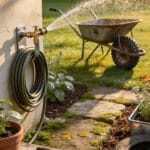
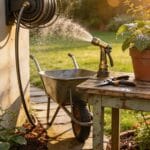
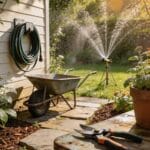
Watering your garden effectively requires choosing between two distinct approaches: precision watering for delicate plants and broad coverage for larger areas. A watering can with a long spout lets you deliver water directly to seedlings and hard-to-reach spots without disturbing soil. For bigger gardens, a quality garden hose paired with watering wand attachments provides efficient, widespread coverage. Consider drip irrigation systems, which deliver water slowly to plant roots, reducing waste while keeping foliage dry. Rainwater harvesting through barrels or tanks offers a sustainable water source for your garden. The key is matching your watering method to your garden’s size and plant needs, ensuring young plants receive gentle hydration while established beds get adequate moisture for healthy growth.
Storage and Transport Containers That Lighten Your Load
As you accumulate gardening tools and materials, you’ll quickly realize that transporting everything around your garden becomes just as important as having the right equipment in the first place. Tubtrug variants offer lightweight, flexible containers that handle hauling, harvesting, and soil mixing without adding excessive weight to your tasks. Wheelbarrows efficiently move heavy loads like compost and plants across garden beds. Collapsible carts provide portable storage that saves space when not in use, making them ideal for beginners with limited storage areas. Buckets serve multiple purposes for transporting harvested crops, tools, and weeds. Choosing lightweight designs reduces strain and fatigue during frequent transportation, allowing you to work longer while maintaining proper body mechanics and preventing injury throughout your gardening season.
Protective Gear and Ergonomic Design: Don’t Skip These
Because gardening involves repetitive motions, heavy lifting, and exposure to dirt and sharp tools, protective gear and ergonomic design become essential components of a safe and comfortable gardening experience. Your glove selection matters considerably; quality gardening gloves protect your hands from thorns, dirt, and irritants while improving grip on wet or slippery tools. Consider leather or reinforced materials for durability during extended sessions. Handle ergonomics deserve equal attention. Tools with properly designed handles reduce wrist, hand, and body strain during repetitive tasks, preventing common injuries like tendonitis. Invest in ergonomic hand tools early to establish healthy gardening habits. Additionally, appropriate footwear protects your feet and provides proper support during standing work. These protective measures aren’t luxuries—they’re investments in your long-term gardening sustainability and enjoyment.
Upgrades Worth Making After Your First Season
Once you’ve completed your first growing season, you’ll have gained valuable insights into your gardening style, garden size, and specific needs that should guide your equipment decisions. After experiencing what works best for your space, consider investing in soil sensors, which measure moisture and nutrient levels, helping you water and fertilize more effectively. If you’ve outgrown container gardening, raised beds might be your next logical step, offering better soil control and easier access. Upgrading to higher-quality versions of frequently used tools—like a premium hose or ergonomic digging fork—reduces strain during extended work sessions. You might also benefit from specialized equipment addressing particular challenges you encountered, whether that’s specific weeding tools or improved storage solutions for your expanded collection.
For a useful next step, start a garden with five basic tools, clean garden tools after use and decide when a garden tool is too worn to repair. These guides cover the related maintenance or buying decision without changing the task explained here.
Frequently Asked Questions
How Often Should I Replace or Maintain My Hand Tools to Keep Them in Working Condition?
Consider seasonal sharpening for your pruning shears and knives to maintain clean cuts. For rust prevention, I wipe my tools after use and store them dry. Regular maintenance extends your tools’ lifespan greatly and keeps them performing ideally.
What’s the Difference Between a Garden Spade and a Shovel, and Which Should I Buy First?
A shovel’s curved blade digs deeper with a scooping motion, while a spade’s flat blade angles for turning soil. I’d buy a spade first—it’s more versatile for mixing and blending nutrients into your beds.
Can I Use Regular Work Gloves for Gardening, or Do I Need Specialized Gardening Gloves?
While work gloves protect, gardening gloves offer superior durability concerns and tactile sensitivity you’ll need. Consider specialized gardening gloves—they’re designed for gripping wet tools and handling delicate plants without sacrificing comfort.
Should I Buy Individual Tools or Invest in a Complete Beginner’s Tool Set Package?
Consider buying individual tools first. Complete sets often sacrifice quality for budget, and you’ll want brand loyalty with tools you’ll use repeatedly. You can always add specialty items as your gardening needs evolve.
How Do I Know When It’s Time to Upgrade From Hand Tools to Powered Garden Equipment?
You’ll know it’s time to upgrade when hand tools become too time-consuming for your garden’s size. Consider motorized convenience once you’re managing large areas regularly, and evaluate fuel considerations against your garden’s actual needs.