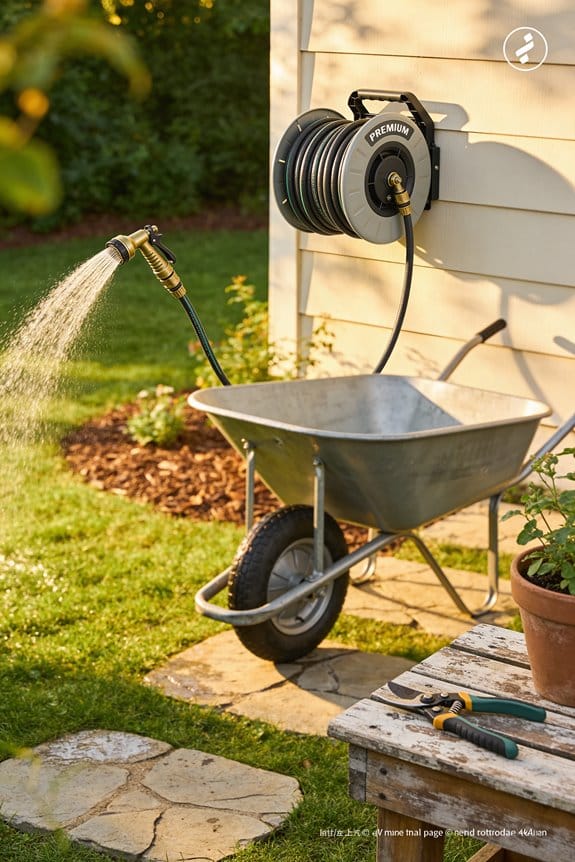
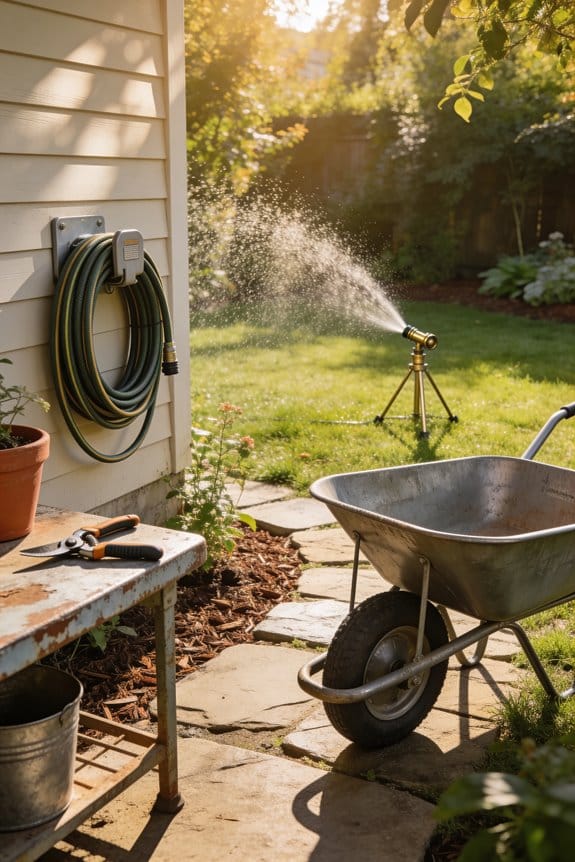

Smart irrigation controllers are trending because they tackle real problems homeowners face: high water bills and wasted water from outdated schedules. These systems use soil moisture sensors and weather data to water your garden only when needed, cutting water usage by 15–20%. Unlike manual watering with a hose, they automatically adjust for rain and heat, preventing overwatering and underwatering. Machine learning technology adapts to your specific soil type, plants, and local climate patterns. Government rebates also make them affordable, with savings visible on your first bill. Understanding how these systems work reveals why they’re becoming essential for budget-conscious gardeners.
Key Takeaways
- Smart controllers reduce water bills by 15–20% through sensor-based scheduling that eliminates guesswork and waste.
- Real-time soil moisture and weather monitoring automatically adjusts watering schedules, preventing overwatering during rain and underwatering during heat.
- Machine learning adapts irrigation to garden-specific conditions like soil type, plant varieties, and microclimates for personalized efficiency.
- Built-in leak detection identifies damaged sprinkler heads and lines early, protecting landscapes and reducing water loss.
- State and local rebate programs plus EPA WaterSense certification significantly reduce upfront installation costs for homeowners.
The Water Crisis Your Garden Faces (And Why Smart Controllers Solve It)
If you’ve noticed your water bill climbing or your garden struggling despite regular watering, you’re not alone—many homeowners face a real challenge in balancing plant health with water conservation. Traditional irrigation methods waste significant water through inefficient scheduling and inability to respond to weather changes. Your garden’s soil compaction reduces water penetration, while microclimate mapping reveals how different areas receive varying sunlight and moisture levels. Root zone salinity accumulates when overwatering occurs, damaging plant growth. Smart controllers address these issues by monitoring soil moisture and weather in real-time, adjusting watering schedules automatically. This technology prevents excess water application that damages soil and crops while maintaining drought resilience. By optimizing your irrigation patterns, smart controllers reduce water usage by 15-20%, lowering bills while supporting healthier plants.
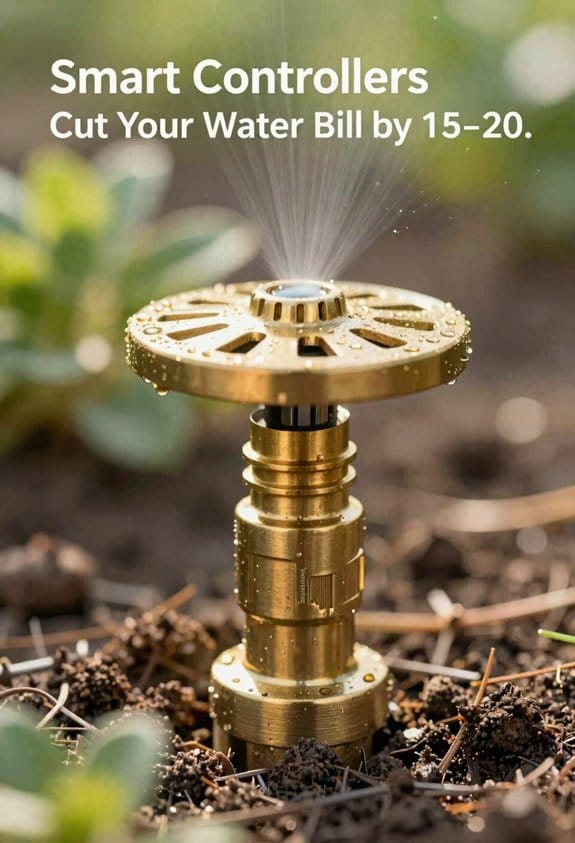
Smart Controllers Cut Your Water Bill by 15–20
You may be interested
The real payoff from installing a smart irrigation controller becomes clear when you examine your water bill, because these systems deliver measurable savings that most homeowners can notice within their first billing cycle. Smart controllers reduce water usage by 15–20% through real-time monitoring of soil moisture and weather conditions. They automatically adjust watering schedules based on seasonal changes, ensuring you’re not overwatering during cooler months when plants need less hydration. Built-in leak detection features identify problems early, preventing water waste from damaged lines or sprinkler heads. By optimizing irrigation cycles to match your garden’s actual needs rather than fixed schedules, these systems transform how efficiently your water gets used, directly lowering your expenses while supporting healthier plant growth.
Automate Watering: Why Smart Controllers Beat Manual Watering
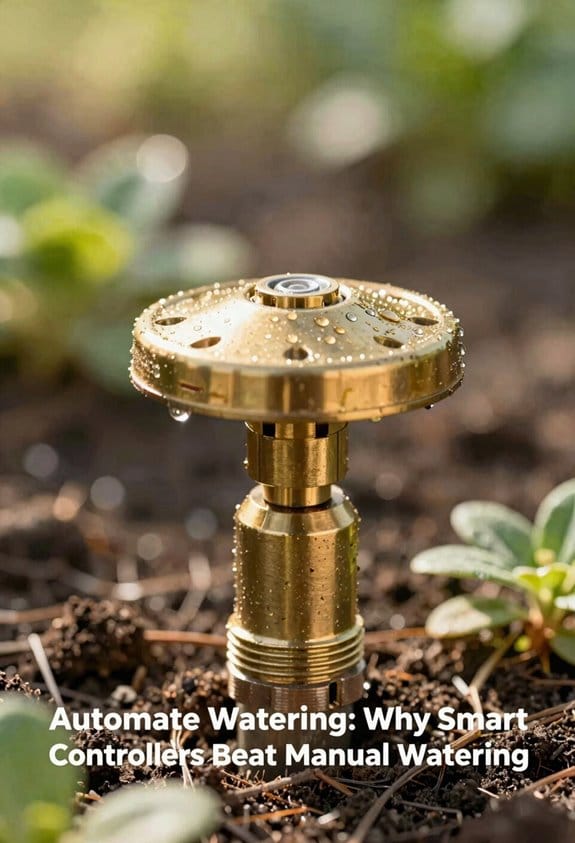
When you’re managing a garden or landscape, manual watering demands your constant attention—you’ll need to remember schedules, adjust for weather changes, and monitor soil conditions regularly, yet smart controllers handle these tasks automatically without requiring your daily involvement. These systems use sensor scheduling to determine precise watering times based on soil moisture levels and weather forecasts. You won’t worry about overwatering during rainy periods or underwatering during hot spells. If you’re away from home, remote overrides let you adjust settings from your phone whenever needed. Smart controllers integrate real-time data monitoring, eliminating guesswork from irrigation management. By automating watering decisions, you’ll reduce water waste, lower utility costs, and maintain healthier plants with minimal effort.
How AI Learns Your Garden’s Unique Weather and Soil Needs
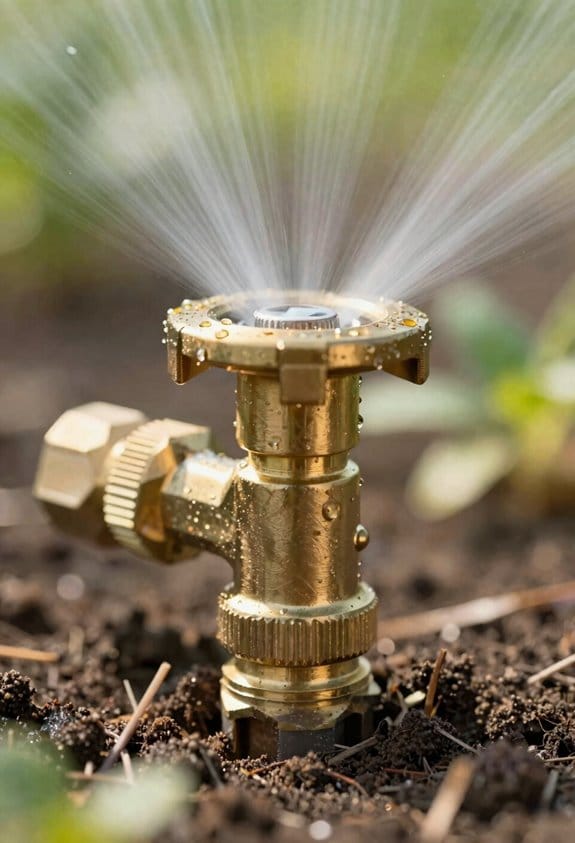
How does your garden’s irrigation system know exactly when to water, even when you’re not paying attention? Smart controllers use sensor fusion, combining data from soil moisture sensors and weather forecasts to create a complete picture of your garden’s needs. Through seasonal profiling, the AI learns how your soil’s water retention changes throughout the year, adjusting watering schedules accordingly. Machine learning algorithms analyze patterns specific to your location, including rainfall, temperature fluctuations, and humidity levels. Over time, the system understands your garden’s unique characteristics—soil type, plant varieties, and microclimates. This personalized approach means your garden receives precisely the water it needs, when it needs it, without manual intervention or guesswork.
Government Rebates Make Smart Controllers Affordable Now
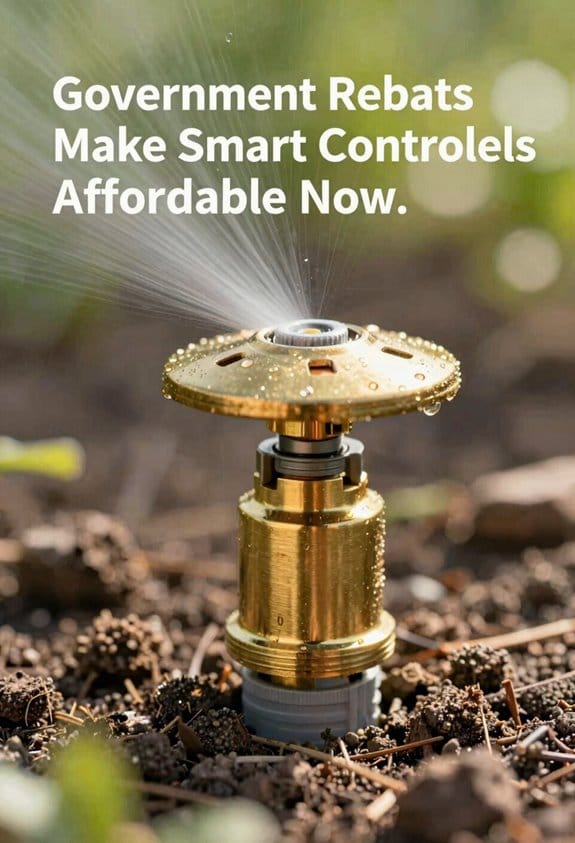
Because water conservation has become a priority across the country, many state and local governments now offer financial incentives to help homeowners install smart irrigation controllers. These rebate programs markedly reduce your upfront costs, making advanced technology accessible to more gardeners. To maximize rebate awareness, Consider checking your local water utility’s website or contacting your state’s environmental agency for available programs. Understanding the application timeline is vital, as many rebates have specific deadlines and enrollment periods. Some programs provide partial reimbursement after purchase, while others offer instant discounts at point of sale. The EPA WaterSense certification often qualifies systems for additional incentives. By taking advantage of these financial programs, you’ll invest in water-saving technology while supporting regional conservation efforts.
From Purchase to First Watering: Getting Your System Running
Once you’ve taken advantage of rebate programs and brought your smart controller home, the setup process typically involves several straightforward steps that prepare your system for operation. First, consult your wiring guide to connect the controller to your existing irrigation lines and electrical source. Next, use your setup checklist to verify all connections are secure and properly positioned. You’ll download the manufacturer’s mobile app, which walks you through calibration settings and soil moisture sensor placement. The app then prompts you to input your local weather data and plant types. After confirming water pressure readings and valve functionality, you can program your first watering schedule. Most systems become fully operational within 30 to 60 minutes, allowing real-time monitoring from your smartphone.
Frequently Asked Questions
Are Smart Irrigation Controllers Compatible With My Existing Sprinkler System and Setup?
Most smart controllers work with existing systems through wiring compatibility and valve adapters. Consider checking your sprinkler’s specifications, as modular solutions cater to diverse setups, ensuring seamless integration with your current infrastructure.
How Long Does a Smart Controller Typically Last Before Needing Replacement or Maintenance?
Most smart controllers last 5-10 years with proper maintenance. Consider checking your warranty coverage, which typically spans 2-3 years. Battery life varies by model, usually 1-2 years, requiring periodic replacement to guarantee peak performance.
Can Smart Controllers Work During Power Outages or Without Internet Connectivity?
I’m painting you a clear picture: most controllers I’ve found include battery backup for power outages, allowing offline scheduling to keep your garden watered. However, advanced features requiring internet won’t function without connectivity.
What’s the Learning Curve for Setting up and Using a Smart Controller App?
I’ve found the learning curve minimal. Most controllers feature intuitive interfaces requiring just minutes to grasp. You’ll get easy setup through guided wizards, user training via tutorials, and mobile alerts notifying you of watering schedules instantly.
Do Smart Controllers Work Equally Well for Different Plant Types and Garden Layouts?
No, they don’t—but they’re designed to adapt. plant-specific settings, soil moisture sensors, and root depth adjustments let controllers navigate your garden’s microclimates effectively, optimizing water for each zone’s unique needs.