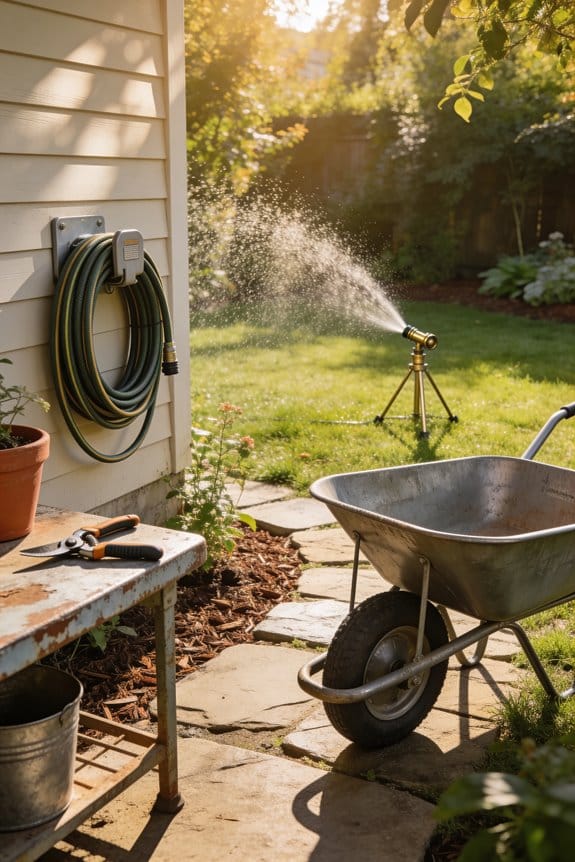
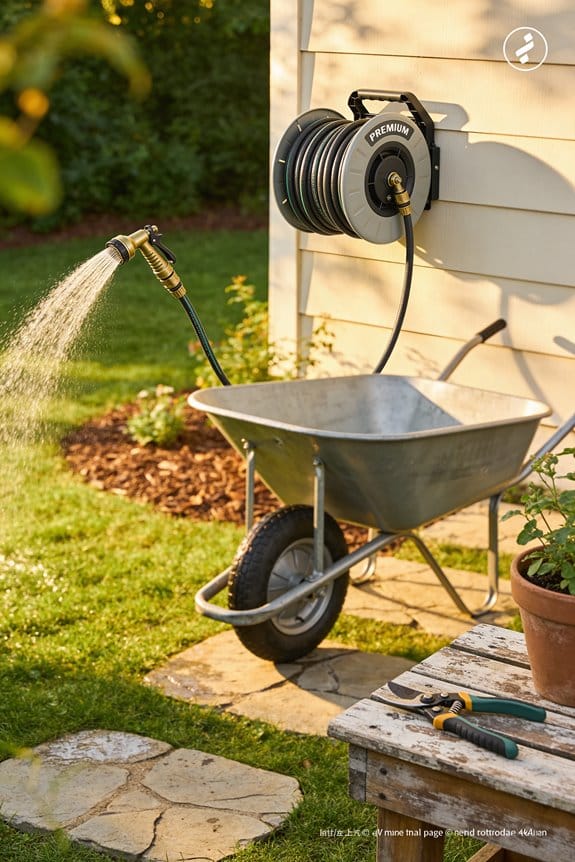

Consider prioritizing smart irrigation systems first—they genuinely save thousands of gallons annually by skipping unnecessary watering and adjusting based on real soil moisture and weather data. Greenhouse climate monitors are worth it too if you grow plants indoors, preventing mold and maintaining ideal temperatures automatically. Motion-sensor outdoor lighting provides security benefits while cutting electricity costs. Soil sensors and weather integration require careful cost consideration since initial investments range from $100–$500, though long-term savings add up. When choosing devices, I’d stick with one ecosystem like Alexa or Google Assistant for seamless communication. Learning which combinations work best together reveals significant advantages.
Key Takeaways
- Smart irrigation systems save thousands of gallons annually by preventing overwatering and skipping watering on rainy days.
- Smart greenhouse thermostats learn patterns and automatically adjust temperatures, reducing energy waste and lowering utility costs.
- Motion-activated outdoor lighting enhances security while reducing electricity costs through intelligent scheduling and occupancy simulation.
- Greenhouse air quality monitors with automated ventilation prevent mold and provide real-time alerts about pollutants.
- Soil sensors and weather data integration eliminate guessing about watering needs while enabling cross-device automation coordination.
Smart Irrigation Systems: Real Water and Money Savings
With a smart irrigation system, you’re fundamentally giving your garden a brain that decides when and how much to water, rather than relying on a fixed schedule or your memory. These systems use soil sensors and weather data to determine precise watering needs, preventing the overwatering that wastes thousands of gallons annually. By skipping unnecessary watering on rainy days and adjusting schedules based on actual soil moisture, you’ll see significant water savings. This efficiency directly translates to bill reduction on your monthly utility costs. The real-time monitoring through mobile apps lets you track moisture levels and customize watering for different garden zones. Healthier plants result from consistent, appropriate hydration without the guesswork.
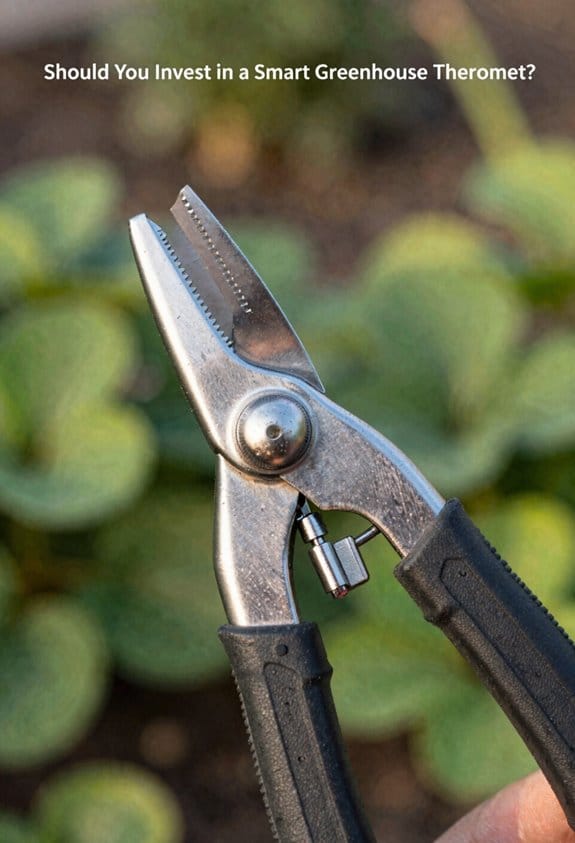
Should You Invest in a Smart Greenhouse Thermostat?
You may be interested
If you’re growing plants in a greenhouse, maintaining the right temperature is essential for their survival and productivity, which is why a smart thermostat might be worth considering. These devices learn your daily patterns through energy learning, automatically adjusting temperatures without constant manual intervention. Occupancy sensing features detect when you’re present, allowing the thermostat to optimize heating and cooling cycles accordingly. You’ll benefit from remote control through your smartphone and voice assistant integration with Alexa or Google Assistant. Smart greenhouse thermostats reduce energy waste by preventing unnecessary temperature fluctuations, ultimately lowering your utility costs. If you’re serious about greenhouse gardening and want to protect your investment while saving money, a smart thermostat delivers practical value.
Smart Outdoor Lighting: Security Over Convenience
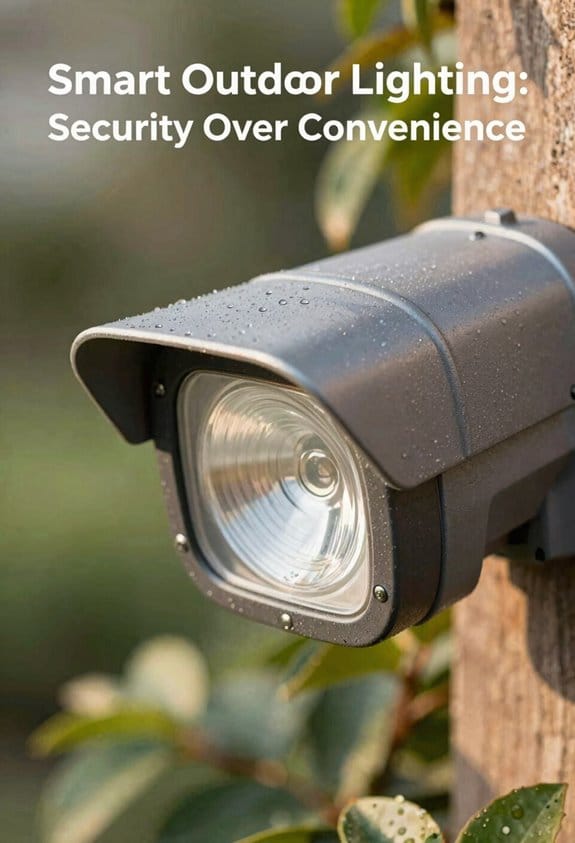
While convenience features grab attention, the real value of smart outdoor lighting lies in its ability to enhance your home’s security. Motion detection sensors activate lights when movement occurs near your property, deterring potential intruders and alerting you to unexpected activity. integrating these lights with your security system creates a thorough protection strategy, not just automated convenience.
Energy scheduling allows you to program lighting patterns that simulate occupancy when you’re away, making your home appear inhabited during dark hours. This feature reduces electricity costs while maintaining security benefits. By combining motion detection with energy scheduling, smart outdoor lighting becomes a practical investment that protects your home and manages utility expenses simultaneously, rather than simply adding convenience to your yard.
Protecting Greenhouses: Smart Climate and Air Quality Monitoring
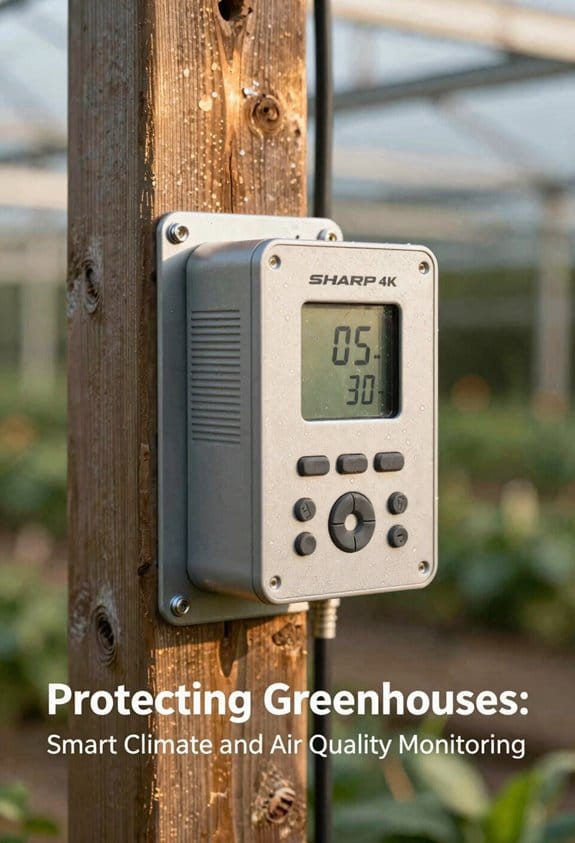
Greenhouses create enclosed environments that require careful attention to temperature and air quality, since small changes in these conditions can markedly affect plant health and crop success. Smart thermostats learn your daily patterns and adjust temperatures automatically, while humidity control systems prevent mold growth that thrives in damp spaces. pairing these devices with air quality monitors gives me real-time alerts about dust, allergens, and pollutants. Ventilation automation triggers when sensors detect problematic levels, working seamlessly with dehumidifiers to maintain ideal conditions. When you integrate these systems with Alexa or Google Assistant, you gain remote control capabilities that make greenhouse management efficient. This coordinated approach guarantees your plants thrive while reducing the manual monitoring you’d otherwise need.
Are Soil Sensors and Weather Data Worth the Cost?
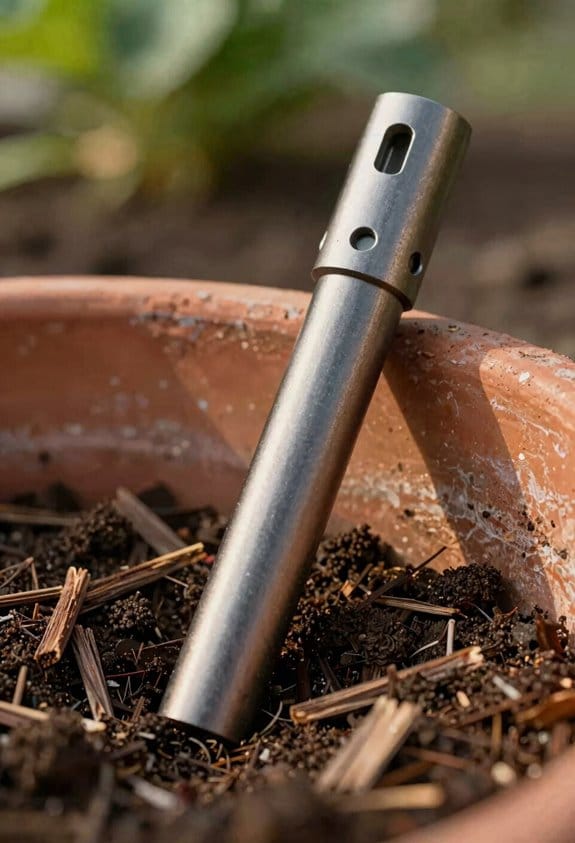
Why should you invest in soil sensors and weather monitoring systems when you’re already managing your garden manually? The answer lies in precision and efficiency. Soil sensors measure real-time moisture levels, eliminating guesswork about when to water. Weather data integration automatically skips watering during rainy periods, preventing overwatering. Though installation complexity varies by system, most modern sensors connect easily to smartphone apps. Long term accuracy improves dramatically compared to manual observation, reducing water waste and lowering utility bills. Initial costs range from $100 to $500, but savings accumulate through decreased water usage and healthier plant growth. For serious gardeners, the investment pays dividends through optimized resource management and time savings on maintenance checks.
Which Smart Devices Actually Work Together?
Once you’ve decided which individual devices suit your garden’s needs, the real advantage comes from choosing systems that work together seamlessly. Hub compatibility matters because it determines whether your smart irrigation system, thermostat, and lighting can communicate through one central control point. Protocol bridges act as translators between different device brands, allowing incompatible systems to share information effectively. selecting devices from the same ecosystem—like those compatible with Alexa or Google Assistant—simplifies integration considerably. When your soil sensors trigger irrigation schedules that coordinate with your smart thermostat and outdoor lighting, you’re maximizing efficiency. Before purchasing, check whether each device supports your preferred hub or assistant to make certain they’ll actually work together in your garden setup.
For a useful next step, understand smart watering systems and use soil-moisture readings. These guides cover the related maintenance or buying decision without changing the task explained here.
Frequently Asked Questions
What Is the Initial Installation Cost for Most Smart Garden Iot Systems?
you’re looking at $200-$800 initially, depending on your system’s scope. Setup complexity varies—some devices are plug-and-play, while others require professional installation, which adds to your overall investment.
Do Smart Garden Devices Require a Strong Wi-Fi Signal Outdoors?
You might worry that outdoor dead zones kill smart garden systems, but I’ve found many devices use edge processing and extended signal range to work reliably. You’ll typically need decent Wi-Fi coverage, though some operate independently.
How Long Do Batteries Typically Last in Wireless Garden Sensors?
most wireless garden sensors last 1-2 years on standard batteries, though it depends on power consumption rates. Low-energy models can stretch battery lifespan further, while frequent transmissions drain them faster. You’ll want replaceable batteries for convenience.
Can Smart Irrigation Systems Work During Internet Outages or Connectivity Issues?
Consider checking your system’s local control capabilities. Most modern smart irrigation systems store offline scheduling on their hub, so they’ll continue running watering cycles even if your internet drops temporarily.
What Happens to Garden Data if a Smart Device Manufacturer Goes Out of Business?
I’d lose access to cloud storage, but I’m protected if I’ve enabled local backups on my device or hub. Data ownership remains mine, so I can export records before the service shuts down.